

By midafternoon, the energy you started with has disappeared. Then an advertisement connects that familiar slump with a daily liver-support capsule.
Lumera’s milk thistle offer makes that connection feel personal. Before starting its 90-day routine, look at the formula, buying choices, and promise behind the bottle.
Overview
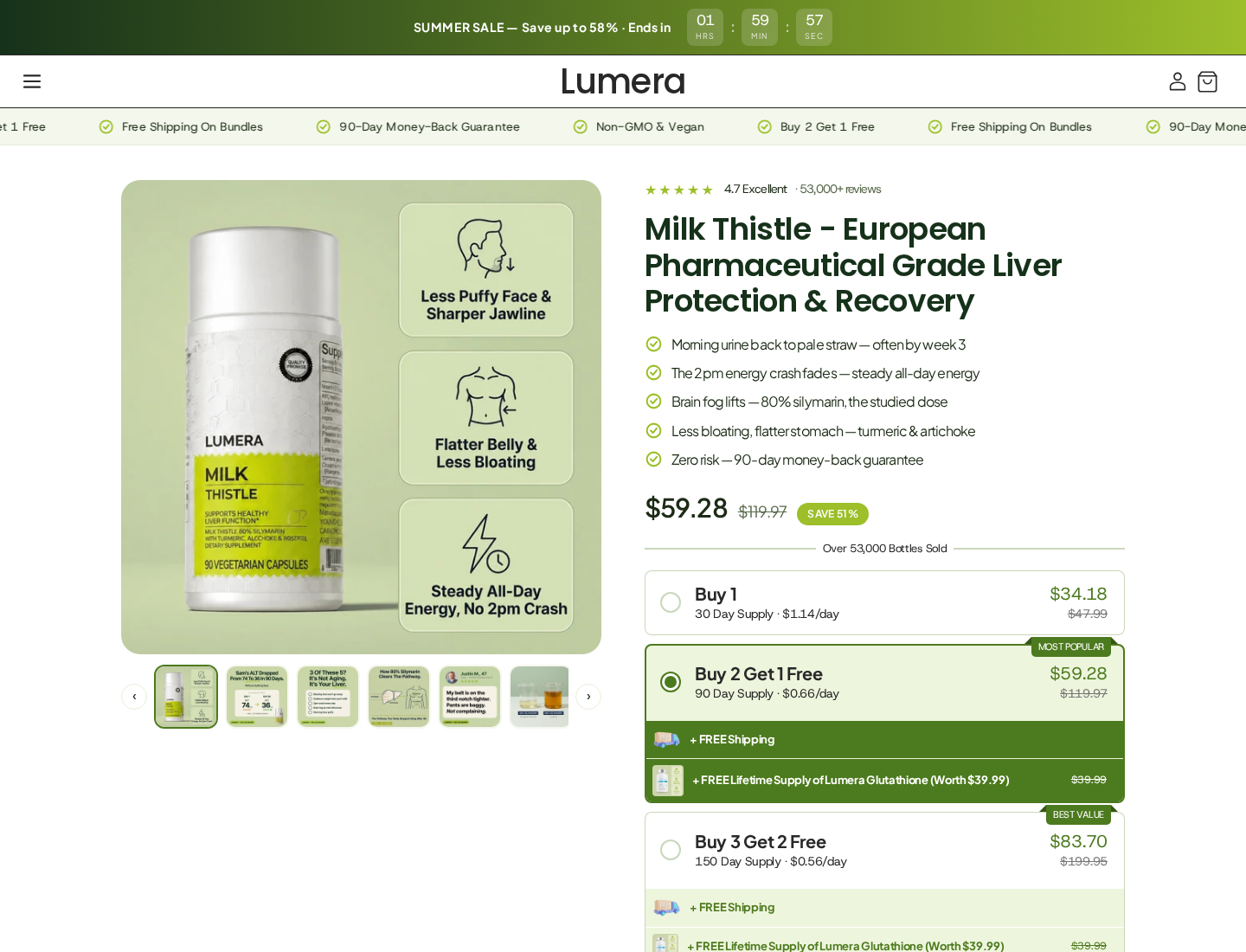
The offer is Lumera Milk Thistle at itslumera.com
Lumera Milk Thistle Liver Detox is sold as a daily capsule standardized to 80% silymarin. Its promotion connects liver support with digestion, energy, clearer thinking, and appearance.
The name Lumera is used for other products too. This article concerns the milk thistle offer at itslumera.com, not unrelated supplements, clinics, or businesses with similar names.
The presentation goes beyond describing a nutrient. It suggests that common experiences, including afternoon fatigue and dark morning urine, signal a need for the advertised routine.
The formula and sales promise need closer reading
Several details change how a buyer should understand this offer:
- An 80% standardization figure does not state the amount of extract in a capsule.
- The ingredient descriptions vary across the homepage, product benefits, and customer stories.
- The initial product selection is a larger bundle rather than one bottle.
- Automatic-refill language appears beside the purchase choices.
- Used-product refunds have a separate first-order guarantee with conditions.
Milk thistle has been studied, but research about the plant isn’t proof that Lumera delivers its week-by-week sequence of results.
The strongest concern is the distance between the precise-sounding promise and the formulation detail available to support it.
The return policy is more nuanced than unopened products only
Lumera has separate routes for sealed returns and dissatisfaction after use. Opening a bottle does not automatically rule out a refund under the published first-order guarantee.
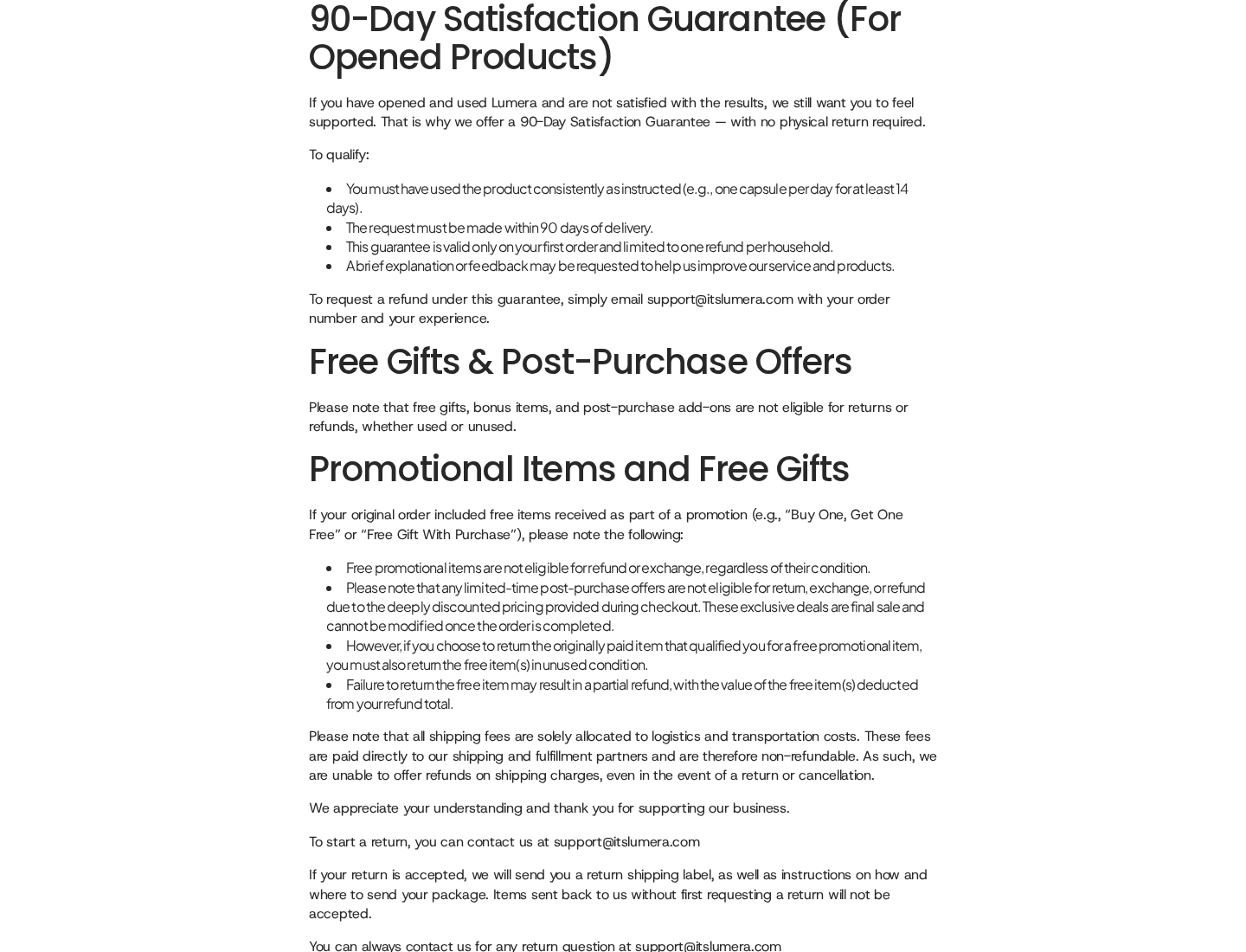
The opened-product guarantee applies to a first order, requires consistent use for at least 14 days, and limits refunds to one per household.
No purchase, product trial, support conversation, or refund was completed. The assessment concerns the advertised formula, sales choices, and written policies a shopper can inspect before ordering.
80% Silymarin Is a Concentration, Not a Complete Dose
Silymarin is a group of compounds associated with milk thistle. Standardizing an extract tells the buyer something about its composition.
It doesn’t supply the missing amount of extract. You still need the quantity per serving to work out how much silymarin the capsule would provide.
For a hypothetical example, 200 mg of extract at 80% would provide 160 mg. A 400 mg extract at that concentration would provide 320 mg.
Those are examples, not measurements of Lumera. They show why the highlighted percentage alone cannot establish whether a serving matches a study.
The sales explanation calls 80% the studied dose and contrasts it with weaker products. That mixes concentration with total exposure in a way shoppers shouldn’t rely on.
Ask for the actual extract weight, standardization, serving size, and complete label. Without those details, comparisons with other bottles or clinical research remain incomplete.
Also check whether a quoted daily amount assumes one capsule or several. A bottle count and a serving count aren’t automatically the same thing.
Which Supporting Ingredients Would You Receive?
The descriptions do not stay consistent
The homepage pairs milk thistle with turmeric, kudzu root, and inositol. Elsewhere, the presentation introduces artichoke or oregano in its explanation of benefits.
Those are different ingredients, not alternative spellings. A customer shouldn’t need to piece together a formula from the homepage, product text, and testimonials.
There may be a page error or a formulation explanation missing. Either way, ask the seller to identify the exact product rather than choosing the most reassuring paragraph.
The actual label must resolve the discrepancy
Request a readable panel showing all active and inactive ingredients, their quantities where disclosed, the capsule shell, warnings, and manufacturer or distributor information.
Ask whether that panel represents the lot currently shipping. A photograph of an older package cannot settle what a changed formulation contains.
This matters when considering allergies or interactions, not merely when comparing prices. Show the full label to a pharmacist if you’re already taking medication.
Do not confuse ingredient testing with the promised result
The page uses laboratory-testing language. A useful report should identify the tested sample, batch, laboratory, methods, and results.
A report about identity or contaminants would answer a different question from a trial measuring fatigue, digestion, or liver-related outcomes in people taking Lumera.
A quality statement can be relevant without proving the entire sales narrative. Match the test to the claim instead of treating every lab reference as medical validation.
The Liver-Warning Story Makes Ordinary Symptoms Sound Product-Specific
The product page asks readers to recognize a pattern: morning urine color, changing alcohol tolerance, exhaustion, brain fog, and stubborn belly fat.
Seeing several familiar complaints together can feel like finally finding an explanation. The purchase then seems to follow naturally from identifying yourself in the list.
But the page also acknowledges that these experiences have many possible causes and are not a diagnosis. That qualification matters more than the implied checklist.
Don’t decide your liver needs a reset because you recognize three items. Your medical history and the actual cause of a persistent change haven’t been assessed.
The week-by-week schedule adds another layer of certainty, predicting improvements in digestion, energy, thinking, and metabolism. A timetable is a marketing promise, not a guaranteed clinical sequence.
The NCCIH’s milk thistle guidance describes insufficient high-quality evidence for firm conclusions and mixed or limited findings in liver-disease research.
That doesn’t mean the plant has no research behind it. It means a researched ingredient shouldn’t be turned into proof of this bottle’s complete advertised transformation.
Nor should the alcohol-related testimonials be treated as permission to drink more. A supplement cannot be assumed to protect you from the consequences of alcohol.
How the Lumera Offer Builds a 90-Day Commitment
Step 1: A personal symptom leads into the reset routine
The initial hook is not simply buying milk thistle. It is the prospect of getting your energy, focus, and familiar sense of well-being back.
That can make the proposed cause seem established before the formula is examined. Start by separating the symptom that concerns you from the seller’s explanation for it.
If the change persists, get appropriate medical advice. Waiting for a sales-page milestone is not a substitute for understanding why it is happening.
Step 2: The first selection is a three-bottle package
The captured US offer had buy two, get one free selected at $59.28. One bottle displayed $34.18, while buy three, get two displayed $83.70.
These are advertised package prices, not a completed payment. Confirm the full amount, shipping, selected quantity, and currency on your own final summary.
The selected bundle is an observable preset. It does not prove a customer chose one bottle and was secretly charged for more afterward.
Step 3: Automatic-refill language creates a separate decision
The product page offers additional savings with automatic refills, and the terms describe repeat billing if a subscribe-and-save option is chosen.
The recurring amount, interval, and actual consent were not confirmed through a completed order. A general clause should not be turned into proof every purchase renews.
Before paying, identify whether the selected offer repeats. A promise that cancellation is available doesn’t tell you what or when the next charge will be.
Also clarify the lifetime-gift language attached to qualifying bundles. Ask what remains free, for how long, and whether any later shipment depends on a paid subscription.
Step 4: The 90-day promise separates sealed returns from used-product claims
Unopened, unused, factory-sealed goods can enter the ordinary 90-day return route. Original packaging and proof of purchase are required.
A separate satisfaction guarantee covers a first order after consistent instructed use for at least 14 days, with the request made within 90 days of delivery.
That route says no physical return is required and limits the remedy to one refund per household. It is not an unrestricted promise covering every later purchase.
This becomes particularly important if refills are involved. A refund route available for the first used bottle should not be assumed to cover every later opened delivery.
Ask about later shipments before accepting a recurring arrangement. Otherwise, the reassurance attached to the initial purchase can create an expectation the written policy does not support.
Step 5: Promotions and add-ons complicate the refund amount
The policy excludes free gifts and post-purchase additions from refund eligibility. It also says certain discounted post-purchase offers are final sale.
If a qualifying paid item is physically returned, free promotional items must accompany it unused or their stated value may be deducted.
A further sale-item exclusion appears elsewhere in the policy. Ask how these clauses apply to your bundle rather than assuming the broad guarantee removes every restriction.
Business Details, Subscription Support, and Fulfillment
The storefront name does not fully identify the operator
The inspected terms refer to Lumera but did not establish a clearly traceable legal entity and operational address. Those details should be available for the transaction.
Compare the invoice and payment record with the company information the seller supplies. A brand name alone doesn’t explain which business is responsible for a refund.
A return label is supplied after acceptance
The policy says accepted physical returns receive instructions and a label. It does not make an advertised US warehouse the automatic destination for every parcel.
Get the actual return address, authorization, deductions, and label arrangements before mailing. For an opened first-order satisfaction request, ask whether the no-return route applies instead.
Support is published at the store’s own domain
The contact page gives support@itslumera.com and promises weekday replies within 24 hours. Subscription changes and guarantee questions are among the listed support topics.
That response promise was not tested, and no verified direct support phone was established from these pages. Keep a written record of each order-specific request.
US dispatch is not manufacturing proof
The product page advertises a US warehouse and the contact page describes US-based help. Neither statement independently identifies where the ingredients or finished capsules were manufactured.
Look for the manufacturer, lot, expiry, and matching label on arrival. Those records are more useful than drawing a supply-chain conclusion from a delivery estimate.
What to Do If You Already Bought Lumera Milk Thistle
-
Find the selected bundle and any renewal agreement. Save the confirmation, amount, quantities, introductory gifts, purchase date, and recurring terms if present.
Check the next charge and shipment in the genuine account or confirmation link. Don’t assume the newsletter sign-up is the same as product refills.
-
Cancel repeat deliveries you do not want. Use the order-management route or write to support@itslumera.com with the order reference and an explicit cancellation request.
Ask for the effective date and whether a shipment is processing. A request to refund the first order should not be assumed to stop future deliveries.
-
Choose the correct guarantee route. Explain whether the products remain sealed or whether your first order was used and you are dissatisfied.
For the opened-product guarantee, preserve the delivery date and relevant use history. Don’t continue something causing concern just to meet a promotional trial condition.
-
Ask how gifts and add-ons affect the remedy. List each paid and free item and request an itemized explanation of any proposed deduction.
Retain unused promotional products while the issue is resolved. Get confirmation before sending back anything under the separate physical-return procedure.
-
Check the complete formulation before further use. Photograph the actual panel and compare it with the ingredient descriptions that persuaded you to buy.
Discuss persistent symptoms and medication questions with a clinician. Do not stop prescribed treatment or use the capsule as compensation for drinking.
-
Take unresolved payment issues to your provider promptly. Supply the receipt, policy, correspondence, cancellation evidence, and tracking where a return occurred.
Identify the exact disagreement, such as a renewal after cancellation or a promised refund that did not arrive. Ask about the applicable process and deadline.
Frequently Asked Questions
Does 80% silymarin tell me the capsule’s full dose?
No. It describes the extract’s concentration. You also need the extract amount and serving size to calculate the quantity supplied.
Is every Lumera product the same milk thistle formula?
No. This investigation concerns itslumera.com. Match the exact seller and label rather than assuming unrelated products sharing the name have the same composition.
Does Lumera refuse all refunds after a bottle is opened?
No. Its separate first-order satisfaction guarantee allows a qualifying used-product request within 90 days of delivery, subject to the published conditions.
Does every order automatically create a subscription?
That was not established. The site promotes automatic refills, while its terms make repeat billing conditional on selecting that arrangement. Check your confirmation.
Do the symptom list and customer stories diagnose a liver problem?
No. The site itself acknowledges other possible causes. Persistent changes deserve proper assessment rather than a diagnosis inferred from supplement advertising.
Should I buy Lumera for the promised liver reset?
No. Skip this offer for that purpose. The concentration claim, inconsistent ingredient explanations, and detailed results timeline don’t establish the advertised outcome.
The Bottom Line
Do not buy Lumera Milk Thistle on the promise of a predictable liver reset. The precise-sounding percentage and symptom story leave essential product questions unanswered.
If you’ve paid, check unwanted refills, preserve the labels, and use the appropriate guarantee route promptly. Take ongoing symptoms to a healthcare professional.

Join the discussion
0 commentsShare your experience or ask a question about this article.
Discussion
Start the conversation
Have a question or something useful to share? Add the first comment.