

A caller says an insurance account in your name is linked to fraud overseas. You insist you never opened it, but the conversation moves to supposed police.
Before long, you’re being asked to join video meetings and keep the matter private. It can feel difficult to step away.
Overview
An insurance allegation becomes a fake criminal case
This insurance fraud call scam targets people with a false account allegation, then escalates through impersonated Chinese police and prosecutors.
The Queens District Attorney warns that this ongoing fraud targets the Chinese community. It involves calls, recurring online meetings, threats, and demands for money.
In the described Queens case, prosecutors allege that a victim wired $300,000 and then another $50,000 after being drawn into the fabricated investigation.
Those are allegations described in a charging announcement, not a conviction. The warning confirms the impersonation pattern without establishing a verdict against every person mentioned.
Familiar platforms give the story somewhere to unfold
The warning describes daily meetings over Zoom or Microsoft Teams with people claiming law-enforcement authority. A later supposed prosecutor adds arrest and extradition threats.
Zoom, Teams, banks, and the insurance brand being named are tools or identities misused in the story. Their appearance doesn’t make them participants in the fraud.
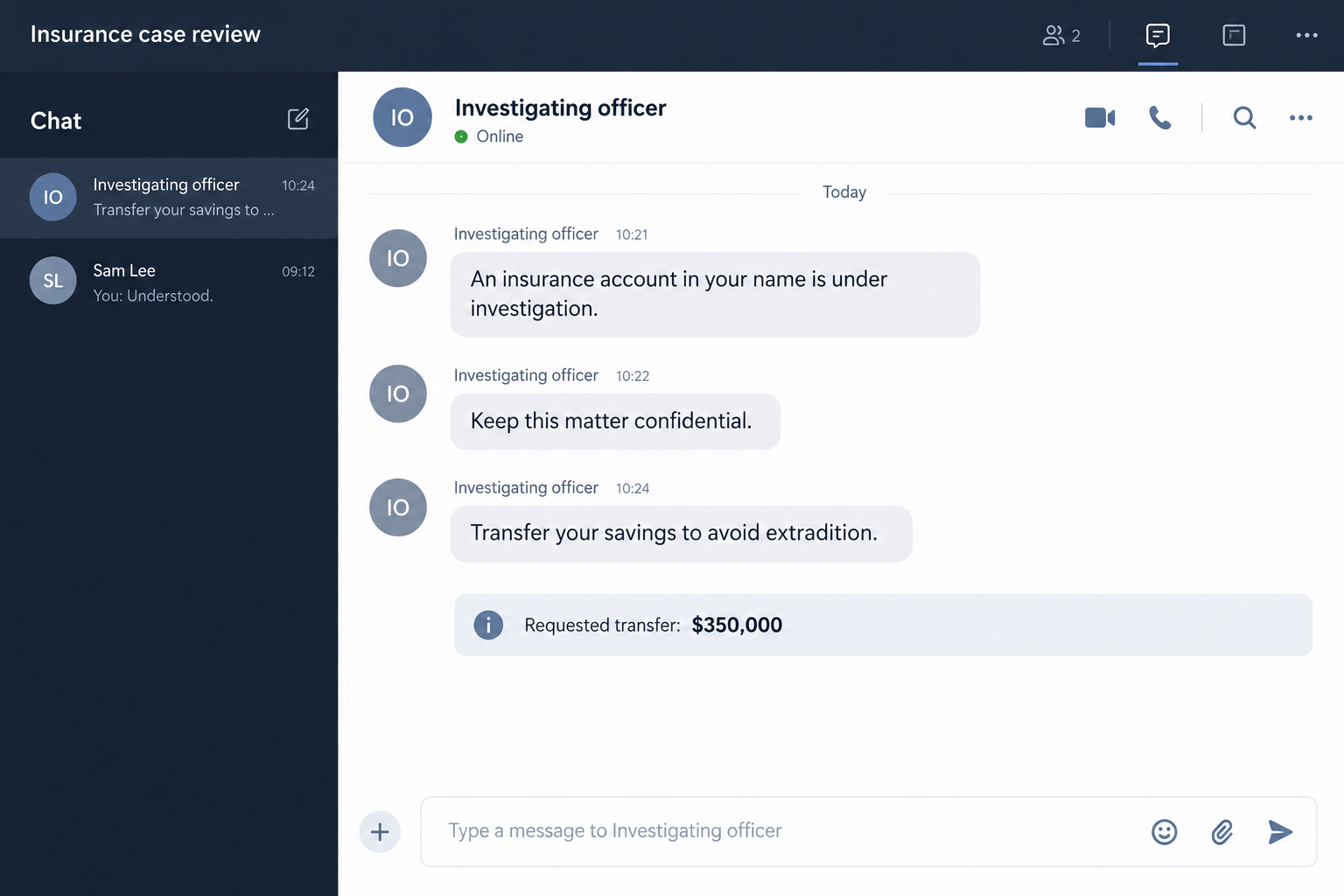
The lead image is an illustration of those pressure tactics. Its $350,000 figure represents the described case total, not a captured single payment instruction.
What makes the demand fraudulent
- An unexpected call alleges an insurance account or fraud case overseas.
- The conversation is handed to supposed Chinese police.
- Online meetings reinforce the appearance of an official investigation.
- Secrecy keeps family members and other advisers out.
- Threats of arrest or extradition become pressure to send money.
- Instructions may include hiding the payment’s true purpose from a bank.
The incoming allegation doesn’t establish that an insurance account actually exists or that your identity is implicated in a real crime.
Don’t transfer savings to resolve a case introduced through this chain. End the contact and verify any genuine concern through independently established official channels.
How the Insurance Fraud Call Scam Works
Step 1: The caller gives you an allegation you want to correct
In the Queens account, the opening claim concerned a United Health Care Global Account supposedly opened in the victim’s name in China.
You may never have used that service or opened any account overseas. The caller treats your surprise as a reason to continue discussing the alleged problem.
That is a powerful opening because hanging up can feel like leaving a serious error unresolved. You want your name removed from whatever has happened.
But an unsupported allegation doesn’t create an obligation to cooperate with the caller. Ask the genuine organization independently whether any issue needs your attention.
Don’t provide identification or financial information simply to prove you aren’t the person described. That gives a stranger more information before their authority is established.
Step 2: A handoff turns customer confusion into police pressure
The caller directs the person toward supposed Chinese provincial police. This makes the next conversation appear connected to an official complaint or investigation.
A transfer isn’t independent verification. Both sides of a handoff can be part of the same impersonation, even when they use different names and roles.
The second person may already know the opening account story. Shared details show continuity between the contacts, not genuine access to police records.
A badge image, case number, or official-sounding explanation should receive the same scrutiny. The FBI’s Chinese-authority impersonation guidance describes spoofed numbers, threats, and fabricated official material.
You can end the call before deciding what is real. A caller’s insistence that you remain connected is another reason to seek help outside the conversation.
Step 3: Daily video meetings make the fiction feel established
The Queens warning describes daily Zoom or Teams meetings. Repetition can make a claimed investigation feel like an established responsibility in your routine.
Each meeting builds on the previous one. After several conversations, the question may shift from whether the officials are genuine to how you can satisfy them.
The platform itself can’t answer that question. A meeting invitation and a working video connection don’t authenticate someone’s police or prosecutorial status.
Don’t allow the meetings to become the only place you discuss the case. Speak privately with a trusted person who isn’t introduced by the caller.
You also don’t need to stay available for further appointments while verifying the story. Declining another meeting isn’t evidence that you committed the alleged offense.
Step 4: Secrecy prevents a second opinion
The victim was instructed to keep the matter confidential. That removes exactly the conversations most likely to interrupt a frightening financial decision.
If you cannot discuss the alleged case with your family, bank, or independently chosen adviser, the caller gets to define every next step.
The instruction can sound protective, as though silence prevents legal trouble. In practice, it leaves you alone with the people demanding cooperation.
Tell a trusted person the actual story, including the insurance allegation and meetings. Don’t replace it with the explanation the supposed officer tells you to give.
Step 5: A supposed prosecutor makes money feel like the escape route
The reported sequence introduces a fake prosecutor and threats involving arrest or extradition. The conversation now connects payment with avoiding a frightening outcome.
When the same people keep warning you about arrest, paying can start to feel like relief. Step away before that fear decides what happens to your savings.
In the Queens case, prosecutors describe two wire transfers totaling $350,000. This isn’t a published schedule of legitimate fees, bail, or penalties.
Don’t negotiate for a smaller transfer as though the claimed case has been authenticated. First leave the conversation and ask your real bank and local authorities for help.
If a caller also demands additional identification or account information, protect that separately. Refusing the payment doesn’t undo information you’ve already disclosed.
Step 6: The bank receives a cover story instead of the truth
According to the charging account, the victim was told to describe the transfer as money for a relative’s house purchase in Hong Kong.
That instruction matters. It conceals the police impersonation from the people who may be able to question or stop the transfer.
Tell your bank why you are really sending the money, including the threats. Don’t rehearse a different explanation supplied by the person requesting payment.
The Queens warning describes a bank freezing the recipient account after flagging suspected fraud. That intervention doesn’t guarantee another bank can recover a later transfer.
Contact your bank immediately if you recognize this sequence. Don’t wait until the next meeting to ask the supposed investigator whether the transfer arrived.
When the Caller Knows Your Name or Shows Documents
A name, phone number, or accurate personal detail can make the opening sound official. It doesn’t establish how the person obtained that information.
Don’t fill gaps in the story for them. Correcting a fake account allegation by supplying your real account details creates a separate exposure.
Official-looking documents also need independent verification. A file sent through the same conversation cannot authenticate the person who sent it.
Save documents as evidence without following embedded contact or payment instructions. Use a genuine agency website or an independently obtained number to ask about a concern.
If language makes the situation harder, seek a trusted interpreter or qualified adviser you choose yourself. Don’t accept the caller’s own helper as an independent opinion.
You can take a genuine legal concern seriously while refusing this payment process. The safe next step is verification outside the caller’s control.
What to Do if You Have Fallen Victim to This Scam
-
Stop the meetings and financial instructions. End calls, leave video sessions, and don’t send another transfer while the alleged case is being checked.
If the impersonators threaten you for stepping away, save the threat and contact local police. Don’t attend a private meeting arranged by the caller.
Use emergency services for an immediate physical danger. A threat on a call still deserves proper reporting without paying the person making it.
-
Tell your bank the complete truth immediately. Explain that fake overseas police or prosecutors pressured you after an insurance-fraud allegation.
Ask about stopping pending transfers, recalling completed wires, and alerting the receiving bank. Provide every transaction reference and the actual payment instructions.
If you previously gave a cover story, correct it. Bank staff need the real reason for the transfer to assess the fraud and available response.
-
Preserve the case materials and communication history. Keep call logs, meeting invitations, chat messages, alleged documents, recipient accounts, receipts, and timestamps.
Don’t return to a meeting to collect more evidence or confront the participants. Existing records are more useful than creating further contact with the impersonators.
Keep full financial details for investigators and the bank. Redact them before sharing a warning publicly or asking a community group for general advice.
-
Report through genuine law-enforcement channels. Contact local police where you live. In the United States, report internet-enabled fraud through the FBI’s official IC3 service.
Use independently obtained contact details. A police contact introduced by the original caller remains part of the unverified chain.
Don’t assume the Queens case and your case involve the same individuals. Describe the matching approach and your own evidence without adding an unsupported identification.
-
Address any identity information you supplied. List the documents, passwords, account numbers, and other sensitive details disclosed during the calls or meetings.
Change exposed passwords on genuine services and review relevant account access. If you sent identity documents, ask appropriate official services about the protection available where you live.
US readers can use IdentityTheft.gov to plan recovery when identity information has actually been misused. An incoming allegation alone doesn’t prove an account was opened.
-
Bring in a trusted person outside the investigation story. Explain the insurance claim, daily meetings, threats, and payment demands together.
A relative or adviser can help you contact the bank and preserve records while you are shaken. Choose them independently, not from the caller’s introductions.
If you are helping someone else, avoid blame. Focus on stopping the next transfer and getting an accurate account to the bank and police.
-
Reject a paid rescue or clearance offer. Another person claiming to recover the wire, remove your name, or close the investigation may demand more money.
No stranger can guarantee recovery because they know the amount you lost. Keep follow-up discussions within the bank, police, and advisers you selected independently.
Continue monitoring affected accounts and retain your report references. A message saying the case is closed isn’t a bank confirmation that your money returned.
If You’re Helping a Parent or Relative
Start by asking what the caller said would happen if they stopped cooperating. That can explain why the person is reluctant to end the contact.
Don’t argue about whether they should have recognized it earlier. Help them make a separate bank call and explain the actual reason for each payment.
Offer to sit beside them during official reporting, especially if language or fear of authorities makes the process difficult.
Ask whether further meetings or transfers are scheduled. Interrupting the next payment is more urgent than reconstructing every conversation perfectly.
Keep their personal records private. A public post about the loss can attract people promising recovery, creating another decision they must navigate while distressed.
The useful response is practical support: end contact, tell the bank, preserve evidence, and arrange independent help with any genuine legal concern.
Frequently Asked Questions
Is an insurance company really accusing me of fraud?
The caller’s claim doesn’t establish that. This confirmed impersonation pattern begins with an alleged account and uses it to introduce fake police.
Contact the genuine organization independently if you need to check an account concern. Don’t use the handoff supplied during the call.
Does a Zoom or Teams meeting prove the participants are officials?
No. Working meeting software proves that someone can host a meeting. It doesn’t authenticate their claimed police, prosecutorial, or government role.
Repeated meetings don’t change that limitation. Verify outside the conversation before disclosing information or moving money.
Why would they tell me what to say to the bank?
A cover story hides the actual pressure behind the transfer. In the Queens account, the supposed house-purchase explanation concealed the claimed investigation.
Tell bank staff the full circumstances, including any instruction to conceal them.
Were the people in the Queens announcement convicted?
The cited announcement describes charges and allegations. It should not be read as a conviction or a final determination of every allegation.
The consumer warning concerns the impersonation approach and the financial pressure described by prosecutors.
Will my bank recover a wire if I report quickly?
It may be able to act, but recovery isn’t guaranteed. Contact it immediately with the transaction details and ask what intervention remains possible.
The bank intervention described in one case doesn’t establish the outcome of another transfer.
Do I need antivirus because I joined a meeting?
Joining a meeting alone doesn’t establish malware infection. This warning centers on impersonation, coercion, identity disclosures, and wire transfers.
If you also installed unfamiliar software or gave remote access, report that additional exposure and seek appropriate technical help.
The Bottom Line
An insurance allegation, a police handoff, and daily video meetings can all belong to one fraudulent story. Don’t transfer savings to escape its threats.
End the contact, tell your bank the real reason for any payment, and verify genuine concerns independently. You don’t need the caller’s permission to get help.

Join the discussion
0 commentsShare your experience or ask a question about this article.
Discussion
Start the conversation
Have a question or something useful to share? Add the first comment.