


Your electricity bill arrives, and another ad promises an easier answer. ZeroWattic says a small plug-in box can change what happens inside your home’s wiring.
Before you give that green light a place beside your appliances, there are a few details worth understanding about the promise behind it.
Overview
A power-saving pitch built around an ordinary outlet
ZeroWattic is marketed as a device that stabilizes electricity, reduces waste, and protects household equipment. The attraction is obvious: less spending without changing your routine.
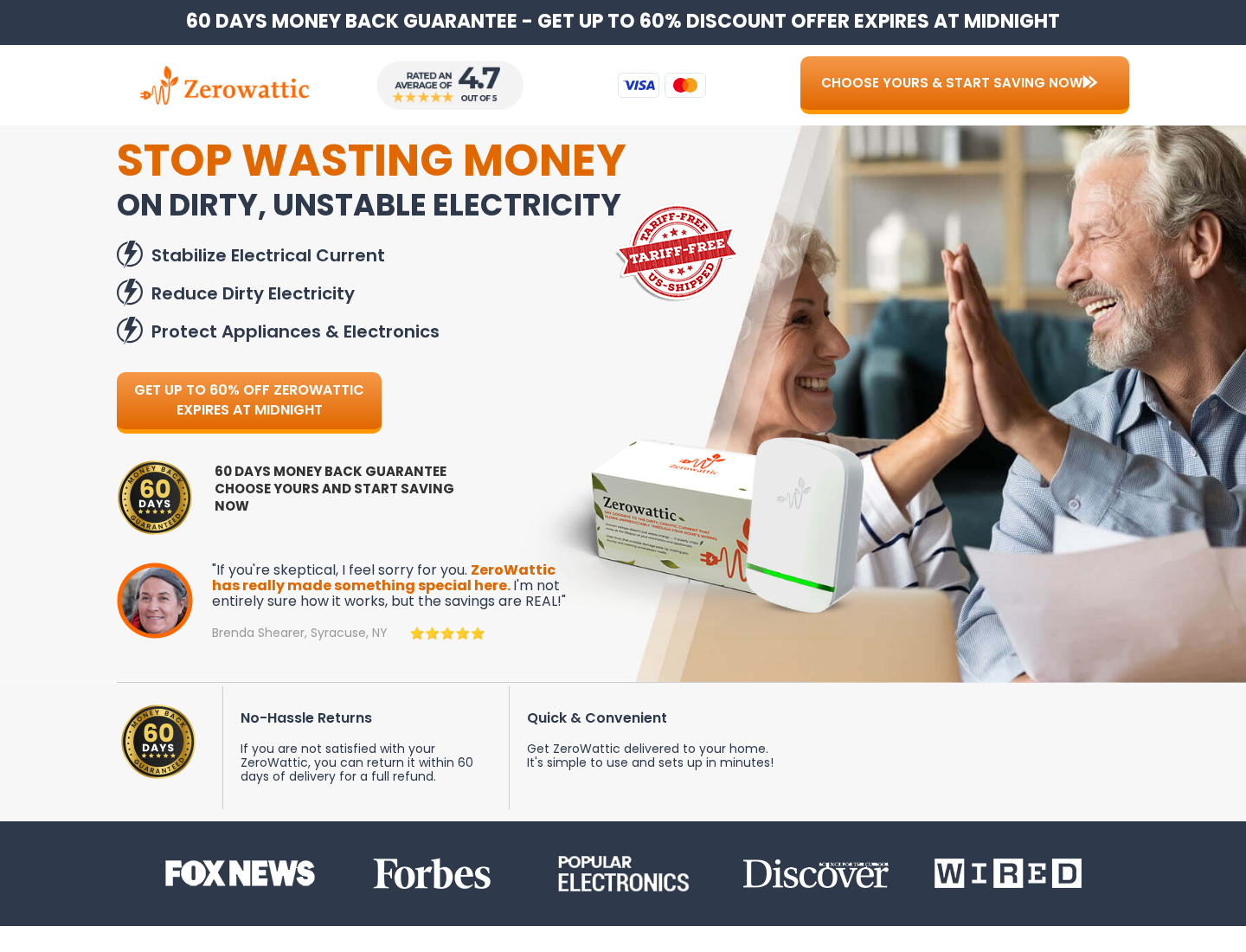
The promotion at easybillfix.com goes beyond general power management. It promises dramatically lower energy consumption and presents customer stories describing substantial monthly savings.
Another ZeroWattic-branded storefront, zerowatticstore.com, uses similar environmental and electricity-stabilization language. The shared product name should not make shoppers overlook differences in seller contacts.
The missing link between electrical jargon and your bill
Technical language does much of the selling. Capacitors, reactive power compensation, harmonic waves, and electromagnetic fields appear alongside reassuring pictures of a tidy white device.
But an improvement in power factor is not automatically a reduction in the real energy a household pays for. That distinction is the central purchasing issue.
Neither a glowing indicator nor a page of testimonials demonstrates that this particular unit makes your refrigerator, heater, or washing machine consume less billable energy.
What deserves your attention before paying
- The advertised 60-day return window sits beside instructions to allow six to eight weeks for results.
- The easybillfix promotion lists support@langleyretail.com, while the other store names First Selection Inc. and a different support address.
- Claims about electricity savings need controlled measurements, not readings that show only a change in current.
- Nothing in these observations establishes that every ZeroWattic order includes a subscription or that every purchaser receives the same offer.
Our buying recommendation is straightforward: do not buy ZeroWattic to lower your household electricity bill. The advertised explanation does not justify that expectation.
Why Power Factor Is Not the Same as Energy Savings
Most people reasonably assume that a device drawing less current must cost less to run. Electricity billing makes that shortcut unreliable.
Current, measured in amps, describes electrical flow. A typical residential bill primarily charges for real energy consumed over time, measured in kilowatt-hours.
Capacitor-based correction can reduce current drawn from the supply while changing the relationship between current and voltage. The appliance’s useful energy demand can remain essentially unchanged.
NIST explains this distinction in its guidance on power-factor correction devices. The conclusion concerns the technology, not a laboratory test of ZeroWattic.
Some commercial customers have tariffs affected by demand or power factor. That is a different situation from an ordinary homeowner buying a plug-in box online.
Picture a refrigerator keeping the same food at the same temperature. Altering a meter demonstration’s amp reading does not necessarily reduce the energy needed for that work.
A convincing household savings claim would show properly measured kilowatt-hours under comparable conditions, with the exact device identified and other changes controlled.
Seasonal temperature, a different utility rate, fewer days in the billing period, or an appliance used less often can all change a bill.
That is why an enthusiastic testimonial about a cheaper month cannot isolate what the box contributed. The result needs a fair comparison.
How the ZeroWattic Sales Funnel Works
Step 1: A familiar money worry becomes a wiring problem
The easybillfix page begins with the idea that households are wasting money on unstable electricity. This shifts attention from measurable appliance consumption to an invisible problem.
The promised solution requires little effort. Instead of replacing equipment or changing heating habits, you are invited to plug something in and continue as before.
That convenience matters emotionally. Someone already stretching a budget may find a one-time gadget purchase easier to consider than another list of household cutbacks.
However, the offer still needs to explain how its proposed electrical change reduces charges under your actual utility tariff.
Step 2: Technical terms make the promise sound established
The page describes capacitors, stabilization, and filtering. These are presented as a bridge between the device’s presence in an outlet and the promised financial benefit.
There is a crucial question missing from that bridge: which measured quantity falls, by how much, and does your electricity provider charge for it?
A reference to reactive power does not answer that. Nor does a broad claim that appliances will last longer establish a household savings figure.
Shoppers should expect model-specific testing and a clear explanation of the test conditions, especially when a promise applies across many different homes.
Step 3: Discounts and social proof encourage the purchase
The offer displays up to 60% off and says the promotion expires at midnight. It also presents ratings, testimonials, and familiar media logos.
Those elements can make a purchase feel both popular and time-sensitive. They do not replace a test of the device’s energy-saving performance.
A displayed logo is not, by itself, a product endorsement from the named publication. A star graphic is not automatically an independently maintained review score.
Before considering any order, read the total quantity and full amount due. A lower per-unit price can mean a higher overall purchase.
Step 4: The green indicator becomes reassurance while time passes
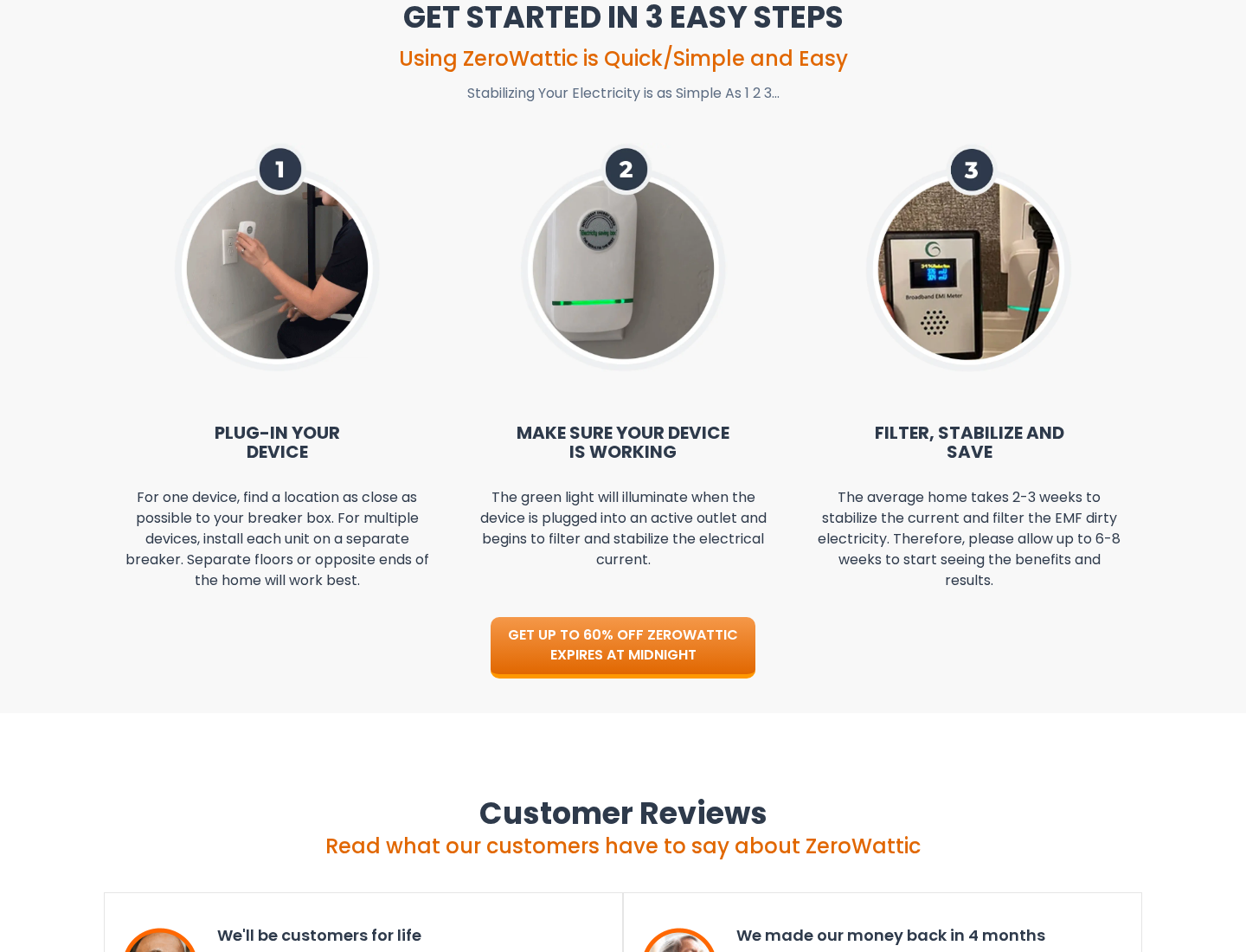
The instructions say a green light shows the device working. They also tell buyers to allow as long as six to eight weeks for benefits.
A light can indicate that a unit has power. It cannot show how much money you saved or whether your household used fewer kilowatt-hours.
Eight weeks is 56 days. Against a 60-day guarantee, that leaves very little breathing room if both periods begin together.
The page specifically advertises returns within 60 days of delivery. Buyers should obtain written confirmation of their own deadline rather than wait for another billing cycle.
ZeroWattic Seller, Contact, and Return Checks
The same product name leads to different business details
The zerowatticstore.com footer identifies First Selection Inc. Its public contact details include support@zerowatticstore.com and (833) 493-7123.
The easybillfix offer instead provides support@langleyretail.com and carries a LangleyRetail copyright notice. Those details matter when deciding where to send an order complaint.
Do not assume a support team attached to one page is responsible for a purchase made through another. Start with your receipt and payment descriptor.
These published names do not independently establish the factory, every reseller’s relationship, or a single legal operator behind all pages carrying the ZeroWattic name.
A shipping claim is not a verified manufacturing address
The easybillfix promotion describes delivery from the USA. That is a claim about the offer’s shipping presentation, not proof of where the device was manufactured.
A package’s return label may identify a logistics company. It does not necessarily identify the business that took payment or designed the product.
Before returning anything, request the complete authorized destination. Sending a parcel to an address found elsewhere online can leave you without a recognized return.
Get the guarantee in writing while the clock is running
A refund promise should explain its start date, required authorization, postage responsibility, excluded costs, and the time allowed for returning the unit.
At zerowatticstore.com, footer labels for terms, privacy, and contact pointed back to the same page rather than providing separate policy destinations.
That makes a written response especially useful. Ask the actual seller which conditions cover your order, and retain its answer with the purchase confirmation.
No test call or refund request was made for this article. A published number is a contact route, not evidence that support resolves complaints.
Match safety claims to the exact electrical model
A mains-powered product should have traceable model information and appropriate electrical safety documentation. Marketing assurances alone do not authenticate a certification.
Ask for the manufacturer, model number, operating voltage, and a verifiable certification record corresponding to that model. A similar-looking device’s listing is not enough.
Do not open the housing to inspect components. If the unit becomes hot, smells unusual, sparks, or appears damaged, stop using it safely.
The article does not establish that ZeroWattic is electrically unsafe. The recommendation against buying it rests on the unsupported household savings proposition.
Are Hidden Monthly Charges Part of This Offer?
Some online discussions associate energy-saving gadgets with recurring memberships. That is a separate allegation from whether a capacitor-type device reduces a residential bill.
A $49.99 monthly charge should not be attributed to every ZeroWattic order without the applicable checkout agreement, receipt, or account record.
The pages examined here do not establish a universal refill or membership arrangement. Do not let an unsupported subscription accusation distract from the documented marketing problem.
If you have already paid, inspect your own confirmation for optional services, trial periods, renewal dates, and separately billed add-ons.
A return of the physical device and cancellation of a separate membership are different requests. If both exist, ask for written confirmation covering each.
Never post your full statement publicly to ask about a descriptor. Share only the merchant label, date, and necessary redacted details with your payment provider.
What to Do If You Ordered ZeroWattic
-
Find the seller attached to your payment. Save the order email, invoice, payment descriptor, quantity, delivery date, and the page that advertised your guarantee.
Use those records to identify the responsible merchant. Another ZeroWattic-branded site may have different contacts or terms.
-
Request cancellation promptly if it has not shipped. Send a dated written request with the order number. Ask for confirmation that dispatch has stopped.
If shipping already began, request return instructions instead. Do not assume refusing a delivery automatically cancels a payment or satisfies the refund conditions.
-
Start a refund request before the deadline. Explain that you are invoking the advertised guarantee. Ask for authorization, the full return address, and any deductions.
Keep the message timestamp. Do not agree to wait beyond your deadline because another month is supposedly needed for electrical filtering.
-
Document the unit without dismantling it. Photograph the package, model markings, supplied instructions, condition, and anything different from the order description.
If returning it, use the authorized route and retain tracking plus proof of postage. Photograph the packed contents before sealing the parcel.
-
Ask your payment provider about an unresolved charge. Describe the actual issue, such as non-delivery, a refused advertised guarantee, or merchandise materially different from the description.
Provide the seller’s response and dated records. Dispute rules and deadlines vary, so do not wait for repeated promises before asking about your options.
-
Check for further billing separately. Review subsequent statements. Report any genuinely unauthorized payment, and request cancellation of any service you did not intend to keep.
Your bank can advise whether a card replacement or merchant payment block is appropriate. A replacement alone may not cancel an agreed recurring service.
-
Redirect the savings effort toward measurable consumption. Check your utility’s energy-usage tools, compare billing periods, and identify large loads before buying another savings gadget.
Ask a qualified electrician about genuine wiring or voltage concerns. Do not rely on a plug-in product to repair a fault or replace protective equipment.
A More Useful Way to Judge an Electricity-Saving Claim
Start with the bill rather than the advertisement. Note the kilowatt-hours consumed, the number of billing days, and the rate charged for each unit.
A smaller payment may reflect a tariff change or credit. Lower consumption can reflect milder weather, travel, or different use of heating and cooling.
For a device making a broad savings promise, ask what was measured and what stayed constant. Comparisons without those details are easy to misread.
A credible test should also account for the product’s own consumption. A box connected continuously is another electrical load, even if a small one.
You do not need to become an electrical engineer to decline an unsupported offer. The seller asking for your money should supply convincing evidence.
Frequently Asked Questions
Does ZeroWattic really lower electricity bills?
The examined offers do not provide convincing independent evidence of meaningful household savings. Power-factor correction alone generally does not reduce a typical residential energy bill.
Is ZeroWattic a scam or a real device?
A physical device is advertised for sale. The concern is its savings marketing, not proof that every order is fraudulent or that nothing is delivered.
Does the green light prove it works?
No. An illuminated indicator does not measure reduced kilowatt-hours, confirm a lower bill, or authenticate the product’s safety claims.
Is ZeroWattic linked to a monthly subscription?
A universal subscription was not established. Check the receipt and actual checkout terms for your purchase, then challenge any unauthorized recurring charge promptly.
Why does the six-to-eight-week waiting period matter?
Eight weeks nearly consumes a 60-day guarantee. Confirm the return deadline immediately instead of allowing promised results to push you outside the advertised window.
Should I buy several units for a larger house?
No. Buying more units does not solve the missing evidence for residential bill savings. Keep the money for measures that reduce actual energy consumption.
The Bottom Line
Do not buy ZeroWattic expecting cheaper household electricity. The sales pitch confuses impressive electrical terminology with a demonstrated reduction in what your utility charges.
If you already ordered, identify your seller, preserve the guarantee, and request cancellation or a refund promptly. Do not let the waiting instructions consume your return window.

Join the discussion
0 commentsShare your experience or ask a question about this article.
Discussion
Start the conversation
Have a question or something useful to share? Add the first comment.