


When your body doesn’t recover the way it used to, the idea of restoring its younger healing ability can feel deeply personal. That’s the appeal behind Cell Factors.
EdgeMedX presents the treatment in the language of regeneration and renewal. Before booking anything, it’s worth slowing down at the claims that sound most reassuring.
Overview
What Cell Factors is being offered as
The EdgeMedX patient website describes Cell Factors as a preparation of proteins, growth factors, and cytokines derived from placental tissue.
It promotes the material through a regenerative-medicine story: biological messages associated with youth could help restore the body’s ability to repair itself.
References to injections and systemic delivery make this more than a wellness slogan. A patient considering treatment needs medical evidence, product traceability, and meaningful consent.
The strongest claims deserve the closest attention
The site estimates Cell Factors could be up to 1,000 times more potent than treatments such as platelet-rich plasma, commonly called PRP.
Other passages discuss healing, rejuvenation, and reduced rejection risk. Those promises reach well beyond saying that scientists are interested in how cells communicate.
A biological explanation can make a treatment sound plausible. It doesn’t tell a patient how reliably that exact preparation helps a particular condition.
The site’s own safety and approval language raises questions
One FAQ acknowledges that Cell Factors isn’t FDA-approved for general therapeutic applications. It also describes mild reactions and ongoing long-term safety evaluation.
Elsewhere, an answer about side effects says none are known. A patient should receive one coherent explanation, not reassurance that changes between sections.
- The stated potency comparison needs a defined measurement and relevant clinical evidence.
- Reported patient experience isn’t interchangeable with a controlled study.
- A claim about reduced rejection risk doesn’t cover every possible adverse reaction.
- A clinic’s availability, training certificate, or website disclaimer cannot substitute for product-specific regulatory clarification.
Why the “Younger Healing” Story Feels So Convincing
It’s easy to remember recovering quickly years ago and wonder whether something important has been lost. The website builds its explanation around that familiar feeling.
Terms such as growth factors and cellular messages give the story a scientific vocabulary. Readers may recognize the words without knowing how a clinical claim is tested.
There is a crucial gap between explaining a possible biological mechanism and showing a worthwhile outcome in people receiving a particular treatment.
For someone with persistent pain, for example, the important questions concern function, symptoms, durability, alternatives, and adverse events. A molecular illustration doesn’t provide those answers.
Nor does a broad promise of renewal establish that a preparation works equally well across joints, athletic recovery, appearance, and age-related concerns.
Each proposed use needs its own justification. Evidence for one condition, preparation, or route of administration cannot simply be transferred to every other use.
How the Cell Factors Treatment Pitch Develops
Step 1: A broad recovery promise draws the reader in
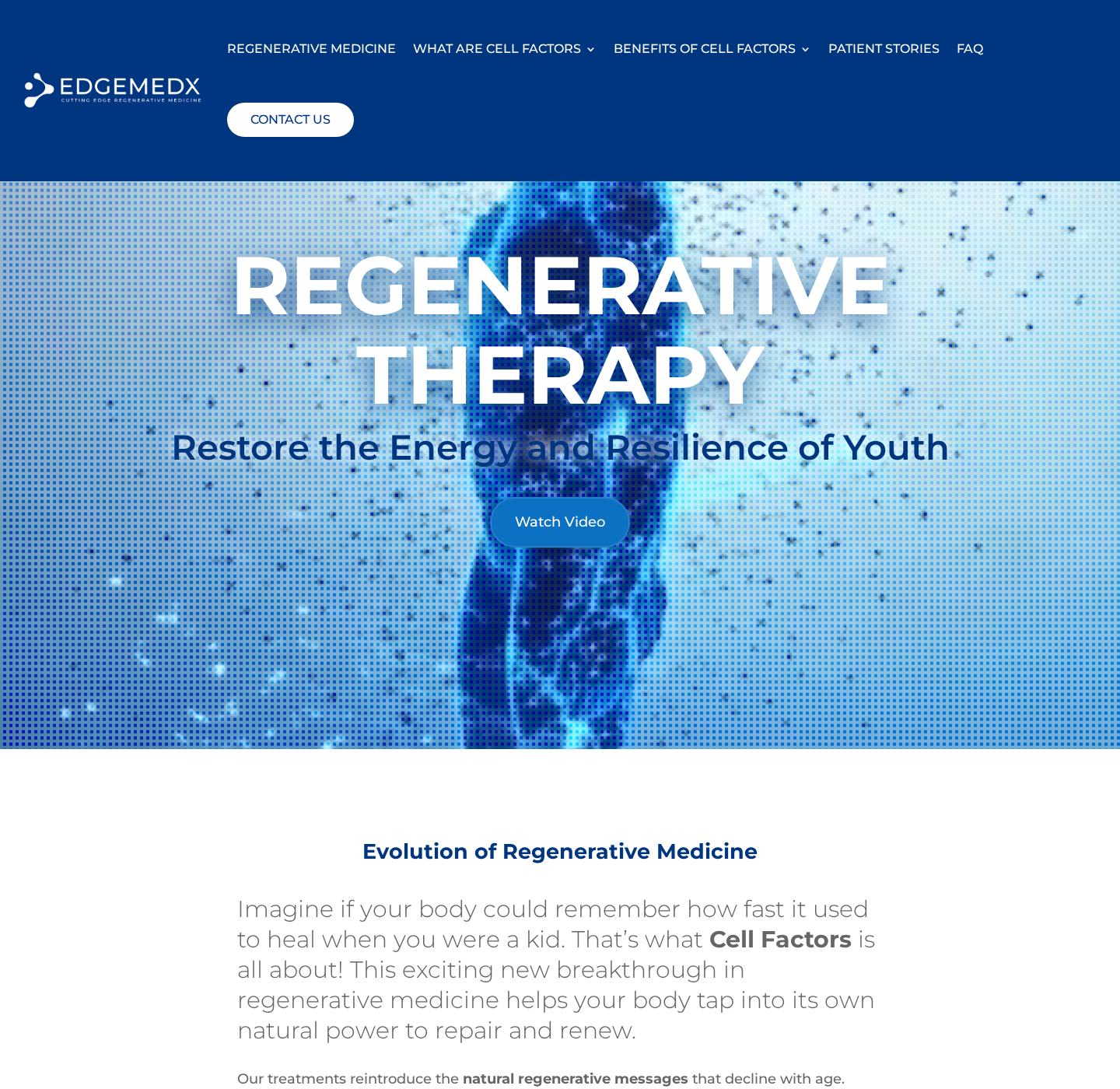
The patient-facing homepage opens with regenerative therapy and the possibility of restoring youthful energy and resilience. It introduces a hopeful destination before the technical questions.
This isn’t proof that every person interested in the treatment has been deceived. It explains why someone may become emotionally invested before discussing the particulars.
A useful first pause is to name your actual goal. “Feel younger” is too broad to judge against a clinical result or an informed-consent document.
Being able to climb stairs, sleep without pain, or return to a specific activity creates a more concrete discussion with an independent clinician.
Step 2: Placental-derived components supply the scientific explanation
The product explanation says placental tissue is placed in a bioreactor and produces a concentrated mixture of biological factors. That’s the website’s description of production.
It then connects those factors to repairing the surrounding cellular environment. Readers are invited to see the preparation as supplying messages the body has lost.
But a proposed mechanism leaves practical questions unanswered: which components are present, at what amounts, how consistently, and with what demonstrated outcome for the intended patient?
Those questions shouldn’t disappear because the explanation feels natural. Biologically active material still needs appropriate quality controls and a sound basis for the use being proposed.
Step 3: Potency and safety language reduce hesitation
The “up to 1,000 times” comparison is especially attention-grabbing. Without a defined endpoint, however, a patient can’t tell what is supposedly being multiplied.
Is it a laboratory concentration, a measured biological signal, or a clinical improvement? Those are very different claims, with very different implications.
The public explanation doesn’t give the reader a clear, independently verified clinical comparison demonstrating a thousandfold improvement in patient outcomes.
The safety argument also emphasizes an absence of whole cells or DNA. Even if a particular risk is reduced, that doesn’t settle all risks of preparation or administration.
The relevant discussion needs to include the actual product, route, patient, possible reactions, and remaining uncertainties. “The body won’t reject it” is not a complete consent conversation.
Step 4: The treatment decision moves to a provider
The broader EdgeMedX network promotes provider education, ordering, and patient acquisition. A reader may therefore encounter the same treatment story through a local practice.
A nearby clinic and a familiar clinician can make the offer feel more settled. Nevertheless, the clinic still needs to explain precisely what it proposes to administer.
Ask for the exact preparation and supporting evidence before agreeing to a procedure or paying a package price. Brand familiarity isn’t enough to identify a vial.
The public material doesn’t establish a universal price or automatic billing plan. Don’t assume a refill trap, but do obtain the specific provider’s written financial terms.

What the Approval and Safety Statements Actually Tell You
Availability is not the same as FDA approval
The website’s FAQ distinguishes legal availability for clinical or research settings from FDA approval for general therapeutic applications. Those phrases should not be collapsed into “FDA-approved treatment.”
The FDA’s patient information on regenerative medicine explains why regulatory status matters when products are offered for treating disease or other medical conditions.
Its guidance also warns against treating a registered company or a listing on a trial website as equivalent to approval. The actual product and use matter.
This is general FDA guidance, not a warning letter naming EdgeMedX or Cell Factors. It doesn’t establish that this particular preparation caused an injury.
A claimed case count doesn’t explain how well treatment works
The patient FAQ refers to 10,000 cases and positive results. That is the seller’s account, not an independently verified clinical trial described here.
A case total doesn’t reveal how patients were selected, which conditions they had, what else they received, or how improvements and complications were measured.
A controlled study tries to answer a harder question: did the intervention produce a useful benefit beyond what would otherwise have happened?
Patients shouldn’t have to guess whether a large number refers to treatments, unique individuals, follow-up records, or published research. Ask for the actual study, not another testimonial.
The side-effect answers don’t tell the same story
One answer on the homepage acknowledges generally mild reactions, including temporary injection-site problems, and says long-term safety assessment continues.
A later answer states that no side effects are known. Read together, those statements leave a patient without a consistent summary of risk.
The more reassuring answer shouldn’t erase the other one. Request a written explanation that covers known reactions, uncertainties, contraindications, and whom to contact after treatment.
Don’t interpret this inconsistency as proof that every recipient will be harmed. The concern is that consent requires clearer information than these mixed assurances provide.
Cell Factors Provider, Company, Contact, and Product Checks
Separate the website operator from the clinician treating you
The patient website’s terms name EdgeMedX, LLC. The provider you consult, however, may have a different legal name and separate responsibility for your care.
Your consent form, invoice, clinician’s professional details, and product paperwork should make those roles understandable. A logo shared across documents doesn’t explain who performed each task.
Identify who assesses suitability, supplies the preparation, administers it, receives payment, and handles complications. You need those answers before the appointment, not after a concern arises.
The Denver contact address doesn’t identify every treatment location
The patient site lists 4800 Dahlia St., Suite #3, Denver, CO 80216-3121. That is a published contact address, not an independently established manufacturing location.
It also doesn’t tell you where a particular patient’s procedure takes place. Check the actual clinic and the professional responsible for that proposed treatment.
A shared suite number or out-of-state contact isn’t enough to label an address fake. The useful question is whether each location’s function is explained.
Get a clinical contact, not just a general inquiry channel
The public contact information includes (720) 770-7070 and askmeanything@edgemedx.com. These are published details; no call or email response was tested for this article.
A general brand contact isn’t a substitute for your treating clinician’s aftercare arrangements. Ask who handles urgent concerns, routine follow-up, and requests for your medical records.
Financial questions need a named contact too. Confirm the cancellation deadline and any deposit conditions in writing rather than relying on a consultation’s friendly tone.
Trace the actual preparation and the evidence behind its proposed use
Request the manufacturer or supplier, product identity, lot information, and relevant quality documentation through the clinician. General descriptions of placental tissue don’t identify an individual batch.
Ask what evidence supports the precise condition, preparation, and route being proposed. A different regenerative product’s study may not answer your question.
If treatment is described as research, ask for the study documentation and applicable regulatory oversight. A training certificate for a provider doesn’t answer that question by itself.
Don’t try to assess sterility or clinical suitability from a website photograph. Those require appropriate documentation and professional review, not a consumer’s visual guess.
Before Paying for a Treatment Package
A consultation can become difficult to evaluate when several promises arrive together: better recovery, renewed energy, reassurance about safety, and a suggested course of treatments.
Break the proposal into medical and financial decisions. First establish whether the intervention is appropriate. Then examine what the provider is asking you to purchase.
Get an itemized price showing consultation, preparation, administration, follow-up, and any proposed repeat procedures. Ask which charges remain if you decide not to proceed.
Do not sign treatment financing simply because a limited appointment slot creates urgency. A repayment agreement can outlast both the appointment and your confidence in the offer.
Public website terms aren’t a substitute for the clinic’s treatment consent or cancellation agreement. Read the documents that actually govern the service offered to you.
A useful independent opinion should come from a licensed clinician who isn’t selling you this preparation. Bring the claims and paperwork, not just the product name.
What to Do If You Paid for or Received Cell Factors
-
Pause further elective purchases while you get independent advice. Don’t pay for additional treatments simply because a package is presented as necessary to protect your initial investment.
Continue prescribed care unless your treating healthcare professional advises otherwise. This article isn’t a diagnosis or an instruction to discontinue medication.
-
Seek prompt medical attention for concerning symptoms. Trouble breathing, significant swelling, fever, or worsening symptoms after a procedure deserve professional assessment, not reassurance from a sales message.
For an emergency, use local emergency services. Tell the clinician exactly what you received and when, even if you’re still waiting for complete paperwork.
-
Request your treatment records and product details. Ask the provider for the preparation’s name, manufacturer or supplier, lot, administration record, consent form, and any relevant aftercare instructions.
Keep the invoice and appointment timeline alongside them. These records help another clinician assess the situation and distinguish your actual treatment from general brand advertising.
-
Arrange an independent clinical review. Discuss the proposed or completed treatment with an appropriately qualified professional who has no financial stake in selling you more of it.
Ask about the evidence for your condition, follow-up needs, reasonable alternatives, and any interaction with your existing care. Request explanations in language you understand.
-
Ask the provider to clarify regulatory statements in writing. If you were told the treatment was approved, request the exact product approval and intended use being referenced.
If it was presented as research, request the study and oversight details. Preserve advertisements or messages that differ materially from the explanation you receive.
-
Address billing through the actual provider or merchant. Request cancellation of unperformed services under the written terms, and identify any deposits, financing obligations, or disputed charges separately.
Contact your card issuer or lender promptly about a genuine billing dispute and applicable deadlines. Neither a complaint nor disappointment automatically guarantees reimbursement.
-
Report suspected adverse events through official channels. In the US, the FDA’s MedWatch program accepts safety reports. A report supports monitoring; it doesn’t establish the cause of an individual illness.
You can also contact the relevant professional licensing authority about concerns involving clinical conduct. Keep the account factual and attach the records you have.
Frequently Asked Questions
Is Cell Factors FDA-approved for general therapeutic use?
The patient website’s own FAQ says it isn’t FDA-approved for general therapeutic applications. Ask the clinician to explain the precise regulatory basis for the proposed use.
Does the FDA guidance specifically accuse EdgeMedX of harming patients?
No. The FDA information discussed here is general patient guidance. It should not be represented as a product-specific enforcement finding against EdgeMedX.
Does “1,000 times more potent” mean treatment works 1,000 times better?
Not from the public explanation provided. A potency comparison needs a defined measurement; it doesn’t automatically establish a corresponding improvement in symptoms or function.
Can the absence of whole cells guarantee there are no side effects?
No. A claim about particular components doesn’t resolve every risk. The website itself mentions mild reactions and ongoing assessment of long-term safety.
Is there evidence of a mandatory refill subscription?
The inspected public material doesn’t establish automatic refills or a universal billing arrangement. Obtain the specific clinic’s itemized pricing, cancellation terms, and any financing agreement.
Should I stop my existing treatment to try Cell Factors?
Don’t stop prescribed care based on promotional claims. Take the proposal to an independent, licensed clinician before changing treatment or paying for an elective procedure.
The Bottom Line
Do not buy Cell Factors as a proven anti-aging or healing treatment on these promotional assurances. The potency claim and conflicting safety answers don’t justify that confidence.
If you’ve already paid, obtain the records and cancellation terms. Before proceeding, get an independent clinical opinion and a clear explanation of the product’s regulatory status.
If you’ve received treatment and feel unwell, medical care comes first. Save the product and procedure details so the clinician assessing you has something concrete to work with.

Join the discussion
0 commentsShare your experience or ask a question about this article.
Discussion
Start the conversation
Have a question or something useful to share? Add the first comment.