

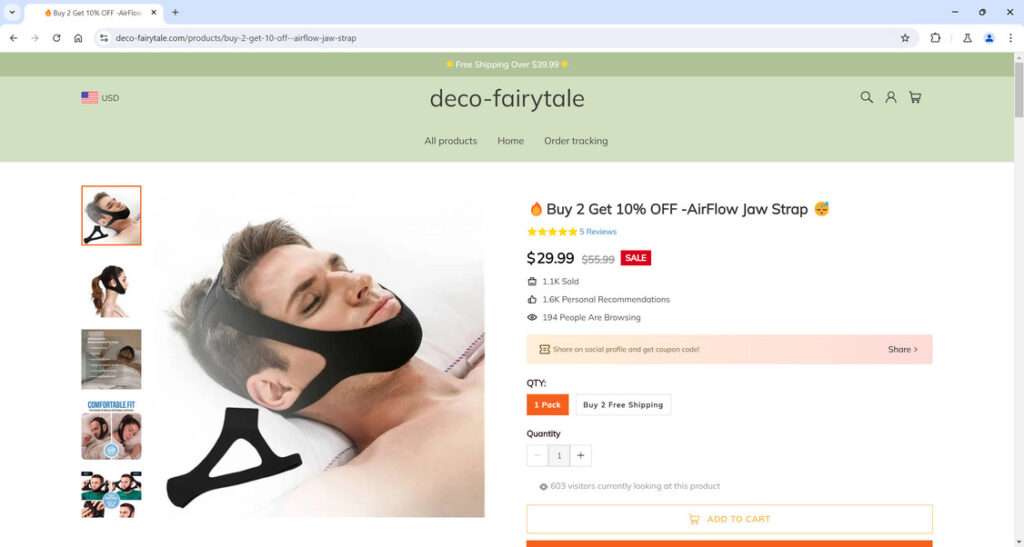
You’ve probably seen an ad that says “Goodbye to sleep apnea and hello to restorative sleep with the AirFlow Jaw Strap. Regain your energy and health. Discover the amazing solution that changes your life.” The ad makes big promises about fixing sleep apnea, improving your jawline and breathing better at night. It’s designed to create a sense of urgency and FOMO.
But is the AirFlow Jaw Strap just a scam? Or does it really deliver on its claims?
In this in-depth AirFlow Jaw Strap review, we’ll take a close look at the facts to see if this product is worth your money.
After analyzing the hype versus reality, we found some major red flags that indicate the AirFlow Jaw Strap likely does not live up to its bold promises. We recommend proceeding with extreme caution before purchasing this questionable product.
Keep reading our investigation to learn the truth about the AirFlow Jaw Strap and make an informed decision before buying.
AirFlow Jaw Strap Ratings
The AirFlow Jaw Strap website boasts a too-good-to-be-true 5 star rating. At first glance, this seems impressive. But upon closer inspection, there are a few issues:
- No Verifiable Reviews: The 5 star rating appears fake. There’s no way to verify if any real customers provided these reviews.
- No Critical Reviews: All the reviews appear overly positive without any real, detailed critiques. Legitimate products have both positive and negative reviews.
- No Review Details: None of the 5 star reviews contain any details on the customer experience. They provide no specifics on how the AirFlow Jaw Strap performed or improved their sleep apnea or jawline.
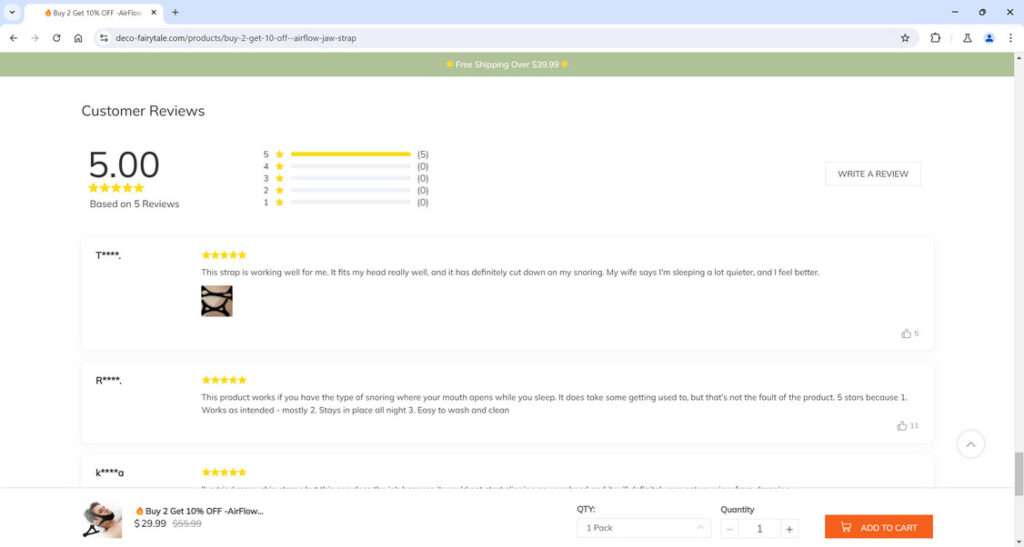
When you see near perfect ratings but no detailed reviews to back them up, it’s a warning sign of fake reviews. Without verified testimonials from real users, there’s no evidence this jaw strap works as advertised.
AirFlow Jaw Strap Reviews
Aside from the questionable reviews on the AirFlow Jaw Strap website, we could not find reviews from any other independent sources. There are no Amazon listings or reviews by influencers and experts in the sleep apnea space.
The lack of independent AirFlow Jaw Strap reviews makes it impossible to get an unbiased opinion on how well it works. When a product is highly effective, other sources beyond the manufacturer’s website will review and recommend it.
This absence of external validation is a red flag indicating the AirFlow Jaw Strap lacks proof that it delivers results. We could not find any reliable data showing this product improves sleep apnea, jawline or nighttime breathing.
AirFlow Jaw Strap Evidence and Side Effects
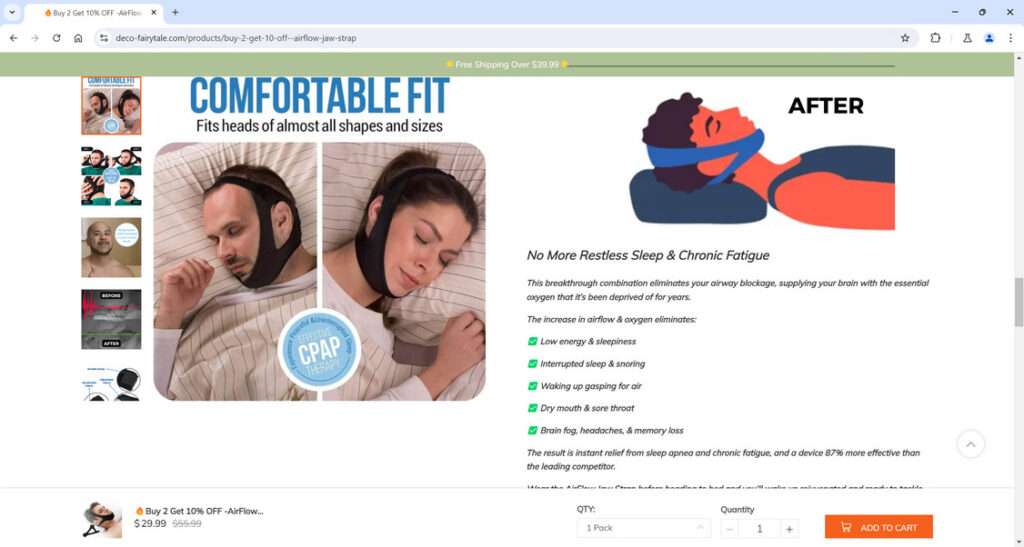
The AirFlow Jaw Strap website makes bold claims about its ability to treat sleep apnea, strengthen jaw muscles and improve breathing. But are these claims backed by scientific proof?
Our research could not find any clinical trials, medical papers or expert analysis supporting the use of jaw straps for sleep apnea.
In fact, the National Library of Medicine published a study in 2014 concluding jaw straps are ineffective:
“A chin strap alone is not an effective treatment for obstructive sleep apnea. It does not improve sleep disordered breathing even in mild obstructive sleep apnea, nor does it improve the apnea hypopnea index in rapid eye movement sleep or supine sleep.”
Without scientific evidence, the jaw strap’s claims of improving sleep apnea and breathing appear unfounded.
There are also concerns over potential side effects from extended jaw strap use:
- Jaw pain
- Tooth grinding
- Facial discomfort
- Skin irritation
According to Healthline, jaw straps can make breathing more difficult and are “definitely not comfortable.” The lack of comfort could impair sleep quality.
AirFlow Jaw Strap Product Images
Another credibility issue comes from the product images on the AirFlow Jaw Strap website. A reverse image search revealed that all of these photos are copied from other sites.
Legitimate brands use unique product photos taken in-house. The use of stock or stolen images is a deceptive practice to avoid showing the real product.
The lack of authentic AirFlow Jaw Strap photos makes it impossible to judge the quality and design. It’s another warning sign that this company lacks integrity.
AirFlow Jaw Strap Customer Service
Quality customer service is crucial when buying a healthcare product online. But the AirFlow Jaw Strap website does not inspire confidence in their support.
Some concerning factors about their customer service:
- No Phone Number – There is no phone number provided to call with questions or product issues.
- No Address – No physical business address is shared either. Anonymous companies are riskier to buy from.
- Vague Return Policy – They claim to offer returns within 14 days but provide no real details on how to process a refund.
- No Live Chat – Many legit sites offer instant live chat for customer issues but this site does not.
The lack of robust customer service makes it unlikely you’ll get support if you run into problems with the AirFlow Jaw Strap. And returns may be difficult based on their vague policies.
AirFlow Jaw Strap Cost
The AirFlow Jaw Strap website does not list their pricing transparently. They offer discounts up to 50% off, but never show the base price.
This sketchy approach makes comparison shopping impossible. It also enables them to show different prices based on factors like location and browsing history.
From the language used, it appears the AirFlow Jaw Strap costs approximately $49 – $99. But without transparent, consistent pricing we cannot confirm an exact price range.
Over $50 is expensive for a basic jaw strap that lacks evidence of medical effectiveness. You can buy jaw straps on Amazon starting around $10.
Our Verdict: Don’t Buy the AirFlow Jaw Strap
Based on our in-depth investigation, we recommend avoiding the AirFlow Jaw Strap. We reached this conclusion due to the following factors:
- Fake looking 5 star reviews
- No reviews from external sources
- Lack of scientific proof for health claims
- Use of stock product photos
- Poor customer service policies
- Vague return details
- Misleading discounts
With so many red flags, we don’t believe purchasing the AirFlow Jaw Strap is a wise investment. You’d likely be much better off working with your doctor to explore proven sleep apnea treatments like CPAP machines or oral appliances.
While the AirFlow Jaw Strap ads sound appealing, our research shows it’s best to save your money. We hope this unbiased review helps you make an informed purchasing decision.
Have you tried the AirFlow Jaw Strap or other similar devices? We’d love to hear about your experience in the comments below!
Frequently Asked Questions About Jaw Straps for Sleep Apnea
Q: Are jaw straps FDA approved?
A: No, jaw straps are not FDA approved to treat sleep apnea. The FDA has not reviewed evidence showing jaw straps effectively improve sleep disordered breathing.
Q: Can jaw straps cure sleep apnea?
A: There is no scientific evidence that jaw straps can cure sleep apnea. At best, they may slightly improve very mild cases temporarily. But for moderate or severe sleep apnea, jaw straps are not an effective treatment.
Q: Are jaw straps safe?
A: When used occasionally they are likely safe, but extended nightly use has risks of tooth damage, jaw pain and facial discomfort. Discuss any concerns with your dentist.
Q: How do jaw straps work?
A: They wrap around the head and chin to hold the jaw forward during sleep. This mechanically opens the airway slightly which may decrease obstruction. But any benefit appears minimal.
Q: Can jaw straps replace CPAP for sleep apnea?
A: No, jaw straps should not replace doctor recommended treatments like CPAP for moderate or severe sleep apnea. There is no proof they adequately improve breathing.
Q: Where can I buy jaw straps for sleep apnea?
A: Basic jaw straps are sold by various online retailers like Amazon and Walmart for around $10-$30. Ensure they have adjustable straps to get the right fit.
Q: Should I use a jaw strap with a mouthguard?
A: You can try using them together, but no studies confirm added benefit. Talk to your dentist to see if combining them may help your specific case. Monitor carefully for side effects.
Q: Can jaw straps help snoring?
A: For some people, jaw straps may slightly reduce snoring. But the evidence is weak. And they’re ineffective at treating underlying breathing issues causing snoring like sleep apnea.
This article is for educational purposes only and does not constitute professional, financial or legal advice. The content is intended for general information and should not be construed as definitive guidance. Information contained herein is subject to change without notice.  For concerns, please contact us via the provided form.
If you are the owner of the website or product in question and wish to offer clarifications regarding your business or website, please reach out to us through the provided Contact Form.

Join the discussion
0 commentsShare your experience or ask a question about this article.
Discussion
Start the conversation
Have a question or something useful to share? Add the first comment.