


A parent sees another parent talking about a better week at home. It sounds like a conversation, not something that belongs in a federal court filing.
The Amare Global FTC case shows why that difference matters. Start with the claims themselves, then look at what the agency actually asked the courts to do.
Overview
Two sets of filings, not two verdicts
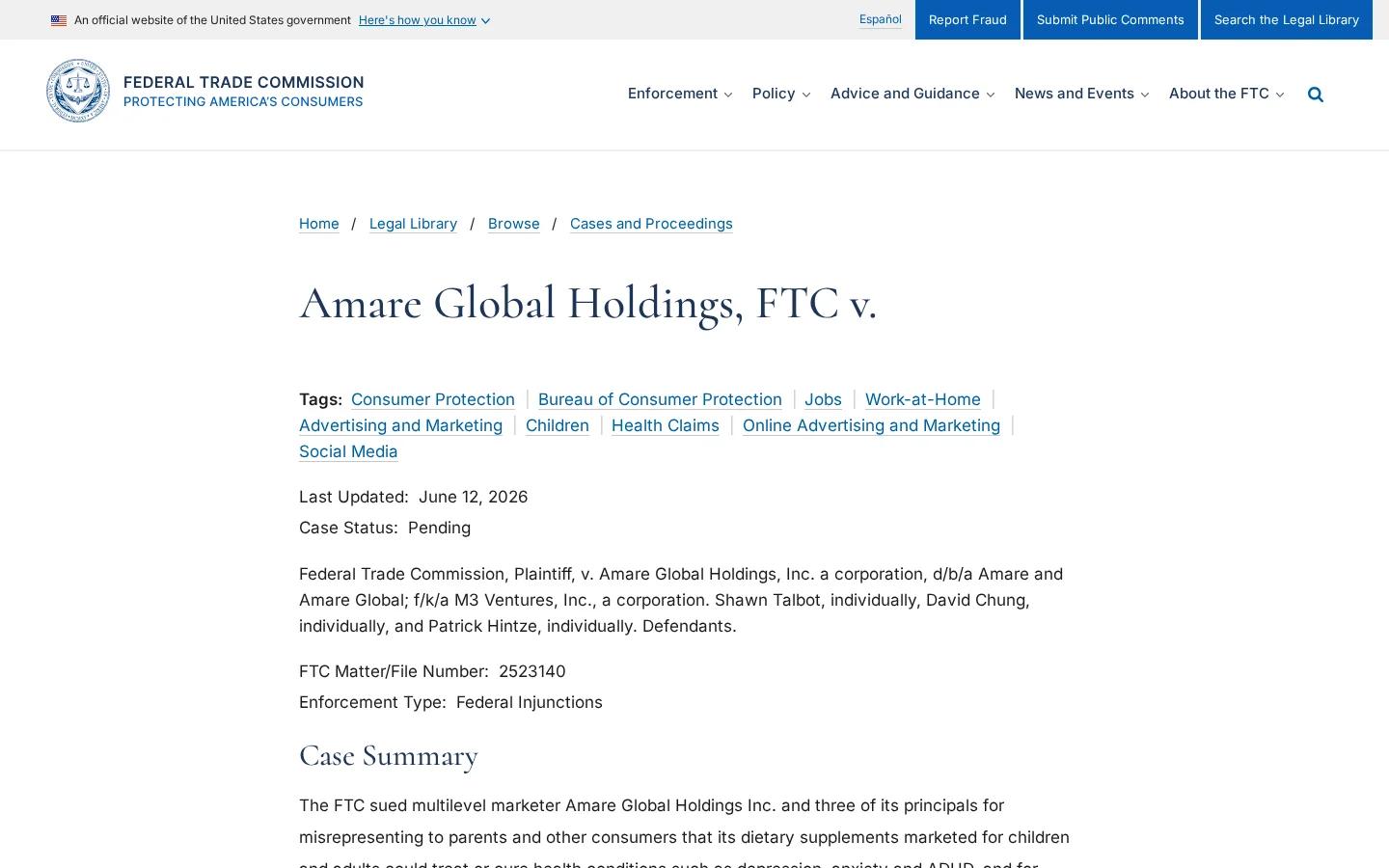
The Federal Trade Commission’s Amare Global case record describes a civil action over marketing supplements and recruiting sellers. The agency lists the case as pending.
The June 2, 2026 complaint names Amare Global Holdings, Shawn Talbott, David Chung and Patrick Hintze. It alleges deceptive health claims and misleading statements about potential earnings.
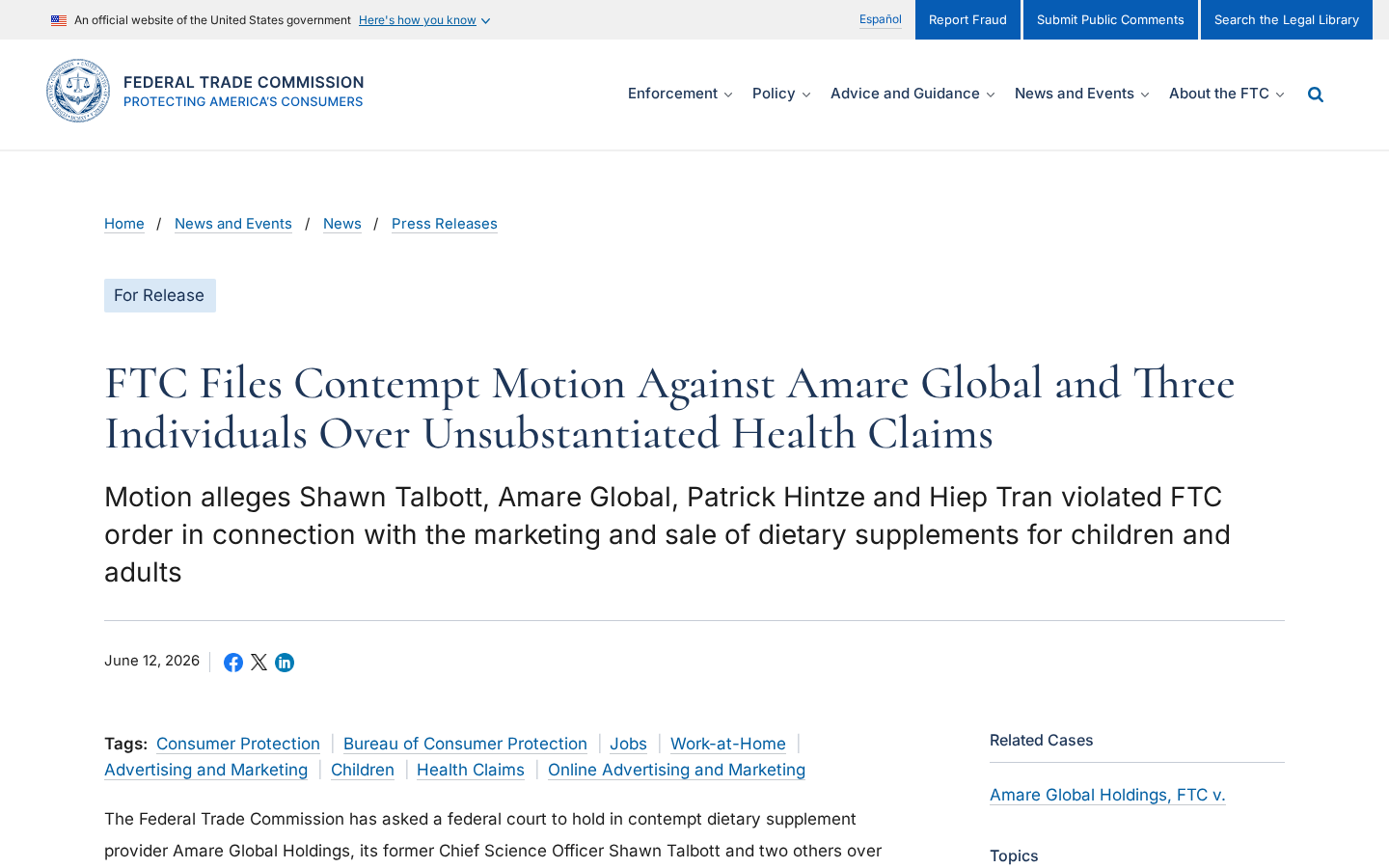
There is also a separate contempt motion tied to an older order from the Window Rock matter. It concerns Amare, Talbott, Hintze and Hiep Tran.
The filings don’t name the same people. Chung is named in the new complaint, while Tran is named in the contempt motion.
That motion asks a court to decide whether an existing order was violated. Filing it does not establish that the court has held anyone in contempt.
Why the FTC focused on the language in the ads
The agency identifies products including Kids Mood+, Kids Happy Juice and the Happy Juice Product Pack. The case is not simply about calling something a wellness drink.
The FTC says promotions presented some of these products as able to treat or lessen conditions such as anxiety, depression and ADHD. Those alleged promises go well beyond everyday wellness.
The agency also challenged advertising about cortisol and neurotransmitters. A word that sounds scientific can make an otherwise unsupported claim feel as if the evidence has already been checked.
Keep these three things in separate columns when you see one of the posts:
- The product: The exact package or combination of products the seller is asking the viewer to order.
- The promise: What the post leads you to expect, including any condition it names or treatment it suggests replacing.
- The evidence: What the seller offers to establish the claim, and whether it actually concerns that product and group of people.
Why the seller’s role matters
Amare’s distributors are known as brand partners. The FTC describes them promoting products through social media and says their posts helped spread the challenged claims.
A person may be sharing their own experience and selling a product at the same time. You need to know both things to understand the message.
The complaint describes a pitch that someone could earn $500 a month as a brand partner. The FTC did not say that was a typical result.
By contrast, the second filing concerns compliance with an earlier order. It asks the court about alleged health advertising violations; it is not another verdict on the income pitch.
How the Amare Global Marketing Claims Reached Buyers
Step 1: The post begins with a situation the viewer recognizes
In one example attached to the FTC’s account, a distributor described changes she said she noticed in her children. The post tied the story to product promotion.
A parent watching may not be thinking about study design. They may be exhausted and listening closely because another person has described a familiar week at home.
That is why it matters whether the post offers reassurance or implies a specific product will treat a condition. The effect of the message is bigger than its opening anecdote.
Read all the way down to the hashtags, links and comments. The FTC describes promotions where the caption supplies a medical implication that is less obvious in the video.
Step 2: A scientific explanation makes the claim feel settled
The brand’s marketing discussed the gut and brain. That is a broad area of research, but it cannot by itself tell you whether a particular mix treats a particular condition.
Ask what the researchers were actually measuring. A different lab result or survey score is not, on its own, proof the product treats a condition.
The FTC disputes how some promotions described research. Its public motion explains why the agency didn’t find the studies adequate to support the claims.
Look for the distinction between an ingredient study and a study of the same finished product. Dose, formulation and the group studied can all make the comparison unreliable.
Be especially careful when a post takes results from adults and suggests the same thing will happen in children. Give the label to your child’s clinician before making that leap.
Step 3: A brand partner makes it easy to move from story to purchase
A link on a social profile can put a purchase one tap away, even when the story itself comes across as a personal update.
The FTC describes an example where it found a purchase route on the same distributor’s profile. The placement is relevant because it connects the health story with a sales opportunity.
Before following the link, capture what the seller promised and the product name. The wording that persuaded you may disappear while the order and charge remain.
A distributor can explain how to order. Talk to your child’s clinician, not a seller in private messages, about whether the supplement is appropriate.
Step 4: Some buyers hear a second pitch about earning money
The agency separately alleges that recruits were led to believe they could make money without a large social following or experience in multilevel marketing.
That promise needs evidence about actual participant results, not a picture of somebody who earned a commission during a good month. Ask what people typically kept after costs.
Consider the time spent creating posts or answering messages, as well as the cash used to buy samples. The earnings number is incomplete if those costs are missing.
Someone can like an Amare product and still have no basis to expect a profit from selling it. Treat the two decisions as separate, even if they arrived together.
What to Do If You Bought Amare Products or Joined as a Brand Partner
- Put health decisions ahead of the order. Speak with your clinician or your child’s clinician about symptoms and supplements. Do not substitute something sold in a video for prescribed treatment.
- Keep the exact bottle, box or label. Photograph both sides, the ingredient panel and the lot number. That is more useful to a clinician than the product name alone.
- Save the advertising claim with its context. Keep the profile name, post date, product link and actual description. A transcript can help if the material is difficult to review later.
- Check what you actually authorized at checkout. Compare the invoice with your statement. If you see a repeat charge, find what you agreed to and how to cancel.
- Request any cancellation or return in writing. Use the merchant details on your receipt. If a charge was unauthorized or the dispute persists, check deadlines with your card issuer.
- Get help if you suspect a reaction. Contact a healthcare professional about your symptoms. You can also report a supplement problem to the FDA.
- Send deceptive advertising concerns to the FTC. Use ReportFraud with the exact claim, product and source. If the issue was an earnings pitch, include your enrollment and sales records.
What to Look for Before Acting on a Health Testimonial
When a post worries you, pause it and write down what the viewer is being told to expect. That helps separate the story from the proposed treatment.
A person can report a real improvement without knowing what caused it. Symptoms can change for many reasons, including changes in routine or care that are not in the video.
Ask whether the comparison group and the people taking the product received similar care. A good experience is not the same question as whether the product made a measurable difference.
Check which result the post highlights and what the original researchers say. A headline about a change in mood is not necessarily evidence of a lasting effect on depression.
The FTC’s allegations include exaggerated representations of studies. This is why a screenshot containing a journal title cannot be read as a decision about the advertised treatment.
Save any link the seller gives you, but keep the timestamped original post, too. If the claim changes, the paper won’t show how the product was first promoted.
The notes worth bringing to an appointment
If a product has already been used, write down the date you started and how much was taken. Keep the rest of the medicine and supplement list with it.
Bring the exact version you bought if the brand has a children’s and adult product with similar names. The label is better evidence than a picture from a distributor’s profile.
Tell the clinician what you noticed and when. If your concern came from a video, show them the promise it made about the product.
For problems that preceded the purchase, be clear about that too. It helps the clinician understand whether the timeline points to an existing symptom or a possible new reaction.
What the case does not verify about an individual order
The FTC filings do not establish the billing settings for every buyer. They should not be used to state that everyone was subscribed or charged for the same bundle.
What matters for a disputed charge is the actual seller, order and consent record. If a distributor handled the transaction, retain their messages along with the business’s invoice.
The filings concern advertising and recruiting, not laboratory testing of individual shipments. They can’t tell you whether the contents of your package match its label.
A complaint and a refund are separate events. Do not pay anyone who says they can move your name onto an FTC payment list or expedite money for you.
Compare the claim with the product the study actually tested
If a seller mentions a study, get the title and find the full paper rather than relying on a slide. Check who paid for it and who ran it.
Look at the comparison the researchers made. A result measured against a participant’s own starting score does not answer the same question as a controlled comparison.
Check how long the researchers followed participants. A few weeks of follow-up do not tell you what happens if a child takes a product throughout a school term or longer.
One favorable measurement on a chart is not evidence for every benefit in the post. This matters when a seller strings together several very different symptoms.
Let the evidence answer a narrow question before expanding it. Even a study of one named product may not apply to the combination the salesperson recommends.
Help someone back away from a claim without blaming them
If a family member already paid, begin with what they hoped would improve. Calling them gullible is unlikely to make them comfortable showing you the post or receipt.
Offer to look at both together. Put the purchase in one conversation and the care decision in another, especially if they are worried that returning it means giving up.
If someone says they already changed care, help them write down when and what changed. Encourage them to contact the clinician who manages it rather than adjusting it again alone.
As a seller, you may have shared copy from a team lead without independently checking it. Preserve those instructions and stop repeating any claim you cannot support.
If you correct an old post, put the correction where the people who saw the original can find it. Don’t move the claim to private messages.
Frequently Asked Questions
Did the FTC recall Amare Happy Juice?
The FTC materials discussed here are advertising and enforcement filings, not a recall announcement. If you need to check a product warning, use the exact name and lot.
Has Amare Global been held in contempt?
The June filing asks a court to find contempt. It is not evidence that a court granted that request or assessed a particular penalty.
Are Kids Happy Juice and Kids Mood+ the same thing?
They are separately named in the FTC materials. Check the label and receipt for what you purchased instead of relying on a social post that shortens or combines product names.
Did the FTC case cover how much brand partners could make?
The new civil complaint alleges misleading recruiting claims as well as health claims. It does not tell you whether any individual distributor made a profit.
Should I stop treatment because someone recommended a supplement?
Do not stop or switch prescribed treatment based on a seller’s recommendation. Take the product label and any questions to the clinician who manages that care.
Will filing an FTC report get my order refunded?
A report gives the agency information about the claim or sale. It does not guarantee a refund or take the place of asking the merchant or payment provider.
The Bottom Line
Do not buy Amare products to treat depression, anxiety or ADHD based on a distributor’s post. Do not enroll based on a monthly income story either.
If you already bought or joined, save what persuaded you and verify the charges. Bring health questions to a clinician, not the person who earns from your order.

Join the discussion
0 commentsShare your experience or ask a question about this article.
Community experiences
Did this happen to you?
Your experience could help someone recognize the same scam. Submit a private report for our team to review.
I experienced this tooReports are reviewed before publication. Sharing publicly is always your choice.
Discussion
Start the conversation
Have a question or something useful to share? Add the first comment.