

If you are looking for a website that sells various products at affordable prices, you might have come across Amazonitara.com. This online store claims to offer electric bikes, furniture, gazebos, planter boxes and other products. But is Amazonitara.com a scam or a legit website? In this review, we will examine some of the red flags and suspicious aspects of Amazonitara.com that you should be aware of before shopping from it.
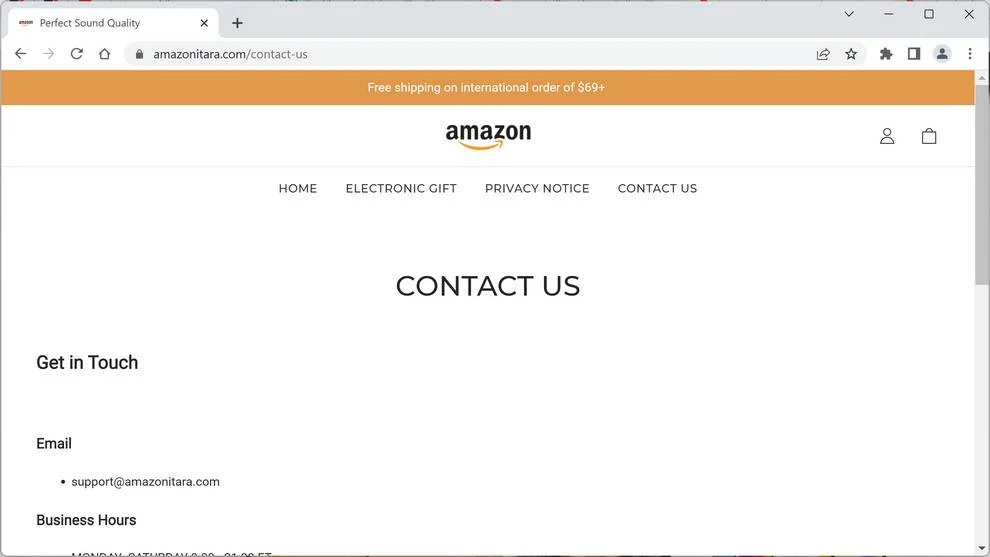
Amazonitara.com Red Flags
Here are some of the reasons why you should avoid Amazonitara.com at all costs:
- Domain
The domain name amazonitara.com was registered on April 29, 2023, which means it is very new and has a short lifespan. This is a common characteristic of scam websites that want to avoid detection and complaints from customers. Moreover, the domain name is similar to Amazon.com, which is a well-known and reputable online retailer. This could be an attempt to confuse or deceive customers who are looking for Amazon products. - Contact Information
The contact information provided by amazonitara.com is very vague and suspicious. The website does not have a physical address or a phone number. The only way to reach them is by email at support@amazonitara.com. However, when we searched for this email address on Google, we found several negative reviews from customers who claimed that they never received their orders or refunds from amazonitara.com.
- Product Quality
The product quality of amazonitara.com is also questionable. The website offers various products such as shower head, frameless wall mirror, home theatre, cabinet storage, etc. at a very low price. However, these products are not original or authentic. They are either counterfeit or poor-quality items that do not match the description or images on the website. Some customers have reported that they received damaged, defective, or wrong products from amazonitara.com. Others have complained that they never received their products at all.
- Customer Reviews
The customer reviews of amazonitara.com are mostly negative and unfavorable. The website does not have any customer feedback section or rating system on its own platform. This means that customers cannot share their opinions or experiences with other potential buyers. The only reviews we could find were on external websites such as planetofreviews.com, where customers have warned others to stay away from amazonitara.com. They have accused the website of being a scam that does not deliver the products or honor the refund policy.
- Refund Policy
The refund policy of amazonitara.com is also very misleading and unfair. The website states that customers can return their products within 14 days of receiving them if they are not satisfied with them. However, this policy is full of loopholes and exceptions that make it almost impossible to get a refund. For example, the website does not cover the return shipping costs, which could be higher than the product price itself. Moreover, the website does not provide a return address or a tracking number for the return package. This means that customers have no proof that they have returned their products and no guarantee that they will get their money back.
Is Amazonitara.com a scam?
Based on the above red flags, we can conclude that Amazonitara.com is a scam website that should be avoided by online shoppers. There is no evidence that Amazonitara.com is a legitimate or reliable website that delivers quality products or services to its customers.
Customers who have shopped from Amazonitara.com have reported that they either did not receive their orders at all or received different or inferior products than what they ordered. They also complained that they could not contact the website for a refund or exchange because the email address provided was invalid or unresponsive.
Therefore, we advise you not to shop from Amazonitara.com or any other similar websites that display the same red flags. You will only risk losing your money and personal information to scammers who do not care about your satisfaction or safety.
What should you do if you have shopped from Amazonitara.com?
- Contact your bank or financial institution: If you have paid with your credit card or debit card, you should contact your bank or financial institution as soon as possible and request them to cancel the transaction and refund your money. You should also report the website as a fraudulent site and ask them to block any future charges from it.
- Change your passwords: If you have created an account on Amazonitara.com or used the same password for other online accounts, you should change your passwords immediately. You should also enable two-factor authentication for your accounts if possible. This will prevent hackers from accessing your accounts and stealing your personal information.
- Beware of phishing emails: You might receive emails from Amazonitara.com or other sources claiming to be related to your order or offering you discounts or refunds. These emails are likely to be phishing attempts that aim to trick you into clicking on malicious links or downloading attachments that can infect your device with malware or steal your information. You should delete these emails and do not open any links or attachments from them.
- Use a browser-based content blocker, like AdGuard : Content blockers help stop malicious ads, Trojans, phishing, and other undesirable content that an antivirus product alone may not stop.
- Scan your device for malware. If you suspect your device is infected with malware, you can run a scan with Malwarebytes Anti-Malware Free.
Amazonitara.com Final Thoughts
In conclusion, Amazonitara.com is a scam website that you should avoid at all costs. It has many red flags that indicate that it is not trustworthy or reliable. It has a fake contact address, a short lifespan, negative customer reviews, no security measures, and stolen content. Do not waste your time or money on this website, as you will likely end up disappointed or scammed.

Reviews & discussion
0 commentsShare a firsthand experience, or ask a question.
Community reviews
amazonitara.com
Moderated reader experiences, not an editorial verdict.
Start the conversation
Have a question or something useful to share? Add the first comment.