

A message asks you to buy Apple Gift Cards and send the codes. The explanation sounds urgent, and the person asking may seem familiar.
Before heading to a store or replying with a photo, look at what those codes would actually let the recipient do.
Overview
The cards are legitimate; the payment instruction is the problem
Apple Gift Card scam messages pressure people to purchase cards and disclose their redemption codes. The request may arrive by text, email, social media, or phone.
A real retail purchase can therefore become part of a fraudulent payment. A genuine card and receipt do not establish that the person requesting them is genuine.
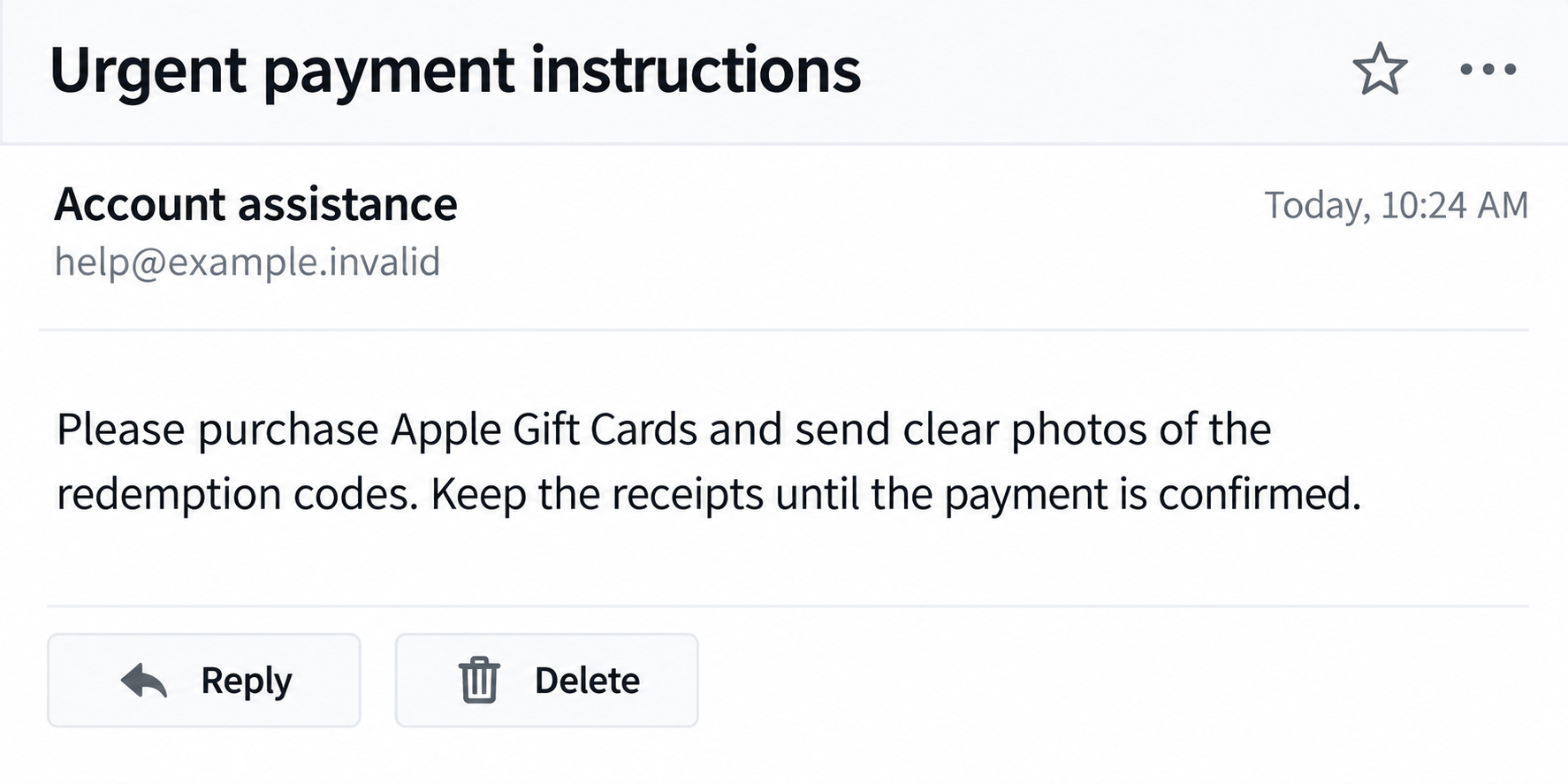
The email image is an invented illustration with an inactive sender address. It shows the suspicious instruction, not an original message or a usable redemption code.
This is different from an advertisement offering a free card. Here, you pay for the card yourself and are persuaded to hand its value to someone else.
Apple cards do not settle unrelated bills or government demands
Apple’s gift card warning explains that its cards are for Apple purchases, not outside bills, taxes, or government fees.
A caller cannot turn one into an approved tax-payment method by describing it as a voucher, electronic deposit, or temporary security measure.
The same concern applies when a supposed support agent says buying cards will protect an account. Spending money on codes is not an account-security procedure.
The deceptive request comes from the impostor. Buying a genuine card at a familiar shop does not mean Apple or the retailer approved that person’s instructions.
The redemption code is the critical handover
You do not have to mail the plastic card for its value to be at risk. A readable code can be enough for someone to use it.
- Do not send a photograph of the back of the card to an unverified contact.
- Do not read codes aloud to settle a bill or escape a threat.
- Independently confirm an unexpected request from a boss, friend, or relative.
- Keep the card and purchase receipt if a suspicious request has already been followed.
If a code was shared, contact Apple through its official support route promptly. Ask what can still be done rather than assuming the balance is already lost.
Why These Requests Can Catch Careful People
The first message often looks like a problem you already know how to solve. A familiar person needs a favor, or an official says payment is overdue.
The unusual payment method arrives later, after you have accepted the basic story. By then, questioning the cards can feel like questioning someone you trust.
That order matters. An impersonator wants you to judge the relationship first and the transaction second, even though the relationship itself has not been verified.
Buying at a recognized store also adds reassurance. The cashier processes a normal sale, which can make the surrounding request feel legitimate.
But the store confirms only that you bought a card. It does not confirm your caller’s identity, supposed emergency, promised reimbursement, or reason for requesting codes.
Pause at the payment method even if the earlier story sounded convincing. It is often the clearest sign that an ordinary conversation has become a financial trap.
How the Apple Gift Card Payment Scam Works
Step 1: Someone borrows a trusted identity or creates an emergency
The contact might claim to be your manager, a relative, a romantic interest, technical support, or someone collecting a supposedly urgent obligation.
Not every request includes a threat. A work-related favor can rely on your willingness to help quickly without bothering a busy person.
Other approaches use fear: an account will close, a service will stop, or an official problem will worsen unless you cooperate immediately.
Check the identity through a route you already know. Do not let the sender establish a new phone number and then use that number to verify themselves.
If the request seems out of character, that matters more than the contact name displayed on the message. Names and photographs can be copied.
Step 2: The person makes buying cards sound like the practical solution
You are told which brand to buy and sometimes how much to load. The explanation may involve a billing problem, unavailable payment system, or promised repayment.
A boss impersonator might call the cards staff gifts. A supposed collector might describe them as an approved payment channel.
Those are different stories, not evidence that all gift requests are scams. The issue is an unverified person directing your money under pressure.
Do not accept an explanation merely because it supplies a reason for the odd method. Ask whether that reason makes sense for the organization supposedly involved.
A government debt does not become payable in Apple codes because a caller uses official language. Nor does a security problem require a retail shopping trip.
Step 3: Instructions keep you moving and limit second opinions
The contact may ask you to stay available while you shop or send updates after each purchase. They can then respond before you reconsider.
If a cashier raises a concern, the caller may tell you to describe the cards as personal gifts. That instruction should stop the transaction.
Being coached to hide the real purpose prevents the retailer from helping you assess the risk. It protects the caller’s story, not your money.
Do not visit another shop merely because the first retailer warned you or imposed a limit. Step away from the conversation and verify the request independently.
Step 4: The caller asks for photographs or the redemption codes
After purchase, the request becomes specific: reveal the code, photograph it clearly, or type it into a chat. This is the key transfer of control.
The plastic card can remain in your possession while someone else uses its value. Keeping the receipt does not prevent a disclosed code from being redeemed.
A claim that the code is needed only for verification does not change what you are exposing. Ask why a supposed collector needs an Apple redemption credential.
Do not send part of a code as a test. Do not send a clearer picture because the recipient says the first one is unreadable.
If you already shared it, contact Apple promptly, even if you do not know whether anyone spent the funds. Do not wait for the caller’s explanation.
Step 5: Another purchase may be requested after the first code
The person might claim that the card failed, the amount was insufficient, or a second payment is needed before the first can be returned.
Some attempts end after one code; others keep asking. Either way, an unexplained demand for another card is a reason to stop, not buy more.
Stop the process rather than trying to correct it through more cards. A new purchase gives the caller additional value without resolving who they are.
Any reimbursement or refund promise should be checked with the real organization through its own channel, not with the person requesting another code.
Do Not Confuse These Different Kinds of Access
A card code is not your Apple Account password
Changing your Apple Account password does not automatically cancel a gift card code you disclosed. They are different credentials with different protective steps.
Likewise, a card scam does not automatically mean your whole Apple Account was compromised. Review whether you also entered a password or approved an account request.
Tell support which of those things actually happened. Clear information helps avoid spending time fixing an account issue while an exposed card still needs attention.
A normal gift is different from paying an impostor
Giving a card to someone you know can be legitimate. The problem is not the existence of a gift, but a deceptive request or unverified recipient.
For an unexpected workplace request, check with the colleague through an established internal channel. For family, contact the person using details you already trusted.
Do not ask the suspicious sender to prove themselves with more personal facts. An impostor may already know enough to keep that conversation convincing.
Keeping the evidence matters more than testing the code
Do not enter a disputed code into a random balance checker. That can expose the same information to another party.
Use Apple’s official guidance and support instead. Keep photographs private, and do not post a full code in a review or public fraud report.
The FTC’s gift card guidance explains why issuer contact and purchase records matter after a scam.
What to Do if You Have Fallen Victim to This Scam
-
Stop sending codes and stop buying more cards.
End the conversation before discussing another payment. Do not pay a cancellation charge or cooperate with a claimed manager who promises to fix the first purchase.
If cards are bought but codes remain private, keep them secure. Ask the retailer and Apple about available options rather than following the sender’s return instructions.
Do not assume ordinary store returns apply to an activated gift card. Explain what happened and ask about the specific card and transaction.
-
Contact Apple through its official gift card support guidance.
Open Apple’s gift card scam page yourself and use its support route. Avoid numbers advertised by an unsolicited recovery contact.
Explain when the cards were purchased and when the codes were disclosed. Have the physical cards or digital purchase records ready.
Ask whether any remaining value can be protected and what information is needed. Available help depends on the circumstances; do not assume a freeze or refund is guaranteed.
-
Keep the cards, receipts, and complete conversation.
Retain the packaging, transaction receipt, purchase location, dates, and amounts. Save the message account or phone details and any supposed payment instructions.
For digital cards, preserve the purchase confirmation and delivery records. Keep copies somewhere the suspicious contact cannot access.
If support requests a code as part of a verified process, use that secure process. Do not send it to someone merely claiming to be support.
-
Tell the retailer and your payment provider what occurred.
The retailer may have an appropriate fraud-reporting process. Provide the transaction reference and explain that the purchase followed a deceptive instruction.
If you used a bank card, contact its issuer and accurately describe the purchase you authorized. Ask what help or review is available.
Do not describe an authorized retail purchase as an unauthorized transaction. The subsequent deception matters, but your provider needs a truthful account to assess it.
-
Verify the impersonated person’s account separately.
If the message claimed to come from your boss or a colleague, alert your workplace through an established channel. Preserve the original message for its security team.
For a relative or friend, contact them directly. Do not blame them solely because their name appeared; an unrelated account may have copied it.
Warn others without circulating redeemable codes. A useful warning identifies the request and verification failure, not sensitive evidence that could cause further loss.
-
Secure any additional information you shared.
If the exchange also captured a password, change it through the actual service and review access. Address any reused credentials on other accounts.
If identity information was disclosed, use IdentityTheft.gov for appropriate US recovery guidance. Code exposure and identity exposure are separate issues.
Do not pay for a generic device scan as if it could cancel a redemption code. The practical priority is card support and any affected financial accounts.
-
Report the scam and reject paid recovery promises.
In the US, make a report through ReportFraud.ftc.gov. Include the impersonated role, contact method, purchased amounts, and payment evidence.
Be cautious if a new contact promises to restore gift card money for an upfront fee. Do not disclose another card code to recover the first.
Continue through the support case you opened yourself. If the incident feels overwhelming, ask someone you trust to help organize the records and follow-up.
Frequently Asked Questions
Can Apple Gift Cards pay a tax bill or utility debt?
No. Apple says its cards are for Apple purchases, not unrelated bills or government fees. Do not follow a caller’s instructions claiming otherwise.
Is sending a photo as risky as reading out the code?
A clear photograph can expose the redemption code. Keeping the physical card does not protect its value once someone else has usable code information.
What if the request appears to come from my manager?
Confirm it through a familiar workplace channel before buying anything. An urgent message with a recognizable name can still come from an impostor.
Should I change my Apple Account password after sharing a card code?
Change it if the account credentials were exposed, but do not mistake that for canceling a card code. Contact Apple about the card separately.
Can I recover the funds if the code was already shared?
Contact Apple promptly and ask what options remain. Keep the card and receipt. The outcome depends on the circumstances, including whether value has been used.
Does buying a legitimate card make the original request safe?
No. The purchase can be genuine while the request is deceptive. Verify the person and purpose before handing over redemption details.
The Bottom Line
Do not follow Apple Gift Card scam messages that demand codes for bills, threats, or an unverified emergency. A redemption code is valuable payment information.
If you already shared one, stop further purchases and contact Apple through its official support guidance. Preserve the cards, receipts, and messages for your case.

Join the discussion
0 commentsShare your experience or ask a question about this article.
Community experiences
Did this happen to you?
Your experience could help someone recognize the same scam. Submit a private report for our team to review.
I experienced this tooReports are reviewed before publication. Sharing publicly is always your choice.
Discussion
Start the conversation
Have a question or something useful to share? Add the first comment.