

Arborahaven is promoting a device that supposedly gives buyers lifetime free global internet with no SIM card, no monthly fees, and no signal dead zones. The offer is being advertised as a one-time purchase, usually around $79, for a small “4K internet” device that can allegedly work almost anywhere.
Based on the product claims, the complaints from buyers, and how mobile hotspot technology actually works, this appears to be a highly misleading offer and likely a dropshipping-style scam.
What Is the Arborahaven Lifetime Free Global 4K Internet Offer?
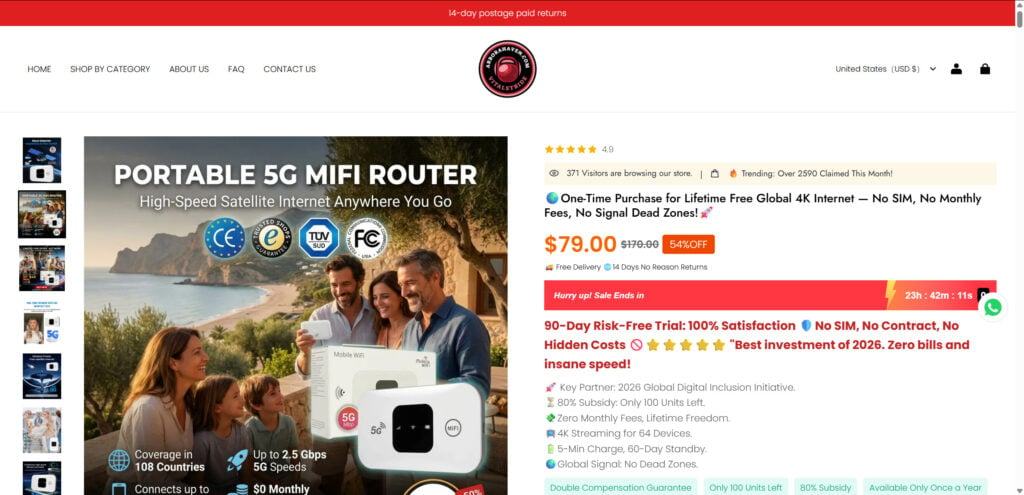
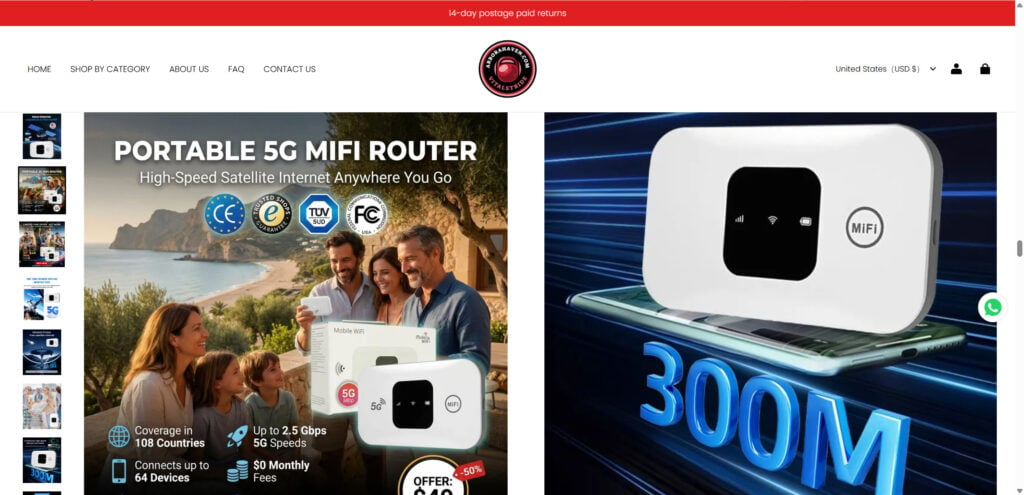
The Arborahaven product page advertises a device under the title “One-Time Purchase for Lifetime Free Global 4K Internet — No SIM, No Monthly Fees, No Signal Dead Zones.” The page lists it at $79, supposedly discounted from $170, and claims “No SIM, No Contract, No Hidden Costs.” It also uses urgency messages such as “Only 100 Units Left,” “80% Subsidy,” and “Available Only Once a Year.”
That is the core hook: buy a small device once, then get internet forever.
The promise sounds attractive because it targets a real frustration. Internet is expensive. Mobile data plans are expensive. Travel roaming is expensive. Many people would love a pocket device that gives them unlimited internet globally without a carrier plan.
But that is exactly why this claim should raise suspicion.
A real mobile hotspot does not magically create internet. It must connect to a cellular network, public Wi-Fi, satellite network, or another internet source. If it uses 4G or 5G, it needs access to a carrier network and a data plan. If it uses satellite, it needs satellite hardware and a paid satellite service. A cheap pocket router cannot bypass telecom infrastructure worldwide for a one-time payment.
The Main Problem: This Is Not How Internet Works
A portable hotspot is usually just a small router. It takes an existing internet connection and shares it over Wi-Fi.
Major carriers explain hotspots the same basic way: a hotspot uses cellular data to connect devices to the internet over Wi-Fi, and standalone hotspot devices connect to cellular towers to provide broadband access. AT&T similarly explains that a hotspot device connects to a cellular network, then allows other devices to share that internet access; it also warns users to make sure their wireless plan supports hotspot data.
That means a device claiming:
- no SIM
- no data plan
- no contract
- no monthly fee
- global coverage
- 4K streaming
- lifetime internet
is not making a normal technology claim. It is making a miracle claim.
Could a legitimate company sell a prepaid hotspot with some included data? Yes. Could a company bundle a SIM card and a short trial? Yes. Could it sell an eSIM-based travel router where users top up data? Yes.
But “free global internet for life” from a small one-time purchase is not realistic.
What Buyers Appear to Receive
Buyer complaints suggest that people are not receiving a revolutionary internet device. Instead, they report receiving ordinary 4G router-style products, sometimes devices that allegedly do not work at all.
On Trustpilot, reviewers describe Arborahaven as advertising SIM-free lifetime global internet but sending what they say is an old 4G router. One reviewer said the device did not turn on and that they were offered only partial discounts instead of a proper refund. Another reviewer said the product was misrepresented as a satellite router, but was actually a 4G device with a SIM slot and IMEI number.
This matches a common dropshipping pattern:
- The ad promotes an unbelievable “new technology.”
- The website sells the product at a large markup.
- The buyer receives a cheap generic gadget.
- The product does not perform as advertised.
- Refunds become difficult, delayed, or partial.
The screenshot provided with this request also shows a generic “Outdoor Travel Mobile 4G LTE Hotspot Router” with a SIM card slot listed for roughly $6.76–$7.90 per unit with a minimum order of 10 pieces. Similar Alibaba listings describe portable 4G Wi-Fi routers with SIM card slots at low wholesale prices.
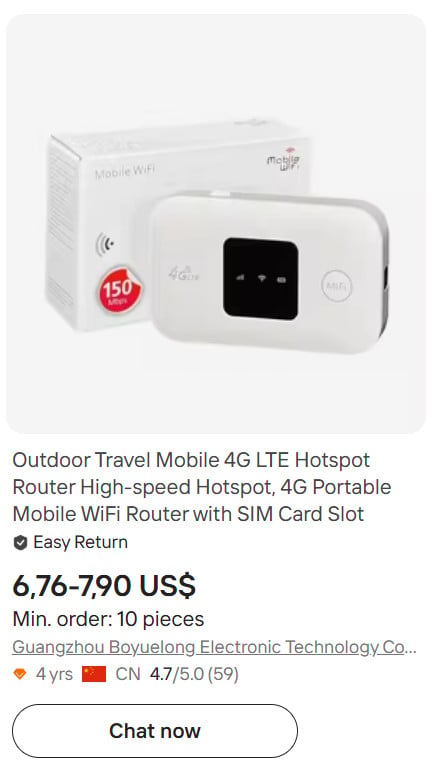
That does not prove every Arborahaven shipment is the exact same device, but it does support the broader concern: these products look like ordinary low-cost mobile hotspots, not breakthrough lifetime-internet technology.
Major Red Flags on the Arborahaven Offer
1. The “Lifetime Free Internet” Claim Is Not Credible
The biggest warning sign is the central promise itself.
Internet service has ongoing costs: network infrastructure, spectrum licenses, data routing, towers, satellites, maintenance, customer support, bandwidth, and carrier agreements. A random online store cannot sell one small device for under $100 and provide unlimited global internet forever.
If a product truly offered unlimited global 4K internet with no SIM and no monthly bill, it would not be sold through vague social media ads using countdown-style sales tactics. It would be a major telecom product with clear carrier partnerships, technical documentation, coverage maps, terms of service, and data usage policies.
2. “4K Internet” Is Marketing Jargon
“4K” refers to video resolution, not a type of internet connection.
A connection may be fast enough to stream 4K video, but there is no such thing as a special “4K internet” device that automatically guarantees 4K streaming everywhere. Streaming quality depends on speed, latency, network congestion, signal strength, data limits, device compatibility, and the streaming platform itself.
Using “4K” in the product name appears designed to make the device sound advanced without explaining how the service actually works.
3. No Clear Carrier, Satellite, or Data Provider
A real global internet product needs a network provider.
If this were a cellular hotspot, Arborahaven would need to explain which carriers it uses, which countries are supported, what bands are compatible, whether the device uses SIM or eSIM, what the data limits are, and what happens when users consume high amounts of data.
If this were a satellite product, it would require satellite hardware and a named satellite network. A tiny generic-looking hotspot is not enough.
The lack of a serious technical explanation is a major red flag.
4. The Page Uses Artificial Urgency
The product page uses classic pressure tactics such as “Only 100 Units Left,” “80% Subsidy,” and “Available Only Once a Year.”
These messages are not proof of fraud by themselves. Many legitimate stores use discounts and limited-time offers. But when urgency is combined with an impossible technical promise, vague company details, and buyer complaints, it becomes much more concerning.
The goal is obvious: make the buyer act quickly before they stop to research the claim.
5. Arborahaven Appears to Sell Random Unrelated Products
The Arborahaven homepage and collections include a mix of unrelated items such as fitness products, anti-blue-light glasses, “energy saver” devices, casting glue, herbicide products, cameras, and routers.
That kind of random product catalog is common with low-trust dropshipping stores. Instead of looking like a specialized telecom company, the site looks like a general online store testing viral products.
A company selling real global internet infrastructure should not look like a shop that also sells ab rollers and random household gadgets.
6. Similar Product Pages Contradict the Main Claim
Arborahaven also has pages for a “Pocket WiFi/Mobile Wi-Fi Router” and another product called “[Power on and use, free for life] All-network portable wifi.” One page lists a portable Wi-Fi router at $48–$64, while another lists a “free for life” portable Wi-Fi product with the style “MF800- White Eurasian Edition.”
This raises another concern: the website appears to be presenting ordinary portable router-type products under different names and claims. That is not how serious telecom hardware is usually sold.
How the Arborahaven Scam Likely Works
Step 1: The Buyer Sees a Viral Ad
The scam usually starts with a social media ad or video. The ad claims that a new device can replace monthly internet bills, work globally, stream in 4K, and provide unlimited access.
The messaging is built around frustration: expensive internet, poor rural coverage, travel data fees, and monthly bills.
Step 2: The Website Makes the Product Look Revolutionary
The landing page frames the product as a rare, subsidized, limited-time offer. It may include claims such as:
- no SIM needed
- no contract
- no hidden costs
- lifetime free internet
- global coverage
- 4K streaming
- no signal dead zones
- risk-free trial
- huge discount
This makes the buyer feel like they discovered a secret technology before everyone else.
Step 3: The Buyer Pays for a Cheap Device at a Huge Markup
Instead of a revolutionary internet device, buyers may receive a generic mobile hotspot or 4G router. These devices are widely available in wholesale marketplaces for much lower prices.
A normal 4G mobile router can be useful when paired with a real SIM card and data plan. But it cannot provide free lifetime internet by itself.
Step 4: The Product Fails to Match the Advertising
This is where buyers realize the problem. The device may:
- require a SIM card
- fail to connect
- not power on
- have no free data service
- not support the buyer’s local bands
- provide no satellite capability
- offer no real “global” coverage
- perform like a cheap generic router
At that point, the core promise collapses.
Step 5: Refunds Become Difficult
Some complaints describe refund resistance or partial refund offers. This is common with questionable online stores. Instead of giving a clean refund, the seller may offer a small discount, delay the process, ask the buyer to ship the item overseas, or stop responding.
The FTC recommends disputing charges if an item did not arrive, was not accepted, or the company refuses to refund after a problem. It also advises consumers to save receipts and confirmation emails and to use credit cards online when possible because they offer stronger dispute protection.
Is Arborahaven Lifetime Free Global 4K Internet Legit?
Based on the available evidence, the Arborahaven Lifetime Free Global 4K Internet offer does not look legitimate.
The product claim is technically unrealistic. The website does not provide convincing proof of a real global internet service. Buyer complaints describe receiving ordinary 4G router-style devices, not a SIM-free lifetime internet solution. The site uses urgency-driven sales tactics and appears to sell a broad mix of unrelated viral products.
A fair verdict would be:
Avoid this offer. It appears to be a misleading dropshipping-style scam built around impossible “free internet for life” claims.
A cheap 4G router is not automatically a scam if it is sold honestly as a router. The issue is the claim that it provides lifetime global internet with no SIM, no monthly fee, and no carrier plan. That is the part that makes the offer highly suspicious.
What To Do If You Bought It
If you already ordered from Arborahaven, act quickly.
1. Save All Evidence
Keep:
- order confirmation emails
- tracking numbers
- screenshots of the product page
- screenshots of the “lifetime free internet” claims
- payment receipts
- customer service messages
- photos or videos of the item received
- packaging labels
This helps if you need to dispute the payment.
2. Contact the Seller Once
Send a clear refund request. Do not argue endlessly. State that the product was not as advertised and request a full refund.
Keep the message short and documented.
3. Do Not Accept a Tiny Partial Refund
Many questionable sellers offer 10%, 20%, or 30% back to make the complaint go away. If the product was materially misrepresented, a partial discount may not be acceptable.
4. Start a Chargeback or Payment Dispute
Contact your credit card company, bank, PayPal, or payment provider. Explain that the product was advertised as lifetime free global internet but the item received does not match the claim.
5. Report the Website
If the seller does not resolve the issue, you can report the purchase to consumer protection agencies. USAGov advises contacting the seller first, then filing complaints with agencies such as the FTC, state consumer protection offices, or econsumer.gov for international sellers.
The Bottom Line
The Arborahaven Lifetime Free Global 4K Internet device appears to be another too-good-to-be-true gadget offer built around impossible promises. A small hotspot cannot provide unlimited global internet forever without a carrier, SIM, eSIM, satellite plan, or ongoing service cost.
The most likely outcome is that buyers receive a cheap 4G router-style device that either needs a SIM card, does not work properly, or fails to deliver anything close to the advertised promise.
Do not buy it expecting free internet for life. The evidence points strongly toward a misleading online offer, not a legitimate technology breakthrough.
FAQ
Is Arborahaven’s lifetime free global internet device real?
The claims appear highly misleading. A small pocket router cannot provide unlimited global internet forever without a SIM card, carrier plan, satellite subscription, or some type of paid network access. Internet service requires ongoing infrastructure and bandwidth costs, so a one-time $79 or $85 payment for lifetime global internet is not realistic.
Why is the “no SIM, no monthly fee” claim suspicious?
Most mobile hotspots need a SIM card, eSIM, or carrier-supported data plan to connect to the internet. If a device claims to work globally without any SIM, subscription, carrier, or satellite service, the seller should provide clear technical proof. Arborahaven does not appear to provide that level of proof.
What do buyers usually receive from these types of offers?
In many similar dropshipping-style scams, buyers either receive nothing, receive a cheap generic 4G router, or receive a device that does not perform as advertised. The product may still require a SIM card and paid data plan, which directly contradicts the “free internet for life” promise.
Is this really a 4K internet device?
“4K internet” is mostly marketing language. 4K refers to video resolution, not a special type of internet connection. A device cannot guarantee 4K streaming everywhere unless it has a strong, stable, high-speed connection with enough data allowance.
Can any device provide lifetime free internet?
Not in the way Arborahaven appears to advertise it. Some companies may offer prepaid data, bundled trial plans, public Wi-Fi access, or limited promotional service, but unlimited global internet for life from a one-time cheap device purchase is not a realistic consumer product.
Why do scam websites use countdowns and “only a few left” messages?
These tactics are designed to create urgency. Messages like “Only 100 units left,” “discount ending soon,” or “hundreds of people viewing now” pressure people into buying before they research the product properly. When urgency is combined with impossible tech claims, it is a major red flag.
Is Arborahaven a real telecom company?
The site does not present itself like a serious internet provider. A legitimate global internet service would normally provide carrier partnerships, coverage maps, service terms, data limits, technical documentation, and customer support details. Arborahaven appears more like a general viral-product store than a real telecom company.
What should I do if I bought the Arborahaven device?
Save screenshots of the product page, your receipt, emails, tracking information, and photos of what you received. Contact the seller once and request a full refund. If they refuse, delay, or offer only a small partial refund, contact your bank, credit card company, PayPal, or payment provider and open a dispute.
Should I return the item if they ask me to ship it overseas?
Be careful. Some questionable sellers require expensive international returns, often to China, knowing that most buyers will give up. Before paying for return shipping, ask your payment provider whether the product qualifies for a dispute because it was not as advertised.
How can I avoid similar free internet scams?
Avoid any website claiming miracle technology, free global internet, lifetime access, no monthly fees, no SIM, and no carrier plan. Search for real reviews, check who owns the company, look for technical proof, and compare the product image with cheap wholesale listings. If the promise sounds impossible, treat it as a warning sign.








