

You spot a dress that looks right for the occasion, at a price that makes buying another color tempting. The boutique looks warm, familiar and reassuring.
Ava & Monroe builds that impression carefully. Before choosing a size, there is another choice worth understanding: what happens if the order does not work out?
Overview
The boutique presentation invites confidence
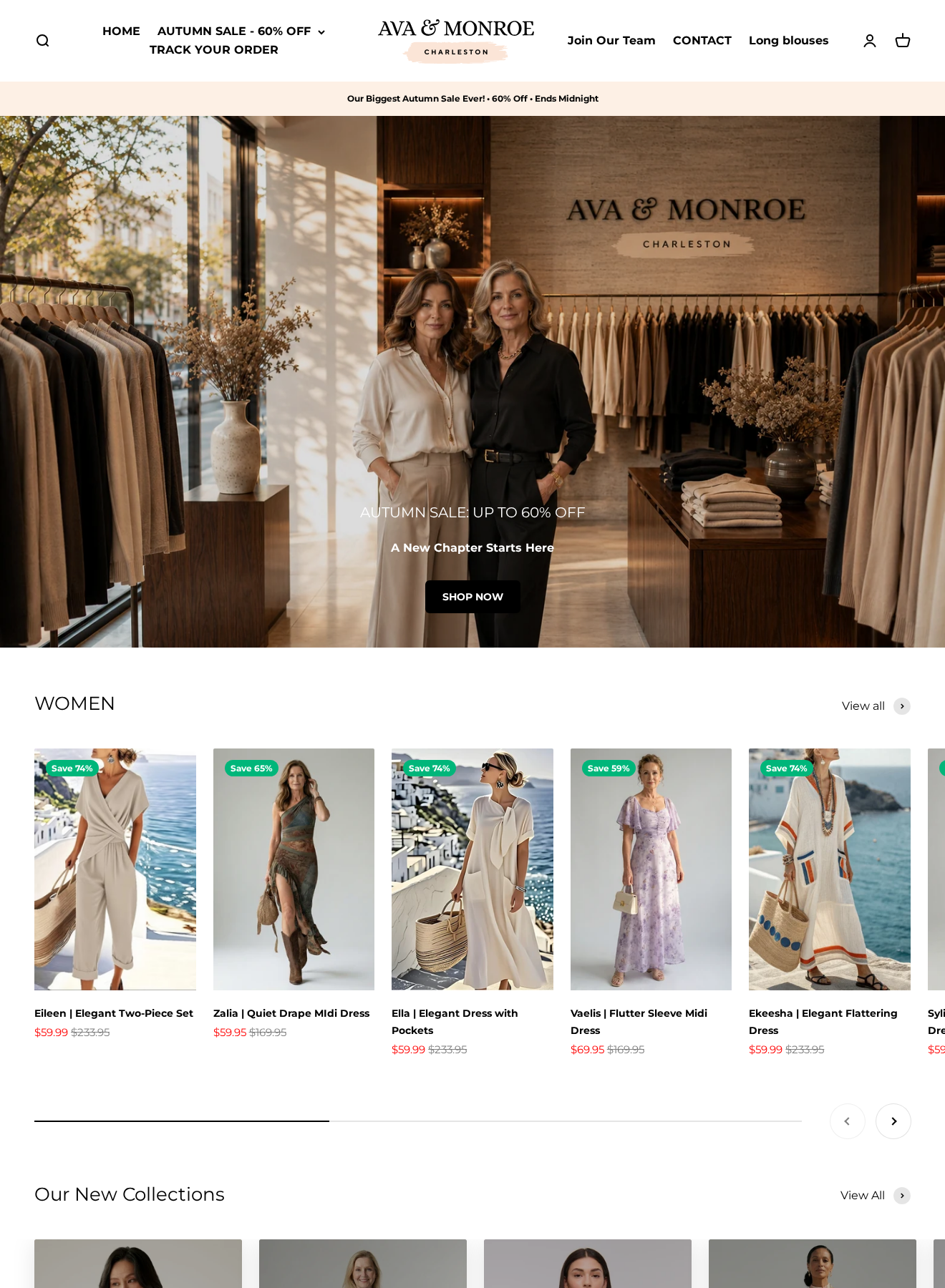
Ava & Monroe sells dresses, coordinated sets, shoes and other clothing through avaandmonroe.com. Its homepage uses Charleston branding and a boutique-style image featuring two women.
The seasonal pitch combines substantial reductions with an end-of-day deadline. Another promotion says every tenth order will be refunded.
Those details make shopping feel personal and time-sensitive. They do not explain who legally operates the business or what remedy you receive for an unsuitable purchase.
The refund policy makes fit your financial risk
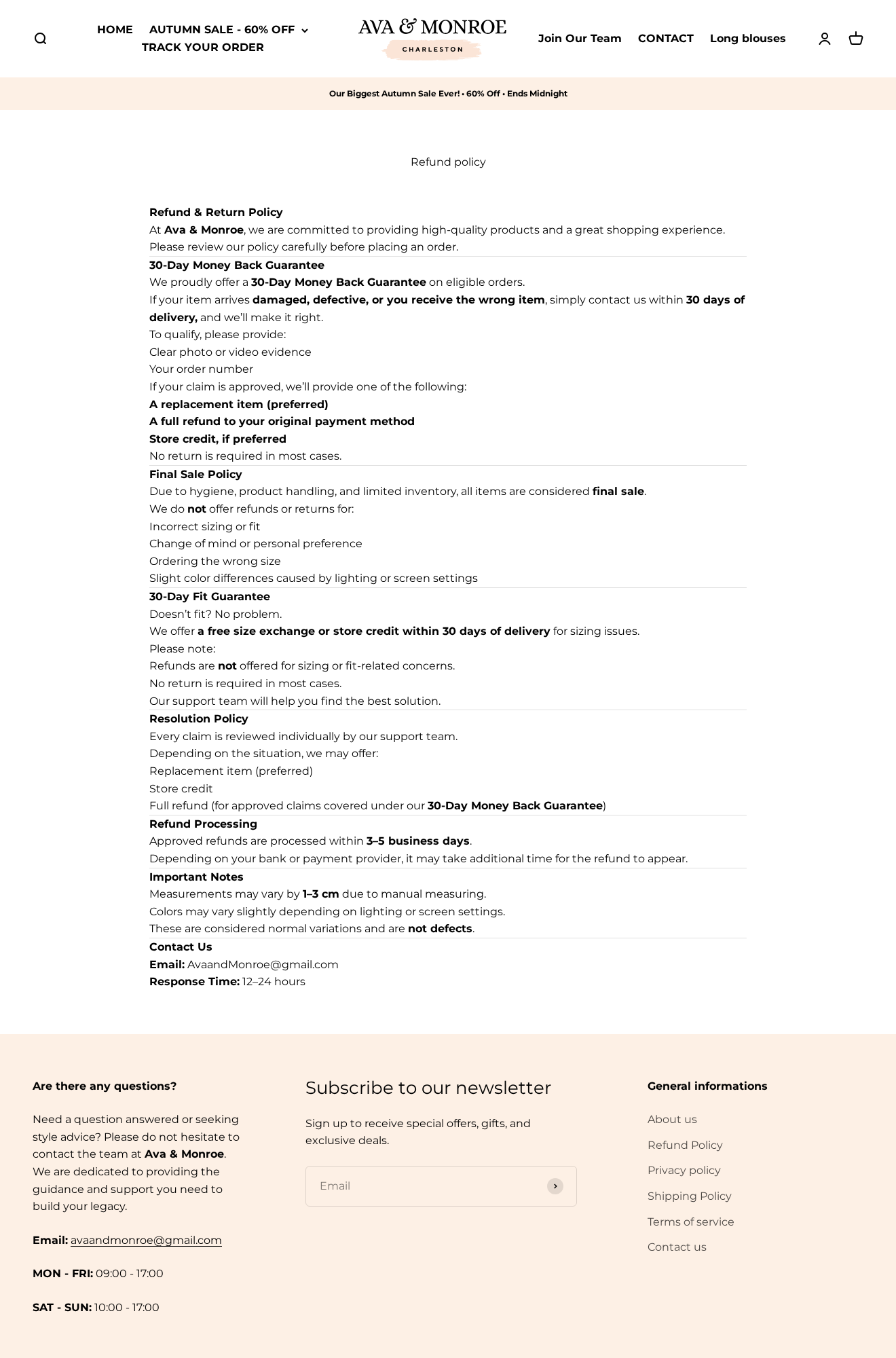
The formal refund policy says all items are final sale. It excludes refunds for sizing, fit, preference and ordering the wrong size.
A separate fit guarantee offers an exchange or store credit within 30 days. That is not the same as returning a dress and recovering your money.
Damaged, defective or incorrect items have a different route. The policy allows approved remedies, including a refund, while describing a replacement as preferred.
The guarantees need to be read as separate promises
The important distinction is between a fault, a fit problem and a purchase you simply no longer want. The store does not promise the same outcome for each.
This is not the flexible home-fitting experience a shopper might expect. Money-back protection covers certain problems, not every unwanted dress.
- Expect fit problems to lead toward an exchange or credit, not automatically a cash refund.
- Check the garment’s measurements and fabric description before payment.
- Allow for international-style delivery estimates rather than assuming nearby stock.
- Keep the exact offer, selected size and order confirmation.
How Ordering From Ava & Monroe Works
Step 1: The sale makes hesitation feel expensive
The homepage promotes its autumn sale as a major event and gives it a midnight deadline. Product cards display crossed-out reference prices and large savings.
That framing changes the question in your mind. Instead of asking whether the dress is worth its current price, you start wondering whether you will miss the reduction.
A reference price only helps when it represents a meaningful comparison. The reviewed material did not provide a price history establishing how long each earlier amount applied.
That does not prove every reduction is invented. It means the saving should not carry more weight than the actual garment details and return conditions.
The every-tenth-order promotion adds another possible reward. It is not a promise that your own purchase will be free.
Before treating that promotion as valuable, ask how orders are counted, which purchases qualify and how a selected customer is notified.
Do not spend beyond your original budget to chase an uncertain refund. Evaluate the basket as though you will pay the entire authorized amount.
Step 2: The picture becomes a decision about material and fit
The storefront imagery suggests an attractive, curated wardrobe. The practical purchase, however, is a particular garment in a particular fabric, size and construction.
Look for actual composition rather than relying on words such as elegant or premium-inspired. A flowing photograph cannot tell you whether a dress is lined.
A size label is equally incomplete. Compare the bust, waist, hip and length measurements with something that already fits you comfortably.
The refund policy allows a stated measurement variation of 1–3 cm and treats certain differences as normal. That tolerance can matter for a close-fitting garment.
Ask whether the chart measures the finished item or the body it is intended to fit. Those numbers are not interchangeable.
If support cannot explain a crucial detail, do not purchase several sizes assuming you can send the extras back for money.
The final-sale policy makes that common fitting-room approach particularly unsuitable here. An exchange leaves you dependent on another item from the same shop.
Step 3: Delivery takes longer than the boutique image might suggest
The homepage FAQ describes processing of one to three business days and a delivery estimate of seven to 12 business days.
The separate shipping page instead gives seven to 16 business days and lists processing separately. It does not promise arrival for a particular occasion.
That difference matters if you are buying for a wedding, holiday or work event. Work from the longer estimate until the seller clarifies the total timeline.
The About page says the business uses global suppliers. That is a sourcing statement, not evidence that every garment is stocked in Charleston.
It also does not establish a particular manufacturing country. The photograph of a boutique cannot settle where the parcel will originate.
Tracking may take 48–72 hours to update under the published guidance. After that, distinguish a label being created from an actual carrier acceptance scan.
If the item has not arrived by an important date, keep the written delivery promise you relied on. A vague recollection of fast shipping is less useful.
Step 4: Dissatisfaction is sorted into very different remedies
A dress can be well made and still not fit. Under the posted policy, that situation does not qualify for the same cash-refund route as a defective item.
The fit guarantee offers a free size exchange or store credit within 30 days of delivery. The homepage describes exchanges as one-time arrangements.
Ask what free covers, whether stock must be available and what happens if a replacement also fails to fit. Do not assume an unlimited fitting service.
For an actual wrong item or defect, the policy asks for the order number and clear photographs or video. It says physical return is unnecessary in most cases.
Approved outcomes can include a replacement, refund or credit. It would be inaccurate to claim that the seller’s policy rules out every refund.
The problem is narrower and still significant: the prominent reassurance does not make a preference or sizing purchase reversible in cash.
That is enough to change the buying decision. If you need dependable refund flexibility, this offer does not provide it on its stated terms.
Ava & Monroe Seller Identity, Sourcing and Customer Support
The brand name does not identify a complete legal counterparty
The terms describe the store as Ava & Monroe. The pages examined did not clearly supply a separate legal entity and complete headquarters address.
The governing-law clause refers to the jurisdiction where the business is headquartered without resolving that location for the reader.
Ask for the merchant’s legal name and business address before purchasing. You should be able to identify the party responsible for the sale without reconstructing it afterward.
Charleston branding is not a verified physical shop
The logo and storefront imagery use Charleston. They do not provide a confirmed public shopping address, manufacturing facility or local returns counter.
Look for opening hours tied to complete premises details, not simply a city name beneath a logo or a welcoming scene inside a shop.
The useful question is operational: can you visit a real location or return there, and does the seller explicitly agree? Do not infer either service from the image.
Gmail is the published support route
The store repeatedly publishes avaandmonroe@gmail.com. The email is easy to find; the legal merchant information needed to identify the seller is less clear.
Response estimates vary between sections, including 12–24 hours and one to two business days. Keep the applicable written exchange rather than assuming instant help.
No message was sent to test support. There is therefore no basis here to claim the mailbox is dead or that every customer is ignored.
Global sourcing should be explained at product level
The About and shipping pages refer to international suppliers and production partners. They do not identify the factory behind each garment.
If origin, fabric composition or construction matters to you, request details for the exact item. A broad statement about supplier standards is not a product specification.
Keep labels and packaging if you order. They can help identify what arrived and support a precise complaint without guessing about a whole supply chain.
Fit Problems, Faults and Store Credit Are Not Interchangeable
Imagine ordering a dress for an event and discovering it is too tight. A credit balance does not give you back the money needed to shop elsewhere.
It also keeps the transaction inside the same catalog. If the cut, fabric or overall selection does not suit you, another order may not solve the original problem.
Before accepting credit, ask whether it expires, whether it covers delivery and whether using it requires a minimum spend. Those details determine its practical value.
A credit worth the garment’s price can still require additional money if the replacement costs more or introduces another shipping charge.
Keep the answer alongside the original claim. You should know whether accepting the offer closes the complaint or leaves the first issue unresolved.
If several items are involved, identify each one separately. A fit exchange for one dress should not obscure an unrelated damaged-item claim.
That is why the distinction belongs in the buying decision, not just in a complaint after delivery. An attractive price cannot compensate for the wrong remedy.
Now consider a garment labeled differently from its description or supplied in the wrong size. That is a different factual claim from simply disliking the fit.
Photograph the label and compare it with the saved listing. Describe the mismatch accurately, including measurements taken in the same way as the chart.
Do not invent a defect to obtain a refund. Equally, do not let a genuine description mismatch be casually relabeled as personal preference.
Mandatory consumer protections depend on your location and circumstances. A shop’s policy is not the final authority on every statutory remedy.
What to Do If You Ordered From Ava & Monroe
- Save the purchase as it was presented.
Keep the item page, fabric description, size chart, sale banner and confirmation. Record which size and color you authorized, along with the total payment.
Preserve any specific promise made by support. A later version of the website may not show the wording that influenced your decision.
- Request cancellation immediately if the order is unsuitable.
Email the published address with your order number and a clear cancellation request. The terms warn that accepted orders may not be changeable.
Ask whether processing has started and request a definite response. Do not assume an unanswered message has stopped dispatch.
- Document the delivered item before altering it.
Take photographs of the package, product label, seams, measurements and any damage. Keep tags attached and avoid washing while seeking a remedy.
Separate ordinary fit disappointment from the wrong item, a manufacturing defect or a material difference from the description.
- Use the correct 30-day route.
For fit, ask about the exchange or credit terms. For damaged, defective or incorrect goods, request the remedy applicable to that specific problem.
The policy asks for supporting images and the order number. Submit those promptly rather than spending weeks discussing the sale in general terms.
- Evaluate an exchange before accepting it.
Confirm the replacement size, availability, delivery charge and whether this uses your one-time exchange. Ask what happens if the replacement is also unsuitable.
If a cash refund has been approved, request the amount and processing date. Check that it reaches the original payment account.
- Escalate an unresolved qualifying complaint on time.
Ask your payment provider about its dispute deadline and required evidence for non-delivery, misdescription or a promised refund not received.
Explain the transaction honestly. An authorized clothing purchase is not automatically card fraud, and a fit preference does not guarantee reimbursement.
Frequently Asked Questions
Is Ava & Monroe a confirmed scam?
The findings concern restrictive remedies and seller transparency, not proof that every order is fraudulent. The final-sale policy is enough to reject a supposedly low-risk fitting purchase.
Can I get money back if the size does not fit?
The policy excludes sizing refunds and offers an exchange or store credit instead. Do not assume the 30-day headline creates a general cash-return option.
What if Ava & Monroe sends a damaged or incorrect item?
The policy provides a separate 30-day claim route with photographs and an order number. Approved remedies can include replacement, refund or credit.
Does the Charleston image prove there is a local boutique?
No. The image and branding do not authenticate a walk-in shop or local return counter. Request a complete business address and confirmation of any in-person service.
Is every tenth order guaranteed to be my order?
No. That promotion does not promise every buyer a refund. Evaluate your basket at full cost and request the actual eligibility rules.
How quickly should I expect delivery?
The homepage and shipping page give different estimates. Allow processing as well as transit, and obtain a written commitment if a particular arrival date matters.
The Bottom Line
Do not order from Ava & Monroe expecting to try clothing and recover your money if it does not fit. Its stated remedy is generally exchange or credit.
Already purchased? Save the listing, document the actual problem and use the appropriate 30-day claim route. Keep payment-provider deadlines in view while support handles the request.

Join the discussion
0 commentsShare your experience or ask a question about this article.
Discussion
Start the conversation
Have a question or something useful to share? Add the first comment.