

The internet loves few things more than an Oreo flavor collab gone viral. So when images of Banana Pudding Oreos started circulating online recently, cookie fans got understandably excited. The packaging looked legit, with a classic Oreo style and tempting images of golden cookies and white creme. But despite enthusiastic tweets and tempting photos, Banana Pudding Oreos aren’t real. Here’s the full story behind the fake that fooled us all.
The Viral Banana Pudding Oreo Photos
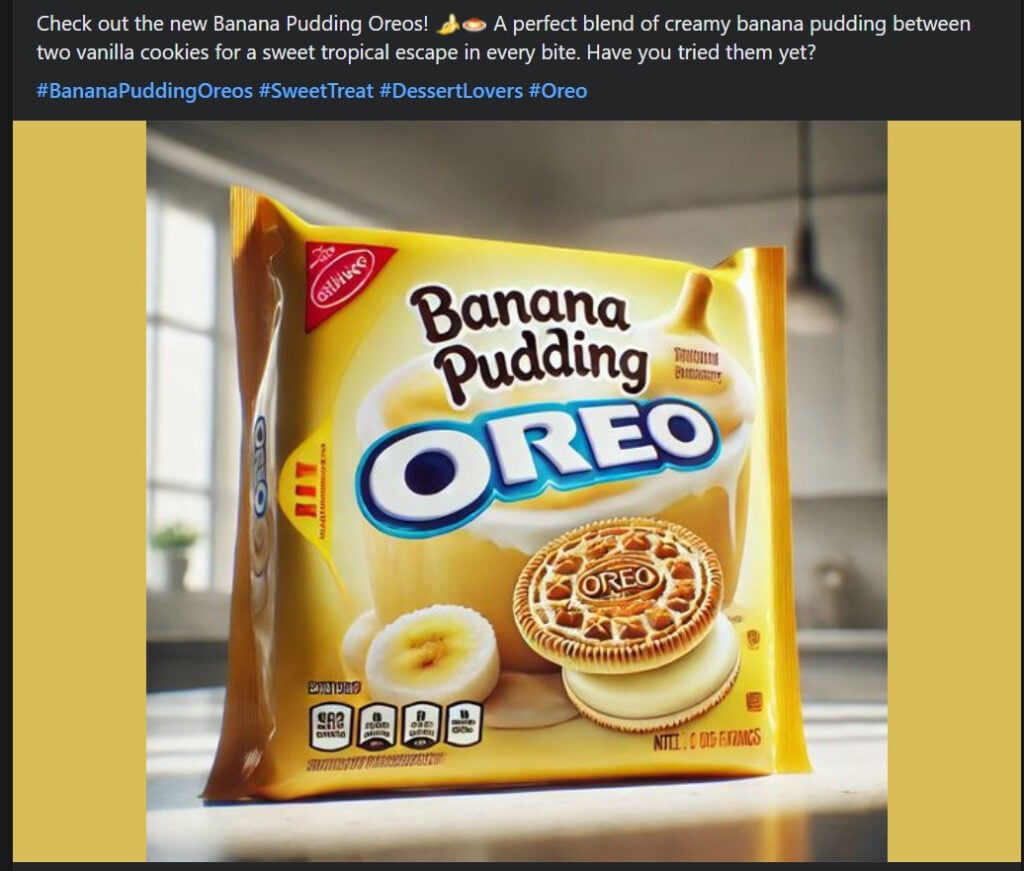
In late 2022, photos of Banana Pudding Oreo packaging started spreading across social media. The images showed a bright yellow package decorated with banana slices and vanilla wafers. According to the mockup, these cookies would blend two classic flavors: Oreo’s signature chocolate wafers and creme with the sweet banana and vanilla tastes of banana pudding.
The accompanying photos got people even more hyped. They showed the cookies themselves – golden Oreo wafers sandwiched around a white creme filling. It was easy to imagine exactly how these would taste – like a perfect fusion of banana, vanilla, chocolate, and cookie.
As the images spread across Twitter and Instagram, excitement mounted. “I would demolish a whole pack of those,” wrote one eager commenter. Even high-profile food Instagram accounts shared the packaging photos, asking followers if they’d try the Banana Pudding Oreos. At first glance, everything about it looked impressively real.
Why Banana Pudding Oreos Are Fake
Despite the convincing images, however, Banana Pudding Oreos aren’t real. Here are a few reasons why this viral flavor is just a fake:
No Official Announcement from Oreo
Oreo always announces new flavors and limited collabs with great fanfare across its social channels. But there was never any official word from Oreo about Banana Pudding cookies. With other recent hit releases like Frosted Strawberry Pop-Tart and Kettle Corn Oreos, the company promoted the new flavors extensively. The total lack of an announcement was a major red flag that Banana Pudding Oreos were fake.
No Sign of Them on Oreo’s Website
The Oreo website highlights all current cookie varieties and even some past limited flavors. But there’s no mention whatsoever of Banana Pudding Oreos. All signs point to the images being doctored rather than real products from Nabisco.
Facebook’s “AI” Label
When one of the Banana Pudding cookie photos spread widely on Facebook, the platform added an “AI” tag to note that the image may have been created artificially. This label typically indicates that the content wasn’t organically created and shared by real people. It was likely artificially generated using AI image generation platforms.
Identical Style to Other Fake Announcements
While the Banana Pudding packaging and cookies looked convincing, they followed very similar styles to previous AI-generated images. In June 2022, an influencer posted similar mockups of Banana Pudding Oreos, which were proven fake. And in 2021, AI-rendered images of purported “Pride Oreos” in rainbow packaging went viral, despite not being real Nabisco products. The latest iteration was likely created using the same AI techniques.
Why Do Viral Fake Oreo Flavors Keep Popping Up?
Banana Pudding Oreos join a host of other viral fake Oreo releases that have popped up in recent years. From Funfetti to Candy Corn to “Pride”, AI-generated cookie images keep fooling people online. But why does this specific type of fake product go viral so often? A few key reasons:
Oreo’s Popularity and Trust
With over $3 billion in global annual revenues, Oreo is one of the world’s most iconic cookie brands. When people see new Oreo releases, they instantly trust that the product is legitimate. The brand’s reputation makes it easier for fakes to get traction.
Consumer Desire for Novel Flavors
Oreo is known for launching adventurous new flavors, from eggnog to rocky road. People crave these novel tastes. When they see a new flavor like Banana Pudding, they eagerly want it to be real. This makes them more likely to share AI-generated images without questioning them.
Viral Spread of Content Online
Modern social platforms are designed to quickly spread content far and wide. Eye-catching images of tantalizing new cookie flavors easily go viral, even if they’re fake. Appealing new Oreo varieties practically tailor-made to go viral online.
Advancements in AI Image Generation
Recently, AI tools have gotten incredibly good at generating photorealistic fake images. Platforms like DALL-E and MidJourney can now whip up mock cookie packaging that looks believable to most people. As these tools spread, fake product images will likely keep going viral.
The Verdict: Enjoy the Idea, But Don’t Get Too Excited Yet
Should you start stockpiling Banana Pudding Oreos in anticipation of their release? Probably not just yet. While the idea of the flavor mashup is fun, so far these cookies only exist as AI-generated images, not as real products. Oreo hasn’t made any official announcement about adding the variety to their lineup.
That said, the concept itself is brilliant. Banana pudding’s sweet, tropical vibe could pair deliciously with Oreo’s classic cookie crunch and creme filling. So someday, Nabisco may decide to actually produce these. For now, enjoy the novelty of the idea – but don’t put too much faith in cookies that are just a clever fake.
Frequently Asked Questions About the Banana Pudding Oreos
1. Are Banana Pudding Oreos real?
No, Banana Pudding Oreos are not a real product. The images spreading online of this Oreo flavor are AI-generated fakes. Oreo has not officially announced this variety, and the cookies do not exist despite the viral photos.
2. Where did the fake Banana Pudding Oreo images come from?
The viral images of Banana Pudding Oreo packaging and cookies seem to have been created using AI image generation platforms. They likely did not originate from Nabisco or any official Oreo sources. The convincing photos demonstrate advanced AI’s ability to fabricate photorealistic images.
3. Why do people keep making fake Oreo flavors?
Oreo’s popularity makes it a prime target for AI-generated fakes that go viral quickly. People tend to trust familiar brands, and novel flavors spark excitement. AI platforms also make it easy to create and spread convincing fake product images rapidly.
4. How can you tell if viral Oreo flavors are real or fake?
Check Oreo’s official website and social media for any announcements of new flavors. If the cookies are real, Oreo advertises them extensively. Also look for AI tags on social posts, which indicate the content may be artificially generated. If no official confirmation exists, it’s likely a fake.
5. Could Banana Pudding Oreos become an actual product in the future?
It’s possible. Oreo frequently produces special flavors based on fan interest and suggestions. If Banana Pudding Oreos continue to get a positive response online, Nabisco may decide to produce them as a limited edition variety. But so far, it’s just an appealing concept, not reality.
6. How can you spot other AI-generated fake food products?
Look for the hallmarks seen in the Banana Pudding Oreos scam. Fake food images often go viral quickly without any company announcement. They exploit brand trust and use realistically simulated packaging. If something seems improbably delicious or exciting, it may be an AI fake designed to attract attention and shares.

Join the discussion
0 commentsShare your experience or ask a question about this article.
Discussion
Start the conversation
Have a question or something useful to share? Add the first comment.