


You booked a trip to Barcelona and the one thing you still need is a ticket. Then an email says seats are available after all.
A late ticket release can be real. Before rearranging your plans, make sure the offer came from someone who can actually get you through the door.
Overview
What Catalonia’s cybersecurity agency found
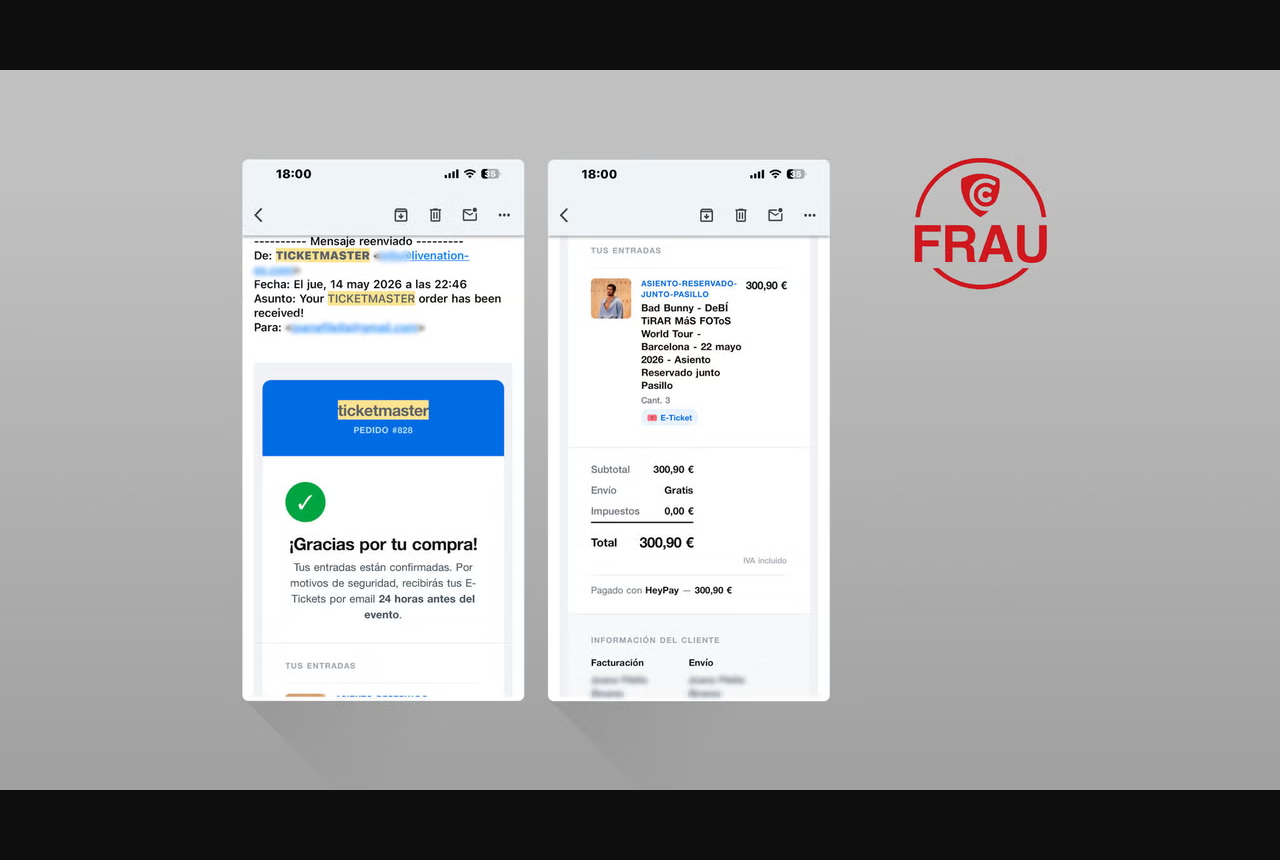
In May 2026, the Cybersecurity Agency of Catalonia warned about fraudulent sales for Bad Bunny’s Barcelona concerts. The agency said official outlets had sold out months earlier.
In one case the agency described, an email announced supposedly available tickets and sent people to an imitation of Live Nation’s booking site.
Neither the message nor the site was genuine.
The fake buying process included a seating map, an apparent confirmation and an invented order number. Buyers were told that their tickets would arrive closer to the event.
The alert documents a real impersonation case, not a dispute about a refund from Live Nation. It doesn’t mean either Live Nation or Ticketmaster sold fake tickets.
Why an imitation booking page can be more convincing than a stranger
With a private seller, you know you’re taking somebody’s word for it. On a professional-looking site, choosing a seat and seeing an order summary can make the purchase feel official.
The confirmation can be especially persuasive. If you’re accustomed to receiving mobile tickets later, a message explaining the wait might seem like evidence you followed the right process.
That is what makes this case worth remembering after the concerts are over.
You don’t need a different warning for every artist, venue or city where the same trick could work.
Bitdefender reported on fake ticket websites targeting Barcelona visitors. For sightseeing, the practical equivalent is checking who issued your timed entry before relying on a booking email.
What to check before paying for a Barcelona ticket
- Who linked to the seller? Start with the venue, performer or attraction. Check whether its official page sends you to the exact site where you’re about to pay.
- Are you buying the right thing? Match the venue, date and time. For attractions, check whether you’re buying admission, a tour with admission, or just a guide.
- Where will the order appear? Check how the verified seller says you can manage an order. An email alone isn’t a reliable substitute for a booking you can independently confirm.
-
What happens if the event is sold out?
Look for an official waitlist or a resale channel the organizer recognizes. Don’t use a surprise availability notice as proof another seller has stock.
How the Barcelona Ticket Scam Works
Step 1: An email suggests a sold-out event has seats again
The email in the Catalan warning offered a second chance at a popular concert. For somebody who missed the original sale, the message answers a question they were already asking.
Late releases do happen. That’s why simply telling yourself the offer is impossible isn’t the best test.
If seats reopened, the event organizer or verified ticket outlet can confirm the sale.
Open a separate tab. Find the event from the venue or promoter, not from the message, and compare what it says about availability. Don’t log in through the incoming offer.
A group trip can add its own pressure.
You may feel you need to tell your friends you’ve secured the tickets before they sell out. Wait until you can verify the seller.
Step 2: The booking page makes the offer look official
The agency found a page with a design similar to the promoter’s and an address containing words tied to its brand.
Seeing familiar words in a URL didn’t make it genuine.
A page can look especially persuasive when it asks you to make a decision you expect, such as choosing between available sections or reviewing seat details.
Compare the address with the official destination you reached independently. Search results, a forwarded screenshot and a familiar logo all leave the central question unanswered: who controls the page?
Official sellers sometimes hand customers off to another domain. A second domain isn’t proof of fraud.
What matters is whether you reached it from an organizer or seller you verified first.
Step 3: A fake checkout takes payment details or money
The impersonation gave people reason to fill out their details and pay.
A seating chart doesn’t prove the site holds those seats, even if it shows a believable section and row.
The important point isn’t whether the checkout went through. It is whether a legitimate seller can find the purchase after you open its website yourself.
A card charge shows that a merchant collected money. It doesn’t show that the venue received any payment or that the ticketing company reserved the seats.
You might also submit payment details without seeing a successful charge. If you think the checkout was fraudulent, call the card issuer even if the site showed an error afterward.
Don’t keep trying different cards to get the same suspicious transaction to work. Find out who the seller is first. You don’t want several accounts exposed to the same page.
Step 4: A realistic confirmation gives the seller time
In the example made public by the agency, the receipt told the buyer to expect electronic tickets later, close to the show. It presented the delay as a security precaution.
Real event organizers may withhold access to a ticket or barcode until near an event. The scam borrows that practice, which buys time before the victim checks the order.
The distinction is whether the verified seller recognizes the booking now.
A ticket can be hidden for a legitimate reason; an order number that only your email recognizes is another matter.
An order from an authorized travel seller may not appear in the promoter’s own account system. In that case, contact the authorized seller using information you found independently.
Don’t wait until you reach the doors to investigate. If your travel plans depend on the ticket, verify the order as soon as something appears off.
How to Buy Barcelona Concert and Attraction Tickets Safely
Start with the event or attraction, not the search ad
Concert tickets and attraction passes aren’t the same product. For a concert, look up the date from the original event announcement or venue’s calendar.
For a visit, start with the attraction itself. The Sagrada Família ticket page, for example, explains available visit types.
That makes it a better reference than a search ad offering unspecified entry.
If you’re buying a package, check what the final price includes.
A guide, transport or access to a particular area can make a tour genuinely different from a basic admission ticket.
A third-party ticket page isn’t automatically fraudulent. A clearly disclosed reseller price is a different issue from a website pretending to be the original venue or promoter.
Separate order confirmations from actual tickets
A purchase confirmation tells you what a seller says you bought. An admission ticket is what you need at the venue. Sometimes they arrive at different times.
If a message says the barcode will come later, find out when it should appear and which account will display it. Ask the verified seller if the instructions aren’t clear.
Don’t ask a stranger to send you a barcode just to prove they have a ticket.
An image can’t establish that the ticket is genuine, still valid or transferable to you.
If an organizer allows resale or transfers, follow the process it documents. Don’t substitute a forwarded picture because the seller says transferring the actual ticket is inconvenient.
Confirm the details before committing to the rest of the trip
Look at the venue address and event date before booking nonrefundable travel.
Barcelona can be part of a longer itinerary, and getting a hotel or train date wrong adds unnecessary cost.
For a timed attraction visit, check the time on the actual booking instead of relying on the search result that led you there. Keep the confirmation accessible offline, too.
If your plans depend on accessibility seating, ask the venue about its own process. An unknown site promising suitable seats may not be able to honor accessibility requirements.
When paying for a group, keep one private record of who holds the tickets.
You should know which verified account to open if a ticket still hasn’t arrived on departure day.
When someone else booked the tickets for your group
If a friend bought tickets for the whole group, ask which seller handled the purchase before sending your share. You don’t need their ticket barcode or card details.
Ask them to open the purchase in the actual account while you’re together. You can check that the venue, date, quantity and seller match what everyone agreed to buy.
With seats bought on a resale platform, find out who can contact support if the order doesn’t arrive. Often the person who placed the purchase has the information needed.
Agree on a point to check again before you travel. If the waiting period expires, don’t ask the friend to forward the original link so everyone can try it.
You can also check whether the venue wants each guest to carry a ticket or lets the lead booker present all of them. Follow the official instructions for that event.
A friend forwarding a convincing confirmation is probably trying to help, not deceive you. Explain that you’re checking the booking source, not questioning who paid.
What to Do if You Have Fallen Victim to This Scam
-
Verify whether an order exists. Open the real seller or event organizer’s site separately. Ask whether it recognizes the order reference and how delivery is supposed to work.
Don’t send an unredacted ticket or barcode to a contact in the suspicious email. If you need to show a receipt, use the verified company’s support process.
-
Contact your card issuer or payment service quickly. Explain what you paid, which site collected the money, and when you realized it might be impersonating another seller.
Ask whether it can secure the card and what dispute options are available. If you entered card details but saw no successful charge, mention that too.
If you transferred money, ask the bank what it can do for that transaction. Don’t assume a refund is available or send another payment to fix the first one.
-
Secure any account details you already entered. If you typed a password on the imitation page, change it through the real service. Replace it anywhere else you used it.
If you received a bank prompt you didn’t expect or passed along a security code, tell the bank. Describe what you approved, not just what the ticket website claimed.
-
Save the receipt and messages privately. Retain the booking email, screenshots, the displayed website address and the transaction record. Preserve the time you paid and the merchant name.
Don’t post your name, card number, ticket barcode or booking reference in public. The relevant details can go to the issuer, verified seller or police if they ask for them.
-
Check what you can still change about the trip. Find any legitimate replacement through the organizer. If there isn’t one, look at the modification or cancellation terms for other bookings.
Don’t let a countdown push you into another risky purchase. Getting back the ticket money and saving the rest of your travel budget are separate tasks.
-
Report the impersonation. Report the message to the mail provider and alert the legitimate seller that its name was used.
If you lost money, ask local police how to report it.
Be wary if someone contacts you promising recovery for an upfront fee. Use the bank and the real seller through the channels you’ve already checked.
Frequently Asked Questions
Was the Bad Bunny ticket warning about the real Ticketmaster?
No. Catalonia’s cybersecurity agency described lookalike messages and pages. Live Nation and Ticketmaster were impersonated. The notice was not about fake tickets sold by their genuine services.
Does a delayed mobile ticket prove the site was fake?
No. Legitimate sellers can hold tickets back until closer to the show. Verify that a genuine or authorized seller can identify your order without clicking the email link.
Can fake Barcelona tickets look like a normal purchase?
Yes. The documented case used a seating map, a confirmation and a made-up order reference. These are signs of a convincing page, not proof of a reservation.
Is every site selling Sagrada Família tickets a scam?
No. Some third parties sell tours or other packages. Check what the offer includes and compare it with the attraction’s official ticket options before paying.
What if the event is sold out on the official site?
Use a waitlist, resale marketplace or transfer procedure only if the organizer recognizes it. Otherwise, skip the offer you can’t verify, even if it seems to be the last one.
Should I wait for the promised delivery date before calling my bank?
Not if you suspect you entered your card on a fraudulent page or paid an impersonator. Contact the bank promptly and check the booking through an independent official channel.
The Bottom Line
Don’t buy a Barcelona ticket from a surprise availability email. Open the organizer’s or attraction’s own site and use the seller it directs you to.
If you already paid and the verified seller can’t confirm the order, contact your payment provider now. Don’t wait for a barcode that may never arrive.

Join the discussion
0 commentsShare your experience or ask a question about this article.
Community experiences
Did this happen to you?
Your experience could help someone recognize the same scam. Submit a private report for our team to review.
I experienced this tooReports are reviewed before publication. Sharing publicly is always your choice.
Discussion
Start the conversation
Have a question or something useful to share? Add the first comment.