

Bed Bath & Beyond is a popular home goods retailer, but its brand name is being used by scam websites falsely claiming to sell Bed Bath & Beyond items at a huge discount. These fraudulent “BBBY Clearance Warehouse” sites are mimicking the look and feel of Bed Bath & Beyond’s website to trick customers and steal money or information.
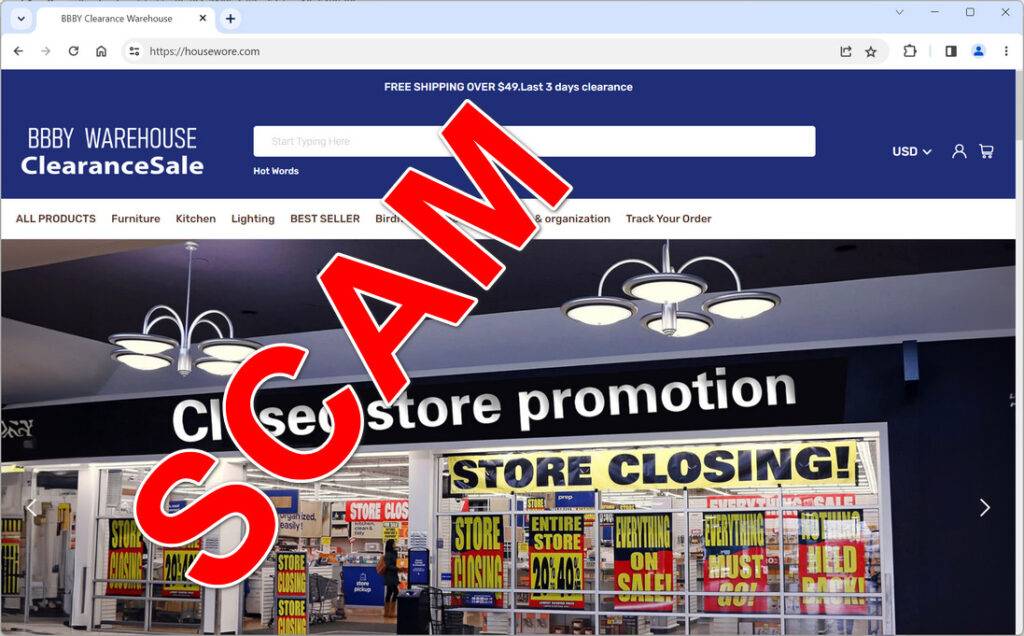
What are the BBBY Clearance Warehouse Shopping Websites?
Bed Bath & Beyond (BBBY) is a popular home goods retailer, but some fraudulent websites are impersonating them to scam customers. These fake BBBY Clearance Warehouse shopping sites are designed to mimic the real company’s website to trick people into thinking they are legitimate.
The BBBY Clearance Warehouse scam sites use very similar templates, logos, images, and even domain names containing “Bed Bath & Beyond” to appear as authorized online Bed Bath & Beyond stores. Some promote fake clearance sales or unrealistic low prices to attract customers searching for deals.
In reality, these websites have no connection to the actual Bed Bath & Beyond company. They are scam operations looking to steal money, data, or spread malware using the brand’s reputation.
How the BBBY Clearance Websites Operate
While at first glance these BBBY Clearance Warehouse scam sites appear convincing as Bed Bath & Beyond outlets, a closer look reveals their deceitful nature. They are designed intentionally to confuse shoppers into thinking they are on the official Bed Bath & Beyond site in order to scam them.
The fake BBBY warehouse sites utilize very similar templates, logos, images and even domain names containing the BBBY name. Many advertise clearance sales or excessively low prices on appliances, furniture, bedding and more to attract deal seekers.
However, they have no actual connection to the real company and often have multiple red flags consumers should watch for:
- No legitimate business registration, contact info, addresses or phone numbers
- Domain names slightly altered from the real BBBY URLs
- Strange phrasing in product descriptions, bad grammar, typos
- Fake customer reviews that seem overly positive
- Non-working social media links
- Requests for unsafe payment methods like bank transfer or gift cards
These scam websites either take payment but never ship any items, deliver low-quality knockoffs or rip off credit card information provided by customers lured in by “clearance” pricing.
How to Identify the BBBY Clearance Warehouse Scam Websites
Luckily savvy shoppers can recognize these BBBY Clearance Warehouse scam websites through several key signs:
- Verify the domain name matches Bed Bath & Beyond’s official bedbathandbeyond.com site exactly
- Search for the site name online along with “scam” or “review” to uncover warnings
- Check for a real contact page with company address, customer service number, employee names
- Ensure product images aren’t edited or generic stock photos
- Compare prices against Bed Bath & Beyond’s current pricing – if too low it is likely a scam
- Look for poorly written product descriptions, grammar/spelling errors
- Make sure social media links actually work and match the site content
- Avoid sites only offering payment via bank transfer, gift card or cryptocurrency
- Check for secure checkout with “https” URLs and lock icons on order pages
What to Do if You Fell Victim to the BBBY Clearance Warehouse scam
If you placed an order through one of these scam websites posing as Bed Bath & Beyond clearance outlets and never received your items, take these steps:
- Immediately alert your credit card provider or bank to report the charges as fraudulent
- Closely monitor financial accounts for any unauthorized transactions from the scam site
- File a complaint with the FBI’s Internet Crime Complaint Center at IC3.gov
- Leave reviews about your experience to warn other consumers
- Change account passwords you entered on the fake website as a precaution
- Contact the real Bed Bath & Beyond to notify them of the scam site
- Report the site to the FTC to help get it shut down
Avoid Being Scammed By Seeking Out Authentic Retailers
While scam websites pretending to sell BBBY clearance merchandise may proliferate, savvy shoppers can protect themselves. Stick to ordering directly from the real Bed Bath & Beyond website and be extra cautious of deals that seem too good to be true. Stay vigilant and only provide information to secure, reputable retailers to avoid BBBY clearance scams.

Join the discussion
0 commentsShare your experience or ask a question about this article.
Discussion
Start the conversation
Have a question or something useful to share? Add the first comment.