


Two pairs of glasses sit in the Bcadeaus catalog. One looks like a simple reader, while the other resembles the sunglasses you might take on a trip.
The labels make them sound closer than they are. Before picking a pair, it helps to work out what each one is supposed to do.
Overview
The $39 autofocus listing and the $45 AI listing are separate
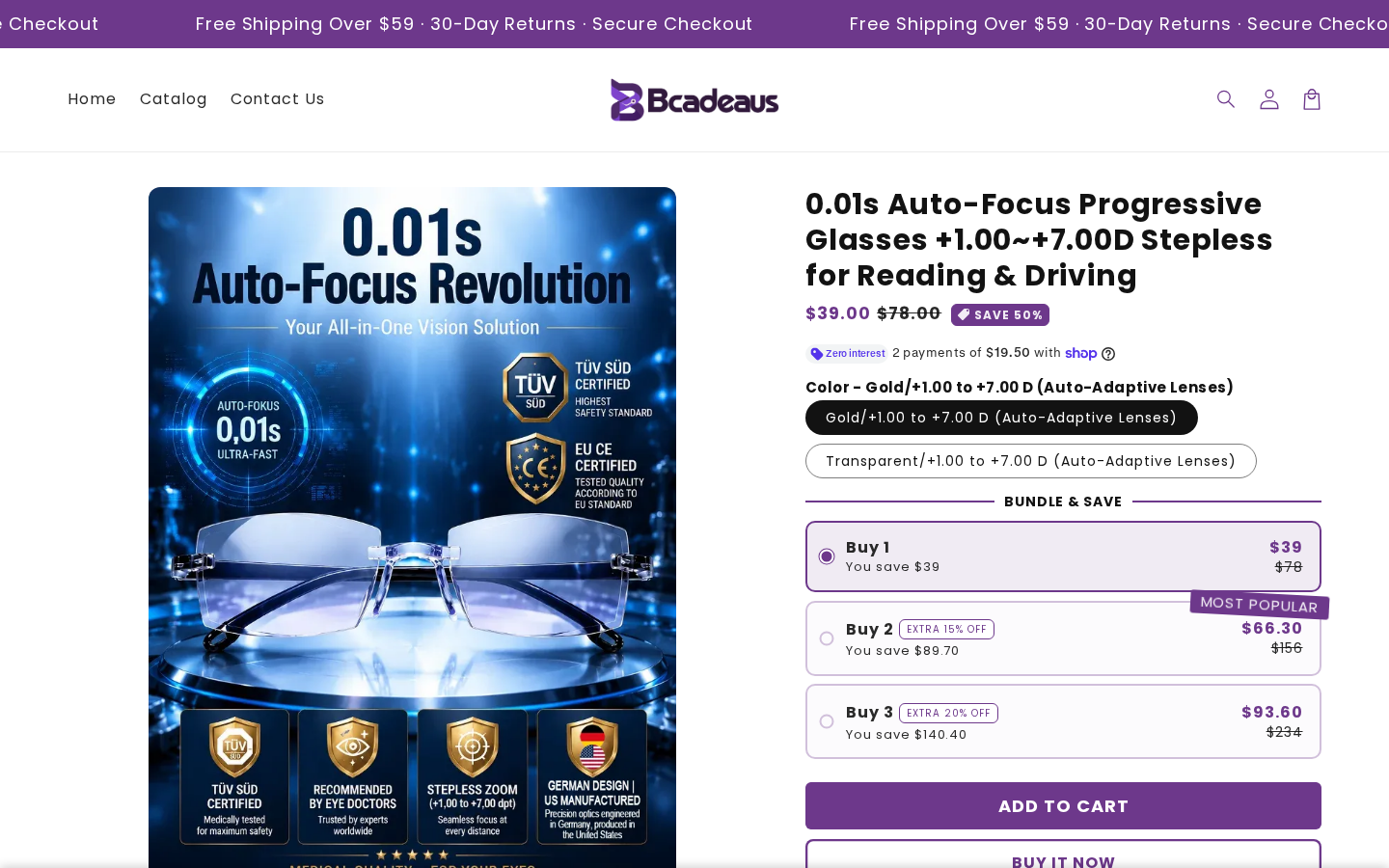
Bcadeaus markets one pair as progressive glasses with focus that adjusts in 0.01 seconds. It lists a range from +1.00 to +7.00 D and mentions reading and driving.
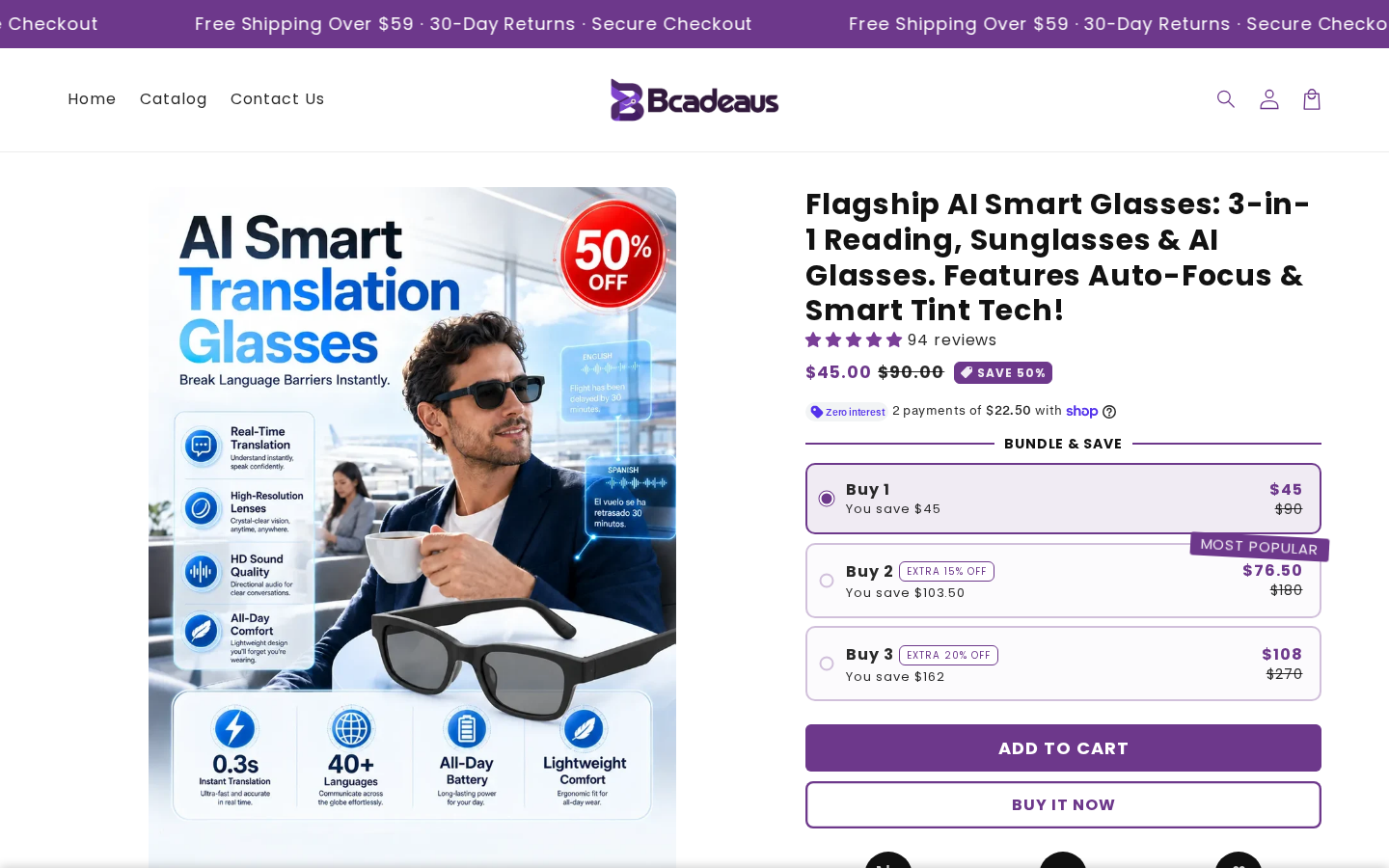
A different page advertises Flagship AI Smart Glasses. It combines a reading and sunglasses pitch with claims about smart tint, sound and translation in more than 40 languages.
Do not assume that buying the cheaper frame gives you the functions advertised on the second page. The products have separate listings and different prices.
Look for the details that would make each promise testable
For the readers, the question is whether the lenses themselves change power or simply have different viewing zones. Those are two different ways of seeing at different distances.
For the AI pair, the question is what equipment and software you need to translate a conversation. A feature name is not a compatibility list or a setup guide.
We checked the listings and policies without buying a pair. The images show what the shop advertised, not a test of the lenses, the electronics or the translation speed.
The return terms matter if you want to test a claim yourself
The site banner advertises a 30-day return period. The two separate policy pages give different details about packaging, labels and buyer-paid postage.
- The pages distinguish one, two and three pairs. On the captures, one pair was selected, not the offer promoted as most popular.
- The product image shows certification-style badges, but a badge is not enough to identify the test report for the exact frame and lenses.
- The return instructions do not clearly say what happens when you open a package to check a function that was promised in the listing.
- The evidence supports skipping the purchase, not claiming that every order is fraudulent or that no glasses are ever delivered.
What the Autofocus and AI Claims Actually Tell You
A progressive lens is not a timed autofocus mechanism
A conventional progressive lens has different areas that help with different viewing distances. Looking through a different part of the lens is not the lens changing its own power.
Bcadeaus puts a timing figure on its claim. To evaluate it, you would need to know what is changing, what starts the measurement and how the result was measured.
The range in diopters is another separate claim. It does not tell you whether the glasses match your needs, how the two eyes are corrected or which models were tested.
The American Academy of Ophthalmology’s reader guidance explains why ready-made readers can be unsuitable if your eyes have different prescriptions or you need a different kind of correction.
Do not use unverified glasses as your driving correction. If you need vision correction for driving, ask an eye care professional about lenses that meet your needs.
Translation is a separate claim on another frame
The flagship listing’s artwork shows a traveler, a translation example and figures for translation speed and the number of supported languages. The front of the pitch is easy to understand.
The purchase decision depends on details behind that picture. Determine whether the audio comes through the frame, whether a phone is needed and whether the service still works while offline.
Those details matter if you are buying the glasses for a trip. A pair of tinted frames is not a substitute for a verified translator if the advertised feature fails.
Look for the model number and a manual that covers the same hardware pictured on the listing. A manual for another pair would not answer those questions.
The listing shows a count of 94 reviews. That number does not independently verify the advertised translation speed or the list of supported languages.
One displayed review mentions an app for adjusting tint. Look for the app’s exact name, publisher and supported phones before buying a pair on that basis.
If you plan to use the glasses away from Wi-Fi, ask how translation works without it. A listing can mention languages without saying how the service processes speech.
The graphic says 0.3 seconds for translation. That is not the 0.01-second focus figure from the other listing, and neither number tells you the test conditions.
Neither listing verifies what the badges or graphics imply
The autofocus product image includes a TÜV SÜD certification claim and a CE-style badge. It also describes German design and manufacturing in the United States.
The graphic does not supply a certificate number for the exact product. Without one, we cannot say the claimed certification is valid or that the mark is fake.
Ask for a document that names the manufacturer, model, scope and certifying body. Read what was tested rather than assuming a badge confirms the lens speed or suitability for driving.
A test of tinted material, for example, would not explain how a lens changes focus. Match the stated test to the exact promise that made you consider buying.
A professionally produced graphic could have been made in many ways. The problem is what it leaves unverified, not whether one part of it looks like an AI image.
Seller Identity, Bundle Prices and Return Rules
Identify the actual seller before relying on an origin claim
The pages use the Bcadeaus name, and the general refund page lists info@bcadeaus.com for returns questions. That is a support address, not independent proof of who manufactured either frame.
If you already bought a pair, compare the order email, payment descriptor and receipt. Keep the name that actually appears in each place instead of assuming they must all match.
Save the product page that applies to your order. An image claiming United States manufacturing does not identify where a specific shipment started or where returns will be processed.
The product pages estimate one to three business days for processing and seven to fourteen business days after dispatch. Those are seller estimates, not observed delivery times.
Before relying on the glasses for a trip, ask what dispatch and delivery mean for your address. Do not confuse the purchase date with when a parcel starts moving.
The number of pairs changes the total, not what the glasses can do
The autofocus page showed $39 for one pair, $66.30 for two and $93.60 for three. The AI listing separately showed $45, $76.50 and $108.
Two pairs were promoted as the popular option, but one was selected on both captures. The larger amount is a quantity offer, not proof that extra items were secretly added.
The banner advertised free shipping over $59. Buying an extra pair to cross that line can still cost more than sticking with what you originally wanted.
The offer also shows installment messaging. Splitting one purchase into two payments is different from signing up for recurring shipments. We did not complete a checkout or place an order.
The main refund policy says to request a return first
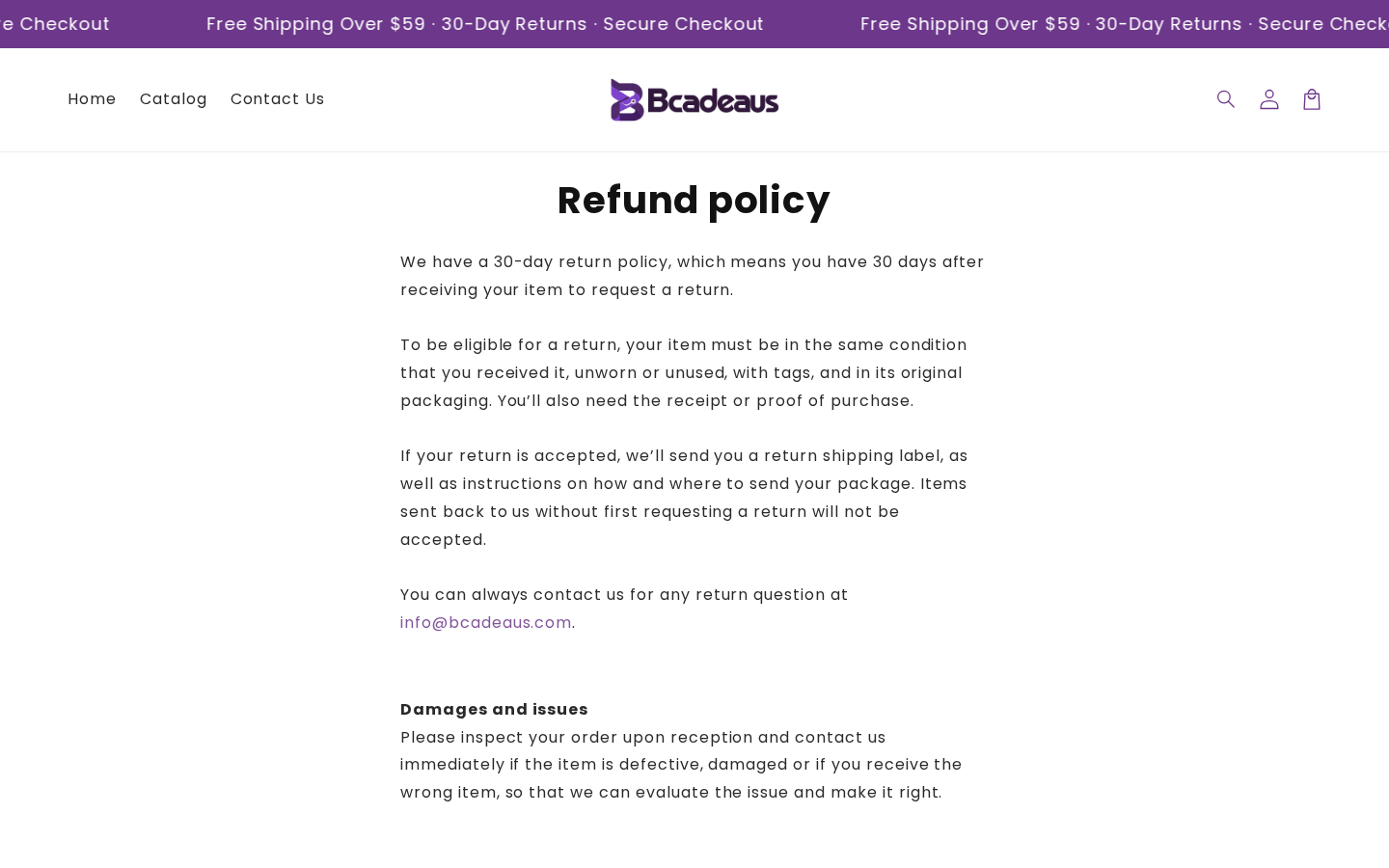
One page says you have 30 days after receiving an item to ask for a return. It calls for unused or unworn condition, tags, packaging and proof of purchase.
It says the store will send a label and instructions if it accepts the return. It does not follow that a return can be sent before the store answers.
If the glasses arrive wrong or defective, report the specific problem promptly. Keep the initial packaging and photos so you can show how the item arrived.
The separate return page leaves a big practical question
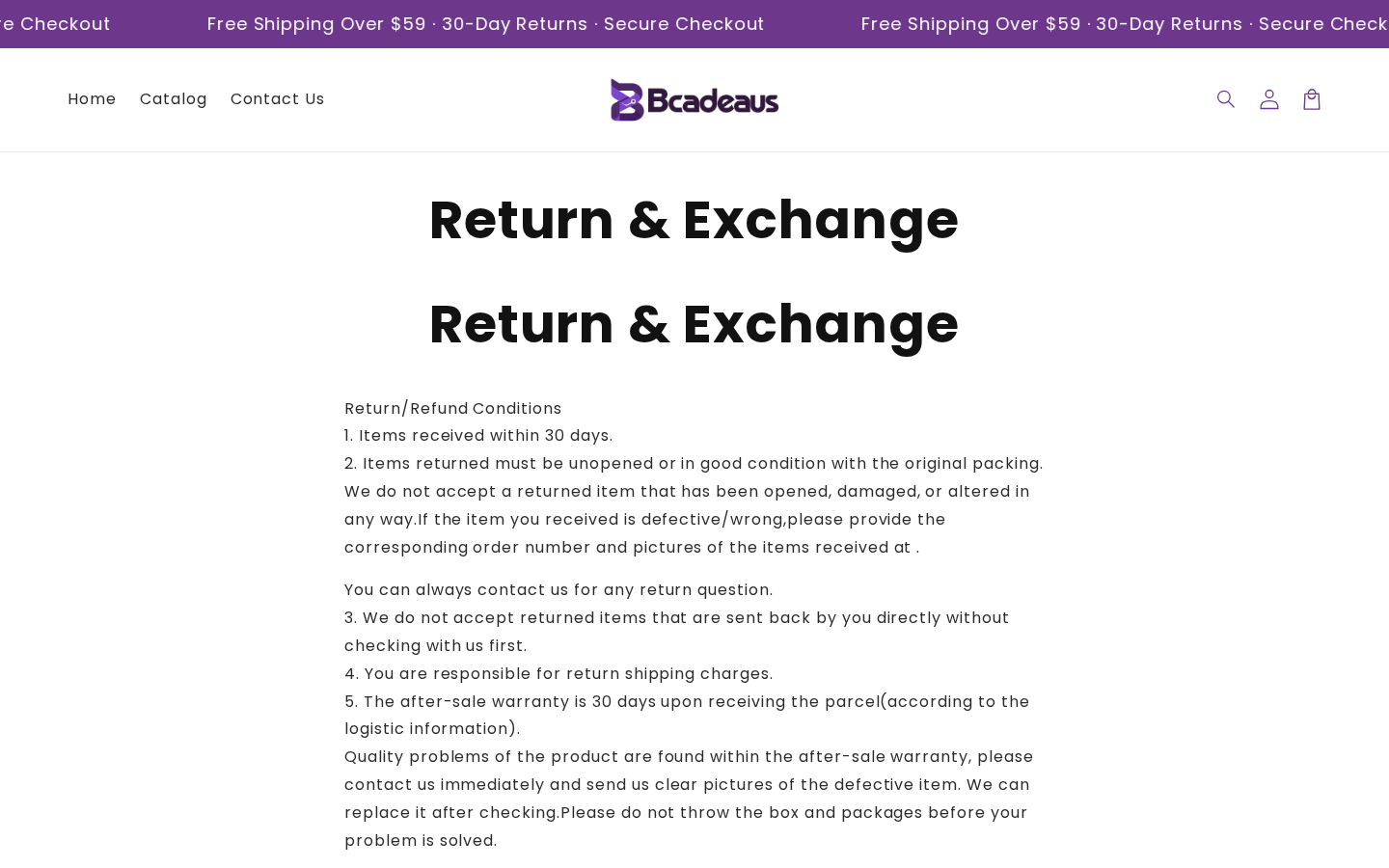
The second page says the buyer is responsible for return shipping. It calls for original packaging and says opened returns are not accepted, while separately addressing wrong or defective items.
Read that beside the page saying a label will be sent after approval. A label is not always prepaid, so the wording alone does not prove that postage is covered.
Neither capture settles what happens when you open the box to discover a promised function is missing. Get an answer that refers to your actual model and issue.
If you already ordered, save both policies. The version quoted in a reply from customer support might not be the only condition shown when you bought the item.
What to Do If You Already Ordered Bcadeaus Glasses
-
Save the listing for the exact pair you ordered. Keep the product name, selected options, promises that mattered to you and total shown on your receipt.
If you ordered the translation model, preserve the language and connectivity claims relevant to your purchase. A complaint about the other pair does not establish what you bought.
-
Keep the box and document anything that arrived wrong. Photograph the model number, packaging and the actual contents without exposing your address or payment details.
If the glasses are not suitable for driving, do not test them behind the wheel. Document the label or missing specification instead of trying to prove a claim there.
-
Ask for a remedy in writing before sending anything back. State whether the issue is a missing feature, damage, wrong item or an ordinary change of mind.
Ask for a return authorization, the destination and who pays. Get the proposed refund amount, including any postage deduction, before buying a shipping label yourself.
-
Check the payment record if the total is different. Compare quantities, shipping, taxes and any installment schedule with the order confirmation to identify the charge that needs attention.
If you did not authorize a transaction, contact the card issuer through its official number. If you did order but received something different, explain that distinction.
-
Ask your issuer about its deadline if the store does not resolve it. Keep the written return request and proof of any shipment you were authorized to send.
The FTC’s shopping guidance recommends preserving records of the order and its return conditions. Do not wait indefinitely for an answer while a dispute window closes.
Get the Answers That Would Change Your Buying Decision
Start with your reason for buying. If you need readers, ask how the model accommodates different correction in each eye and whether it can meet your prescription.
If you want translation, ask which languages are supported in both directions. Find out whether that includes the languages you actually need and whether there are extra fees.
Ask the merchant what is in the box. A claimed full day of battery life does not say whether you need a separate charger or how the time was measured.
Ask how you can tell the translation function is working. Look for instructions specific to the advertised model rather than a slideshow of situations where it might be useful.
A picture of a clear lens next to a dark one does not establish how they respond inside a car. Do not assume tint and vision correction are interchangeable.
If you are comparing alternatives, compare the total for one pair with the same features and return conditions. Avoid taking the advertised quantity discount as the starting price.
Check whether software updates or service access are required to keep the feature working. A product can arrive on time and still depend on something the seller never explained.
If those questions have no clear answers, the limited return window makes ordering riskier. Do not buy several pairs just to learn what the first one does.
Frequently Asked Questions
Are the $39 and $45 Bcadeaus offers the same product?
The two pages sell separate pairs of glasses. One advertises autofocus for reading and driving; the other is sold with AI translation and tint claims.
Do progressive lenses normally change focus in 0.01 seconds?
Ordinary progressives use areas of different lens power. That does not substantiate a timed focus change, which would need evidence specific to the product advertised.
Can I use the Bcadeaus readers while driving?
Do not rely on an ad to decide that a pair is suitable for driving. Use the vision correction recommended for that purpose by an eye care professional.
Do the certifications prove all the advertised features work?
A mark alone does not tell you what was tested. Look for the actual certificate and check that it covers the same model and the claim you care about.
Is the bundle selector a subscription?
The observed selector offered quantities for one purchase. That is not evidence of recurring orders, and the pages did not establish an automatic refill or recurring eyewear program.
Can I return glasses after opening the box?
The site has separate policy pages and the return instructions flag opened items. Ask for a written answer for your order, especially if the claimed feature is missing.
The Bottom Line
Do not buy Bcadeaus glasses for autofocus, driving or AI translation on the strength of these pages. Choose a pair whose lens specifications or supported features you can verify.
If you already ordered, keep the listing and packaging and ask for written return instructions. If the seller does not resolve the problem, check your payment provider’s dispute deadline.

Join the discussion
0 commentsShare your experience or ask a question about this article.
Community experiences
Did this happen to you?
Your experience could help someone recognize the same scam. Submit a private report for our team to review.
I experienced this tooReports are reviewed before publication. Sharing publicly is always your choice.
Discussion
Start the conversation
Have a question or something useful to share? Add the first comment.