

Making money online effortlessly is a tempting offer. Websites like PayTube lure users with promises of easy daily earnings—just watch videos, complete tasks, or invite friends. However, hidden behind these seemingly harmless opportunities lies a sophisticated scam designed to exploit unsuspecting users. In this detailed article, we’ll uncover how the PayTube Scam operates, the deceptive practices used, and how you can protect yourself.




Scam Overview: The Dark Side of PayTube
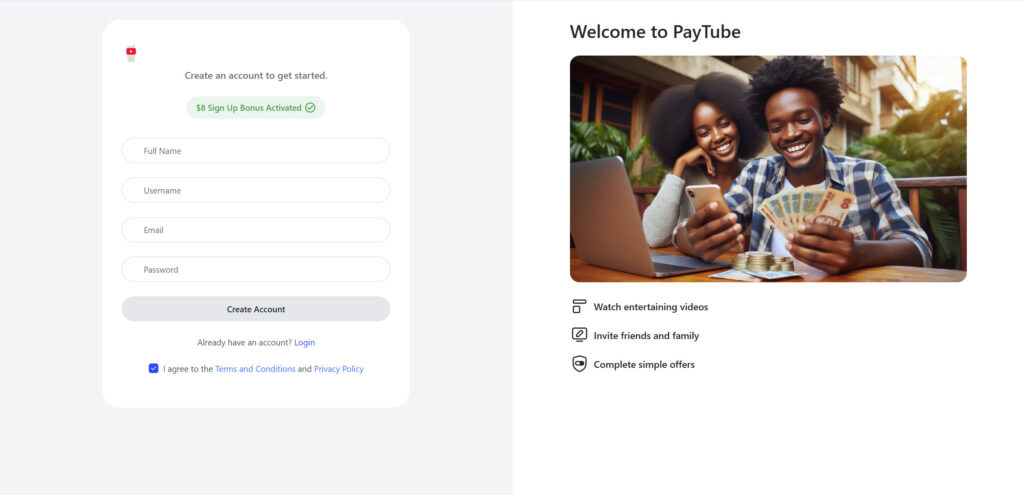
PayTube presents itself as a legitimate platform that offers financial rewards simply for watching videos, completing minor tasks, and inviting new users. With attractive visuals and user-friendly interfaces, these sites often promise earnings of $20 or more per day. They usually have eye-catching statements like “$8 Sign-Up Bonus Activated” or “Earn $1 per video watched,” drawing in people looking for easy ways to supplement their income.
However, these sites—including domains like Cuvimox.site, and others ending in .xyz or .site—are part of a growing network of fraudulent schemes. At first glance, PayTube appears professional. It has clean graphics, smooth navigation, and even referral programs. But beneath this professional façade lies a trap set to steal personal information, trick users into unwanted subscriptions, or force installations of suspicious apps.

The websites under the PayTube umbrella often reuse the same template, changing only the domain names or minor visual details. This cloning strategy makes them difficult to track and identify, allowing scammers to quickly rebrand when a domain is exposed or taken down.
Once a user registers on PayTube, they start watching videos and accumulating earnings rapidly. However, these earnings are superficial and meant only to increase excitement and encourage further engagement. Users are quickly introduced to referral schemes promising generous commissions—further incentivizing spreading the scam to friends and family, inadvertently turning victims into recruiters.
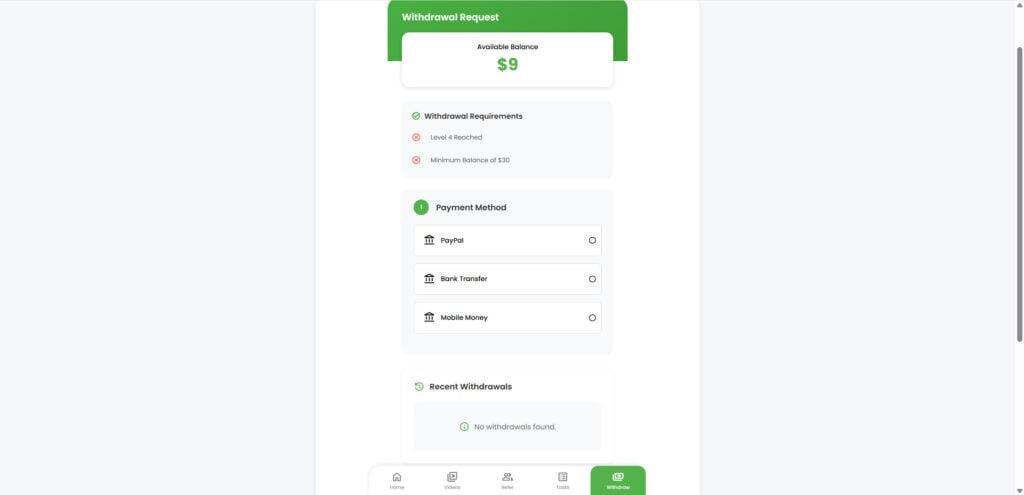
Withdrawal requirements are intentionally complex and nearly impossible to achieve. Users might find that reaching the required withdrawal threshold involves inviting numerous friends, completing daily tasks indefinitely, or subscribing to hidden services. In the end, no money ever materializes in the user’s bank account. Instead, victims lose time, personal data, and in many cases, money through unwanted recurring payments or subscriptions.
Affiliate offers displayed on PayTube are a significant part of the scam, often leading to unwanted premium subscriptions billed monthly, installations of suspicious software, or malicious browser extensions designed to steal sensitive data. Users initially believe they’re simply engaging with advertisements or sponsored content, not realizing they’re falling deeper into a carefully orchestrated trap.
How The Scam Works
- Initial Attraction:
PayTube websites attract users through targeted ads, social media promotions, or referrals from friends. Promises of daily earnings for minimal effort are the primary lure. - Registration Process:
Users are guided through a straightforward sign-up process, collecting personal data such as full names, email addresses, and sometimes even payment details under the guise of future earnings withdrawal. - Earning Mechanics:
Once registered, users watch videos or complete basic tasks for alleged financial rewards. Each completed activity displays instant “earnings,” artificially inflating users’ sense of accomplishment and pushing them to continue. - Referral Systems:
Users are encouraged to invite friends through personalized referral links. The website promises substantial bonuses, creating a pyramid-like structure that multiplies the scam’s reach exponentially. - Complex Withdrawal Conditions:
Attempting to cash out earnings exposes the scam. Withdrawal criteria include reaching multiple levels by watching numerous videos, inviting multiple referrals, and completing several tasks daily. - Unwanted Subscriptions & Downloads:
To “unlock” certain withdrawal features, users are asked to complete “verification tasks,” involving affiliate offers or third-party sign-ups. This leads users into unwanted premium services or apps with recurring charges. - Failure to Pay Out:
Even after meeting extensive requirements, the website stalls the withdrawal process indefinitely, citing “technical issues,” “verification delays,” or ultimately, simply ignoring requests entirely. - Rebranding and Disappearing:
Eventually, when too many users become suspicious or authorities intervene, scammers quickly shut down the domain, only to relaunch under a new name and continue exploiting new victims.
What to Do if You’ve Fallen Victim
- Stop Immediately:
Cease all interactions with the PayTube platform and any affiliated offers or links. - Check Financial Statements:
Review your bank accounts, credit card statements, or PayPal for unauthorized charges or recurring subscriptions. - Cancel Unwanted Subscriptions:
Immediately contact your bank or service providers to cancel any unauthorized or suspicious subscriptions. - Change Passwords and Secure Accounts:
Update passwords for all accounts associated with the scam and enable two-factor authentication where possible. - Scan for Malware:
Perform a comprehensive antivirus scan on your devices to detect and remove any malicious apps or browser extensions installed from affiliate offers. - Report the Scam:
Report PayTube and its affiliated domains to relevant authorities such as the FTC, your local consumer protection agency, and cybercrime reporting portals like the FBI’s Internet Crime Complaint Center (IC3). - Warn Your Contacts:
Alert friends and family about PayTube to prevent further spread and victimization. - Monitor Identity Theft Risks:
Due to potential data breaches, monitor your identity closely through credit monitoring services to ensure no unauthorized activities take place. - Seek Professional Help if Necessary:
If financial losses are significant or you notice signs of identity theft, contact financial advisors or legal professionals to guide you through recovery.
Is Your Device Infected? Run a Free Malware Scan
Slow performance, constant pop-ups, or strange behavior? These are classic signs of a malware infection. The fastest way to find out is to scan your device with Malwarebytes Free — one of the most trusted malware removal tools available.
The free version detects and removes the most common threats, including:
- Adware — the cause of those annoying pop-ups
- Browser hijackers — unwanted redirects and changed homepages
- Trojans and spyware — hidden programs stealing your data
- Potentially unwanted programs (PUPs) — software you never asked for
👉 Select your device below — Windows, Mac, or Android — then follow the simple steps to download Malwarebytes, scan your system, and remove any threats it finds. The scan usually takes 5 to 20 minutes.
Run a Malware Scan with Malwarebytes for Windows
Malwarebytes is one of the most popular and trusted anti-malware tools for Windows — and it’s completely free for removing infections. It catches threats that many antivirus programs miss, including adware, browser hijackers, and trojans. Follow the steps below to scan and clean your PC in just a few minutes.
Download Malwarebytes
Click the button below to download the latest version of Malwarebytes for Windows from the official source. The free version is all you need — it will scan your computer and remove adware, browser hijackers, and other malicious software at no cost.
Download MalwarebytesOfficial installer for Windows 11 and 10. Your download starts right away.Want real-time protection? See Malwarebytes Premium Malwarebytes Free for WindowsScans and removes malware at no cost
-
Install Malwarebytes
When the download finishes, open your Downloads folder and double-click the MBSetup file. If Windows shows a User Account Control pop-up, click “Yes” to allow the installation.

Follow the On-Screen Prompts to Install Malwarebytes
The setup wizard will walk you through a few quick screens:
-
Choose where you’re installing the program — “Personal Computer” or “Work Computer” — then click Next.

-
Malwarebytes will now install on your device. This usually takes under a minute.

-
When installation is complete, the “Welcome to Malwarebytes” screen will open automatically.

-
On the final screen, click Open Malwarebytes to launch the program.

-
Enable “Scan for Rootkits”
Before scanning, turn on rootkit detection so Malwarebytes can find even the most hidden threats. Click the Settings gear icon on the left side of the screen.

In the settings menu, find “Scan for rootkits” and click the toggle so it turns blue.

Done? Click “Dashboard” in the left pane to return to the main screen.
Start the Scan
Click the blue Scan button. Malwarebytes will automatically update its virus database and start checking your computer for malware.

-
Wait for the Scan to Finish
The scan checks your entire system for browser hijackers and other malicious programs, so it can take 5 to 20 minutes depending on your computer. Feel free to do something else — just check back occasionally to see the progress.

-
Quarantine the Detected Threats
When the scan is done, you’ll see a list of everything Malwarebytes found — malware, adware, and potentially unwanted programs. Click the “Quarantine” button to remove all of them at once.

Malwarebytes will now remove the malicious files and registry entries and move them safely into quarantine.

-
Restart Your Computer
Some threats can only be fully removed after a reboot. If Malwarebytes asks you to restart, click Yes. Once you’re logged back in, Malwarebytes has finished removing the threats it found.

That’s it — your Windows PC is now clean of trojans, adware, and other malware, and should be back to running smoothly.
If you are still having problems with your computer after completing these instructions, then please follow one of the steps:
- Run a computer scan with ESET Online Scanner
- Ask for help in our Windows Malware Removal Help & Support forum.
Run a Malware Scan with Malwarebytes for Mac
Malwarebytes for Mac is a free on-demand scanner that removes the malware other security software tends to miss — adware, browser hijackers, and unwanted programs included. Cleaning an infected Mac with Malwarebytes has always been completely free, and it’s our go-to recommendation. Follow the steps below to scan and clean your Mac in just a few minutes.
-
Download Malwarebytes for Mac
Click the button below to download the latest version of Malwarebytes for Mac.
Download MalwarebytesOfficial installer for macOS. Your download starts right away.Want real-time protection? See Malwarebytes PremiumMalwarebytes Free for MacScans and removes malware at no cost -
Open the Malwarebytes setup file
When the download finishes, open your Downloads folder and double-click the setup file to begin the installation.

-
Follow the On-Screen Prompts to Install Malwarebytes
The Malwarebytes for Mac Installer will guide you through a few quick screens. Click “Continue” and keep following the prompts until the installation completes.



When the installation is complete, Malwarebytes opens to the Welcome to Malwarebytes screen. Click “Get started“.
-
Select “Personal Computer” or “Work Computer”
Malwarebytes will ask what type of computer you’re installing it on. Click either Personal Computer or Work Computer, whichever applies.

-
Start the Scan
Click the “Scan” button. Malwarebytes will automatically update its detection database and begin checking your Mac for malware.

-
Wait for the Scan to Finish
Malwarebytes will scan your Mac for adware, browser hijackers, and other malicious programs. This can take a few minutes, so feel free to do something else — just check back occasionally to see the progress.

-
Quarantine the Detected Threats
When the scan is done, you’ll see a list of everything Malwarebytes found. Click the “Quarantine” button to remove all the threats at once.

-
Restart Your Mac
Malwarebytes will now remove all the malicious files it found. Some threats can only be fully removed after a reboot — if Malwarebytes asks you to restart, allow it. Once you’re logged back in, your Mac is clean.

That’s it — your Mac is now free of adware, rogue browser extensions, and other potentially harmful software.
If you are still experiencing problems while trying to remove a malicious program from your computer, please ask for help in our Mac Malware Removal Help & Support forum.
Run a Malware Scan with Malwarebytes for Android
Malwarebytes for Android automatically detects and removes dangerous threats like malware and ransomware so you don’t have to worry about your most-used device being compromised. Aggressive detection of adware and potentially unwanted programs keeps your Android phone or tablet running smooth.
-
Download Malwarebytes for Android.
You can download Malwarebytes for Android by clicking the link below.
Get Malwarebytes for AndroidOpens Google Play in a new tab.Want real-time protection? See Malwarebytes Premium for AndroidMalwarebytes for AndroidScans your phone and removes malware at no cost -
Install Malwarebytes for Android on your phone.
In the Google Play Store, tap “Install” to install Malwarebytes for Android on your device.

When the installation process has finished, tap “Open” to begin using Malwarebytes for Android. You can also open Malwarebytes by tapping on its icon in your phone menu or home screen.

-
Follow the on-screen prompts to complete the setup process
When Malwarebytes will open, you will see the Malwarebytes Setup Wizard which will guide you through a series of permissions and other setup options.
This is the first of two screens that explain the difference between the Premium and Free versions. Swipe this screen to continue.
Tap on “Got it” to proceed to the next step.
Malwarebytes for Android will now ask for a set of permissions that are required to scan your device and protect it from malware. Tap on “Give permission” to continue.
Tap on “Allow” to permit Malwarebytes to access the files on your phone.
-
Update database and run a scan with Malwarebytes for Android
You will now be prompted to update the Malwarebytes database and run a full system scan.

Click on “Update database” to update the Malwarebytes for Android definitions to the latest version, then click on “Run full scan” to perform a system scan.

-
Wait for the Malwarebytes scan to complete.
Malwarebytes will now start scanning your phone for adware and other malicious apps. This process can take a few minutes, so we suggest you do something else and periodically check on the status of the scan to see when it is finished.

-
Click on “Remove Selected”.
When the scan has been completed, you will be presented with a screen showing the malware infections that Malwarebytes for Android has detected. To remove the malicious apps that Malwarebytes has found, tap on the “Remove Selected” button.

-
Restart your phone.
Malwarebytes for Android will now remove all the malicious apps that it has found. To complete the malware removal process, Malwarebytes may ask you to restart your device.
That’s it — your Android phone is now clean — no more malicious apps, adware, or browser redirects.
If you are still having problems with your phone after completing these instructions, then please follow one of the steps:
- Restore your phone to factory settings by going to Settings > General management > Reset > Factory data reset.
- Ask for help in our Mobile Malware Removal Help & Support forum.
Stay Protected: Block Ads and Malicious Sites
Now that your device is clean, keep it that way. Most infections start with a malicious ad or a fake download button — so blocking them at the source is your best defense.
We recommend AdGuard, which blocks malicious ads, phishing pages, and dangerous redirects before they can reach you.
👉 Download AdGuard and browse safely
What is the PayTube Scam?
The PayTube scam involves fraudulent websites claiming users can earn significant daily income (often advertised as “$20+ daily”) by simply watching videos, referring friends, or completing small tasks. In reality, users never receive any payments, and the scam primarily aims to trick users into providing personal data or subscribing unknowingly to unwanted paid services.
How can I identify a PayTube scam site?
PayTube scam websites often share similar characteristics, including:
- Unrealistic Earning Claims: Promising high daily income with minimal effort.
- Generic Domain Names: Frequently using domains like
.xyz,.site, or suspiciously named sites such asCuvimox.site. - Template-based Designs: Reusing similar templates across various scam domains.
- Lack of Legitimate Contact Information: Missing credible customer support details or physical addresses.
Do people actually get paid from PayTube?
No. Although these scam websites often display fake testimonials, screenshots, or payment proofs, users who attempt to withdraw their earnings typically face insurmountable hurdles or never receive any actual money.
I already signed up for PayTube; what should I do?
If you’ve already signed up, you should take the following steps immediately:
- Change your passwords on all online accounts, especially those linked to payment methods or banking.
- Cancel any unknown subscriptions or charges that may have appeared on your bank statements or online payment services.
- Run a full antivirus and malware scan on your computer and mobile devices to ensure they are not compromised.
- Contact your bank or payment provider if you’ve provided any payment information or suspect fraudulent activity.
- Report the scam to relevant consumer protection authorities or online scam watchdogs.
Why do PayTube sites ask me to complete tasks or watch videos?
Scam websites like PayTube use tasks and video watching as bait to:
- Collect personal information or data.
- Trigger hidden subscriptions to premium services without the user’s explicit consent.
- Generate ad revenue through forced or deceptive clicks.
You won’t benefit financially; these activities solely profit the scammers.
Are all websites with similar designs or claims scams?
While not every reward-based site is fraudulent, websites that share identical templates or excessively generous reward promises with little work required are almost always scams. Always perform due diligence before providing any information or engaging with unfamiliar websites.
What are some PayTube scam domains I should avoid?
Commonly known scam domains include, but aren’t limited to:
- Cuvimox.site
- Domains ending in
.xyz,.site,.online, or similar less-common domain extensions. - Any site with a suspicious, hard-to-remember, or nonsensical URL.
Always check reviews and warnings online before interacting with any reward-based websites.
Can I get my money back if I was scammed by PayTube?
Recovering funds from PayTube scammers can be difficult, but you should:
- Immediately contact your bank or financial institution and report the fraudulent activity.
- Request a chargeback if payments were made via debit or credit card.
- Contact payment processors like PayPal to dispute transactions.
- Report to authorities to help prevent future scams.
What should I do to avoid scams like PayTube in the future?
To avoid similar scams:
- Research thoroughly before engaging with any reward-based or money-making websites.
- Avoid websites promising easy, high daily income for minimal tasks.
- Only provide payment or personal information on trusted, verified platforms.
- Regularly monitor your financial accounts for unauthorized charges.
How do I report PayTube and similar scams?
Report fraudulent websites and scams by:
- Filing a complaint with your local law enforcement or cybercrime division.
- Reporting to the Federal Trade Commission (FTC) or equivalent authorities in your country.
- Warning others by posting your experience on scam-awareness websites and online forums.
By reporting these scams, you contribute significantly to protecting others.
Are there legitimate alternatives to PayTube for earning money online?
Yes, legitimate alternatives do exist. Genuine online earning opportunities usually involve consistent work, realistic earning potentials, and transparent payout processes. Some trustworthy alternatives include:
- Verified freelance platforms (Upwork, Fiverr).
- Legitimate survey websites (Swagbucks, Survey Junkie).
- Affiliate marketing through reputable platforms (Amazon Associates, CJ Affiliate).
Always verify user reviews and legitimacy before signing up.
The Bottom Line
PayTube may initially appear as a straightforward, attractive opportunity to make easy money online, but it’s nothing more than a carefully disguised scam. Behind flashy graphics and easy tasks lie complicated conditions, unwanted subscriptions, and deceptive practices designed to exploit unsuspecting users. Always exercise caution, perform diligent research, and steer clear of platforms that promise unrealistic returns for minimal effort. Remember, legitimate online earning opportunities will never require complicated withdrawals, unwanted subscriptions, or invasive personal information. Staying informed is your best defense against scams like PayTube.








