Beware the BloxDrop Robux Scam: How Players Get Lured Off Roblox to “Verify”
Written by: Thomas Orsolya
Published on:
BloxDrop is showing up in Roblox servers the way scam waves usually do: fast, repetitive, and across totally unrelated games. Players report seeing the same copy-paste messages over and over, claiming someone is “winning tons of Robux” or getting “free rewards”, often pushed by accounts that don’t seem to behave like real players.
If you’re seeing BloxDrop links or lookalike domains like bloxdrop.com in chat, treat it as a high-risk scam campaign and do not interact with it.
Roblox is very clear on this topic: offers of free Robux or “Robux generators” are scams and should be reported.
Quick safety answer
Do not click links pushed through Roblox chat spam
Do not “verify” your account on third-party sites
Do not enter your Roblox login anywhere outside Roblox
Do not deposit Robux or money hoping to unlock a payout
What you’ll see in Roblox
This campaign typically looks like:
Repeated chat lines like “BloxDrop is legit” or “I won so much Robux”
The same wording showing up in multiple experiences
Messages that keep coming even after you switch games
“Weird” sender behavior, including accounts that appear to vanish quickly or don’t act like normal players
Misspellings or alternate spellings of the name to dodge filters (this tactic is common in Roblox scam spam)
This is not normal community marketing. It’s what volume-based scams look like: flood chat, hook a few clicks, repeat.
Why this screams “scam”
Here are the biggest red flags, in plain language:
1) Bot spam is not how legit services grow
Real platforms don’t need to invade random Roblox servers with automated scripts. Scam networks do, because they rely on scale, not trust. Roblox developers have been reporting bot-style chat spam pushing Robux “gambling” or reward links as a real problem.
2) The promise is the bait
“Free Robux”, “instant rewards”, “win Robux today” are the exact claims Roblox warns users about.
3) Lookalike domains are a classic trick
When a keyword gets blocked or reported, spam campaigns often rotate names, swap letters, or use typos to keep the link working. If you see BloxDrop plus weird variants, assume it’s part of the same funnel and stay away.
4) “Not affiliated with Roblox” does not make it safe
BloxDrop itself states it’s an independent platform and not affiliated with Roblox. That’s important because it confirms it is third-party and outside Roblox’s protection layer.
How BloxDrop-style Robux scams usually work
Even when the site design changes, the playbook stays the same:
Step 1: Spam Roblox chat until someone bites
Bots post “big win” claims, promo codes, and “free Robux” hooks to trigger curiosity and FOMO.
Step 2: Pull you off Roblox to an external site
Once you leave Roblox, you’re outside Roblox moderation, outside Roblox safety prompts, and closer to whatever the scammers want next.
Step 3: Dangle progress with coins, cases, spins, and “free” starter rewards
These systems are designed to feel like you’re one step away from cashing out.
Step 4: Hit you with “one more thing”
This is where victims get pressured into:
completing offer tasks
signing up for trials
enabling notifications
installing apps
depositing Robux or money
“verifying” their Roblox account
Step 5: Withdrawal friction so most people never get paid
Common outcomes include pending withdrawals, new minimums, repeated “verification” steps, or support that goes silent.
What’s the real risk?
Depending on what you do on the site, the risk can include:
Roblox account compromise (if you enter login details or approve something you shouldn’t)
Stolen Robux/items through trades, purchases, or unauthorized activity
Payment loss if you deposit money, buy packs, or get pushed into shady subscriptions
Data harvesting if you hand over email, usernames, or other personal details
What to do right now
If you only saw the spam
Don’t click anything
Report the chat message and block the sender (when possible)
Switch servers, or use private servers when available
If you clicked the link but didn’t enter anything
Close the tab
Do not allow notifications
Clear site data for that domain in your browser (cookies and permissions)
If you entered your Roblox username, email, or any details
Change your Roblox password immediately
Enable 2-step verification
Check your email security (password + 2FA), because email access often leads to Roblox resets
If you entered your Roblox password anywhere outside Roblox
Treat the account as compromised:
Change Roblox password now
Log out of other sessions (if available in your account settings)
Check trade history, purchase history, and friends added recently
Tell a parent/guardian if you’re a kid, or handle it with your child if you’re a parent
If you paid money or deposited anything
Contact your payment provider quickly and ask about disputes/chargebacks
Screenshot the promises, your “balance”, and any blocked withdrawal messages
Stop trying to “unlock” the payout. That’s how people lose more.
The safest way to get Robux
Roblox’s guidance is straightforward: there is no such thing as a Robux generator, and free Robux offers pushed by websites or random users should be treated as scams and reported.
If you want Robux, stick to official Roblox methods and approved in-platform systems.
Is Your Device Infected? Run a Free Malware Scan
Slow performance, constant pop-ups, or strange behavior? These are classic signs of a malware infection. The fastest way to find out is to scan your device with Malwarebytes Anti-Malware Free — one of the most trusted malware removal tools available.
The free version detects and removes the most common threats, including:
Adware — the cause of those annoying pop-ups
Browser hijackers — unwanted redirects and changed homepages
Trojans and spyware — hidden programs stealing your data
Potentially unwanted programs (PUPs) — software you never asked for
👉 Select your device below — Windows, Mac, or Android — then follow the simple steps to download Malwarebytes, scan your system, and remove any threats it finds. The whole process takes about 5 minutes.
Malwarebytes for WindowsMalwarebytes for MacMalwarebytes for Android
Run a Malware Scan with Malwarebytes for Windows
Malwarebytes is one of the most popular and trusted anti-malware tools for Windows — and it’s completely free for removing infections. It catches threats that many antivirus programs miss, including adware, browser hijackers, and trojans. Follow the steps below to scan and clean your PC in just a few minutes.
Download Malwarebytes
Click the button below to download the latest version of Malwarebytes for Windows from the official source. The free version is all you need — it will scan your computer and remove adware, browser hijackers, and other malicious software at no cost.
(The link opens in a new page where your download will start)
Install Malwarebytes
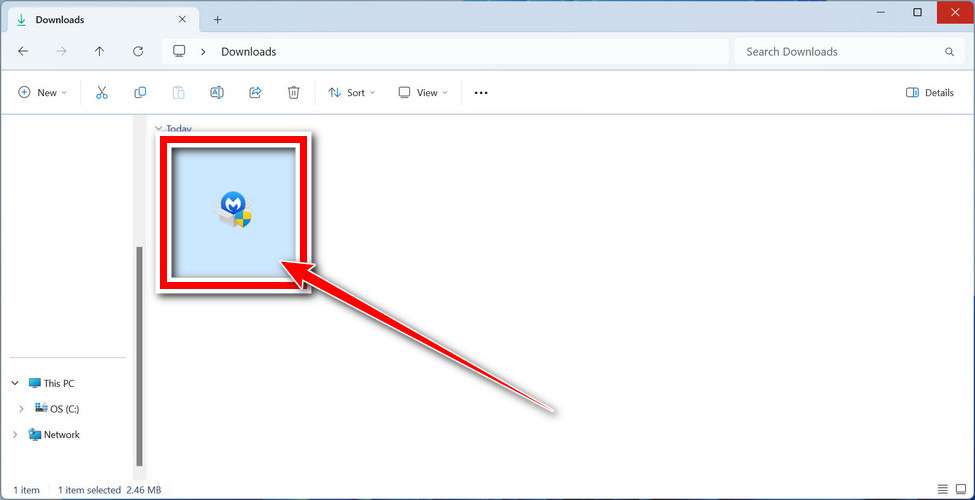
When the download finishes, open your Downloads folder and double-click the MBSetup file. If Windows shows a User Account Control pop-up, click “Yes” to allow the installation.
Follow the On-Screen Prompts to Install Malwarebytes
The setup wizard will walk you through a few quick screens:
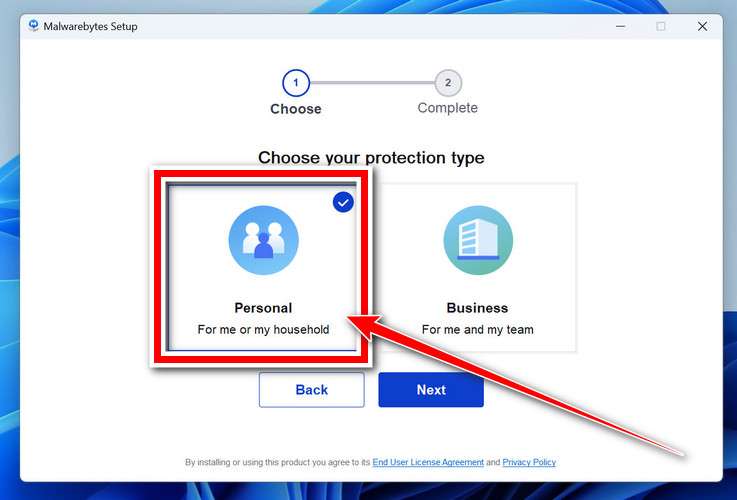
Choose where you’re installing the program — “Personal Computer” or “Work Computer” — then click Next.
Malwarebytes will now install on your device. This usually takes under a minute.
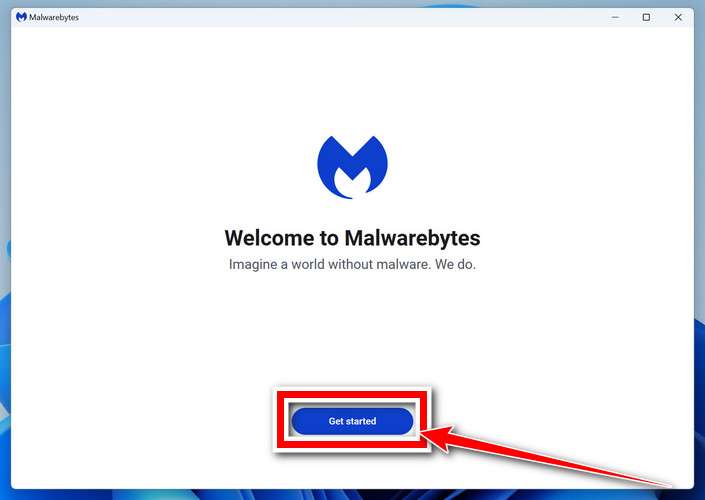
When installation is complete, the “Welcome to Malwarebytes” screen will open automatically.
On the final screen, click Open Malwarebytes to launch the program.
Enable “Scan for Rootkits”
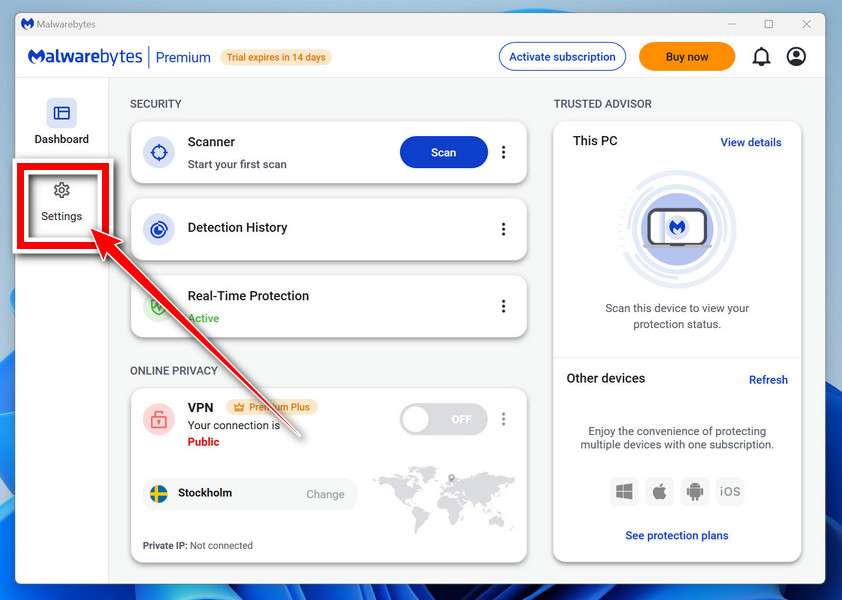
Before scanning, turn on rootkit detection so Malwarebytes can find even the most hidden threats. Click the Settings gear icon on the left side of the screen.
In the settings menu, find “Scan for rootkits” and click the toggle so it turns blue.
Done? Click “Dashboard” in the left pane to return to the main screen.
Start the Scan
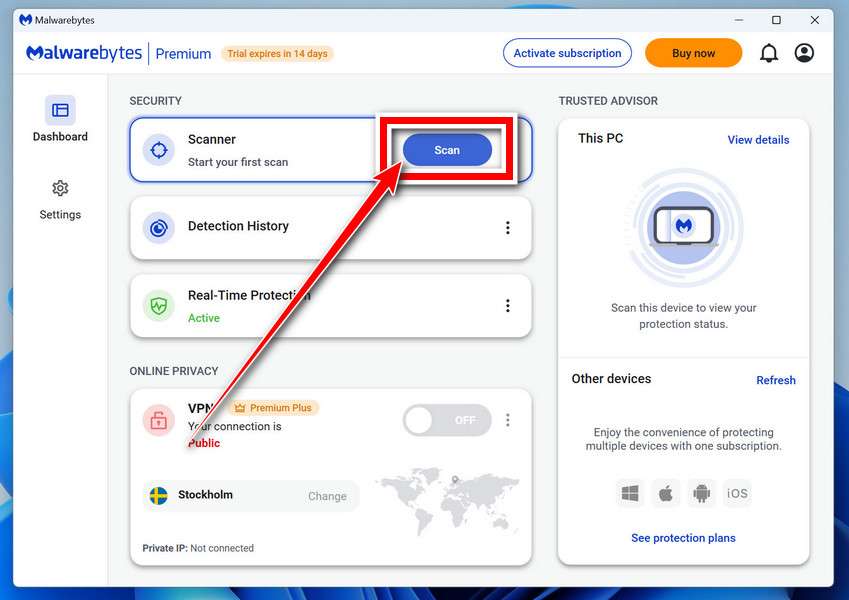
Click the blue Scan button. Malwarebytes will automatically update its virus database and start checking your computer for malware.
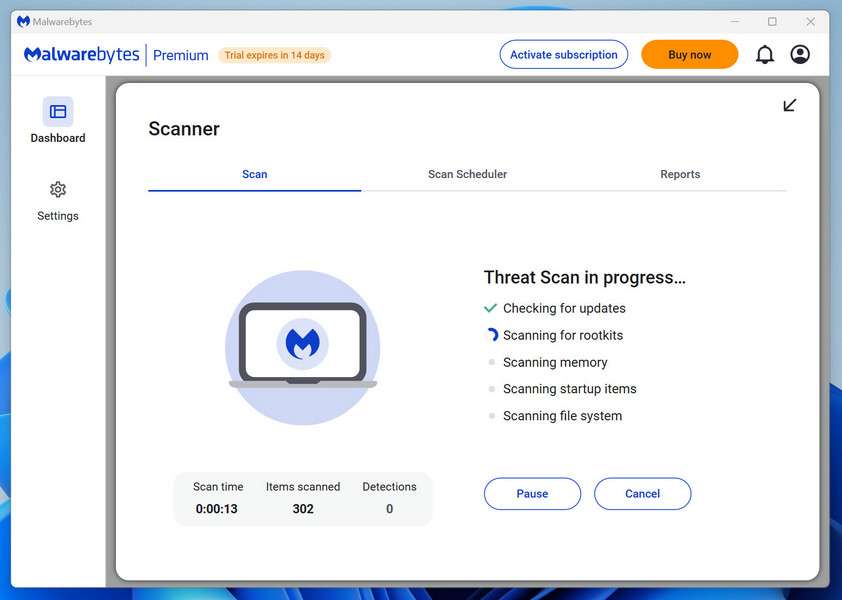
Wait for the Scan to Finish
The scan checks your entire system for browser hijackers and other malicious programs, so it can take several minutes. Feel free to do something else — just check back occasionally to see the progress.
Quarantine the Detected Threats
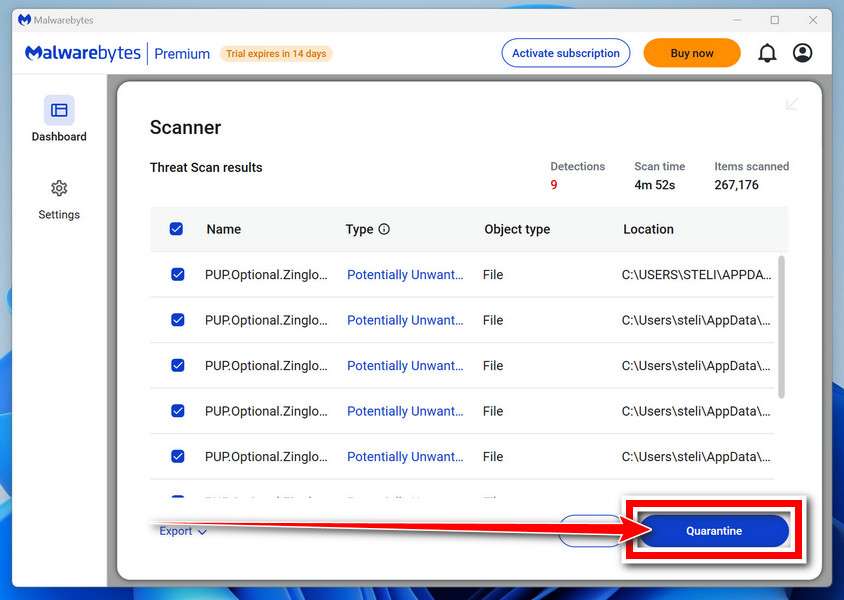
When the scan is done, you’ll see a list of everything Malwarebytes found — malware, adware, and potentially unwanted programs. Click the “Quarantine” button to remove all of them at once.
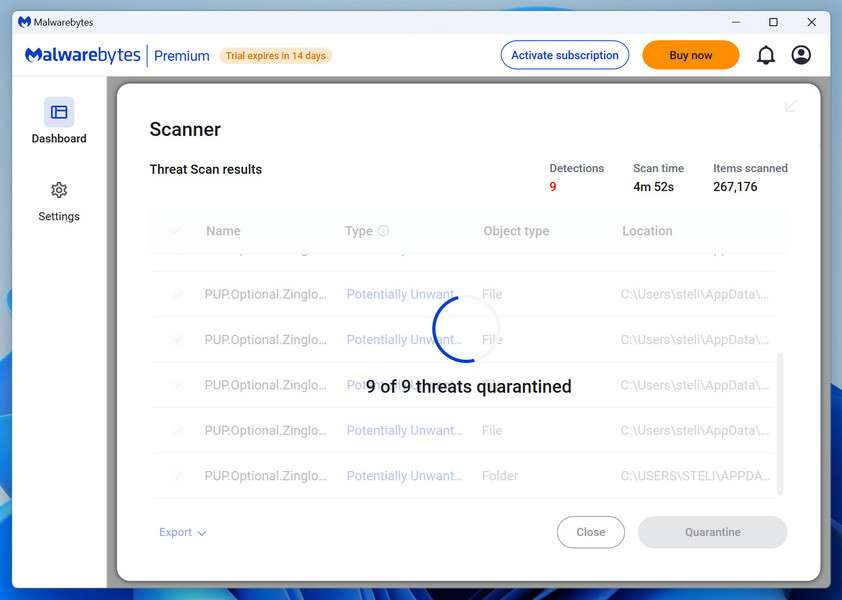
Malwarebytes will now remove the malicious files and registry entries and move them safely into quarantine.
Restart Your Computer
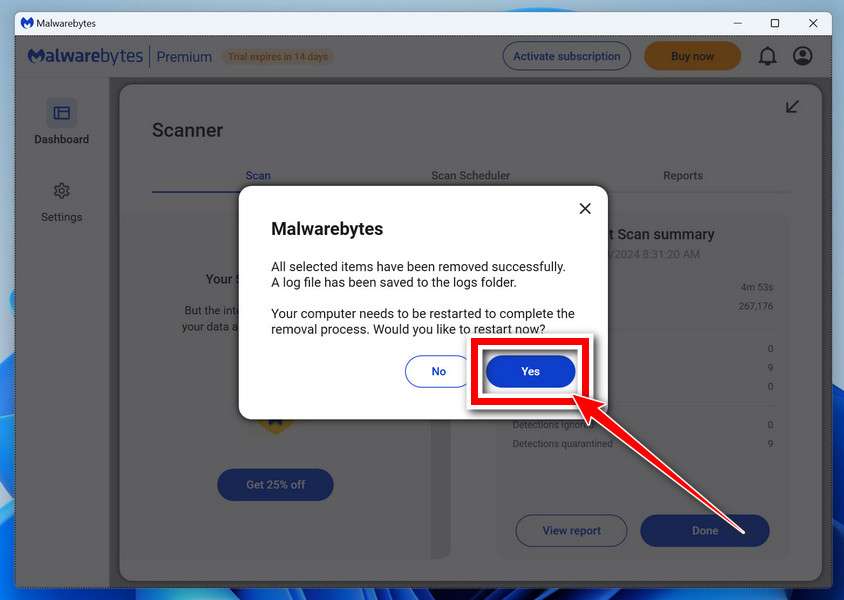
Some threats can only be fully removed after a reboot. If Malwarebytes asks you to restart, click Yes. Once you’re logged back in, your PC is clean and you can continue with the next steps in this guide.
When the scan finishes, click Quarantine to remove everything Malwarebytes found. That’s it — your Windows PC is now clean of trojans, adware, and other malware, and should be back to running smoothly.
If your current antivirus allowed this malicious program on your computer, you may want to consider purchasing Malwarebytes Premium to protect against these types of threats in the future. If you are still having problems with your computer after completing these instructions, then please follow one of the steps:
Malwarebytes for Mac is a free on-demand scanner that removes the malware other security software tends to miss — adware, browser hijackers, and unwanted programs included. Cleaning an infected Mac with Malwarebytes has always been completely free, and it’s our go-to recommendation. Follow the steps below to scan and clean your Mac in just a few minutes.
Download Malwarebytes for Mac
Click the button below to download the latest version of Malwarebytes for Mac.
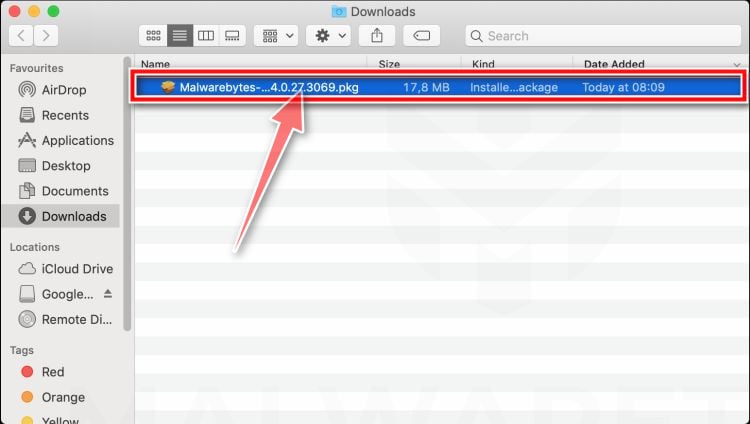
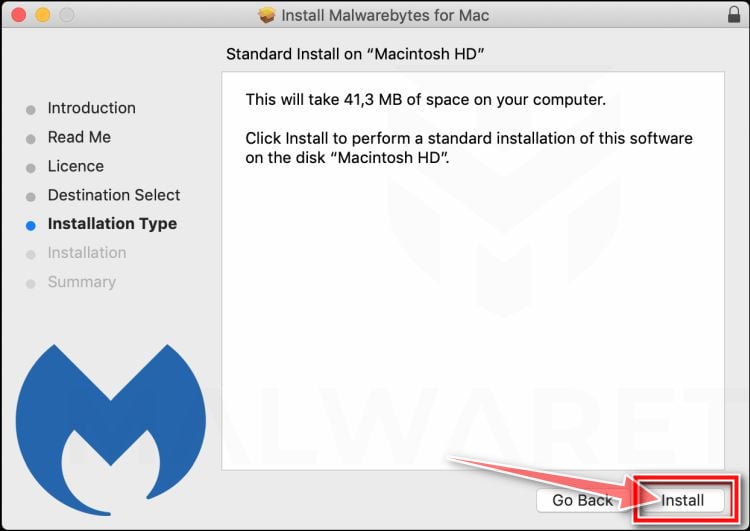
When the download finishes, open your Downloads folder and double-click the setup file to begin the installation.
Follow the On-Screen Prompts to Install Malwarebytes
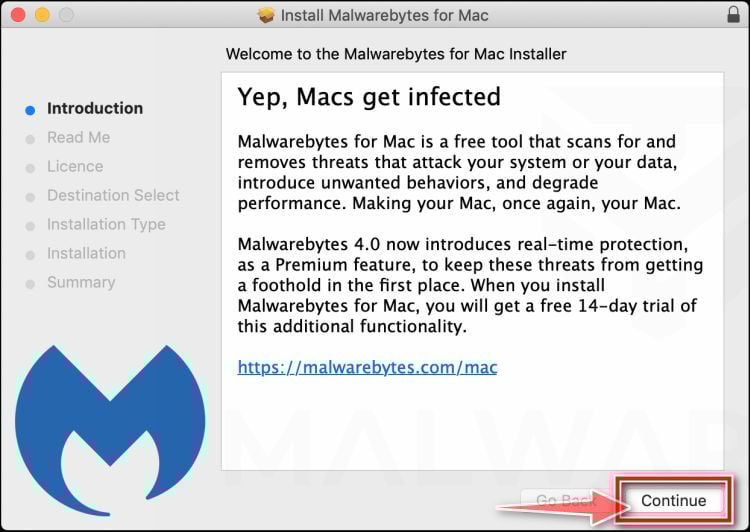
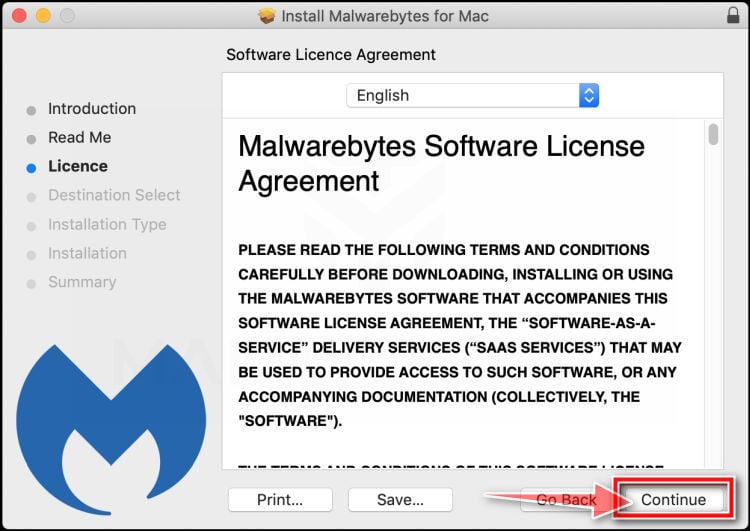
The Malwarebytes for Mac Installer will guide you through a few quick screens. Click “Continue” and keep following the prompts until the installation completes.
When the installation is complete, Malwarebytes opens to the Welcome to Malwarebytes screen. Click “Get started“.
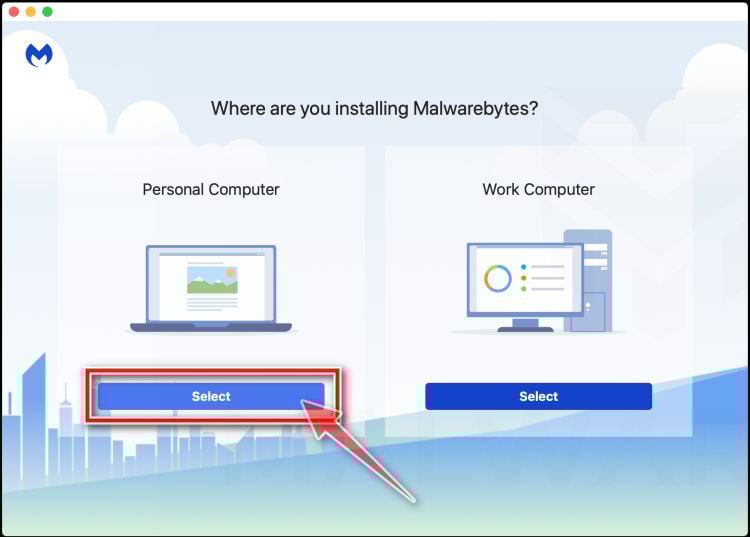
Select “Personal Computer” or “Work Computer”
Malwarebytes will ask what type of computer you’re installing it on. Click either Personal Computer or Work Computer, whichever applies.
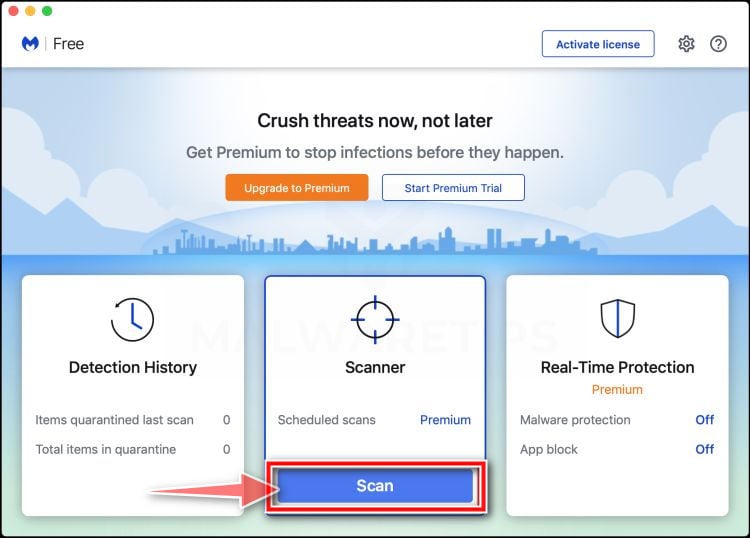
Start the Scan
Click the “Scan” button. Malwarebytes will automatically update its detection database and begin checking your Mac for malware.
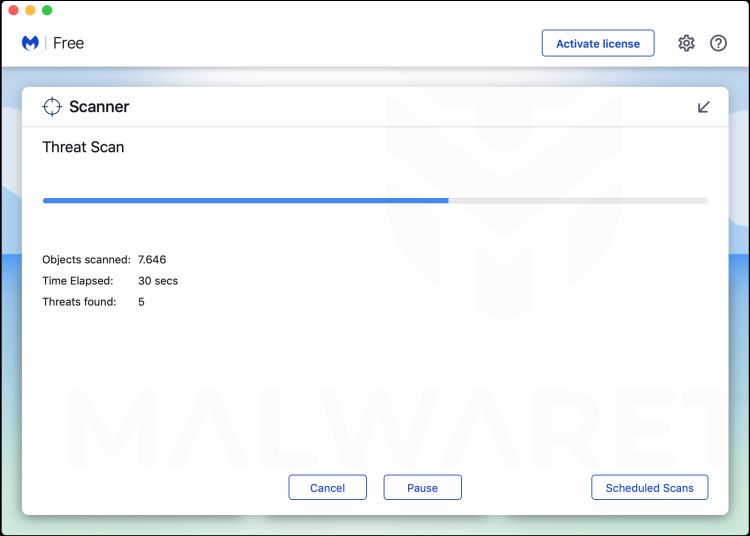
Wait for the Scan to Finish
Malwarebytes will scan your Mac for adware, browser hijackers, and other malicious programs. This can take a few minutes, so feel free to do something else — just check back occasionally to see the progress.
Quarantine the Detected Threats
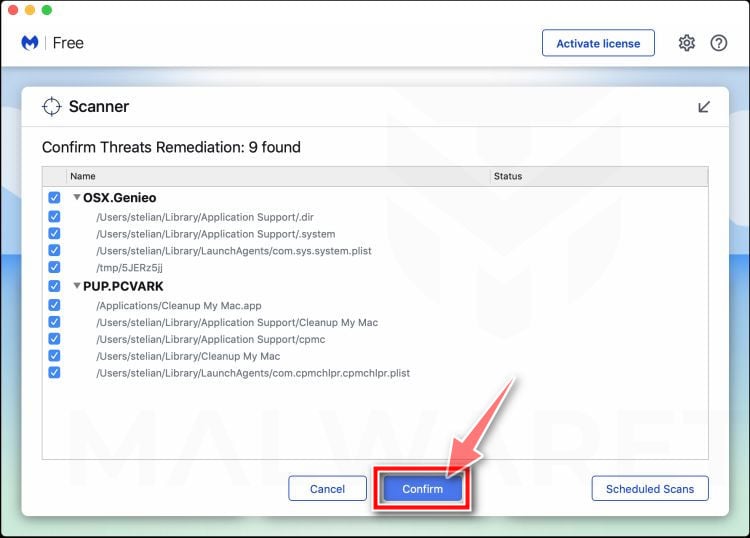
When the scan is done, you’ll see a list of everything Malwarebytes found. Click the “Quarantine” button to remove all the threats at once.
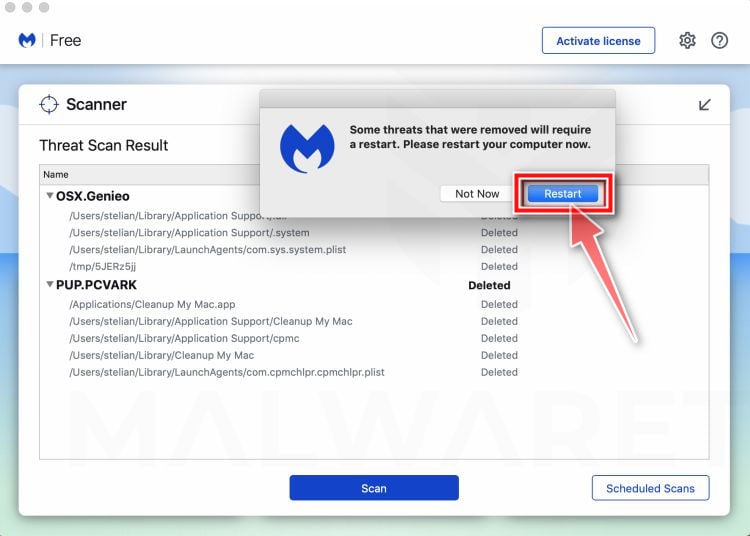
Restart Your Mac
Malwarebytes will now remove all the malicious files it found. Some threats can only be fully removed after a reboot — if Malwarebytes asks you to restart, allow it. Once you’re logged back in, your Mac is clean.
Once the scan is done, remove every threat it detected. Your Mac is now free of adware, rogue browser extensions, and other potentially harmful software.
If your current antivirus allowed a malicious program on your computer, you might want to consider purchasing the full-featured version of Malwarebytes Anti-Malware to protect against these types of threats in the future. If you are still experiencing problems while trying to remove a malicious program from your computer, please ask for help in our Mac Malware Removal Help & Support forum.
Run a Malware Scan with Malwarebytes for Android
Malwarebytes for Android automatically detects and removes dangerous threats like malware and ransomware so you don’t have to worry about your most-used device being compromised. Aggressive detection of adware and potentially unwanted programs keeps your Android phone or tablet running smooth.
Download Malwarebytes for Android.
You can download Malwarebytes for Android by clicking the link below.
In the Google Play Store, tap “Install” to install Malwarebytes for Android on your device.
When the installation process has finished, tap “Open” to begin using Malwarebytes for Android. You can also open Malwarebytes by tapping on its icon in your phone menu or home screen.
Follow the on-screen prompts to complete the setup process
When Malwarebytes will open, you will see the Malwarebytes Setup Wizard which will guide you through a series of permissions and other setup options. This is the first of two screens that explain the difference between the Premium and Free versions. Swipe this screen to continue. Tap on “Got it” to proceed to the next step. Malwarebytes for Android will now ask for a set of permissions that are required to scan your device and protect it from malware. Tap on “Give permission” to continue. Tap on “Allow” to permit Malwarebytes to access the files on your phone.
Update database and run a scan with Malwarebytes for Android
You will now be prompted to update the Malwarebytes database and run a full system scan.
Click on “Update database” to update the Malwarebytes for Android definitions to the latest version, then click on “Run full scan” to perform a system scan.
Wait for the Malwarebytes scan to complete.
Malwarebytes will now start scanning your phone for adware and other malicious apps. This process can take a few minutes, so we suggest you do something else and periodically check on the status of the scan to see when it is finished.
Click on “Remove Selected”.
When the scan has been completed, you will be presented with a screen showing the malware infections that Malwarebytes for Android has detected. To remove the malicious apps that Malwarebytes has found, tap on the “Remove Selected” button.
Restart your phone.
Malwarebytes for Android will now remove all the malicious apps that it has found. To complete the malware removal process, Malwarebytes may ask you to restart your device.
After the scan, tap Remove Selected to delete all detected threats. Your Android phone is now clean — no more malicious apps, adware, or browser redirects.
If your current antivirus allowed a malicious app on your phone, you may want to consider purchasing the full-featured version of Malwarebytes to protect against these types of threats in the future. If you are still having problems with your phone after completing these instructions, then please follow one of the steps:
Restore your phone to factory settings by going to Settings > General management > Reset > Factory data reset.
Now that your device is clean, keep it that way. Most infections start with a malicious ad or a fake download button — so blocking them at the source is your best defense.
We recommend AdGuard, which blocks malicious ads, phishing pages, and dangerous redirects before they can reach you.
When a “Robux rewards” site spreads through bot-like chat spam inside Roblox, that’s not a normal promotion pattern. It’s a scam signal. Add in domain misspellings like bloxdrom.com, pressure tactics, and “free Robux” claims, and the safest move is simple:
Avoid it completely. Don’t click, don’t verify, don’t log in, and don’t deposit.
FAQ
Is BloxDrop legit?
At minimum it’s a third-party platform not affiliated with Roblox. But the way it’s being pushed through Roblox chat spam matches common scam distribution patterns, and Roblox warns that free Robux offers are scams.
Why am I seeing BloxDrop everywhere in Roblox chat?
Because spam campaigns aim for volume. They hit many servers quickly, knowing only a small percent needs to click for the campaign to profit.
What is bloxdrom.com?
Scam waves often use misspellings and lookalike domains to dodge filters and reports. If the link is coming from Roblox chat spam, treat it as unsafe and ignore it.
Can clicking a link alone hack me?
Just clicking is usually lower risk, but it can still lead to dangerous steps (notifications, installs, fake logins, “verification”). Close the page and don’t interact further.
What should parents tell kids in one sentence?
“Never click free Robux links in chat, never type your Roblox password on any website, and always ask an adult first.”
If you want, I can also rewrite this into a shorter “homepage warning” version (tight, scannable, with a bold checklist) plus a longer deep-dive version for SEO.
10 Rules to Avoid Online Scams
Here are 10 practical safety rules to help you avoid malware, online shopping scams, crypto scams, and other online fraud. Each tip includes a quick “if you already got hit” action.
Stop and verify before you click, log in, download, or pay.
Most scams win by creating urgency. Verify using a trusted method: type the website address yourself, use the official app, or call a known number (not the one in the message).
If you already clicked: close the page, do not enter passwords, and run a malware scan.
Keep your operating system, browser, and apps updated.
Updates patch security holes used by malware and malicious ads. Turn on automatic updates where possible.
If you saw a scary “update now” pop-up: close it and update only through your device settings or the official app store.
Use layered protection: antivirus plus an ad blocker.
Antivirus helps block malware. An ad blocker reduces scam redirects, phishing pages, and malvertising.
If your browser is acting weird: remove unknown extensions, reset the browser, then run a full scan.
Install apps, software, and extensions only from official sources.
Avoid cracked software, “keygens,” and random downloads. During installs, choose Custom/Advanced and decline bundled offers you do not recognize.
If you already installed something suspicious: uninstall it, restart, and scan again.
Treat links and attachments as untrusted by default.
Phishing often impersonates delivery services, banks, and popular brands. If it is unexpected, do not open attachments or log in through the message.
If you entered credentials: change the password immediately and enable 2FA.
Shop safely: research the store, then pay with protection.
Be cautious with brand-new stores, “closing sale” stories, and prices that make no sense. Prefer credit cards or PayPal for dispute options. Avoid wire transfers, gift cards, and crypto payments.
If you already paid: contact your card issuer or PayPal quickly to dispute the transaction.
Crypto rule: never pay a “fee” to withdraw or recover money.
Common patterns include fake profits, then “tax,” “gas,” or “verification” fees. Another is a “recovery agent” who demands upfront crypto.
If you already sent crypto: stop paying, save evidence (wallet addresses, TXIDs, chats), and report the scam to the platform used.
Secure your accounts with unique passwords and 2FA (start with email).
Use a password manager and unique passwords for every account. Enable 2FA using an authenticator app when possible.
If you suspect an account takeover: change passwords, sign out of all devices, and review recent logins and recovery settings.
Back up important files and keep one backup offline.
Backups protect you from ransomware and device failure. Keep at least one backup on an external drive that is not always connected.
If you suspect infection: do not connect backup drives until the system is clean.
If you think you are a victim: stop losses, document evidence, and escalate fast.
Move quickly. Speed matters for disputes, account recovery, and limiting damage.
Stop payments and contact: do not send more money or respond to the scammer.
Call your bank or card issuer: block transactions, replace the card if needed, and start a dispute or chargeback.
Secure your email first: change the email password, enable 2FA, and remove unfamiliar recovery options.
Secure other accounts: change passwords, enable 2FA, and log out of all sessions.
Scan your device: remove suspicious apps or extensions, then run a full malware scan.
Save evidence: screenshots, emails, order pages, tracking pages, wallet addresses, TXIDs, and chat logs.
Report it: to the payment provider, marketplace, social platform, exchange, or wallet service involved.
These rules are intentionally simple. Most online losses happen when decisions are rushed. Slow down, verify independently, and use payment methods and account controls that give you recourse.
Thomas is an expert at uncovering scams and providing in-depth reporting on cyber threats and online fraud. As an editor, he is dedicated to keeping readers informed on the latest developments in cybersecurity and tech.