

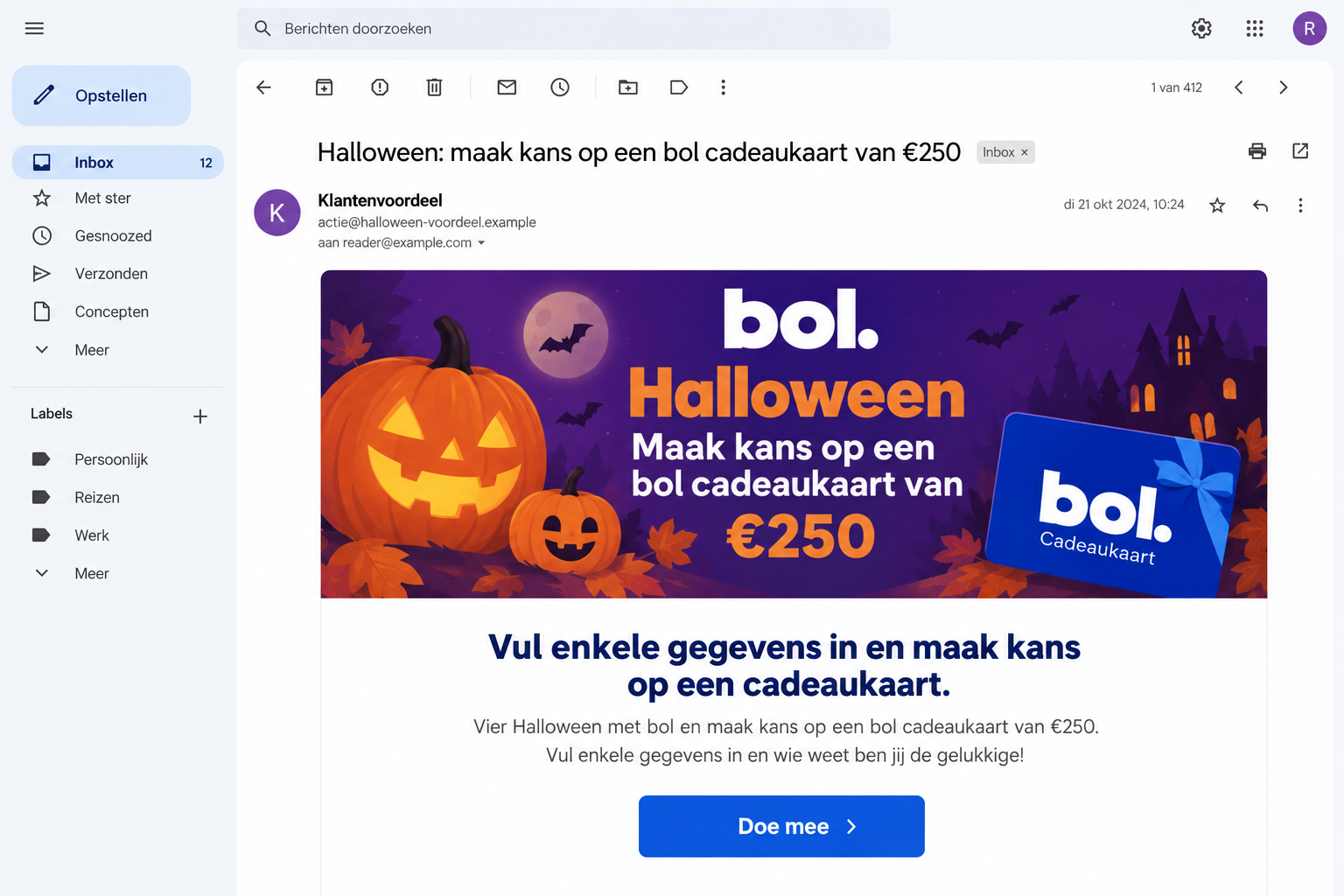
A Halloween email offers a chance to win a €250 bol.com gift card. The familiar blue branding makes it look like a pleasant seasonal interruption.
It only asks for a few details, the message suggests. Before following the button, check who is actually inviting you and where that invitation leads.
Overview
The Reported Halloween Giveaway Is an Impersonation
Security researchers identified a Halloween-themed email and landing page using bol.com branding to promote a chance of winning a €250 gift card.
The reported campaign is not associated with bol. The retailer is the impersonated brand, not the organization responsible for the fraudulent invitation.
The email-style image above illustrates the lure with fictional addresses. It is not an original message or evidence of a particular sender, date, or malicious domain.
What the Lure Asks You to Do
The reported landing page makes entry sound straightforward: follow the button, enter information, and join the draw. Its seasonal design makes that request feel ordinary.
- The amount offered is €250, not a confirmed credit already in your bol account.
- The invitation describes a chance to win, not proof that you have won.
- The familiar logo does not authenticate the email or its destination.
- Personal details entered on the imitation page go to an unverified operator.
- Any later login, bank-verification, or payment request requires separate scrutiny.
The Safe Answer Is to Leave the Email Route
Do not enter the giveaway through the unsolicited link. Open bol independently through its genuine app or a known address and check there.
You do not need to complete the form to discover the catch. The impersonation and unverified data request are enough to reject the invitation.
Nor does it mean every promotion involving a real gift card is fraudulent. The sender, organizer, terms, and destination have to match the genuine promotion.
Why a Gift-Card Draw Feels Easy to Trust
A gift card is a believable retailer prize. It is easy to picture using it, and €250 is large enough to make a brief form seem worthwhile.
Halloween provides a reason for bright colors, short deadlines, and special offers. The imitation borrows those ordinary seasonal details to make the request feel timely.
The phrase chance to win can also lower resistance. It sounds less suspicious than a claim that an unknown person has already awarded you money.
But a modest-sounding claim can still be deceptive. The issue is whether bol organized this invitation, not whether its wording avoids an obvious guaranteed prize.
The initial request may look inexpensive because it asks for information rather than an immediate transfer. Personal information still has value.
A name, telephone number, and email can support later contact that appears more personal. That does not mean every recipient will suffer the same follow-up.
How the bol.com Halloween Gift Card Scam Works
Step 1: The Email Borrows a Familiar Retail Identity
The reported message uses bol branding and a Halloween theme. For customers in the Netherlands and Belgium, the name can be immediately recognizable.
That familiarity can make a reader concentrate on the prize rather than the actual sender address.
A display name is not an authenticated identity. Anyone can place a retailer’s name in a message heading or copy its logo into email artwork.
Spelling mistakes are not a reliable boundary either. A polished Dutch message can be fraudulent, while a badly formatted legitimate notification can still require checking.
Step 2: The Button Moves You Outside the Trusted Context
The email’s button is the handoff. It can send the reader to a page that resembles the retailer without being operated by it.
On desktop, hovering can reveal the destination; on a phone, a link preview may help. Do not tap through simply to find out whether the page looks convincing.
Look at the actual hostname, not just a brand name in a long address. Text before a slash or within a page path can be misleading.
A padlock only concerns the connection to that host. It does not establish that the retailer controls the page or has authorized the competition.
Step 3: A Short Entry Form Makes Disclosure Feel Harmless
The reported page invites visitors to complete a few fields. Breaking the process into simple stages makes it feel quick and manageable.
The important question is not how many fields appear. It is who will receive the answers and why they need them.
Even ordinary contact details can connect your address, telephone number, and identity. Do not assume the absence of a bank field makes the form trustworthy.
This particular report establishes the giveaway and data-entry lure. It does not show that every version collected the same fields or led to the same final page.
Step 4: Any Additional Demand Changes the Risk
If the journey next asks for a bol password, stop. A giveaway entry should not be used as an excuse to sign in through an unfamiliar domain.
If it asks for a bank confirmation or card details, the concern becomes financial as well as personal. A small amount does not make a payment safe.
Some prize schemes introduce shipping or verification charges. That is a possible escalation, not a verified charge made by this exact Halloween campaign.
The FTC’s prize-scam guidance warns against paying fees to collect a supposed prize or giving financial information to an unverified promoter.
Do not approve a bank prompt to make the page continue. Read what the bank says you are authorizing, not what the giveaway page calls it.
Step 5: The Data Can Make a Later Message More Convincing
After entering details, someone may receive another message referring to the draw, a delivery, or a verification problem. Treat that as a new claim to verify.
Knowing the name you submitted does not prove the follow-up comes from bol. The unverified form may be the source of that information.
Do not keep responding to finish an entry you no longer trust. You are not required to complete the process because you started it.
Save the message and page details, then end contact. Use independently located official support if you need help with a genuine bol account.
Check the Promotion Without Using Its Own Evidence
Open the retailer’s app or type its known address. Search for the promotion and its official rules rather than accepting the email’s copied terms as confirmation.
If you cannot locate it, ask genuine customer service whether the invitation is authorized. Send the suspicious message details through that independently found route.
Do not call a number printed on the giveaway page to verify the giveaway page. That leaves the answer under the same operator’s control.
A real competition should identify an organizer and useful conditions. Matching artwork without matching authority is not enough.
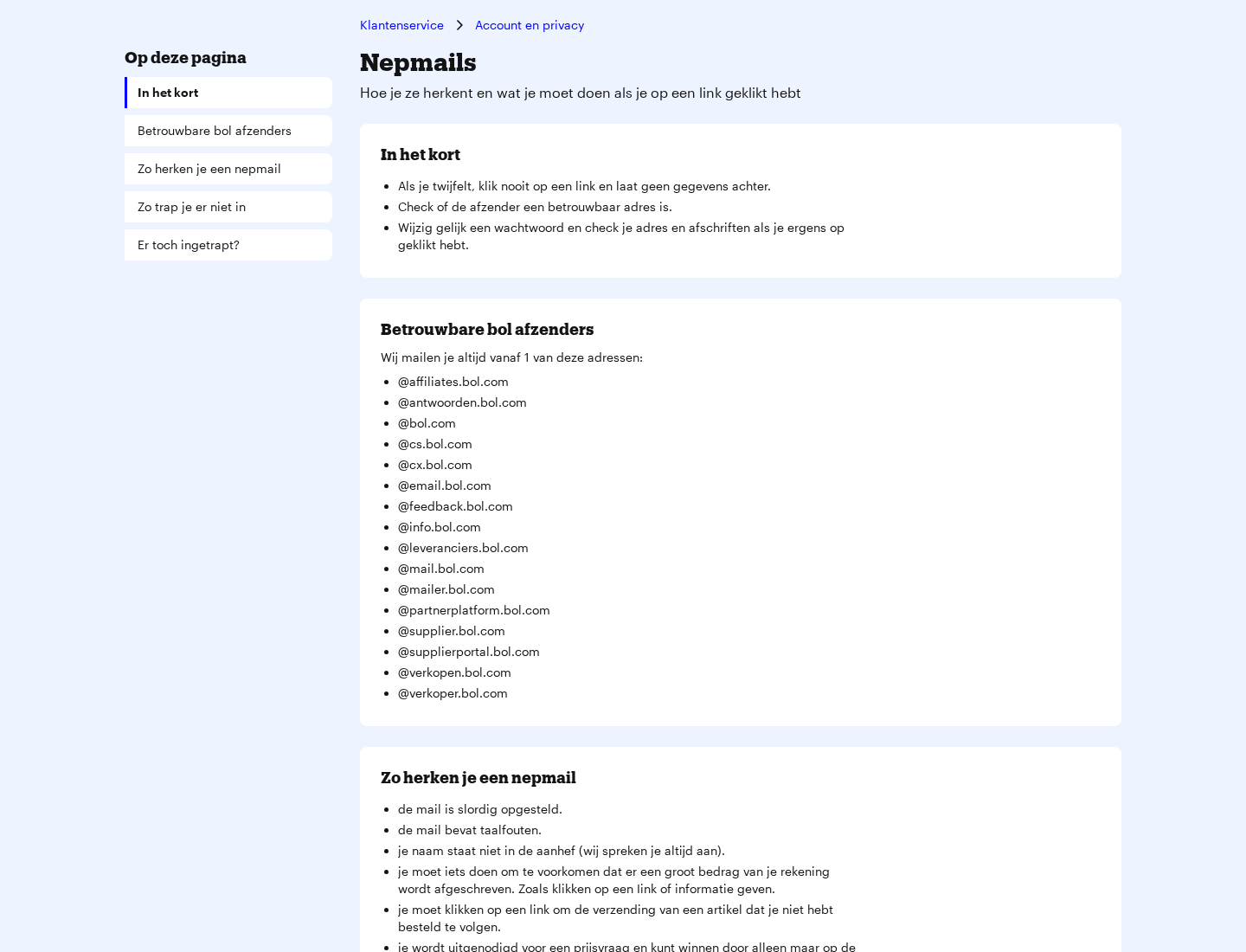
Bol’s official fake-email guidance offers checks and advice for people who have clicked suspicious messages.
Know What Was Actually Exposed
If You Only Received the Message
Receiving a fraudulent email does not mean your account has been accessed. Report it as phishing, block the sender if useful, and delete it after preserving necessary evidence.
You do not need to replace a bank card merely because the email reached your inbox. Match the response to what you actually did.
If You Opened the Page but Entered Nothing
Close the page and refuse downloads or notification prompts. A visit alone does not prove malware infection or a stolen bol password.
If a file downloaded, leave it unopened. If you installed something or the browser now behaves unexpectedly, that calls for a separate device check.
If You Submitted Contact Details
Expect more persuasive follow-up attempts and be careful with calls referring to the prize. Do not provide identification documents or extra details to correct the entry.
Keep a note of which fields you filled in. That lets a bank, support team, or reporting service understand the actual exposure.
If You Shared a Password or Payment Details
Protect the relevant account and contact the payment provider promptly. A clean device scan cannot cancel a card payment or undo a password disclosure.
Use a known device and genuine app when changing credentials if the device used for the form may also have installed suspicious software.
What to Do If You Responded to the Fake bol Giveaway
-
Stop the entry process. Do not pay, sign in, upload identity documents, or approve bank prompts. Close the imitation page instead of following its next instruction.
-
Save useful evidence privately. Keep the original email, sender address, full destination URL, screenshots, and any transaction record. Do not post personal details publicly.
-
Secure any password you disclosed. Open the genuine service separately, change the password, review account activity, and update other accounts that reused it.
-
Tell your bank what you entered. Explain card disclosure, an approved transfer, or an unexpected charge accurately. Ask about blocking misuse and disputing the specific payment.
-
Check for an unwanted third-party plan. If you paid, examine the receipt and later statements for recurring terms. A subscription is possible, not established for every recipient.
-
Report the impersonation through real channels. Use bol’s independently located support and your email provider’s phishing-report control. Delete the message after keeping what the report needs.
-
Address device exposure only if relevant. If you installed software, use Malwarebytes to check that device. AdGuard can help reduce malicious advertising, but neither tool recovers the gift card.
For the Windows product, use the established MalwareTips Malwarebytes route, not a scanner promoted by the giveaway itself.
If unwanted advertising persists, the MalwareTips AdGuard page provides the site’s existing route. Blocking ads does not replace bank or account action.
You do not need to purchase protection simply because you read an email. These tools fit a device or malicious-advertising concern, not every stage of this lure.
A Few Details That Can Prevent the Second Loss
If the imitation page asked for permission to send notifications, review that permission in the browser. A notification can imitate a warning even after the original tab closes.
Remove the permission for the unfamiliar site rather than trusting its next alert. Do not allow another download to supposedly fix the first one.
For a disclosed password, also consider your email account. If the same password was used there, securing it helps prevent reset messages from being intercepted.
When reporting a card problem, identify whether you merely typed the details or completed a bank authorization. That difference helps the issuer understand what happened.
A screenshot of a pending amount is not the whole payment record. Keep the date, descriptor, and any confirmation your bank provides.
After reporting, use a calendar reminder to check the case with the genuine provider. You should not need to revisit the fake draw to follow a complaint.
If a supposed support agent contacts you after the giveaway, do not share a one-time login code. That code may authorize access rather than verify your complaint.
A genuine-looking case number also proves little when it arrives from the same unknown contact. Start a new conversation through the official service.
Be skeptical of anyone promising to remove your details from the scammer’s system for a fee. They may be using the first disclosure to sell another story.
If a bank confirms no money moved, keep monitoring as instructed without repeatedly submitting the card to test it. The suspicious page is not a safe testing tool.
A family member can help preserve messages or contact support, but avoid forwarding the live lure without a clear warning. Send a screenshot when that is enough.
Finally, a genuine order confirmation from bol should be checked separately. This email does not justify canceling unrelated purchases or abandoning an otherwise secure retailer account.
Frequently Asked Questions
Is the €250 Halloween Gift Card Email From bol?
The reported Halloween giveaway campaign impersonates bol and is not associated with the retailer. Verify any different promotion through the genuine app or official customer-service route.
Does the Email Mean I Have Won €250?
No. The reported lure offered a chance to win. Neither an email button nor a copied gift-card image establishes a prize or a balance in your account.
Is Entering Only My Email Address Safe?
An email address alone is less exposure than a password or card, but it still goes to an unverified operator. Do not complete the form to find out.
Should I Pay a Small Delivery or Verification Fee?
No. Do not pay an unverified promoter to claim this supposed prize. A small payment can expose financial details or authorize something different from the page’s explanation.
Did Clicking the Link Infect My Phone?
Not necessarily. Check whether anything downloaded, installed, or gained permission. A device scan addresses software concerns, not the separate consequences of sharing credentials or payment details.
Does bol Ever Run Genuine Gift-Card Promotions?
A real retailer can run promotions. That does not authenticate this Halloween message. Check the exact offer and organizer through bol’s own app or official site.
The Bottom Line
Do not join the €250 bol.com Halloween giveaway through an unsolicited email. The familiar retailer identity is being used to make an unverified data request feel legitimate.
If you responded, act on what you shared: protect logins, contact the bank if needed, and report the message. Check genuine offers through bol itself.

Join the discussion
0 commentsShare your experience or ask a question about this article.
Discussion
Start the conversation
Have a question or something useful to share? Add the first comment.