

The message sounds less like a donation request and more like a private opportunity. Support the campaign now, it suggests, and share in the reward later.
When politics already feels urgent, that extra promise can make an unexpected invitation harder to dismiss. It is worth stopping before enthusiasm turns into a transfer.
Overview
What a Campaign Investment Pool Claims to Offer
The campaign investment pool scam presents a political contribution as money that will produce a personal return after a candidate wins.
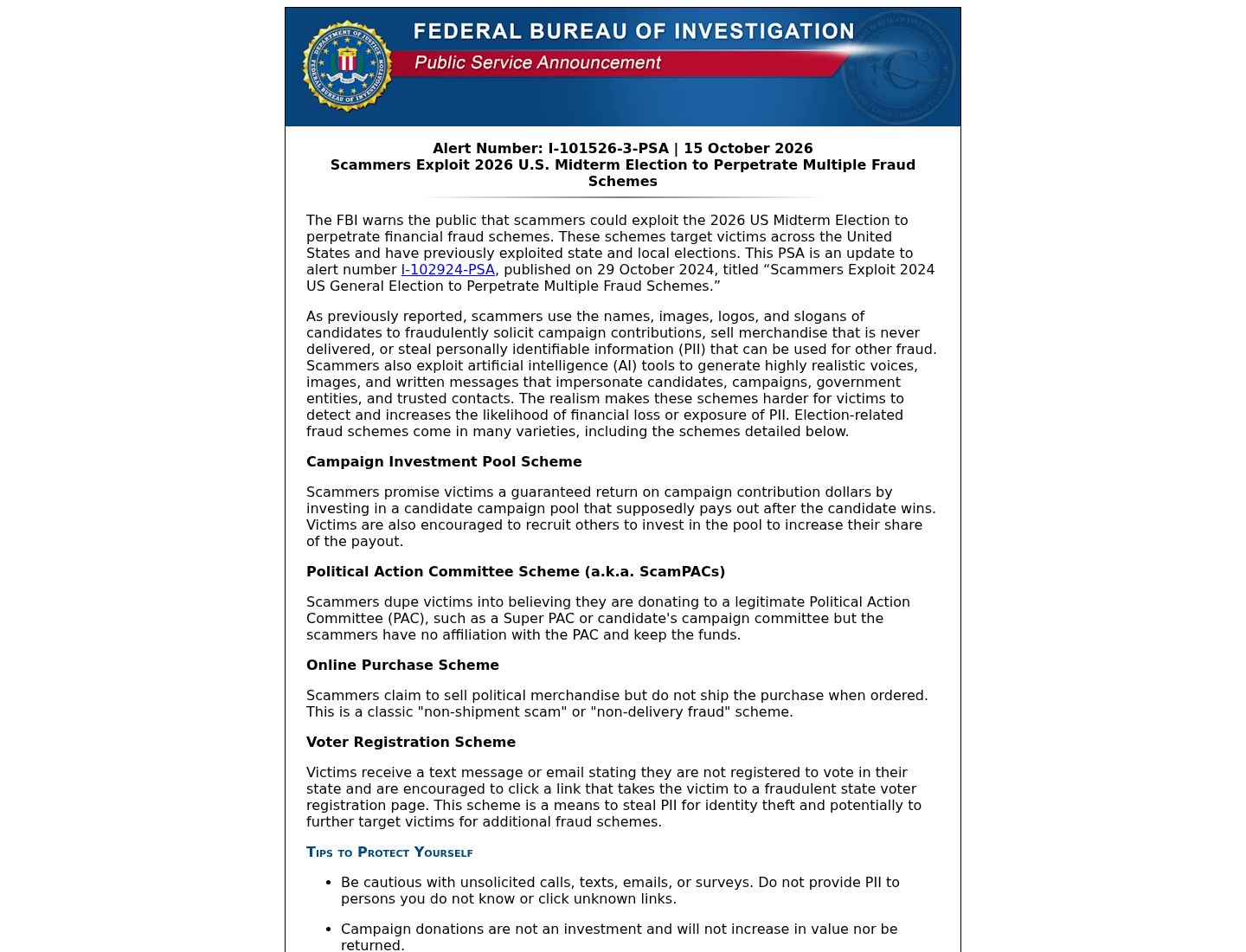
The FBI describes the scheme in its election-fraud warning. It also identifies a recruitment element: bringing other people into the pool supposedly increases the participant’s payout share.
The candidate’s popularity is part of the pitch, not evidence of an investment. Supporting an election campaign does not give a donor a stake in future profits.
The Promises That Should Stop the Payment
- Your contribution will supposedly grow or be repaid after an election victory.
- The sender treats political confidence as a guarantee of financial returns.
- Recruiting friends is presented as a way to increase your own share.
- A familiar campaign name is offered instead of independently verified payment authority.
- You are encouraged to act before checking who controls the receiving account.
The Scam Is the Investment Promise, Not Political Participation
Legitimate campaigns, political committees, and donations exist. This warning is not an accusation against a particular party, candidate, or lawful fundraising platform.
The deception begins when someone turns that activity into a guaranteed personal-profit arrangement and asks you to fund it.
You do not need to determine whether the candidate will win. The promised relationship between your donation and a private payout is already the problem.
Why the Election Makes the Pitch Persuasive
Ordinary investment pitches usually ask you to trust a business proposition. This one can ask you to trust a cause you already care about.
That changes the conversation. Questioning the transfer may feel like questioning the candidate or letting other supporters down.
Keep those decisions separate. Your political views do not require sending money to an account introduced in an unsolicited message.
The FBI’s election-fraud alert warns that criminals can reuse candidate names, images, logos, and slogans when soliciting money.
Those details are easy to recognize, but recognition does not authenticate the sender. Public campaign material can be copied into a private conversation.
A message can also come from someone you know who believed the offer. Their sincerity does not make the payout real.
That is why independent verification matters more than confidence, shared political interests, or an enthusiastic introduction from a friend.
How the Campaign Investment Pool Scam Works
Step 1: The Invitation Borrows a Campaign’s Identity
The approach may arrive through a message, email, call, or online group. The sender invokes a candidate or political movement to establish immediate relevance.
Familiar imagery and fundraising language can make the request resemble something a supporter would normally encounter during an election.
At this point, the important distinction is who initiated the contact and where the requested payment would go.
A campaign photograph tells you whose reputation is being used. It does not tell you who owns the message account or controls its links.
Step 2: A Donation Is Reframed as a Financial Stake
The pitch then introduces a pool and a promised return. Instead of simply contributing to political activity, participants are told they will personally benefit financially.
The expected trigger is the candidate winning. That makes a real public event appear to support a private repayment promise.
There is a crucial missing connection: an election victory does not create an investment account for campaign donors.
Ask where the payout money would come from and what legitimate transaction creates that obligation. Campaign branding cannot supply the missing answer.
Step 3: Certainty About the Candidate Becomes Certainty About the Money
A supporter may already believe the candidate has strong prospects. The scam encourages that belief to spill into a different question: whether the money is safe.
Those questions are unrelated. Even a correct election prediction does not establish the existence of the promised pool or the sender’s authority.
The word guaranteed should make the offer less credible, not more. The FBI specifically warns about guaranteed returns tied to campaign contributions.
You do not need to debate polling, election results, or policy. None of those can validate a fabricated investment arrangement.
Step 4: Recruitment Turns Supporters Into Distribution Channels
The FBI describes participants being encouraged to recruit others to increase their share. That turns a private approach into a network of personal referrals.
A friend may introduce the pool with genuine excitement. Their recommendation can feel safer than an anonymous advertisement precisely because you trust them.
But they may be repeating the same unsupported promise. Additional participants do not create a genuine source of investment returns.
Do not recruit people while you try to work it out. That can expose others to losses and make later conversations harder.
If you already shared it, send a correction promptly. State that the payout promise is not a legitimate reason to contribute.
Step 5: The Payment Leaves Through a Route the Sender Controls
The practical danger arrives when a participant transfers money. The receiver may not be the campaign or committee whose identity appears in the invitation.
Payment methods and destinations can vary. This warning does not identify one account, wallet, or platform used in every version.
Before any transfer, a receiving name and account should match an independently verified fundraising route. A screenshot of purported authorization is not enough.
Do not send a small test payment to establish legitimacy. A successful transfer only proves that the receiving account can accept money.
Step 6: Waiting for a Payout Can Delay the Response
A promise tied to a future election creates a built-in reason to wait. Participants may believe nothing is wrong until that event passes.
If concerns arise, the sender may offer reassurance or ask for patience. Any later demand for a release fee, tax, or extra contribution deserves immediate rejection.
Those later demands are possible escalation tactics, not steps documented in every campaign-pool case. Do not pay them to discover whether a balance is real.
Contact your payment provider as soon as you recognize the deception. Its response options should not depend on the promoter’s chosen timetable.
Checking a Real Campaign Without Using the Sender’s Links
Find the candidate or committee through an independent route. Use its established official site and contact details, not a number supplied by the person requesting money.
For federal committees, the Federal Election Commission committee database provides public registration and reporting information.
Search the exact committee name or identifier. Look at the record’s dates, committee type, and filings rather than stopping at a familiar-looking name.
A committee record is not a safety badge for an unrelated message. A scammer can copy details from the same public database you are reading.
Likewise, the word unauthorized in an FEC designation has a technical meaning. It is not, by itself, a finding that a committee is fraudulent.
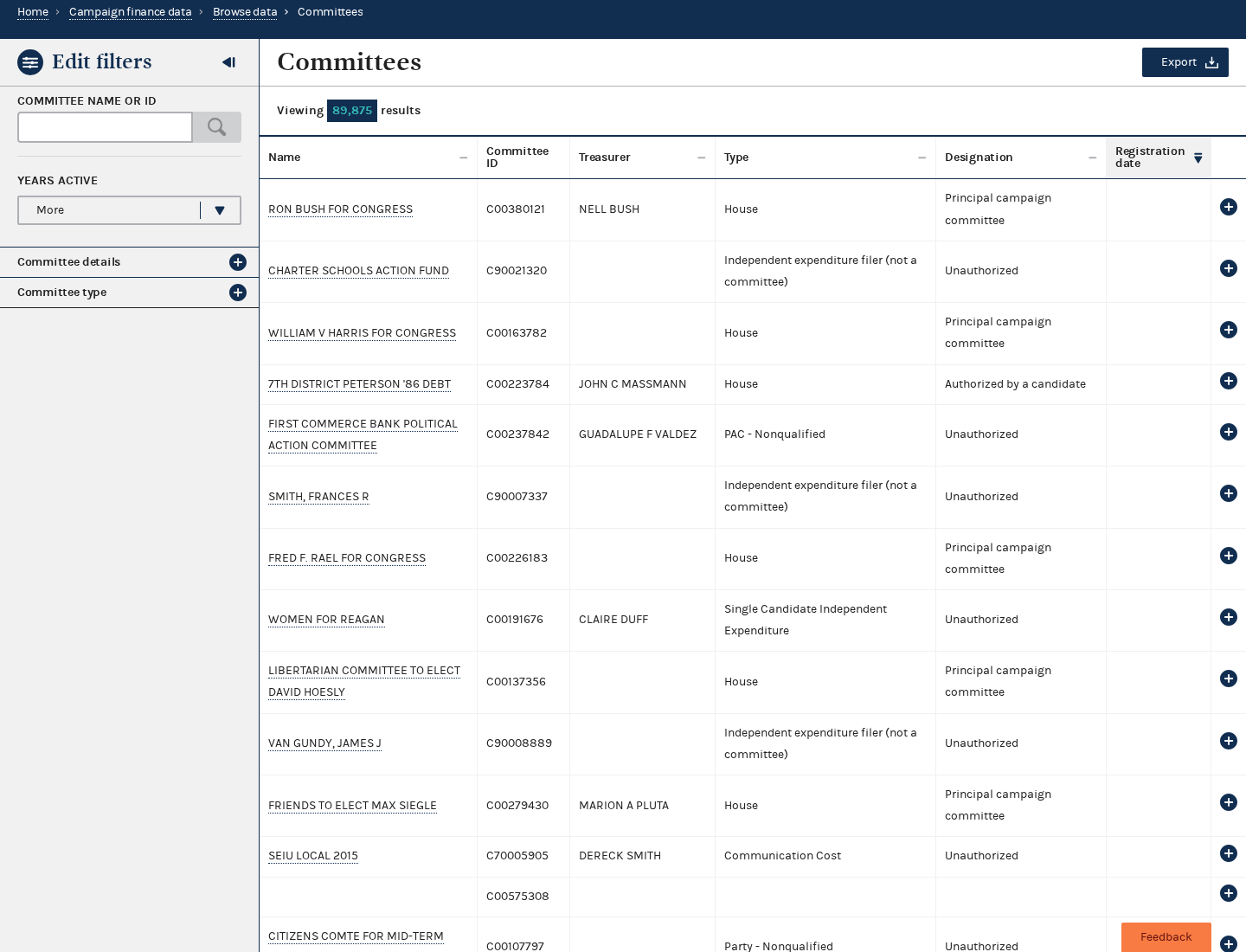
A Real Registration Does Not Authenticate a Private Pool
The next check is the connection between the organization and the specific request. Ask the real campaign whether that sender and payment route are authorized.
Do not ask only whether the committee exists. That leaves the most important part of the impersonation untested.
A legitimate campaign might confirm that it accepts donations while knowing nothing about a promoter’s supposed profit pool.
For state or local activity, use the relevant election or campaign-finance authority. A federal database is not a complete list of every lawful local organization.
If you cannot verify the request, do not pay. There is no need to resolve every detail before rejecting the guaranteed-return pitch.
How This Differs From Other Political Fundraising Problems
A Campaign Donation Is Not an Investment
A contribution supports political activity. It does not ordinarily entitle you to financial gains after the recipient wins office.
An invitation describing personal profits therefore needs to be assessed as a money-making claim, not waved through as ordinary political support.
This does not attempt to summarize every campaign-finance rule or specialized transaction. It addresses the unsolicited guaranteed-payout scheme described in the official warning.
A Fake PAC Solicitation Uses a Different Immediate Promise
In a separate scheme, someone falsely claims to collect donations for a real committee and keeps the money. The donor may never be promised profits.
Both schemes can borrow a committee’s identity, but the campaign-pool version adds a personal financial reward and recruitment incentive.
That difference affects what evidence you preserve. Keep the promised payout and referral terms, not merely the campaign logo.
Recurring Donations Are a Separate Billing Question
A genuine fundraising form can offer recurring contributions. Whether you authorized those charges should be checked against that form and your receipt.
An unwanted recurring donation is not automatically the campaign investment pool scam. The guaranteed private return is the defining feature here.
If you recognize a legitimate donation but want to stop future payments, use the actual fundraiser’s cancellation process rather than treating it as an investment withdrawal.
What to Do If You Sent Money to a Campaign Investment Pool
-
Stop further contributions to the pool. Do not pay another amount to improve your share, recover a previous transfer, or unlock an alleged payout.
-
Contact the payment provider immediately. Give the transfer date, amount, receiving details, and explanation. Ask whether a recall, hold, or dispute is available.
-
Preserve the complete pitch. Save messages, profile addresses, promised returns, referral instructions, receipts, and transaction identifiers. Keep original files where possible, not only cropped screenshots.
-
Warn anyone you invited. Explain the specific false promise and ask them not to transfer funds. Do this before deleting a group or blocking the promoter.
-
Notify the impersonated organization independently. Share the sender and payment route with its real office. Do not request help through the suspected account.
-
Report the scheme to IC3. Include how contact began, what was promised, where money went, and whether others were recruited. Retain the report acknowledgment.
-
Reject paid recovery approaches. Someone promising to recover the money for an upfront fee can be exploiting the same loss. Verify any claimed authority independently.
If you disclosed credentials, secure that account through its genuine app or site. Financial recovery and account protection are separate tasks.
If you shared only a conversation and no financial or login information, your response can be simpler: preserve, report, warn contacts, and end the approach.
A payment provider may need an accurate description of an authorized transfer induced by fraud. Do not falsely describe it as a stolen-card transaction.
Make the Report Useful Without Sharing It Publicly
If the promoter supplied a document describing your share, retain the original attachment without opening new files. Its title, sender, and timestamp can help explain the promise.
Also preserve any instruction to conceal the arrangement from relatives or the bank. You can report that pressure without following it.
A trusted person can help assemble the records. Asking for help does not commit you to publicly discussing your politics or your loss.
Write a short timeline while the details are fresh. Note the first approach, the first payout promise, each transfer, and any request to recruit others.
For a bank transfer, keep the receiving account details and payment reference. For cryptocurrency, preserve the network, receiving wallet, and transaction hash.
A screenshot showing a currency amount is less useful than the underlying transaction identifier. Keep both if available.
Do not publish account numbers, private conversations, or personal identifiers in a public warning. Give sensitive evidence directly to the provider and reporting authority.
A fraud report also does not guarantee that money will be recovered. It provides investigators with the information needed to connect cases and follow payment routes.
The most useful immediate action remains stopping the flow of money. You can care about an election without financing someone else’s invented payout.
Frequently Asked Questions
Can a Campaign Contribution Earn a Guaranteed Return?
Do not treat campaign contributions as investments. The FBI specifically identifies promises of personal returns after a candidate wins as the campaign investment pool scam.
What If the Candidate Really Wins?
A correct prediction does not create a legitimate payout obligation. The result of the election cannot authenticate an account, promoter, or supposed pool.
Does Recruiting Friends Make the Pool More Credible?
No. Recruitment is part of the mechanism described in the warning. More participants can spread the loss without creating a real source of returns.
Does an FEC Listing Prove the Request Is Genuine?
No. Public records can be copied. Confirm that the actual committee authorized the specific sender and payment destination, using independently located contact details.
Should I Wait Until After Election Day to Report It?
No. Contact the payment provider and report the fraudulent promise as soon as you recognize it. Waiting may reduce practical recovery options.
Are All Political Fundraising Messages Scams?
No. Legitimate fundraising exists. This warning concerns a private financial-return promise, impersonation, and recruitment, not ordinary verified political participation.
The Bottom Line
Do not send money to a campaign investment pool or recruit anyone into one. A political victory is not a personal investment payout.
If you already transferred funds, call the payment provider now, preserve the pitch, and report it. Verify any future political donation through the genuine organization’s own channel.

Join the discussion
0 commentsShare your experience or ask a question about this article.
Discussion
Start the conversation
Have a question or something useful to share? Add the first comment.