

A family friend invites someone into a private investment group and even funds the first deposit. The new member only has to repay that helpful friend in cash.
The balance appears on a polished exchange website. The difficult question comes later: can any of it be withdrawn?
Overview
A trusted referral moves the risk inside the family
A reported case involved parents invited to a Bonchat group called “KKR Investment Group” by a family friend. The friend reportedly placed an initial deposit for them and expected repayment in cash.
The arrangement can feel unusually safe because the money appears to come from someone already trusted. Yet repaying the friend creates a real loss even if the balance displayed online is fictional.
The friend may be another victim rather than part of the operation. Early participants are often encouraged to recruit relatives before discovering what happens when they request a substantial withdrawal.
The trading site is not an official KKR or AXA domain
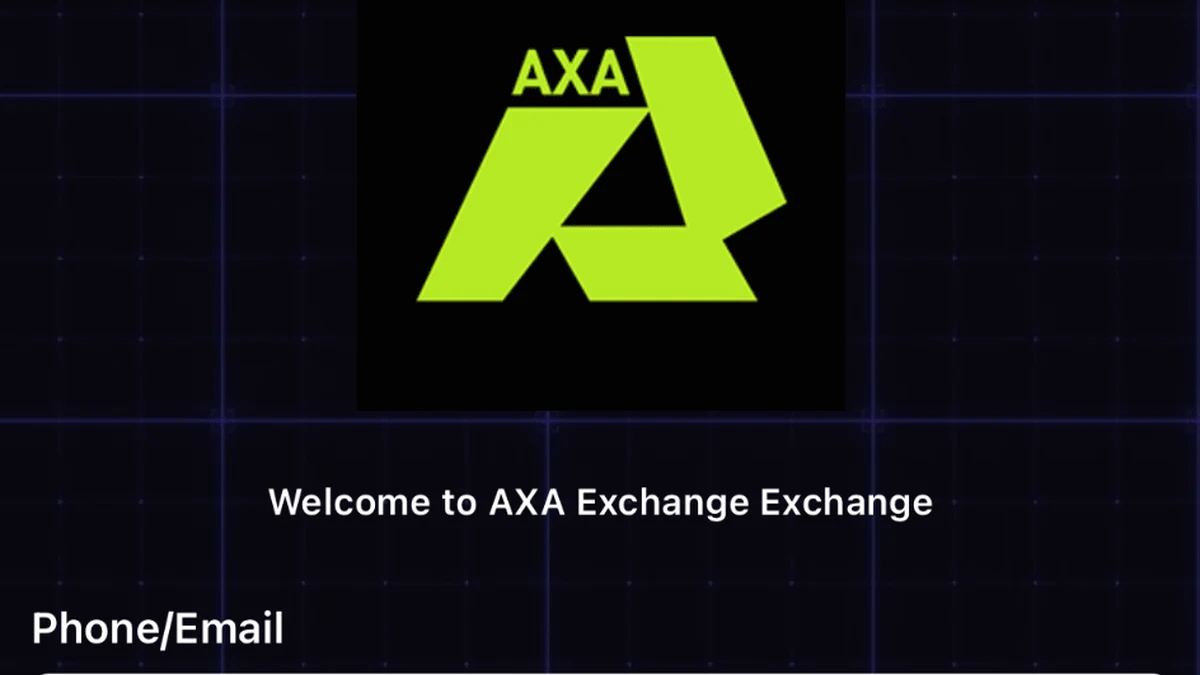
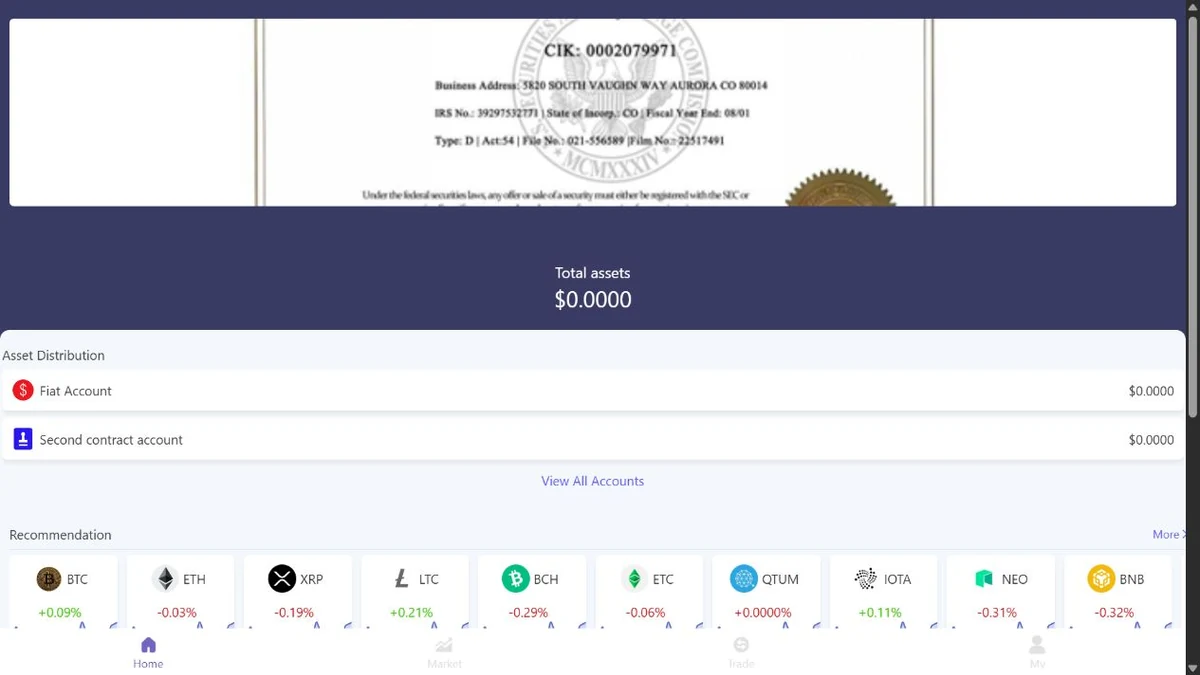
The group directed participants to axa1565.com, a website presenting itself as “AXA Exchange.” During our latest live check, the site still opened to a mobile-style dashboard with fiat and contract accounts, cryptocurrency markets, and a displayed balance.
Public domain records show that axa1565.com was registered on May 8, 2026. The address does not match the official domains of either KKR or AXA, despite borrowing names and visual cues associated with established financial companies.
The dashboard proves only what its operator wants to display
A browser interface can show deposits, trades, profits, and account levels without holding any assets. The balance becomes meaningful only when the user can withdraw it to a bank or wallet they control without paying invented release fees.
Major warning signs include:
- The investment begins in Bonchat rather than through an authorized firm.
- The group borrows the KKR name without a verifiable company connection.
- The website uses AXA branding on an unrelated, recently registered domain.
- A friend funds the first deposit and requests cash repayment.
- The platform’s operator and legal entity are difficult to identify.
- An official-looking SEC identifier does not match the exchange.
- Profits exist only inside a dashboard controlled by the seller.
- No large withdrawal has been confirmed outside the group.
The safest time to verify the platform is before repaying the friend or adding personal money. A screenshot of someone else’s successful withdrawal is not a substitute for your own independent research.
How the Bonchat KKR Investment Scam Works
Step 1: The invitation comes from someone familiar
A friend, relative, coworker, or community member says they have found a private investment group. They may show real withdrawals or speak enthusiastically because their own dashboard is rising.
Trust moves from the relationship to the platform before the platform earns it.
Step 2: The group borrows a famous financial name
“KKR Investment Group” sounds connected to the established global investment firm. Administrators may use analyst titles, copied market commentary, professional profile photos, and official-looking documents.
KKR’s own fraud warning says the company does not conduct business through chat platforms and warns about impostor sites and unsolicited investment messages.
Step 3: Members are sent to a private exchange website
The registration link does not lead to KKR or AXA. It opens axa1565.com, where users can view markets, account types, and balances inside an interface labeled AXA Exchange.
The site may resemble a real crypto platform, but appearance does not establish custody, licensing, liquidity, or ownership.
Step 4: A starter deposit removes the fear of paying online
The recruiter may advance money on the new member’s behalf. The dashboard begins moving before the target uses a bank card or sends cryptocurrency to an unfamiliar address.
Repayment in cash moves the victim’s real money to the recruiter while leaving the questionable platform outside the obvious transaction.
Step 5: The dashboard creates progress
Trades appear profitable, account levels rise, and group members celebrate gains. The operator controls the numbers, prices, order history, and notifications, so none of those elements proves a trade occurred.
Administrators may announce special signals or limited opportunities that require larger deposits.
Step 6: Small withdrawals build confidence
Some schemes allow an early withdrawal. Returning a small amount can convince the participant to invest far more and recruit family members.
The money may simply come from newer deposits. One successful test does not prove that the full balance is available.
Step 7: Withdrawing the larger balance becomes expensive
When the victim wants to leave, the platform demands tax, verification, liquidity, insurance, anti-money-laundering, or account-upgrade fees. Payment does not unlock the funds; it creates another reason to pay.
A legitimate platform can deduct valid fees from an account balance. A demand for fresh outside money before releasing money is a defining warning of an advance-fee investment scam.
What We Verified About axa1565.com
The site remained live during our latest review and redirected to an AXA Exchange home screen. It displayed total assets, a fiat account, a second contract account, cryptocurrency market areas, and navigation for trading and personal account functions.
That confirms the interface exists. It does not confirm that customer funds are held, that displayed orders reach a market, or that withdrawals are settled.
The page previously displayed an official-looking document with SEC CIK 0002079971 and an Aurora, Colorado address. The SEC’s public data associates that CIK with “Unity Growth Series Fund LLC – Fund 033” in Reston, Virginia, not with AXA Exchange, KKR, or the address shown.
A real CIK is an identifier for a filer. It is not a license that can be copied to another website, and it does not mean the SEC approves an investment or guarantees deposits.
The recent domain date also conflicts with the impression of an established international exchange. A new website cannot inherit the history, authorization, or financial strength of brands whose names appear on its pages.
We found no basis to connect axa1565.com or the Bonchat group with KKR’s authorized operations. The route described in the report directly conflicts with KKR’s warning about chat-platform impersonation.
Why the Friend’s Deposit Is Not Free Money
The arrangement changes the direction of trust. Instead of asking the parents to send money to an unknown website, the recruiter asks them to repay a known person. That feels safer but does not answer whether the platform balance is real.
The friend may have seen a dashboard debit suggesting that funds were transferred between accounts. If the operator controls both balances, this costs the scheme nothing and creates no independently verifiable asset.
Cash repayment also reduces the paper trail between the new participant and the platform. The friend holds the real money; the parents hold digits on a site they did not choose.
Before repaying anything, everyone should agree to withdraw the entire principal to a bank or wallet controlled by the parents. Do not accept a screenshot, pending status, internal transfer, bonus, or conversion into another site balance.
If the withdrawal requires new money, stop. Paying the fee on behalf of the friend only expands the same loss.
How to Check a Private Investment Group
Start with the real company, not the group administrator. Use contact details on KKR’s official website and ask whether the group, representative, and domain are authorized. Search regulatory databases for the exact legal entity, not a similar brand name.
Type the domain yourself and compare it with the company’s published websites. Extra words, random numbers, unusual app downloads, and registration only weeks or months earlier are serious concerns for a platform claiming an institutional history.
Ask where customer assets are custodied, which regulator oversees the service, and which entity appears on bank or crypto transfers. Verify every answer independently.
Investor.gov warns that social media and group chats are common gateways to investment scams. A busy group is not due diligence; administrators can control accounts, comments, and testimonials.
MalwareTips has documented the same borrowed-authority pattern in other campaigns, including the fake Cathie Wood investment scam. The famous name attracts attention while the payment route leads somewhere unrelated.
What a Fake Investment Dashboard Can Imitate
A convincing dashboard does not need to connect to a real exchange. Market prices can be copied from public feeds, while account balances and trade results come from a private database controlled by the site operator.
The platform can mark a losing trade as profitable, create a bonus, or show an internal transfer between two users. None of those entries requires money to move through a bank, blockchain, broker, or clearing venue.
Documents inside the site deserve the same skepticism. A regulatory logo, certificate number, company address, or executive signature can be copied from an unrelated filing. Verify the identifier in the regulator’s own database and compare every name and address.
Group-chat testimonials are also controlled evidence. Administrators can post from several accounts, delete withdrawal complaints, and remove members who ask difficult questions. A busy conversation may be part of the interface rather than an independent community.
Ask for transaction records that exist outside the platform. A crypto deposit should have a public transaction ID and destination address. A withdrawal should arrive at the user’s independently controlled wallet or bank.
Most importantly, do not pay to repair a number on a screen. If profits cannot cover the platform’s own stated fee, the operator is using the displayed balance to collect new money.
Company, Address, and Fulfillment Checks
KKR does not verify the Bonchat group
The real firm’s fraud notice says it does not conduct business through chat platforms. A group title and copied logo cannot override that warning.
The AXA name does not match the domain
axa1565.com is not an official AXA corporate domain. Treat the use of AXA branding as possible impersonation unless AXA confirms the relationship directly.
The displayed CIK belongs to another filer
The SEC identifier shown previously points to a different entity and address. Copying a genuine record does not register the website displaying it.
Fulfillment means money leaves the platform
A withdrawal is complete only when funds arrive in an independently controlled bank account or wallet without another deposit. Internal balances and pending receipts do not count.
What to Do if You Have Fallen Victim to This Scam
- Stop paying and do not repay a cash advance yet. Preserve the relationship, but require an independent withdrawal before treating the website balance as money.
- Contact the bank or crypto exchange. Report suspected investment fraud, provide recipient accounts and wallet addresses, and ask whether funds can be frozen or traced.
- Save the complete record. Keep Bonchat messages, administrator profiles, referral details, deposit instructions, transaction IDs, wallet addresses, dashboard screenshots, and withdrawal demands.
- Warn relatives privately. Explain that the friend may also be a victim. Do not let the group turn family disagreement into pressure for another payment.
- Secure exposed accounts. Change passwords and revoke sessions if the site received reused credentials, an ID, bank statement, card image, or one-time code.
- Remove unofficial apps. Run Malwarebytes if any trading app, remote-access tool, or file from the group was installed. A clean scan does not recover funds.
- Block malicious routes. AdGuard can reduce exposure to known scam and advertising domains, but it cannot certify an exchange or make a displayed balance withdrawable.
- Report the impersonation. Notify KKR and AXA through their official sites, and report the domain to its registrar and hosting provider.
- File financial-fraud reports. Use ReportFraud.ftc.gov, IC3.gov, and the relevant securities regulator in your country.
- Reject recovery agents. Anyone demanding an upfront fee or wallet access to retrieve the investment may be the same operation returning under a new name.
Frequently Asked Questions
Is KKR connected to the Bonchat group?
We found no verified connection. KKR says it does not conduct business through chat platforms and warns about impostors using its name.
Is axa1565.com an official AXA website?
It is not an official AXA corporate domain. The site displaying AXA branding does not establish ownership or authorization.
Does the SEC CIK prove the exchange is registered?
No. The CIK shown points to a different filer. A CIK identifies an SEC submission account; it does not approve a separate website or guarantee investments.
What if the friend already withdrew money?
Small withdrawals can be used to build trust. Verify the amount, destination, and source, then test the full principal before adding or repaying money.
Should the parents repay the friend in cash?
Not until the supposed deposit can be withdrawn independently and the arrangement is understood. Cash repayment converts a questionable dashboard credit into a certain loss.
Can the platform deduct a legitimate withdrawal fee?
A real service normally deducts disclosed fees from the balance. Requiring fresh outside money for tax, verification, or release is a major scam warning.
The Bottom Line
The Bonchat pitch uses two layers of borrowed trust: a family friend opens the door, then the names KKR and AXA make the website feel institutional. Neither layer proves who controls the money.
Do not repay a cash advance or add funds because a dashboard shows profit. Verify the exact company and domain, then withdraw the principal to an account you control. If leaving requires another deposit, the displayed balance is bait, not an investment.








