

A sore knee can make every staircase feel longer. When an online supplement promises easier movement, it is understandable to want more than another temporary workaround.
The BoneFlex supplement offer speaks to that frustration, but its product identity and safety advice deserve attention before you choose a bottle package.
Overview
Which BoneFlex Supplement Offer This Article Examines
This investigation concerns the joint-supplement offer at boneflex.co.uk. It promotes capsules for mobility, stiffness, inflammation, and joint discomfort.
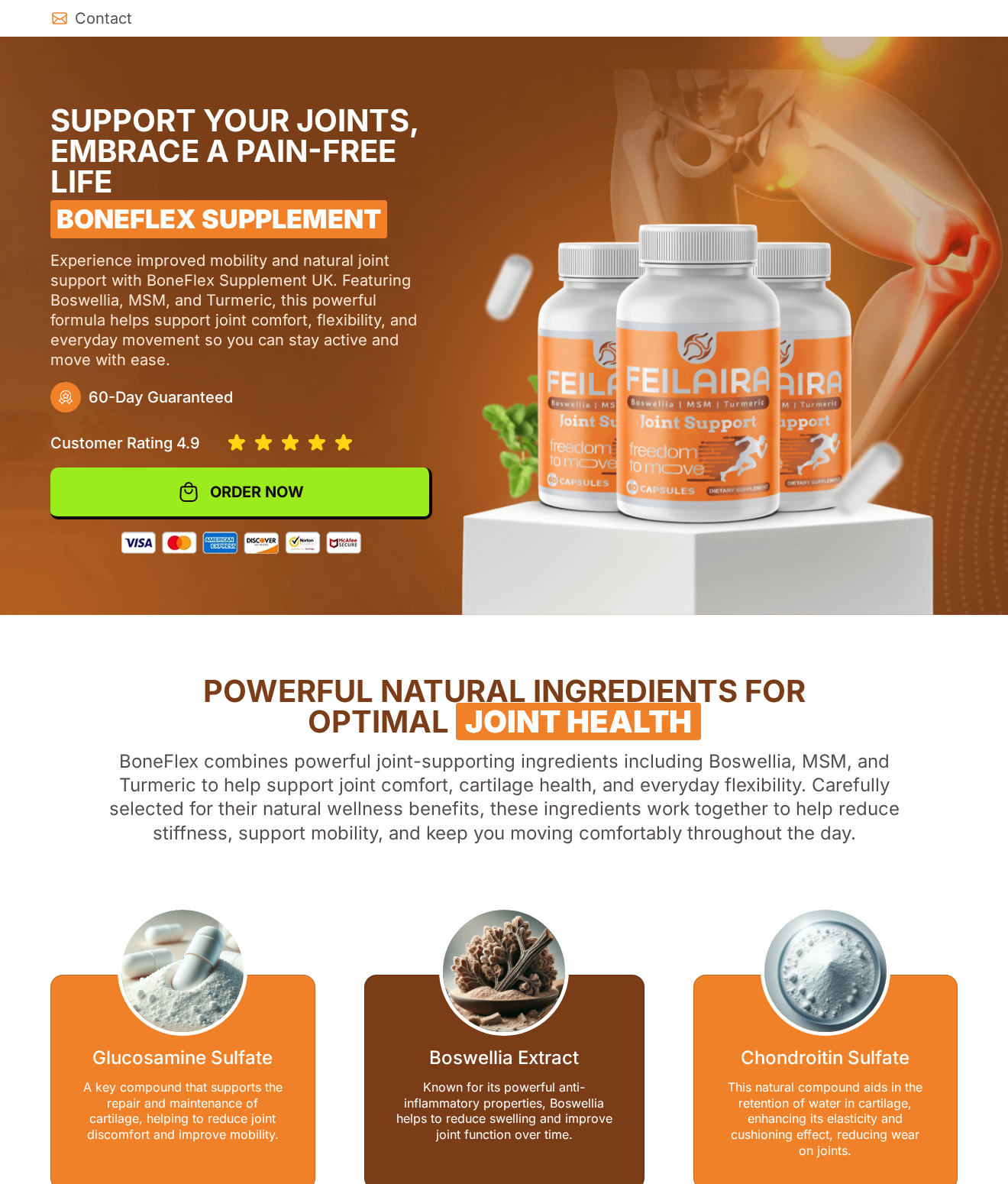
The page uses the BoneFlex name while displaying Feilaira bottles. A pop-up explains the difference by claiming the product has been renamed.
According to that message, trademark regulations in Kansas and New Jersey prompted the change, while the formula supposedly remains the same.
That explanation is the seller’s claim, not a trademark finding independently verified here. Buyers still need a clear link between the advertisement and delivered product.
The Safety Statements Are the Biggest Concern
The website describes the supplement as natural and free of side effects. It also says it can be taken with existing medications.
Its suggested precaution is simply taking the capsules around 30 minutes before or after medication. That is not an adequate general interaction assessment.
- The ingredient discussion does not establish a complete, dose-specific Supplement Facts panel for the product being dispatched.
- The safety advice is broader than the evidence presented on the sales page.
- A recommended three-to-six-month routine extends beyond the advertised 60-day guarantee from purchase.
- The page says purchases are one-time, so an undisclosed refill scheme is not established by this investigation.
Our Practical Recommendation
Do not buy this offer on the strength of its medication-compatibility assurance or claims of predictable joint relief. The documentation needs to come first.
The concern does not require guessing where the capsules were made or declaring every similarly named supplement fraudulent. The actual wording already warrants scrutiny.
If you ordered, verify whether your confirmation names BoneFlex or Feilaira, obtain the complete label, and seek appropriate advice before taking it alongside medication.
How the BoneFlex and Feilaira Offer Works
Step 1: Everyday Joint Problems Become a Simple Supplement Story
The sales page begins with the prospect of moving more comfortably and living without persistent pain. It mentions familiar joint-support ingredients and broad wellness benefits.
For someone who struggles with stairs, walking, or exercise, that combination feels practical. The capsules appear to offer a manageable routine rather than another complicated intervention.
However, joint pain is a symptom, not a single diagnosis. Different conditions and injuries require different assessments, and a general capsule description cannot distinguish them.
Advertising about cartilage, inflammation, and mobility should therefore be matched to a specific formulation and a clearly studied outcome, not accepted as one universal promise.
Step 2: Ingredient Names Stand In for Product-Specific Evidence
The page discusses glucosamine, chondroitin, boswellia, turmeric, MSM, and bromelain. These recognizable names help make the offer feel grounded in research.
But recognizing an ingredient does not tell you its amount, source, extract strength, purity, or whether it appears in the dispatched formula.
Those details are particularly important when a website displays one brand name in its headings and another on its bottles.
Ask for the complete label on the actual stock, not a list of attractive ingredients. A photograph should show serving size and quantities together.
Neither the ingredient descriptions nor the reference list supplies an identified human trial demonstrating the promised results for the finished BoneFlex or Feilaira blend.
Step 3: The Rename Message Keeps the Buyer Moving Toward the Order
A pop-up says BoneFlex is now Feilaira because of trademark regulations in two US states. It reassures visitors that the formula has not changed.
The natural response is to treat the name change as an administrative detail and continue shopping. Yet the claim leaves important purchasing questions unanswered.
Who owns the current product? Which name appears on the receipt? What documentation establishes the unchanged formula? Which seller is responsible for the guarantee?
A genuine rebrand is possible. The point is that a short pop-up is not sufficient documentation of it, especially when health and safety claims are involved.
Step 4: The Six-Bottle Option Makes a Larger Commitment Look Economical
The page lists one bottle at $89, three bottles at $177, and six bottles at $294. The largest package receives prominent recommendation language.
Its per-bottle figure is $49, but the amount spent is $294. That difference matters if you are still deciding whether the product suits you.
The page also claims that 97% of customers choose six bottles. No underlying sales dataset was established in the inspected material.
Do not treat that percentage as independent evidence of satisfaction. It is a seller statement supporting a larger basket.
A visible multi-bottle offer is not proof of an unauthorized bundle. Verify what you selected, but distinguish sales pressure from a charge you never approved.
Step 5: Continued Use Can Outlast the Refund Promise
The FAQ suggests consistent use for three to six months for the best results. The guarantee is described as 60 days from the original purchase date.
Those timelines are not equivalent. Delivery time uses up part of a purchase-based window, and a three-month trial would exceed it.
Someone encouraged to wait for longer-term improvement could discover that the refund deadline passed before the recommended routine was complete.
Ask for the guarantee start date and full return procedure before paying. Do not assume a longer suggested treatment schedule extends a shorter written promise.
The page says the sale is a one-time purchase with no automatic shipment. Preserve that statement, along with the final order confirmation.
Why the Medication Advice Should Stop You From Rushing
Natural Does Not Mean Compatible With Every Prescription
The site’s broad assurance about taking BoneFlex with medication is more concerning than ordinary promotional enthusiasm about comfort or flexibility.
Supplements can alter the effects of medicines. Compatibility depends on the actual ingredients, quantities, medical conditions, and the prescriptions a person takes.
The National Center for Complementary and Integrative Health notes bleeding concerns when glucosamine or chondroitin are taken with warfarin.
It also notes that glucosamine may increase blood glucose in some people. Those are directly relevant cautions for ingredients promoted on this page.
A 30-minute gap between products does not demonstrate that an interaction is avoided. Do not use the website’s timing suggestion instead of a pharmacist’s review.
No Reported Side Effects Is Not a Safety Guarantee
A seller saying there have been no reports of side effects does not establish that nobody has experienced one or that the product has been adequately monitored.
It could reflect limited reporting, incomplete information, or a promotional generalization. Without a defined safety study, the claim cannot carry the weight placed on it.
Ask how adverse reactions are recorded and what warnings accompany the actual package. The full label matters more than an all-natural badge.
Pregnancy, breastfeeding, allergies, and medical conditions also deserve individual consideration. A universal reassurance cannot substitute for those checks.
Research on Joint Ingredients Is Mixed, Not Meaningless
It would also be inaccurate to say that all joint-supplement ingredients are fictional or have never been studied. Some have substantial research histories.
The results and recommendations vary by ingredient, formulation, joint, and condition. Selected evidence cannot be stretched into a guarantee that this blend repairs cartilage.
A useful study comparison would match the tested preparation and amount with the product label. Without that label, even a careful comparison is limited.
That is why the correct response is to demand specificity, not to replace the seller’s confident claim with an equally unsupported claim of total ineffectiveness.
The Scientific Reference List Has a Relevance Problem
The bottom of the sales page lists scientific-sounding references, including material about inulin, prebiotics, fiber, gut microbiota, flaxseed, and guar gum.
Those subjects do not, by themselves, establish the advertised joint-supplement results. A long bibliography can create an impression of support without supplying the necessary evidence.
One link labeled as supporting boswellia leads to a paper titled Fiber and Prebiotics: Mechanisms and Health Benefits.
That mismatch is a concrete problem in the evidence presentation. It is not a matter of disliking supplements or dismissing scientific research.
When checking a reference, open it and compare its title, tested substance, participants, and outcome with the claim beside the link.
A legitimate paper remains legitimate when used in an irrelevant sales context. The problem lies in presenting it as support for a different product claim.
BoneFlex and Feilaira Seller Identity Checks
The Advertisement and the Bottle Use Different Names
The page heading says BoneFlex, while the displayed bottle says Feilaira. The rename message attempts to connect them, but buyers should request supporting product documentation.
Keep both names when searching receipts or requesting help. Include a photograph of the package received so support cannot confuse it with another similarly named product.
This article does not concern unrelated products using BoneFlex as a name, including pet accessories or other manufacturers’ joint preparations.
Support and Ordering Links Leave the Main Domain
The sales page points contact and policy links toward bg.feilaira.com. Its order buttons use a separate mynewsera.com route.
Different domains can be part of a legitimate sales arrangement, but the party accepting payment and handling refunds should remain identifiable throughout that journey.
Do not assume that a familiar checkout platform endorses the medical promises. Follow the actual seller information on the confirmation.
The Published Location Does Not Identify a Factory
The footer associates BoneFlex with Aurora, Colorado, and says the product is manufactured in the USA. Those are website statements, not an independently traced supply chain.
The inspected page did not establish a complete factory identity or batch-specific quality report. Request those details if manufacturing claims influence your decision.
Ask where your specific batch was produced and where returns are accepted. Manufacturing, dispatch, business registration, and return handling can involve different locations.
The Guarantee Needs a Usable Seller and Procedure
The FAQ publishes +1 970 512 3292 and sends customers to a contact page. The footer also references support@feilaira.com.
We did not call, send messages, place an order, or test a refund. No claim about response quality or guaranteed recovery follows from those listings.
Before purchasing, obtain the legal seller name, return address, approval procedure, shipping costs, and precise guarantee deadline in one written response.
A Safer Way to Compare a Joint Supplement
If mobility is your concern, start by defining the actual problem you want to improve: pain, stiffness, walking distance, or another symptom.
Discuss that goal with the professional managing your care. This makes it easier to evaluate an advertised benefit instead of buying a vague promise of repair.
Next, insist on a readable Supplement Facts panel. Ingredient names scattered across a landing page are not enough to compare formulations or assess interactions.
Check the total commitment as well. Six bottles may reduce the unit price while increasing the money at risk before you know whether the product suits you.
Finally, separate marketing deadlines from medical decisions. A limited offer is not a reason to rush a medication review or delay investigating a new symptom.
What to Do if You Ordered BoneFlex or Feilaira
An order already placed does not oblige you to accept unclear safety advice. Use the confirmation and the delivered packaging to establish exactly what was sold.
- Match the purchase to the parcel.
Compare the advertised name, receipt, bottle label, capsule count, and selected package. Photograph any mismatch before throwing away the shipping materials.
- Obtain a complete formula before use.
Ask for ingredient quantities and warnings on the dispatched batch. Give that information to a pharmacist alongside your medication list.
- Do not change prescribed medication.
If you already combined products and feel unwell, seek appropriate medical advice. Explain what you took and retain the bottle for identification.
- Calculate the guarantee from the purchase date.
The page describes a 60-day window starting with the original order. Request a remedy before that period expires rather than waiting through a six-month routine.
- Ask for explicit return instructions.
Request the authorization, address, packaging requirements, and postage responsibility. Keep the seller’s answer with the guarantee captured when you ordered.
- Escalate a documented unresolved issue accurately.
Show your payment provider the offer, receipt, label, and support correspondence. Explain nondelivery, a mismatch, or a refused promised refund without inventing unauthorized billing.
If a later charge appears despite the one-time-purchase statement, keep that statement as evidence and ask the merchant and payment provider to investigate the actual transaction.
Frequently Asked Questions
Is This BoneFlex Offer a Confirmed Scam?
The evidence does not prove criminal fraud. It does reveal serious weaknesses in medication advice, product identification, research relevance, and the relationship between results and refund timelines.
Why Do the Bottles Say Feilaira?
The page claims a rename related to trademark regulations. That explanation is not independently verified here. Ask the seller to document the product and formula supplied.
Can I Take It With Medication by Waiting 30 Minutes?
Do not rely on that general reassurance. Potential interactions need a review of the actual ingredients and your prescriptions; separating doses does not establish compatibility.
Is the Six-Bottle Price $49 in Total?
No. The displayed six-bottle package is $294, equivalent to $49 per bottle. The full amount matters when comparing the offer.
Does BoneFlex Automatically Send Refills?
The reviewed page explicitly describes one-time purchases without automatic shipment. An undisclosed subscription is not established by the material inspected.
Can I Wait Six Months Before Asking for a Refund?
Not under the advertised 60-day purchase-based guarantee. The longer suggested use period does not extend that shorter commercial deadline.
The Bottom Line
Do not buy this BoneFlex supplement until the seller clarifies the Feilaira identity, complete formula, and return process. Reject the blanket medication-compatibility advice.
If you already ordered, check the actual label with a pharmacist and protect the 60-day guarantee. Do not wait months simply because the sales page recommends longer use.

Join the discussion
0 commentsShare your experience or ask a question about this article.
Discussion
Start the conversation
Have a question or something useful to share? Add the first comment.