

BreatheEaseX is promoted to people who may already be frightened by every difficult breath. Its advertising wraps a supplement spray in the appearance of a television investigation, a famous host, a wellness expert, and a celebrity testimonial.
Behind that presentation is a multi-bottle sales funnel making claims that could persuade someone with COPD to distrust inhalers or delay real care.
We traced the video story, product claims, domains, company details, contacts, prices, and refund instructions.
Overview
What BreatheEaseX Claims to Do
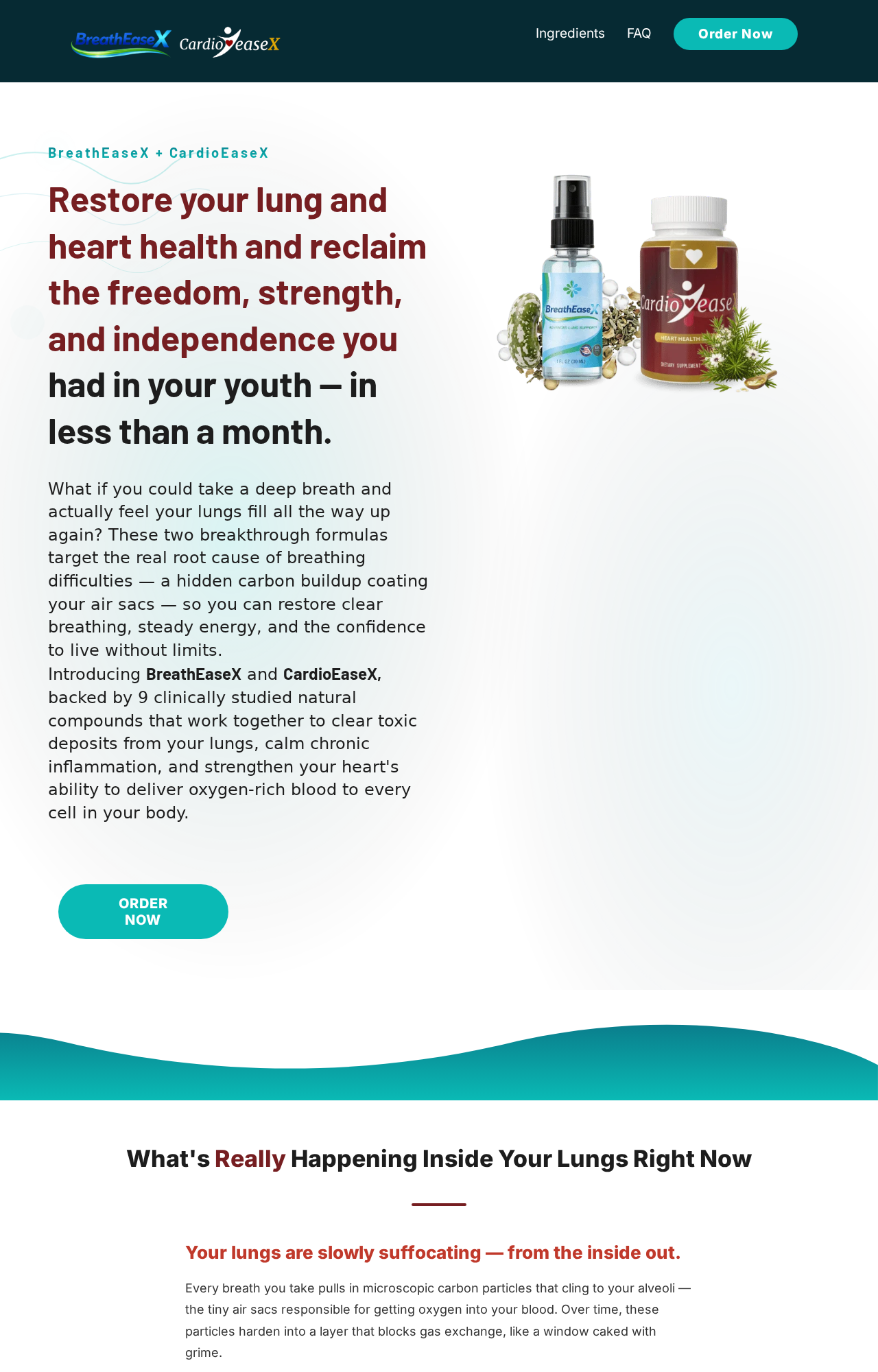
BreatheEaseX is a liquid dietary-supplement spray marketed with CardioEaseX capsules. The sales page says the combination can restore lung and heart health, clear toxic deposits, calm chronic inflammation, and return breathing freedom in less than a month.
The spray is promoted with Manuka honey, NAC, quercetin, olive leaf, vitamin D3, and L-theanine. CardioEaseX is described with CoQ10, hawthorn, L-carnitine, and magnesium, but the page does not clearly disclose the individual doses in the visible sales presentation.
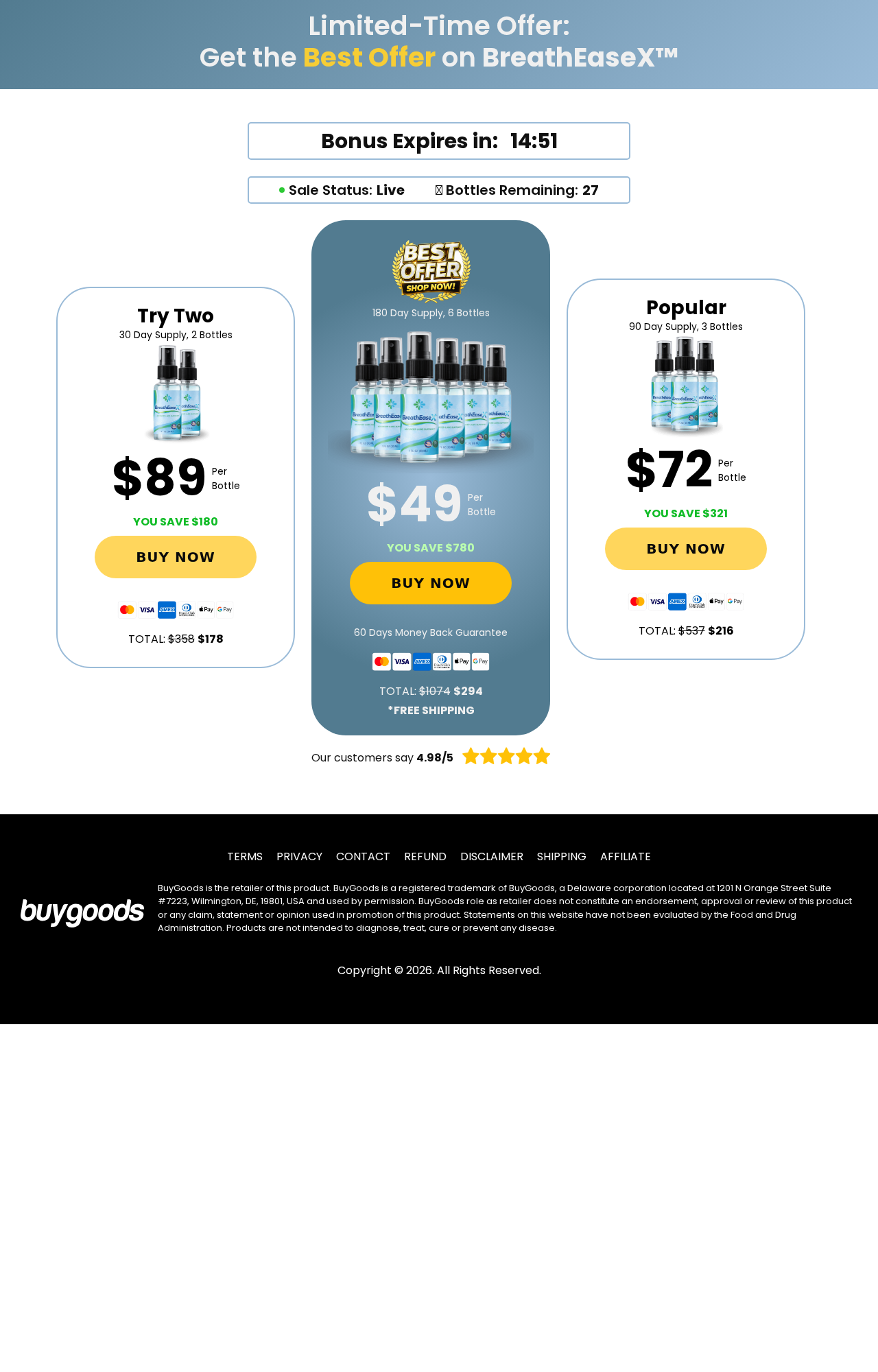
Packages cost $178 for two bottles, $216 for three, or $294 for six. The current page says the order is one-time and does not include automatic shipping.
Why the COPD Advertising Is Dangerous
Versions of the campaign imitate Fox News and use the likenesses of Laura Ingraham, Barbara O’Neill, and Sam Elliott. The video promotes a “mullein leaf and Vicks trick” and makes claims about restoring damaged lungs.
Some versions encourage viewers to distrust conventional treatment or suggest they can throw inhalers away. We found no credible evidence that the named public figures endorsed BreatheEaseX or that the product can replace prescribed COPD treatment.
A breathing emergency is not a marketing experiment. Any advertisement that pushes a supplement as an alternative to an inhaler creates a direct safety risk.
Our Verdict on BreatheEaseX
We strongly recommend avoiding BreatheEaseX. The campaign uses unverified celebrity endorsements, fake-news styling, implausible lung-cleaning claims, and shared supplement infrastructure that is not openly explained.
The exact checkout we examined says one-time purchase, so we are not labeling it a confirmed subscription. The medical deception and corporate inconsistencies are serious enough without exaggerating the billing evidence.
The major warning signs are:
- Fake or unverified endorsements by celebrities and media personalities.
- A false-news presentation designed to resemble trusted coverage.
- Claims that a hidden carbon coating is choking the air sacs.
- Suggestions that a supplement can replace inhalers or restore lungs quickly.
- The product page and checkout use differently spelled domains.
- Official-looking pages publish two different support numbers.
- The return address and legal template match IronPulseX.
- The marketing page points support to an unrelated Hemoflow email domain.
The Fake News Story Is Built to Override Medical Judgment
Fox News Styling Makes an Advertisement Look Reported
The campaign uses television graphics and recognizable faces to make the viewer feel that a major news organization investigated a breakthrough. That appearance is critical because a normal supplement ad would not carry the same authority.
We found no credible Fox News report validating BreatheEaseX. A logo, anchor image, or studio-style layout can be copied into an advertorial without the network’s involvement.
Before trusting any broadcast-looking health claim, locate the story on the network’s real domain and verified accounts. If the only copy exists inside a sponsored funnel, assume the presentation is deceptive.
AI Can Put False Words in Familiar Mouths
The use of Laura Ingraham, Barbara O’Neill, and Sam Elliott creates three different forms of trust: news authority, alternative-health authority, and celebrity familiarity.
AI-generated faces, cloned voices, dubbed footage, and fabricated interviews can combine those identities into a story none of them actually told. Small lip-sync errors may be hard to notice on a phone.
We found no reliable confirmation from the named figures that they created or endorsed the BreatheEaseX and CardioEaseX package.
The “Hidden Carbon” Explanation Is Not Credible COPD Education
The page says microscopic carbon particles coat the alveoli, harden like grime, block gas exchange, and can be cleared by its formulas. This visual story is easy to understand and frightening.
COPD is a complex, chronic lung disease that can involve airway inflammation, damaged air sacs, excess mucus, and reduced airflow. It is not responsibly explained as dirt that a spray can wash from the lungs.
The page does not provide a finished-product clinical trial showing that BreatheEaseX removes deposits, reverses COPD, or restores lung function in less than a month.
The Checkout Turns Fear Into a Large Multi-Bottle Purchase
There Is No One-Bottle Trial
The smallest main option requires two bottles for $178. The page labels six bottles for $294 as the best offer and adds countdown and low-stock messages.
A person who fears losing lung function may interpret the largest package as the safest medical choice. In reality, package size has no ability to validate the product’s claims.
The crossed-out totals are also extreme, reaching $1,074 for six bottles. The seller does not show evidence that ordinary buyers regularly paid that reference amount.
The Supply Math Is Confusing
The two-bottle option is called a 30-day supply, the three-bottle option a 90-day supply, and six bottles a 180-day supply. That progression is inconsistent unless the smallest package follows a different use pattern.
The page should state clearly whether one bottle lasts 15 or 30 days and whether the package includes one or both products. Buyers should not need to infer dosing from bottle graphics.
Save the Supplement Facts panels and actual directions before buying. If the delivered labels differ, those screenshots support a merchandise-not-as-described complaint.
The Current Page Says One-Time Purchase
The version we examined says there is no autoship or subscription. The checkout did not expose a recurring-order selection in the server response.
That should be documented accurately. Deceptive medical advertising does not automatically prove recurring billing.
Still, consumers should read the final order summary for subscription, continuity, refill, monthly, membership, or recurring language because affiliate variants can change.
How the BreatheEaseX Scam Works
Step 1: A Social Ad Finds People Frightened About Breathing
The video targets COPD, chronic cough, shortness of breath, reduced exercise tolerance, or fear of oxygen dependence. It may mention a family member or celebrity who supposedly recovered.
The emotional state matters. Someone who feels conventional treatment has failed may be unusually receptive to a secret cure story.
Step 2: A Fake Broadcast Supplies Authority
The ad looks like a Fox News segment or television interview. A host appears to question an expert, while graphics and captions reinforce the impression of real reporting.
The viewer is not told that the video may be AI-generated, edited, or unauthorized. Familiar identities replace independent evidence.
Step 3: The Ad Attacks Inhalers and “Big Pharma”
The campaign suggests that standard treatment manages symptoms while hiding the real cause. Some versions tell viewers they can discard inhalers after using the remedy.
This creates a false conflict between the supplement and medical care. The more the viewer distrusts clinicians, the more likely the sales page is to control the decision.
Step 4: A Mullein and Vicks Trick Becomes a Bottle
A household-style remedy keeps the viewer engaged, but the funnel ultimately sells BreatheEaseX and CardioEaseX. The advertised “trick” is a narrative bridge to a commercial order.
The product formula and dose are not shown to replicate a proven medical protocol. The familiar ingredients simply make the transition feel natural.
Step 5: The Landing Page Promises Rapid Restoration
The page says the formulas target the real root cause and can restore lung and heart health in less than a month. Testimonials reinforce the idea that objective measures such as oxygen saturation can improve.
Seller-selected stories do not establish typical results. The page does not disclose medical histories, simultaneous treatments, or independent verification.
Step 6: Multi-Bottle Pricing Raises the Stakes
The buyer must choose between $178, $216, and $294 packages. The largest is visually emphasized and surrounded by urgency cues.
By this point, the purchase may feel like a medical rescue rather than an ordinary supplement order. That is exactly why the fake-news setup is effective.
Step 7: Conflicting Policies Make Refunds Harder
The promotional site, checkout domain, support email, contact pages, and return facility do not align cleanly. The customer may discover these inconsistencies only after trying to cancel or return the product.
A 60-day guarantee becomes a process involving authorization, returned bottles, customer-paid shipping, and support details that differ by page.
Company, Address, and Fulfillment Checks
The Marketing and Checkout Domains Do Not Match
The main presentation appears at breatheeasex.com, using “breathe” in the spelling. Its order buttons lead to breatheasex.com, which drops the second “e” and hosts the BuyGoods checkout policies.
A small spelling difference can be missed on mobile. It makes consumers trace two domains when determining which one made the claims and which one accepted the order.
The Support Details Conflict
The checkout refund page lists +1 (970) 406-7582 and support@breatheasex.com. The contact page lists a different number, +1 (720) 619-8477.
The marketing page also exposes contact.lr@gethemoflow.com in its return instructions, even though Hemoflow is a different product name. This is a strong sign of reused sales infrastructure.
The Addresses Look Like Fulfillment and Mail Infrastructure
Returns are directed to 19655 E 35th Drive, Suite 100, Aurora, CO 80011. The policy identifies it as a fulfillment-house return address.
The footer separately lists 924 N Magnolia Ave, Suite 202, Unit #5383, Orlando, FL 32803. Neither address is presented with clear proof that it is the product manufacturer or clinical research operation.
IronPulseX Uses the Same Operational Details
IronPulseX publishes the same two phone numbers, Aurora return facility, Orlando suite, and mistaken Bari Tonic link in its shipping policy. The repeated errors extend beyond a common payment processor.
This supports a finding of shared templates, vendors, or operating infrastructure. It does not alone identify the ultimate legal owner, which is precisely the transparency problem.
The Refund Promise Is Not as Simple as It Sounds
The Buyer Must Return Bottles
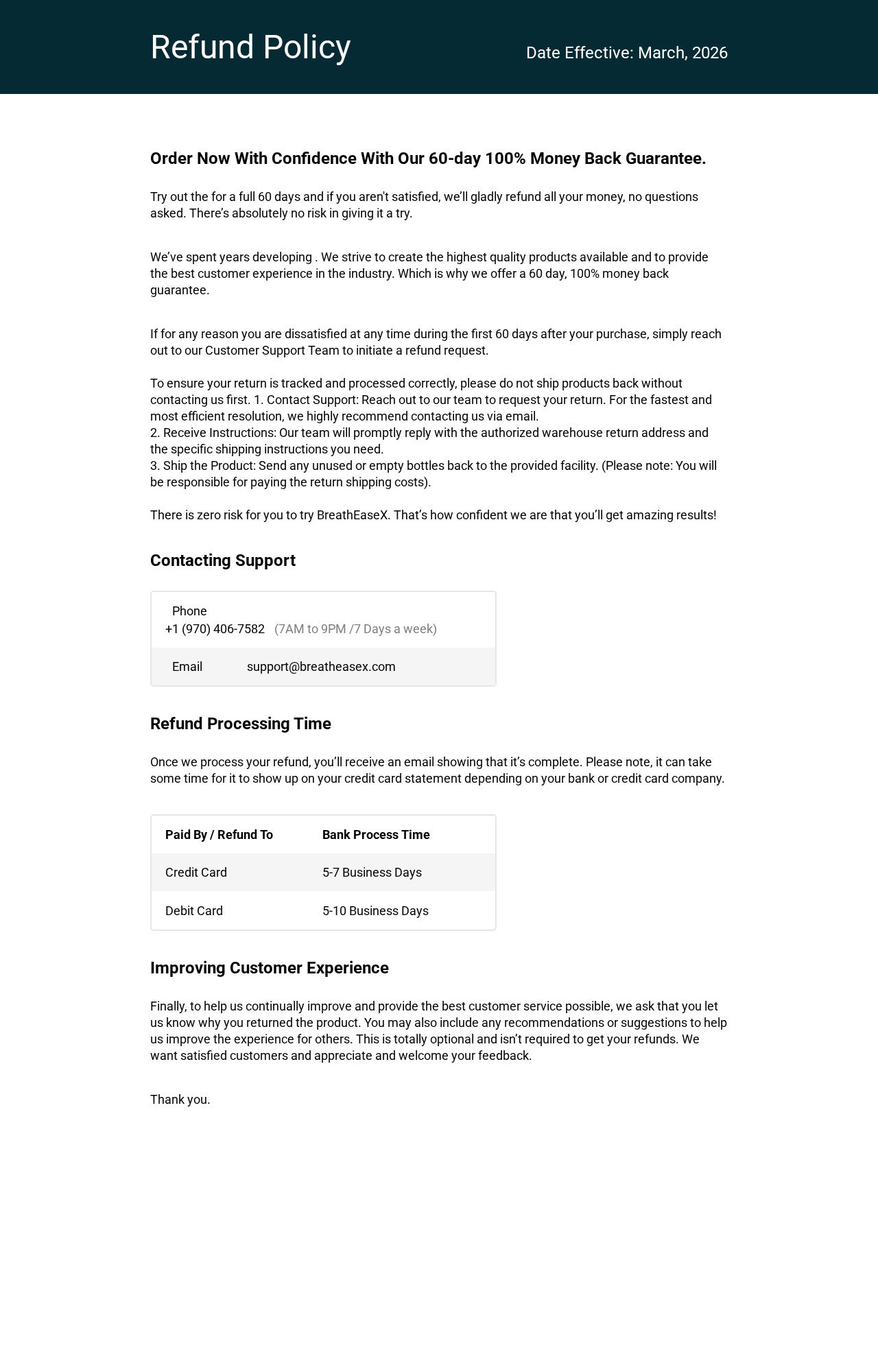
The refund policy tells customers to contact support, receive instructions, and send unused or empty bottles back. The customer pays return shipping.
The shipping page says all bottles should be returned, including full, partial, empty, and bonus bottles. That is different from a simple “no questions asked” impression.
Start the process early and ask which page controls the return. Keep written confirmation and tracking.
The Legal Template Points to an Unrelated Brand
The BreatheEaseX shipping page directs readers to bari-tonic.com for terms. Bari Tonic is not BreatheEaseX.
The same error appears in IronPulseX policies, making it unlikely to be a harmless isolated typo. It shows that the legal pages were cloned without adequate review.
Copied terms are particularly concerning when a customer’s refund deadline depends on exact instructions.
What to Do if You Have Fallen Victim to This Scam
- Do not discard or stop an inhaler. Continue prescribed treatment unless your clinician changes it. Seek urgent medical help for severe shortness of breath, blue lips, chest pain, confusion, or rapidly worsening symptoms.
- Save the complete funnel. Capture the social ad, fake broadcast, celebrity claims, product page, pricing, order summary, policies, receipt, card descriptor, package, and bottle labels.
- Check the billing terms. The version we examined was one-time, but look for subscription, autoship, refill, membership, continuity, monthly, or recurring language on your own receipt.
- Request the refund in writing. Contact the retailer using the receipt. State the order number, amount, date, misleading claim, and requested remedy. Ask which phone, return address, and deadline are authoritative.
- Return with tracking if required. Photograph every bottle and the package, obtain authorization, and keep proof of delivery. Do not rely on a verbal promise.
- Contact the card issuer if support fails. Explain whether the dispute involves a fake endorsement, unauthorized charge, product not as described, or refusal to honor the written guarantee. Submit evidence.
- Report the health advertisement. Report it to the platform, the FTC, and, for suspected adverse events, the FDA. A copied Fox News appearance can also be reported as impersonation.
- Protect your browser and computer. Run Malwarebytes after suspicious downloads or redirects. AdGuard can block many malicious ads, trackers, and fake redirect chains, but cannot replace medical care or cancel a payment.
Frequently Asked Questions
Can BreatheEaseX cure COPD?
We found no reliable product-specific evidence that it cures COPD, removes hidden carbon from the lungs, or restores lung function in less than a month.
Did Laura Ingraham or Sam Elliott endorse it?
We found no credible confirmation of those endorsements. Treat broadcast-style videos as fabricated unless verified through the person and network’s official channels.
Should I stop using my inhaler?
No. Do not change prescribed COPD treatment because of an online ad. The National Heart, Lung, and Blood Institute advises using COPD medicines, including inhaled treatments, as recommended.
Is BreatheEaseX a subscription?
The current checkout we examined said one-time purchase and no autoship. Verify the final order summary and save it because versions can change.
Where are returns sent?
The policy lists 19655 E 35th Drive, Suite 100, Aurora, CO 80011 as a fulfillment-house address. Confirm it with support and obtain authorization before shipping.
Is BreatheEaseX FDA approved?
No. Dietary supplements are not FDA approved for safety and effectiveness before sale, and a manufacturing badge is not approval to treat COPD.
The Bottom Line
BreatheEaseX uses the fear of progressive lung disease to sell a $178 to $294 supplement package through fake-news styling, unverified endorsements, and medically dangerous promises.
The current checkout appears one-time, but the billing model is not the main danger. The campaign encourages trust in an invented lung-cleaning story over proven medical care, while its company, domain, support, and refund details remain inconsistent. Avoid it.








