

A tempting social media offer promises brand new Breville Barista Pro coffee makers available nearly free. But before jumping on this unbelievable deal, understand the real catch. Videos and posts promoting overstock clearance sales are actually a subscription scam aiming to steal your money.
Enticing clips display pallets overflowing with Breville coffee makers ready to ship out. However, it’s all an elaborate ruse designed to trick victims into surrendering their personal and payment information. Don’t get duped.
An In-Depth Exposé on the Deceptive $6.95 Breville Coffee Maker Social Media Scam
A viral sensation promising luxurious Breville coffee makers for just shipping costs has exploded across social media. At first glance, the unbelievable deal seems impossible to pass up for coffee aficionados. However, the tantalizing Breville coffee maker promotion flooding platforms is actually an elaborate subscription scam, not the bargain of a lifetime.
The scam’s presentations vary slightly, but employ the same sophisticated psychological and technical manipulation techniques. Convincing videos showcase warehouses, shelves, or pallets brimming with Breville coffee makers ready to ship out. This aims to reinforce legitimacy and product availability.
Accompanying posts tout limited time overstock clearance sales and urgent motifs to compel fast action before the deal disappears.
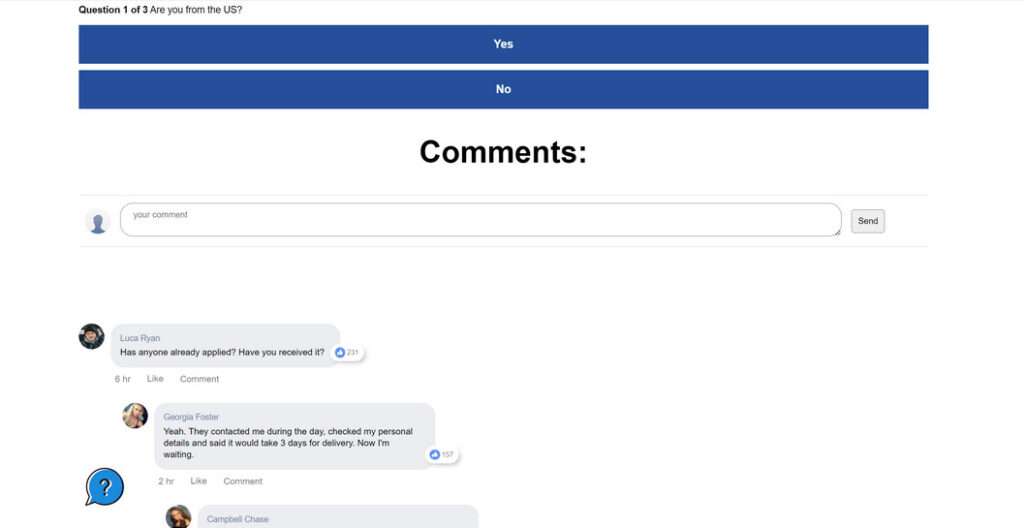
When social media users click on these enticing ads or posts, they are directed to polished scam websites disguised as authorized retailers. After completing a few short questions or surveys, victims are congratulated for “winning” a Breville coffee maker.
Deceptive popups then prompt users to enter payment information solely to cover shipping and processing fees, typically $3-$9.95. But in the excitement of scoring an unbelievable deal, most hand over financial data without proper scrutiny.
In reality, the card details entered are not actually processed for any shipping costs. Instead, victims are unknowingly registered for expensive recurring subscription services, resulting in monthly charges of $100 or more completely unrelated to the promoted coffee makers.
Attempts to cancel these unauthorized subscriptions or seek refunds from provided customer service contacts prove futile. Even after recognizing the true scam, banks often reject related fraud claims since the user technically submitted their information willingly at first.
By leveraging social engineering and elaborate marketing facades, this scam convinces ordinary users to willingly compromise their financial data and security. But by dissecting the systematic deception involved, we can avoid being duped and protect our hard-earned money.
How the Viral $6.95 Breville Coffee Maker Scam Fools Social Media Users
While specific implementations vary slightly, the core phishing techniques and social engineering psychology enabling these Breville coffee maker cons remain consistent at the core. Here is an in-depth breakdown of how scammers systematically dupe social media users via this viral scam:
Step 1: Flood Platforms With Tempting Breville Coffee Maker Offers
- Scammers inundate platforms like Facebook, Instagram, YouTube, and TikTok with sponsored posts and video ads promoting the Breville coffee maker deal.
- Accompanying text and captions build urgency with limited time motives like overstock sales, clearance events, etc.
- Videos displaying rows of Breville coffee makers aim to reinforce legitimacy and product availability.
Step 2: Drive Clicks to Highly-Polished Phishing Sites Posing as Retailers
- Clicking on these social media posts sends users to sophisticated scam websites disguised as authorized retailers.
- Elaborate staging and polished branding aim to build user trust in the site’s legitimacy.
Step 3: Make Users Complete Harmless Questions to “Win” the Coffee Maker
- Users are prompted to complete 3-5 basic questions before being declared a “winner”.
- This makes users feel obligated to follow through after appearing to receive something for “free”.
Step 4: Prompt Users to Enter Payment Details to Cover Minor Shipping Fees
- Popups congratulate users and prompt them to enter card details to cover $1-$5 in shipping costs.
- The tiny fee distracts from scrutinizing larger legitimacy issues or hidden terms.
Step 5: Secretly Enroll Victims in Recurring Subscription Services
- User payment information is actually used to register for expensive monthly subscription plans without consent.
- Recurring credit card charges ranging from $100-$250 are typical, while no products are ever fulfilled.
Step 6: Make Canceling Impossible and Refunds Unattainable
- Fake customer support contacts are completely unresponsive to cancellation requests.
- Banks frequently consider charges “authorized” since users willingly input information initially.
By recognizing the sheer complexity of manipulation and legitimacy signals, users gain the knowledge to identify and avoid falling for this scam themselves. Exercise extreme caution around social media offers involving upfront payments, regardless of how official a website may appear.
What To Do If You Fall Victim to the Viral $6.95 Breville Coffee Maker Scam
If you discover your personal or financial data was compromised by the Breville coffee maker social media scam, take these steps immediately to halt and limit damages:
- Contact your bank and credit card providers to report fraudulent charges and potentially close affected accounts. Request replacement cards as well.
- File claims with payment processors and credit bureaus documenting the fraudulent activity for potential chargebacks.
- Notify the FTC, state attorney general, and IC3 to lodge official complaints that aid investigation efforts.
- Report scam posts and accounts to social media platforms to help curb the scam’s spread before more users are victimized.
- Monitor your credit reports frequently for any unauthorized accounts opened using your information and enable credit freezes if needed.
- Change account passwords and enable two-factor authentication across online accounts as a security precaution.
- Educate family and friends by spreading awareness to help immunize others from being deceived.
Frequently Asked Questions About the Viral $6.95 Breville Coffee Maker Scam
1. What exactly is this Breville coffee maker scam I keep seeing online?
The Breville coffee maker scam is a deceptive social media promotion that uses convincing ads and websites to trick users into signing up for expensive subscription services without realizing it. Videos and posts promote an unbelievable deal to get a free or deeply discounted Breville coffee maker, but it’s actually a ploy to steal your money and information.
2. How does the Breville coffee maker scam work to deceive people?
The scam uses polished videos and websites that appear legitimate to convince users the deal is real. After clicking on an ad, you are directed to complete questions and enter payment information for a small shipping fee. But instead of processing any order, your card is actually charged recurring monthly subscription fees around $100 or more without authorization.
3. What techniques does the scam use to fool users?
The scam employs social engineering tricks like urgency, limited time offers, and psychological triggers that make the deal seem irresistible. Fancy websites with countdown timers, customer service numbers, and other legitimacy signals also convince users it’s a real retailer.
4. What warning signs should raise red flags about the offer?
Upfront payment requirements, pre-checked boxes, hidden terms, sketchy URLs, and limited time motifs should signal alarm. The scam creates a false sense of urgency and limited opportunity to disable critical thinking. Also beware of offers too good to be true.
5. What happens after users enter their information on the phishing sites?
Users are actually registered for expensive monthly subscription services completely unrelated to any coffee maker orders. Recurring credit card charges ranging from $100-250 are common. Cancellation attempts and refunds requests are futile as all contact information is fabricated.
6. What should I do if I already fell victim to the Breville coffee maker scam?
If you entered information and see fraudulent charges, immediately contact your bank and credit card companies to report the issue and potentially close compromised accounts. File claims with the FTC and IC3, then monitor your credit closely going forward to limit damages.
7. How can I spot and avoid this Breville coffee maker scam moving forward?
Carefully scrutinize special offers requiring upfront payments, even if the website looks legitimate. Report suspicious accounts and posts promoting unbelievable deals. When emotionally compelled to act fast, force yourself to pause and examine the situation logically.
8. Who is behind the Breville coffee maker scam and where do they operate?
Specific bad actors are difficult to pinpoint since most use fake identities and offshore shell companies. However, many orchestrate cons like this from China or countries in Africa and Eastern Europe beyond the reach of US law enforcement.
9. Is there any chance the viral Breville coffee maker deal being promoted is real?
Unfortunately, the scam leverages such sophisticated deception that the promises of free or insanely cheap Breville coffee makers are never real. No retailer is actually clearing out discounted inventory in the quantities depicted. Assume it is always a fake offer.
10. What legal recourse options exist for victims of the viral Breville coffee maker scam?
Unless the scammers are caught, victims have limited direct legal recourse. File detailed complaints with the FTC and IC3 to aid investigations of larger networks behind such scams. Seeking restitution by showing you were deceived may help reverse unauthorized charges.
The Bottom Line
The chance to score coveted Breville coffee makers for just a few dollars in shipping may seem impossible to pass up. But falling for the scam’s elaborate staged videos and phishing websites only compromises your sensitive personal and financial data while leaving you empty handed. Stay vigilant and exercise skepticism to protect yourself from manipulative social media scams aiming to capitalize on impulse and excitement. Don’t let yourself get played.

Join the discussion
0 commentsShare your experience or ask a question about this article.
Discussion
Start the conversation
Have a question or something useful to share? Add the first comment.