

Coinplex tells a modern investment story. Artificial intelligence watches global markets, automated systems find opportunities, and an ordinary user supposedly earns by pressing a button.
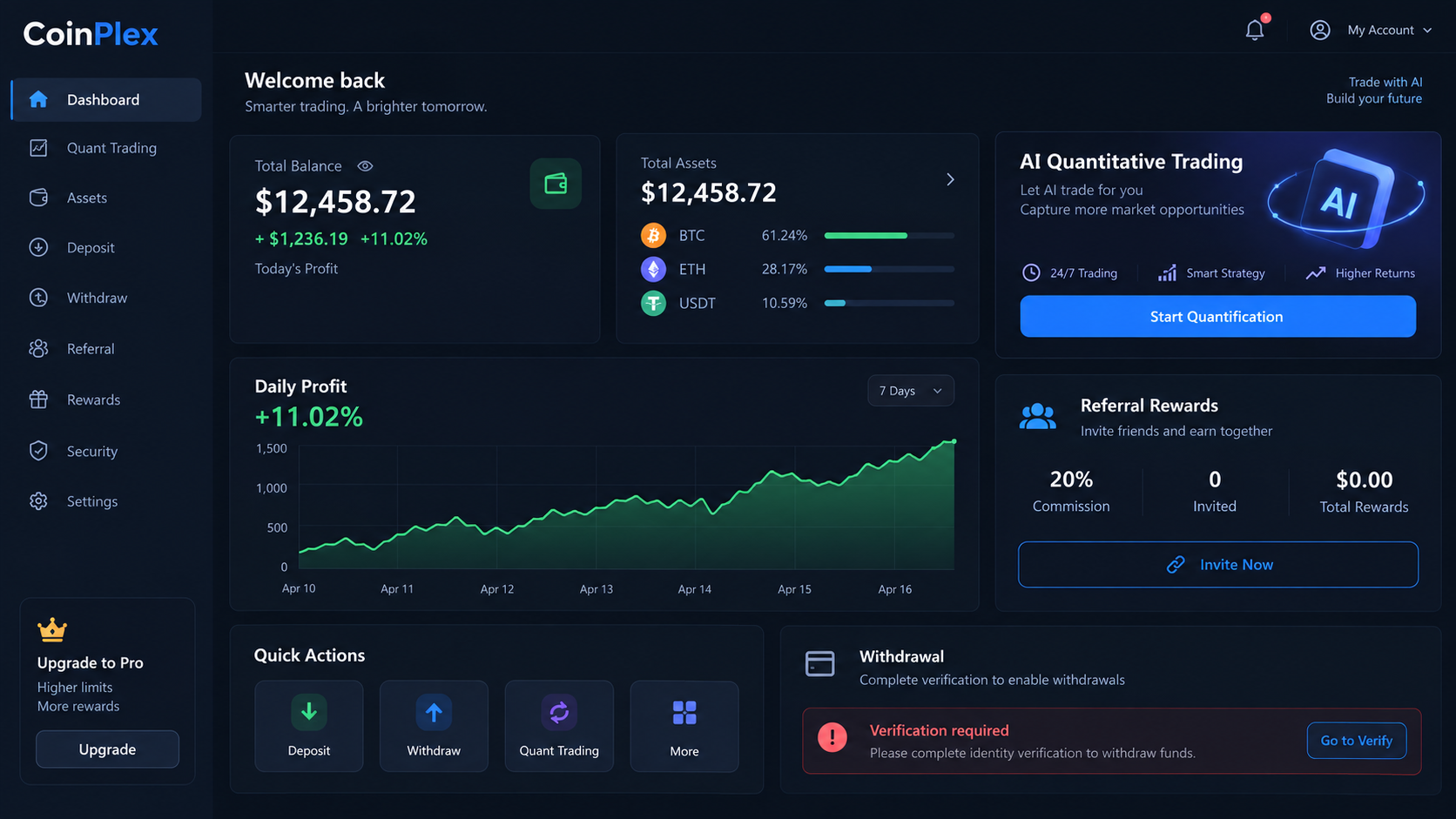
The dashboard can look polished enough to quiet doubt. What matters is whether any real trading exists behind the balance, returns, and withdrawal screen.
Overview
What Coinplex Claims
Coinplex has promoted itself through several domains as an artificial-intelligence quantitative trading company.
Its pages have claimed advanced algorithms, huge volumes of market data, high forecast accuracy, automated execution, risk management, and professional investment services.
Users are encouraged to deposit cryptocurrency, complete simple “quantification” actions, watch a balance rise, and recruit other members for commissions.
The presentation borrows language from genuine institutional trading while offering ordinary users an implausibly simple path to consistent profits.
What the Evidence Shows
The operation has used multiple domains, unclear ownership, referral compensation, cryptocurrency deposits, and an app-like click-a-button earning model.
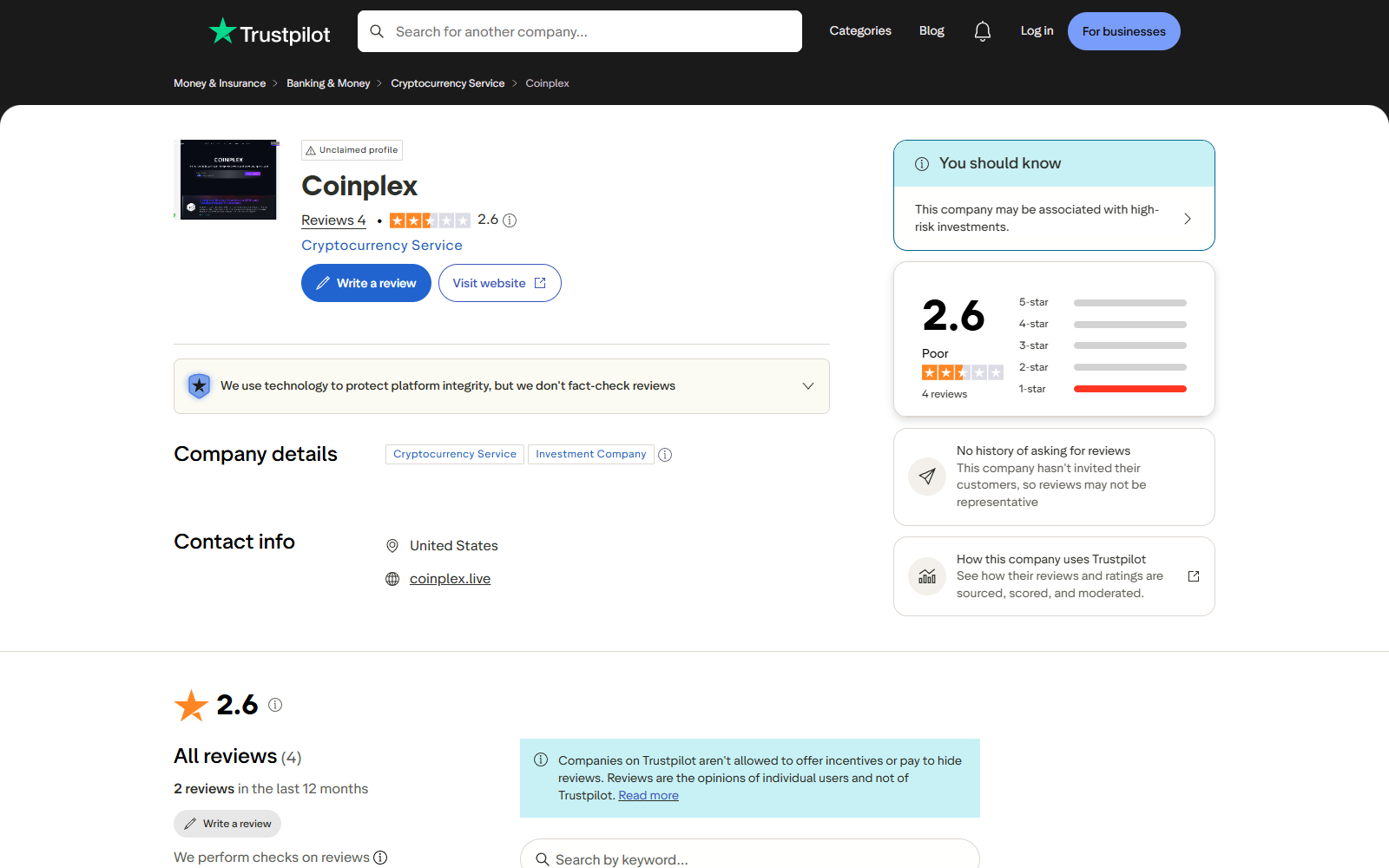
We could not verify a clearly licensed investment company responsible for the public claims, customer funds, or supposed trading activity.
Independent complaints describe blocked withdrawals, deleted accounts, fake withdrawal displays, and losses. Those reports match the expected failure point of a Ponzi-style operation.
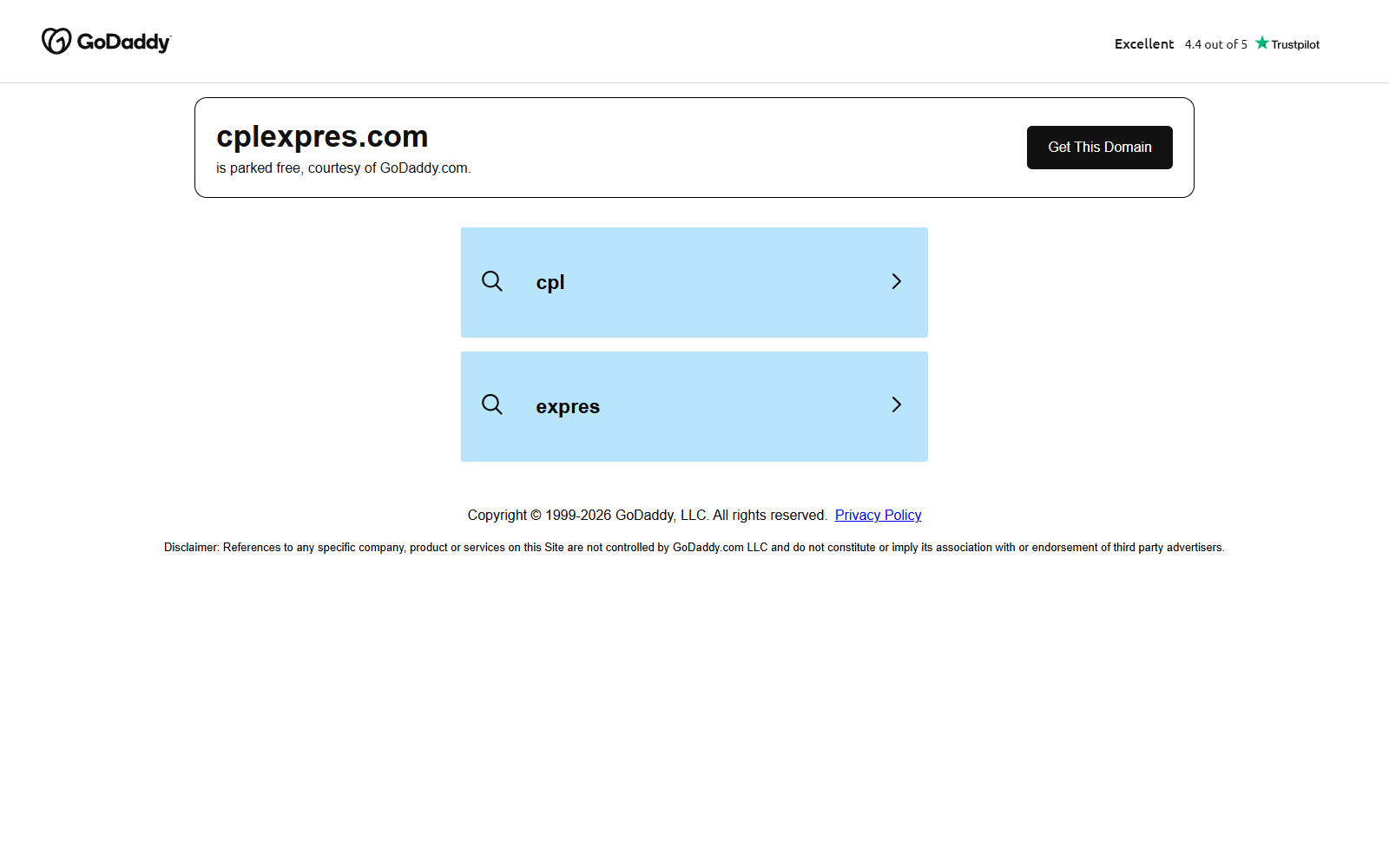
A historically promoted domain was parked for sale when checked. Rapid domain rotation and disappearance are major accountability warnings.
Our Verdict
Coinplex shows the defining signs of a click-a-button cryptocurrency Ponzi scheme rather than a transparent, regulated trading service.
The displayed profits do not prove trades occurred. Referral money and later deposits can fund early withdrawals long enough to create convincing social proof.
Do not deposit cryptocurrency, pay withdrawal fees, or invite others. If money is already inside, preserve evidence and begin reporting immediately.
- Ownership and licensing are not clearly verifiable.
- The claimed trading method is implausibly simple.
- Recruitment commissions encourage rapid expansion.
- Cryptocurrency transfers are difficult to reverse.
- Former domains have moved or disappeared.
What Is a Click-a-Button Investment Scheme?
These platforms pretend that daily button presses activate profitable e-commerce, advertising, arbitrage, or quantitative-trading tasks.
The action has no credible financial purpose. Professional algorithms do not need thousands of unrelated consumers to authorize routine trades manually.
The button gives participants a ritual. It makes the daily credit feel earned rather than simply typed into a private database.
Account balances are controlled by the operator. They can rise on schedule without any corresponding assets, brokerage account, or market transaction.
Small withdrawals may be paid at first. That payment persuades users to deposit more and recruit relatives.
When incoming money slows, withdrawal rules change, fees appear, accounts freeze, and support disappears.
The mathematics cannot last. Returns promised to earlier members require continual deposits from new participants.
How the Coinplex Scam Works
Step 1: A Recruiter Introduces an Exclusive Opportunity
Coinplex commonly spreads through messaging groups, social media, friends, coworkers, or local investment communities.
The invitation may emphasize that the platform is already paying and that joining early produces better returns.
A personal recommendation lowers skepticism, even when the recruiter only understands the same dashboard and promotional materials.
Step 2: AI and Quantitative Trading Create Credibility
The website uses terms such as deep learning, high-frequency trading, big data, genetic algorithms, and real-time risk control.
These technologies exist in legitimate finance. Listing them together does not prove Coinplex built or operates any of them.
Claims of extremely high forecasting accuracy should increase skepticism, not confidence. Real markets do not offer stable, near-certain prediction.
Step 3: Cryptocurrency Removes Traditional Payment Friction
Participants are directed to fund accounts using assets such as USDT.
Crypto transfers can cross borders quickly and generally lack card-style chargebacks. A recipient can move funds through many wallets within minutes.
The address shown for a deposit may not reveal the legal owner, location, or final destination.
Step 4: Daily Button Presses Manufacture a Sense of Work
Users log in and click a trading or quantification button. The dashboard then records a profit.
No evidence shows that the click creates an external trade. The operator controls both the action and the result displayed afterward.
The routine keeps members engaged and gives them a simple success story to share.
Step 5: Early Withdrawals Build Social Proof
Some early users may receive small payouts. They post screenshots, show friends, and insist the platform is legitimate.
A Ponzi scheme can pay selected participants using newer deposits. That is not proof of sustainable trading revenue.
The most persuasive promoter may sincerely believe the platform works because their own withdrawal cleared.
Step 6: Referral Rewards Accelerate Deposits
Multi-level commissions reward members for bringing in others and may pay percentages across several recruitment levels.
The participant becomes financially motivated to silence doubt and present the opportunity as safe.
Growth can appear explosive until the pool of new depositors slows.
Step 7: Withdrawals Become Conditional
When pressure rises, the platform may demand verification, tax, account upgrades, matching deposits, migration fees, or additional turnover.
Paying one fee often produces another. Legitimate taxes are not normally sent to an anonymous wallet to unlock personal funds.
Dashboard messages can claim a withdrawal is pending while no blockchain transaction exists.
Step 8: Domains Vanish and the Community Is Moved
A website may stop loading, become parked, or redirect users toward a replacement platform.
Operators can call the change a migration, merger, security upgrade, or improved version.
In reality, a new domain can reset complaints, balances, and accountability while targeting the same victims again.
Why a Professional-Looking Dashboard Proves Nothing
A trading dashboard is only a webpage. It can display balances, charts, transaction histories, badges, and profit percentages generated from ordinary database entries.
Green numbers feel authoritative because legitimate exchanges use them. The visual language is easy to copy.
Real proof would connect the customer to independently verifiable custody, executed orders, regulated statements, and withdrawals confirmed on the blockchain.
A screenshot cannot show whether assets exist. Even a transaction identifier must be checked in the correct public explorer.
Fraudulent platforms sometimes show internal transfers that never leave their system. Others provide a fake explorer page controlled by the same operators.
Always verify a withdrawal through a widely recognized blockchain explorer and the receiving wallet you control.
If the operator refuses to provide a transaction hash, the claimed withdrawal should be treated as unverified.
The “95% Forecast Accuracy” Claim Is a Warning
Coinplex promotional material has claimed forecasting accuracy above 95% while describing massive daily data processing.
That number sounds precise, but the definition of a correct forecast is not provided.
A model could predict tiny price movements, cherry-pick time periods, ignore trading costs, or label neutral outcomes as correct.
Even high classification accuracy does not guarantee profitable execution after fees, slippage, liquidity, and risk.
A legitimate investment firm would provide audited performance, methodology, risk disclosures, drawdowns, and a verifiable legal entity.
Extraordinary predictive claims without audited evidence are designed to remove fear from a risky deposit.
Why Cryptocurrency Is Central to the Scheme
USDT feels stable because its price targets $1. That price stability does not make a transfer reversible or its recipient trustworthy.
Victims often purchase USDT through a legitimate exchange, then send it to an address supplied by the platform or recruiter.
The exchange completed its job correctly. The loss occurs after funds leave the customer’s controlled account.
Scammers may coach users to describe the transfer as personal or unrelated to investment, preventing exchange warnings.
They may also guide screen sharing or remote access, exposing login sessions, wallet recovery phrases, and verification codes.
Never share a seed phrase, private key, or one-time security code. No investment support agent needs them.
Domain Rotation Is Part of the Risk
Coinplex has appeared across several domain endings. That fragmented footprint makes it difficult to identify one accountable operator.
A domain can be abandoned after warnings accumulate. Search engines then take time to connect the replacement with the older complaints.
During our check, cplexpres.com redirected to a parked-domain page. That is incompatible with the image of a stable global financial company.
Other pages or apps may still use the Coinplex name. Shared branding does not guarantee a shared legal entity or recovery path.
Do not deposit because a recruiter says the “new official domain” is safer. Verify licensing through the regulator, not through a link they provide.
Company, Address, and Fulfillment Checks
The Platform Does Not Clearly Identify Accountable Executives
Coinplex pages have presented a global financial operation without giving users a readily verifiable ownership and management structure.
Anonymous “AI experts” are not accountable custodians for customer funds.
A Claimed Headquarters Is Not Proof of Occupancy
Promotional material has associated the operation with Colorado, but an address alone does not establish that trading staff, records, or customer assets are there.
Confirm any company through official registries and the financial regulator for the claimed service.
Support Can Become a Second Extraction Channel
When withdrawals fail, chat agents may demand more deposits, taxes, upgrades, or verification payments.
Stop paying. Save the conversation and never install remote-access software for an unverified financial operator.
Financial “Fulfillment” Means a Real Withdrawal
There is no shipped product to inspect. Coinplex fulfills its promise only when funds arrive in a wallet or account the customer controls.
Dashboard profits, pending status, approval messages, and internal receipts are not payment.
How to Verify an Investment Platform Before Sending Crypto
Start with the legal entity, not the app name. Find the registered company, directors, jurisdiction, and exact domain.
Check the regulator responsible for securities, derivatives, or investment services in your country. Search the official database directly.
Confirm that the license covers the service offered and that the regulator lists the same domain and contact information.
Look for audited financial statements and a named custodian. A certificate uploaded by the seller can be fabricated.
Ask how returns are generated. “AI,” “quantitative,” and “arbitrage” are not complete answers.
Reject guaranteed returns, daily fixed profits, referral pressure, and cryptocurrency-only deposits.
Finally, test whether support answers risk questions without becoming aggressive. Legitimate investing always includes loss risk.
What to Do if You Have Fallen Victim to the Coinplex Scam
- Stop sending cryptocurrency. Do not pay taxes, unlock charges, upgrade fees, migration deposits, or verification demands.
- Preserve complete evidence. Save dashboard screens, wallet addresses, transaction hashes, chats, usernames, phone numbers, domains, referrals, and promised returns.
- Contact the sending exchange immediately. Report the destination as fraud-related and provide transaction identifiers. Ask whether the receiving service can be alerted.
- Secure wallets and accounts. Revoke suspicious token approvals, change passwords, enable strong multifactor authentication, and move unaffected assets when qualified guidance supports it.
- Remove remote-access tools. Disconnect unknown sessions. Malwarebytes can scan the computer for remote-control software, stealers, and other unwanted programs.
- Block malicious follow-up pages. AdGuard can reduce exposure to dangerous advertising and known scam domains, but it cannot recover transferred cryptocurrency.
- Notify people you recruited. Do not hide the loss. Quick warnings may prevent friends from depositing or paying an invented withdrawal fee.
- Report the operation. Contact police, financial regulators, cybercrime portals, the hosting provider, social platform, and cryptocurrency exchange.
- Beware recovery scammers. Anyone guaranteeing blockchain recovery for an upfront payment is likely attempting a second theft.
- Seek professional support. Large losses can be emotionally overwhelming. Speak with trusted family, financial counsel, and mental-health support when needed.
Recovery Services Are Often the Next Scam
After a Coinplex complaint becomes public, supposed investigators may contact the victim privately.
They claim to trace wallets, know an exchange employee, possess hacking tools, or work with a regulator.
The first payment may be called a retainer, gas fee, court bond, anti-money-laundering certificate, or wallet synchronization charge.
No legitimate professional can guarantee recovery of cryptocurrency controlled by an unknown recipient.
Verify lawyers and investigators through independent licensing records. Contact the organization using information you found yourself.
Never share wallet seed phrases or install software supplied by a recovery agent.
Frequently Asked Questions
Is Coinplex a legitimate AI trading platform?
The operation shows severe warning signs, including unclear ownership, referral incentives, click-a-button earnings, crypto deposits, domain rotation, and withdrawal complaints.
Does clicking the quantification button create real trades?
We found no independent proof that user clicks execute external market orders. The platform controls the displayed action and resulting balance.
Why did some Coinplex users receive withdrawals?
Early or selected payments can come from newer deposits. A successful small withdrawal does not prove genuine trading revenue or long-term solvency.
Should I pay a Coinplex withdrawal tax or verification fee?
No. Stop sending funds and verify any tax obligation directly with the relevant authority. Additional payment demands are a common extraction tactic.
Can a crypto exchange reverse my USDT transfer?
Usually not after blockchain confirmation, but report it immediately. An exchange may flag addresses, preserve records, or cooperate with law enforcement.
Can a recovery company get my Coinplex money back?
Recovery is uncertain. Avoid anyone promising guaranteed results, requesting cryptocurrency upfront, or asking for private keys, seed phrases, or remote access.
The Bottom Line
Coinplex uses sophisticated financial language and a simple daily ritual to make an unverified investment operation look like automated trading.
The dashboard is not the money. Do not deposit, stop paying new fees, warn anyone you recruited, and report every wallet and domain involved.








