


Picture an established brand’s online store, with polished photos and detailed descriptions, then add prices that seem too good to pass up. That’s the impression Corellecook.shop gives.
Before you click the add-to-cart button, it’s worth understanding who’s really running this site and what usually happens to your money after payment.
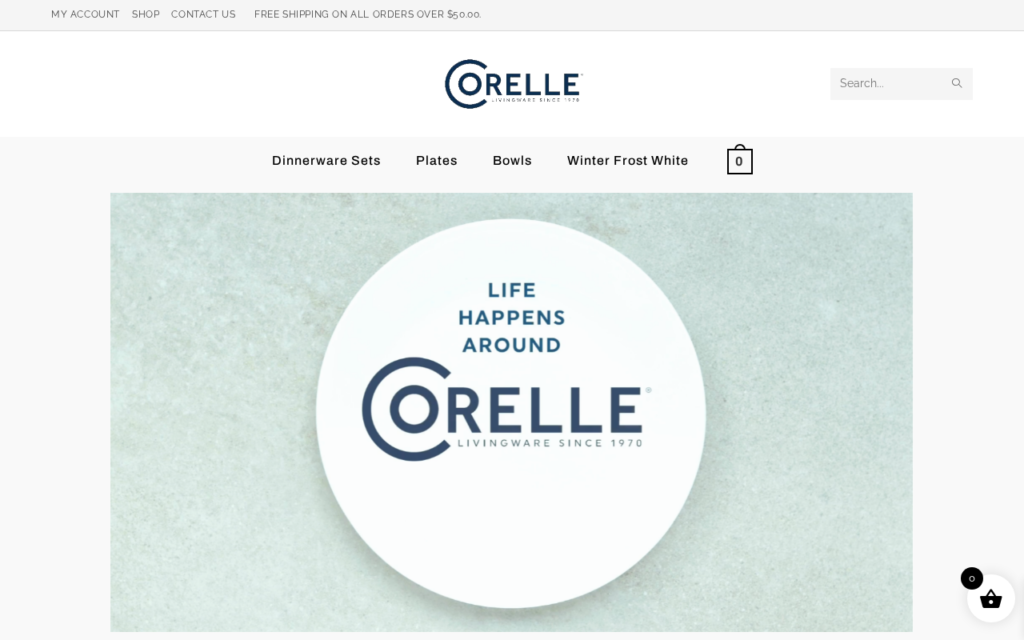
Overview
Copied catalog, unfamiliar address
Corellecook.shop is a copy. Its catalog, photos and branding come from real brands and stores, none of which runs it, and the genuine sellers trade from their own websites.
Shopping from your phone, you’d likely never notice. The page looks the way it should, the products feel familiar, and the checkout button responds when you tap it.
You’re dealing with a copycat network. Stores like this one run heavy ads, collect as many orders as they can, and pack up for new domains when complaints build.
Why everything seems to be on sale
The bait is a price that seems too good to skip. A $180 item drops to $39, often with a countdown timer or “closing sale” banner urging you along.
It’s not a clearance, it’s a rush. The price is meant to make you pay fast, before you stop and notice the store isn’t who it claims to be.
Think about where real sales happen: on a brand’s own website, or with retailers it names. A 70% markdown on everything, from a store you can’t trace, doesn’t belong there.
What happens after checkout
People who place an order with Corellecook.shop or a similar fake store usually face one of these outcomes:
- Nothing ever shows up. Either the tracking number goes nowhere or it tracks a different person’s delivery.
- A cheap copy arrives. The materials, sizing and finish are all off, and it’s not the real product.
- You get an unrelated item. The store ships something cheap purely so a delivery shows up on record.
- Charges you didn’t make show up. Payments you never authorized start landing on the card you used at checkout.
Don’t buy from Corellecook.shop. It’s a fake store running on a copied catalog, and its checkout should never see your card details.
What We Found on Corellecook.shop
Here’s what stands out about Corellecook.shop:
- Corellecook.shop was registered on January 31, 2026, about 9 months ago.
- The MalwareTips URL scanner gives Corellecook.shop a Safety Score of 28/100, rated High Risk (full report).
- When VirusTotal last analysed Corellecook.shop, on October 19, 2026, 2 of 93 security vendors flagged it as malicious or suspicious.
How the Corellecook.shop Scam Works
This isn’t a one-off: hundreds of copycat stores reuse the same script. Know the steps, and the next one won’t get your money.
Step 1: An ad dressed in borrowed photos
Everything begins with a paid post on Facebook, Instagram or TikTok. The scammers reuse photos and videos from real brands and stores, so the ad looks like any other.
An urgent excuse comes with it: an anniversary sale, a warehouse clearance, a “we’re closing our stores” announcement. Below, comments may be off, or full of short, glowing replies.
From there, it takes one tap to reach Corellecook.shop, and the page looks like a long-standing store.
Step 2: A cloned storefront, detail by detail
The page is assembled from real shops, from product photos and descriptions to the branding. Even the menus, guides and “free returns” badges can look the same.
The site can’t borrow a real business, though. In stores like this, you’ll usually find no business name, address or customer service, or ones that go nowhere.
Look at the footer and the legal pages first. They usually give it away: a generic company name, no address at all, or a free email address.
Step 3: Pressure tactics to get your payment fast
The store wants you moving, not looking. Countdown timers, “only 3 left” badges and “12 people are viewing this” pop-ups do that job, since time reveals the holes.
The extras are planned too. Free-shipping thresholds and “buy 2, get 1 free” bundles push the basket up so every card reaching checkout yields as much as possible.
Step 4: First the confirmation, then the silence
A confirmation email follows your payment, and it looks like one from any real shop. That’s by design: the longer it reassures you, the longer before you ask questions.
Sometimes a tracking number follows a week later. Often it never changes, parks on “label created,” or marks the order delivered in a city you’ve never lived in.
While you wait, your card’s dispute window keeps closing. That’s no coincidence: the delay is built into the plan.
Step 5: You get a fake, or you get nothing
If something lands on your doorstep, it’s usually a cheap overseas copy. It doesn’t match the photos, and it isn’t the product you bought.
Some stores ship a cheap accessory or another token item to a real address. That package exists to put “delivered” in the tracking, which they’ll use against your refund.
Step 6: Refund requests go nowhere
Contacting support usually means silence or a canned response: wait “a few more days.” And when a refund finally comes up, the conditions attached are ones nobody can meet.
The offer may be 20% back if you keep the item, or a return to China that you pay for. Both options leave most of your money with the store.
Red Flags at Corellecook.shop
You won’t prove a store is fake with one odd detail. Stores like Corellecook.shop stack several together, and you can confirm each one yourself in under a minute.
The domain belongs to someone else
Corellecook.shop isn’t one of the places a real brand sells from. Those places are its own domain and the retailers listed on its official site.
Look up the brand yourself and open its real website. Now compare that address with the one in your browser bar. A mismatch tells you this isn’t the brand’s store.
The logo hides an anonymous seller
Stores like this rarely say who they are: no registered company, tax number or physical address you can check. If something goes wrong, nobody can be held responsible.
Scroll to the footer, or open the terms of service or imprint page. A real brand usually names the company selling to you there. Do this before paying.
Contact options that lead nowhere useful
Stores like this usually keep support to a contact form or a bland, generic email address, leaving out any phone number, live chat or local return address.
Set that against the real brand, which usually offers phone support, store locations and a returns center. A fake store gains nothing by being easy to find.
Policy pages that came from another store
Copycat stores often borrow their refund, shipping and privacy pages from another shop, and sometimes they forget to change the store name, country or currency.
Take the returns page slowly. Copycat stores often wrap the real rule, such as sending items back to China at your expense, in a headline that sounds generous.
Deals the actual brand wouldn’t run
Big brands rarely slash their entire catalog by 70% or more. A store where every item gets that kind of cut isn’t running a real sale.
The same goes for the “original” prices beside each deal. They’re often made up so the fake discount seems far bigger.
Reviews without a traceable buyer
Try to follow a five-star review on a store like this to a real buyer, and you rarely can. Matching reviews elsewhere online usually don’t exist either.
Search for the store’s address and add “reviews.” If it’s a copycat, the results usually show nothing at all or complaints from customers still waiting on their packages.
How to Spot These Scam Websites
Fake brand stores have become harder to spot. Many of them now use AI-generated ads, polished product videos and copied checkout pages that look identical to the real thing.
The good news is that the same few checks still catch almost all of them:
- Check the address, not the logo. Open the brand’s official site yourself and compare addresses. One extra word or an odd ending is enough.
- Scan the site before you pay. Paste the address into the MalwareTips Website Scanner. It shows the domain’s age, security results and known warning signs in seconds.
- Look up who owns the domain. A Whois.com lookup shows when it was registered. A brand’s official shop doesn’t sit on a newly registered domain.
- Find the company behind the store. A real brand names its legal company, address and tax details. A copycat store leaves them out or invents them.
- Be suspicious of “closing down” sales. Store-closure, anniversary and warehouse-clearance stories are the most common hooks in fake brand ads.
- Search for outside reviews. Look the store up on Trustpilot and in search results. No history at all is as telling as a wall of complaints.
- Watch the payment options. A checkout that pushes bank transfers, crypto or a payment page on another domain is a reason to stop.
A browser extension can help. Malwarebytes Browser Guard blocks many known scam and phishing sites, and Malwarebytes ScamGuard checks suspicious links and messages before you click.
How to Buy the Real Thing Safely
If you had your eye on something at Corellecook.shop, there’s usually a way to buy the genuine item safely:
- Head to the official website. Search for the brand yourself and buy there. A link in an ad or comment isn’t the place to start.
- Look for authorized retailers. Many brands list who’s allowed to sell their products. Any store not named there isn’t one of them.
- Confirm the sale at the source. If a clearance is real, the brand announces it on its own website or verified social accounts. Sponsored ads alone don’t count.
- Pick a marketplace with buyer protection. If the brand sells there, buying from its official storefront gives you a clear path to your money back.
- Keep your payment protected. Never send a bank transfer, gift card or crypto. Use a credit card or PayPal instead.
The price may be higher than Corellecook.shop’s, and that’s the trade: a genuine product, plus a seller that honors refunds when you need one.
What To Do If You Already Fell For the Scam
If you paid a fake store, move quickly. The sooner you act, the better your chances of getting the money back and stopping further charges.
- Call your bank or card issuer. Say you paid a fake store and ask for a chargeback. Disputes have time limits, often around 120 days, so don’t wait.
- Open a PayPal dispute if you paid that way. Choose “item not received” or “significantly not as described.” PayPal generally accepts claims within 180 days of payment.
- Block or replace your card. If you typed your card details into the site, ask for a new card and turn on transaction alerts.
- Save your evidence. Keep the order email, the tracking number, screenshots of the product page and any messages from the store.
- Watch for follow-up scams. Fake delivery texts asking for a “customs fee” or “address update” often follow these orders. Don’t pay them or click their links.
- Change reused passwords. If you created an account on the store with a password you use elsewhere, change it on those other sites.
- Protect your data. Your name, address and phone number are now in the wrong hands. Malwarebytes Personal Data Remover finds where your details are exposed and helps remove them.
- Cut off the ads. These stores find people through ads. AdGuard blocks many malicious ads and pop-ups in your browser, so fewer of them reach you.
- Report the store. Report the ad on the platform where you saw it. In the US, file a report at ReportFraud.ftc.gov. For cross-border purchases, use econsumer.gov.
If you downloaded anything from the store, such as an “order tracking” app or a file attached to an email, scan your device with Malwarebytes Free.
Frequently Asked Questions
Is Corellecook.shop a legitimate store?
No. Corellecook.shop is a fake store, and its catalog is copied. You’re looking at real brands’ photos and descriptions on a site those brands don’t run.
Why does Corellecook.shop look so convincing?
Because it borrows almost all of its content from real brands and stores: product photos, descriptions, menus and guides. What it doesn’t have is a real business behind it all.
Will I receive my order from Corellecook.shop?
Maybe, though probably not what you paid for. People who buy from stores like this often receive nothing at all, or a cheap copy that looks nothing like the photos.
I already paid. Can I get my money back?
Often, yes. Move quickly and contact your card issuer or PayPal to dispute the charge, picking “item not received” or “not as described.”
Save the order email and tracking number, and grab screenshots of the product page. Don’t wait until the store replies.
Should I replace my card?
Entered your card details on Corellecook.shop? Then yes. Ask the bank for a fresh card and stay alert for small test charges on your statements.
Where can I report Corellecook.shop?
The platform that carried the ad should hear about it first. Next, warn the brand whose photos are being reused, then file a complaint with your country’s consumer protection agency.
The Bottom Line
Everything on Corellecook.shop is lifted from real brands, from the product photos to the items themselves. The cheap prices pull you in, but your order will probably never show up.
Do not place an order on Corellecook.shop. Head to the brand’s own website for the product, or use a retailer that the brand itself lists.
Ordered already? Today, call your bank or open a PayPal dispute. Keep every email and screenshot, and if your card details went in, ask for a new card.

Reviews & discussion
0 commentsShare a firsthand experience, or ask a question.
Community reviews
corellecook.shop
Moderated reader experiences, not an editorial verdict.
Start the conversation
Have a question or something useful to share? Add the first comment.