


A funded trading account sounds like a shortcut around needing a large investment balance. Coyle Capital’s Fully Managed Funded offer builds on that appealing idea.
But before paying for access, look beyond the account size. The public trading record and the websites behind this particular offer deserve a much closer look.
Overview
What Coyle Capital and FMF are connected to
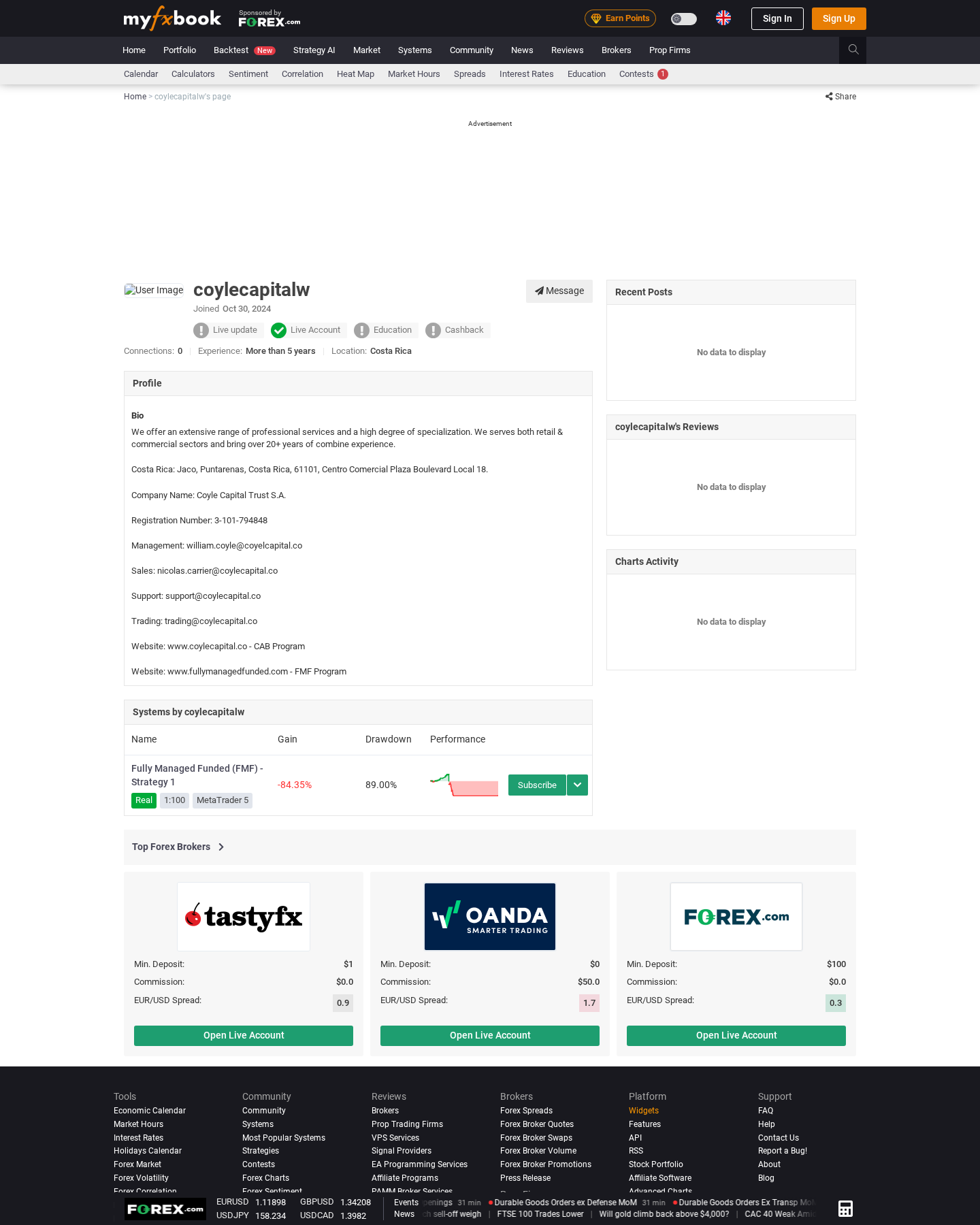
The public Myfxbook profile named coylecapitalw links coylecapital.co to a CAB program and fullymanagedfunded.com to an FMF program.
It identifies a business as Coyle Capital Trust S.A., gives a Costa Rica address, and lists company-domain contacts. These are statements supplied through the profile.
The financial offer concerns managed trading access, not an ordinary software subscription. Paying a fee and owning the advertised trading capital are different things.
The visible strategy record is a serious warning
The profile lists “Fully Managed Funded (FMF) – Strategy 1.” Its displayed gain is -84.35%, alongside 89% drawdown.
Those figures do not support treating managed trading as dependable passive income. A substantial drawdown is money moving against a strategy, not a small administrative inconvenience.
They also aren’t a calculation of every customer’s loss. An account’s displayed performance and your particular contractual exposure need to be distinguished.
Why we would not pay into this offer
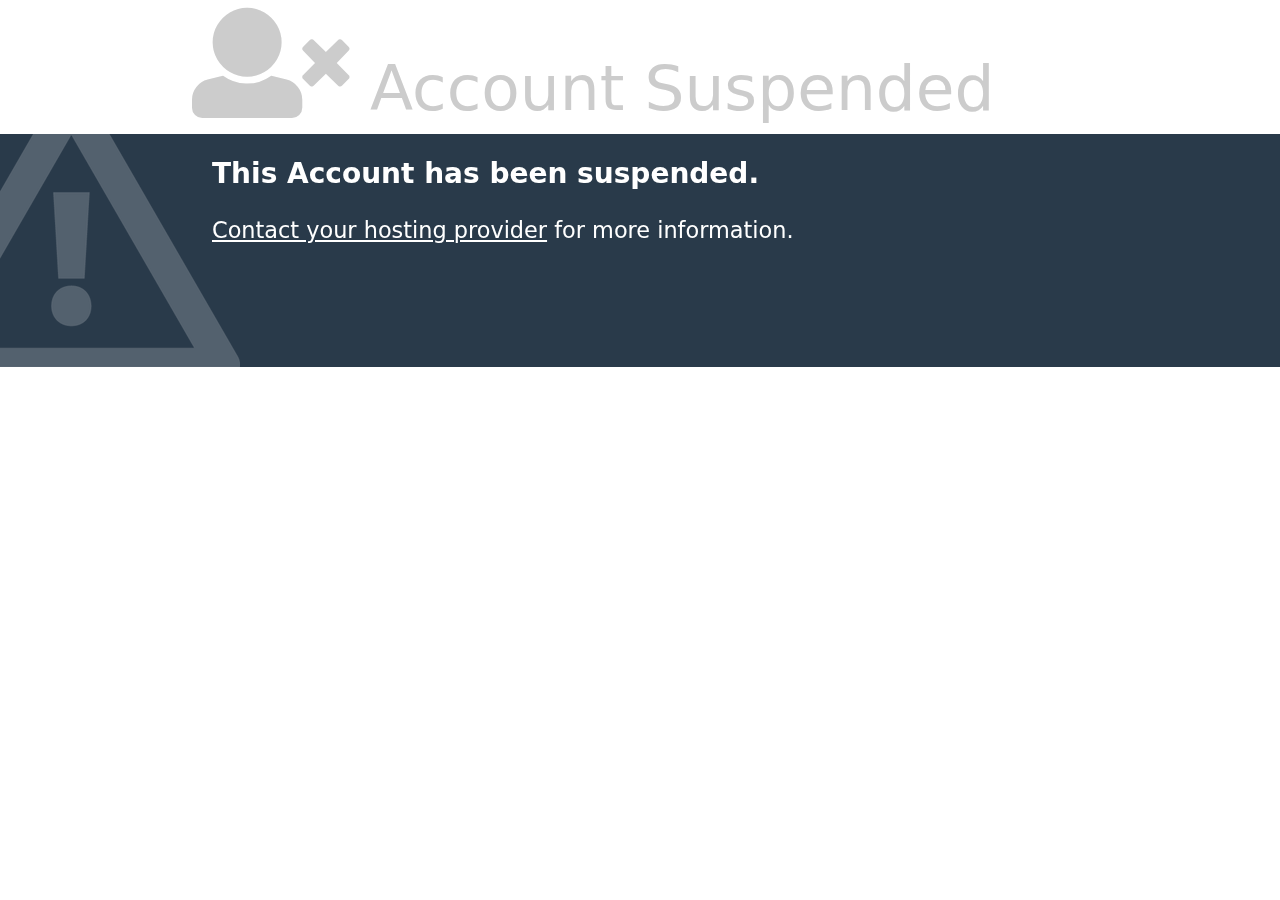
The Coyle website currently resolves to a hosting-suspension page. The separate FMF website could not be retrieved through the inspection used here.
A suspended site alone doesn’t establish fraud. Combined with the visible strategy losses and unavailable current contracting information, however, it leaves no sound basis for a recommendation.
- The public strategy shows severe losses rather than a reliable income stream.
- An advertised funded balance is not automatically your withdrawable property.
- A profile’s business details aren’t independent confirmation of financial authorization.
- Current fee, cancellation, custody, and payout obligations need an enforceable agreement, not a promotional explanation.
The Account Size Isn’t the Same as the Money You Own
A large funded-account figure can make a much smaller entry payment feel like a bargain. That comparison leaves out the rights attached to each number.
Your payment is a real expense. The larger trading allocation may instead be subject to limits, loss rules, profit-sharing arrangements, or conditions affecting access.
A published account of FMF’s promotion describes a $1,500 setup fee beside a $10,000 account and a monthly return pitch. These aren’t independently confirmed current contract terms.
Don’t treat that historical package description as a live quote. The usable information a prospective customer needs is the agreement actually offered before payment.
In particular, establish whether a return percentage refers to the advertised allocation, your fee, gross trading performance, or a share remaining after deductions.
For illustration, 1% of $10,000 is $100. It is not 1% of a $1,500 payment. Changing the base changes the expectation dramatically.
That arithmetic doesn’t demonstrate that any payment will be made. It simply shows why a percentage without a clearly defined base can mislead a prospective participant.
How the Coyle Capital and FMF Pitch Should Be Examined
Step 1: Separate the funded-account invitation from the contract
The invitation introduces the possibility of managed trading with more capital than the participant initially pays. The psychological attraction is access rather than ownership.
Before comparing account tiers, establish what service is being purchased. Is someone managing your assets, allocating trading capacity, or selling participation under another arrangement?
Those descriptions aren’t interchangeable. They affect who controls the money, what losses you bear, and what the provider has actually promised to deliver.
If a representative can’t provide an intelligible written answer, don’t let a larger account number move the conversation straight to payment.
Step 2: Read the trading record rather than the success story
The profile’s listed FMF strategy is directly relevant to the offer’s name. The negative gain and high drawdown deserve more attention than a confident sales presentation.
Drawdown describes a decline from an earlier peak. A large drawdown can require a very substantial subsequent gain simply to return to the starting point.
It also matters which period and account a figure covers. A different strategy’s attractive chart would not erase the losses on the record actually identified here.
No private brokerage statements or customer accounts were accessed for this article. The figures discussed are the publicly displayed strategy metrics.
Step 3: Resolve the payee and payout before transferring funds
A Myfxbook profile links the two program names, but it doesn’t itself accept responsibility for your agreement. Identify the party that would receive your payment.
Compare the agreement, invoice, bank beneficiary or cryptocurrency destination, and support instructions. A mismatch needs an explanation before the transfer, not after a withdrawal problem.
If cryptocurrency is requested, record the asset and network without assuming it offers a card-style dispute process. Transfer finality changes the recovery options available.
Don’t mistake a trading-platform login for control over the destination holding funds. Access to a dashboard and authority to move assets are separate questions.
Step 4: Consider what happens when the website or strategy stops working
The hosting-suspension page makes continuity a practical concern, not an abstract one. Someone already involved needs a documented route to records and responsible contacts.
It doesn’t reveal why hosting was suspended. It also doesn’t establish that every account is inaccessible or that a particular withdrawal has been refused.
The important consequence is simpler: don’t send another payment just because a chat contact says access will shortly return.
A replacement domain, new account tier, or proposed migration should be examined as a new commitment. None automatically improves your rights under an earlier agreement.
Coyle Capital Company, Address, Contact, and Account Checks
The profile identifies a company, but isn’t a company registry
The profile gives Coyle Capital Trust S.A. and registration number 3-101-794848. That is useful identifying information to compare with any agreement you’re sent.
It should not be presented as an independently certified current registration or permission to provide a particular investment service in your country.
Similar business names exist in finance. This article concerns the coylecapitalw profile and the two domains it links, not every firm called Coyle Capital.
A Costa Rica address doesn’t settle cross-border protection
The listed location is Centro Comercial Plaza Boulevard Local 18, Jaco, Puntarenas, Costa Rica, 61101. Its function wasn’t independently established here.
Don’t describe it as fake, a mailbox, or a trading floor without evidence. Instead, ask which entity and jurisdiction your actual agreement makes responsible.
For a customer abroad, the ability to enforce a claim matters more than a map pin. Registration, financial authorization, and practical recovery are separate issues.
Published emails need to match the agreement
The profile lists support@coylecapital.co and trading@coylecapital.co, along with named management and sales contacts. A lookup isn’t a test of response or complaint handling.
There is also a different spelling in the management email’s domain on the profile. Confirm the intended contact through dependable records before sending sensitive documents.
Don’t assume a spelling mismatch proves impersonation. But don’t guess where identification should go, especially when the main website isn’t providing normal access.
A performance page isn’t custody or payout assurance
Myfxbook provides a setting for displaying trading statistics. The existence of a profile doesn’t make the platform responsible for the financial offer being promoted.
Your questions still concern the broker, account ownership, allocation rules, payment destination, loss limits, withdrawal eligibility, and dispute process.
Those documents weren’t available as a complete current contracting package. Without them, a performance link cannot fill the gap, especially one displaying these losses.
What the Negative Gain and Drawdown Mean in Plain Language
A loss percentage can sound abstract until you translate it into the work required to recover. Losing half a balance requires doubling what remains to break even.
Larger declines make that recovery hurdle steeper. A confident promise of a few good months doesn’t undo a very large reduction in trading capital.
The 89% drawdown figure describes a peak-to-trough measure on the displayed strategy. It should not be substituted for a statement that every investor lost 89%.
Likewise, the -84.35% gain metric belongs to the listed record. It isn’t a verified estimate of the total amount customers collectively paid or lost.
Still, the buying consequence is clear. Anyone presenting this as comfortable passive income needs to explain the losses, not direct attention to a different success story.
A strategy can trade real markets and still be unsuitable. You do not have to prove that the trading is fictional to decline an unacceptable offer.
Save the strategy’s name alongside any performance screenshot. Otherwise, an older illustration, a different account, or a revised presentation can be mistaken for the record you relied on.
Also ask whether the provider’s explanation includes closed accounts and unsuccessful periods. Showing only a surviving strategy can leave out part of the experience relevant to your decision.
The public FMF figure is already adverse. It doesn’t need to be enlarged into an invented account of customers’ individual trades to justify walking away.
Questions a Genuine Agreement Must Answer
Start with the fee. When is it earned, what exactly does it buy, and which circumstances permit cancellation or a refund?
Then examine losses. Determine whether you can lose only the fee, additional deposited assets, accumulated profits, or access to an allocation.
Next comes control. Who can place trades, change the strategy, move funds, or end the service, and how are those decisions communicated?
Finally, ask about a shutdown. You need a way to obtain records and submit a claim if normal website access disappears.
These aren’t technical details to sort out after funding. They determine whether the service being offered is the service you thought you were purchasing.
For Coyle Capital and FMF, we would not make a payment while those obligations remain unresolved and the public strategy record shows such substantial losses.
What to Do If You Paid Coyle Capital or FMF
-
Stop additional payments while assessing the account. A request for another fee, upgraded package, or replacement service doesn’t become safer because you’ve already committed money.
Keep any existing trading exposure separate from the decision to send more. Get qualified advice before making rushed decisions about open positions.
-
Preserve the agreement and original pitch. Download invoices, account terms, promotional messages, performance links, and any promises concerning funded capital, returns, refunds, or withdrawals.
Include the actual domain and dates. A screenshot of a balance without the account context can be difficult to interpret later.
-
Reconcile what you paid and received. List fees, deposits, distributions, trading losses, and any withdrawals as separate entries.
If cryptocurrency moved, keep the transaction hashes and networks from your sending service. Don’t rely solely on figures inside the provider’s portal.
-
Request the account status and responsible entity in writing. Ask where records are held, whether assets remain available, and which contractual conditions govern a withdrawal or cancellation.
Keep replies in their original form. Don’t accept an unrelated new payment arrangement as an answer to a question about your existing funds.
-
Speak to the payment provider about a specific dispute. Explain accurately whether the issue is an unauthorized payment, an undelivered service, or a withdrawal problem.
Ask about time limits promptly. Legitimate trading losses and a provider failing to deliver what was purchased aren’t automatically the same kind of claim.
-
Report a suspected financial offense through official channels. Supply the company details, domains, agreement, contact history, and a clear payment chronology.
In the US, IC3 accepts internet-crime reports. Elsewhere, use the relevant police or financial authority’s independently verified contact route.
-
Don’t hire a recovery stranger on a guarantee. Someone citing your losses or the suspended website may be trying to sell a second risky transaction.
Never disclose a wallet recovery phrase or banking code, and don’t pay a supposed clearance charge to unlock an unverified reimbursement.
Frequently Asked Questions
What connects Coyle Capital to Fully Managed Funded?
The public coylecapitalw Myfxbook profile lists both domains and identifies an FMF strategy. That connection doesn’t independently confirm every term a promoter may offer.
What does the public FMF strategy show?
The displayed record shows -84.35% gain and 89% drawdown. These describe that strategy record, not a verified loss calculation for every customer.
Does a funded account mean I own its full advertised balance?
No. Ownership, trading allocation, fee payments, and withdrawable profits are different rights. Only the applicable agreement can establish what the provider owes you.
Does the suspended website prove a scam?
Not by itself. It establishes an access and continuity problem. The visible losses and missing current contracting information independently justify declining this offer.
Is the listed Costa Rica company independently verified here?
No. The name and registration number are profile statements. They aren’t a certification of current legal status or authorization to serve customers in another jurisdiction.
Should I pay a new fee to restore access?
Don’t pay based on an informal assurance. Preserve the request, seek the existing agreement’s explanation, and discuss the situation with your payment provider or appropriate authority.
The Bottom Line
Do not pay into Coyle Capital’s FMF offer on a passive-income promise. The public strategy’s severe losses and unavailable current contracting information make it unsuitable to recommend.
If you’ve already paid, stop adding funds, obtain your account records, and pursue the specific payment or withdrawal issue through documented contacts and official channels.

Join the discussion
0 commentsShare your experience or ask a question about this article.
Discussion
Start the conversation
Have a question or something useful to share? Add the first comment.