


A cold room and an expensive heating bill make a small, efficient heater sound like an easy win. Cozy Cove Pro’s advertising promises exactly that combination.
The pictures are inviting, and the guarantee sounds generous. But choosing a heater means checking more than whether the person in the promotional photo looks comfortable.
Overview
A ceramic heater with unusually broad promises
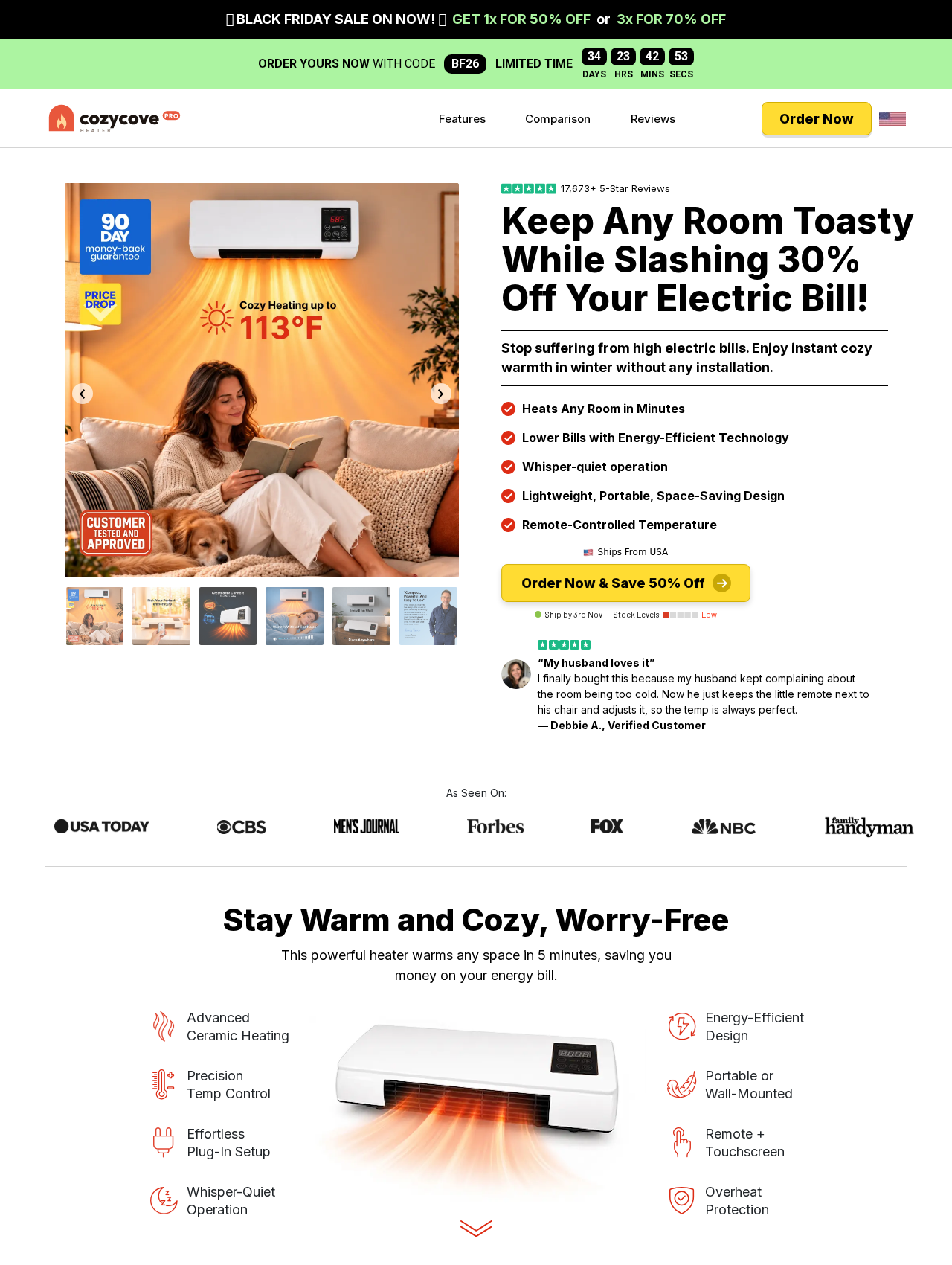
Cozy Cove Pro is advertised as a portable or wall-mounted ceramic heater with a remote control, touchscreen, and a lightweight body.
The sales page promises room heating within five minutes and promotes a 30% reduction in your electric bill. It lists coverage up to 549 square feet.
The same specifications put power output between 400 and 800W. That number deserves more attention than the glowing heat effect used in the product pictures.
The guarantee is less simple than the advertisement
The offer invites a 90-day trial and promises a full refund if the buyer doesn’t experience comfortable temperatures and lower utility bills.
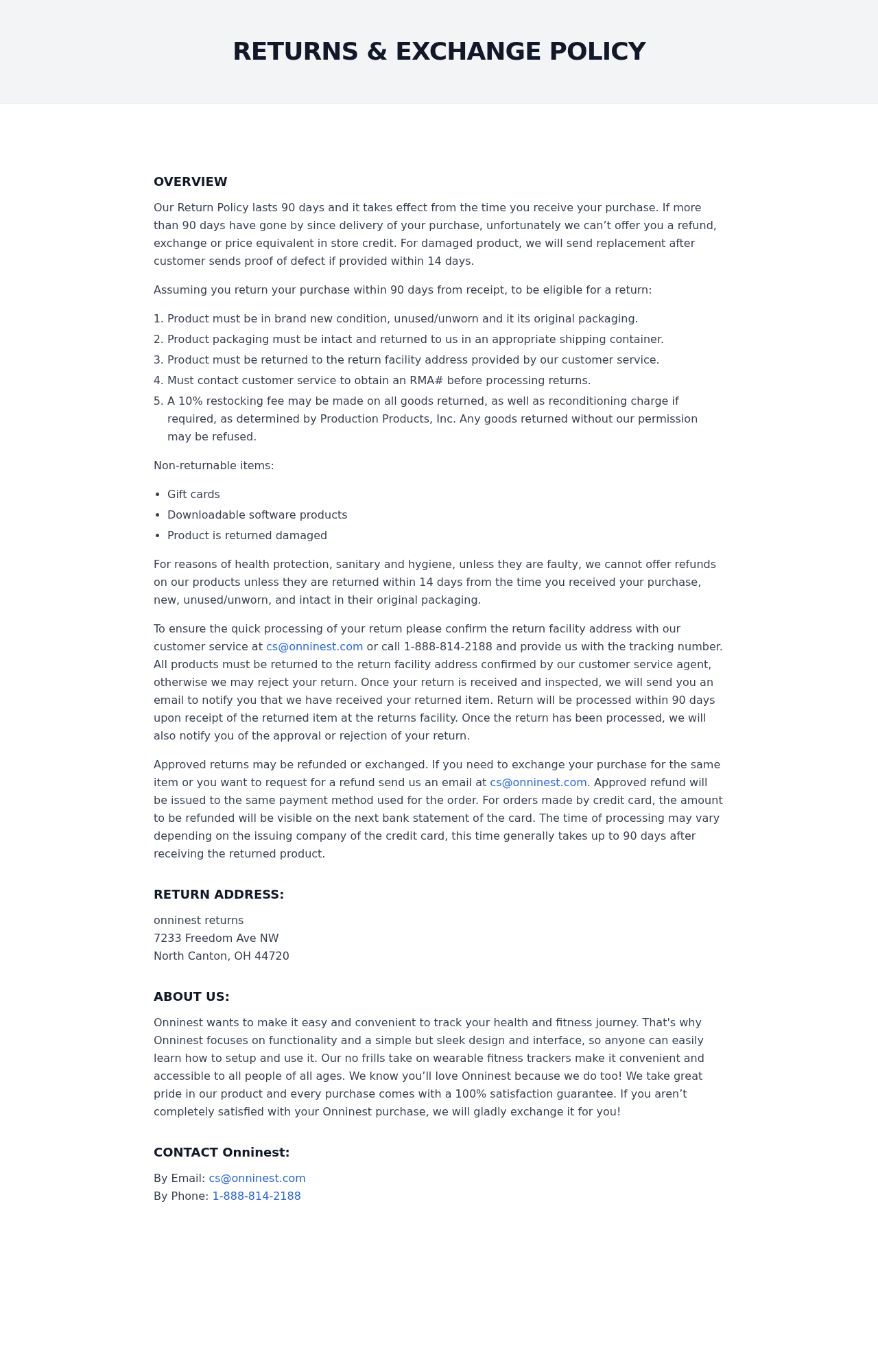
The linked Onninest return policy requires products to be unused and in original packaging. It also allows a possible 10% restocking deduction.
Those conditions don’t fit comfortably with a promise that you can test the heater’s effect on your monthly electricity bill.
The main concerns are measurable, not mysterious
The important buying questions are specific:
- What temperature increase was achieved in a defined room during those five minutes?
- What heating system and usage pattern produced the claimed bill saving?
- Can a heater used for testing actually qualify for the advertised refund?
- Which business and return terms appear on the final order?
The buying risk is straightforward: an ordinary fan heater is being offered with sweeping savings claims and a trial promise undermined by its own return conditions.
The Generic Heater Design Behind Cozy Cove Pro
Around $10 on Alibaba, versus $99.99 at checkout
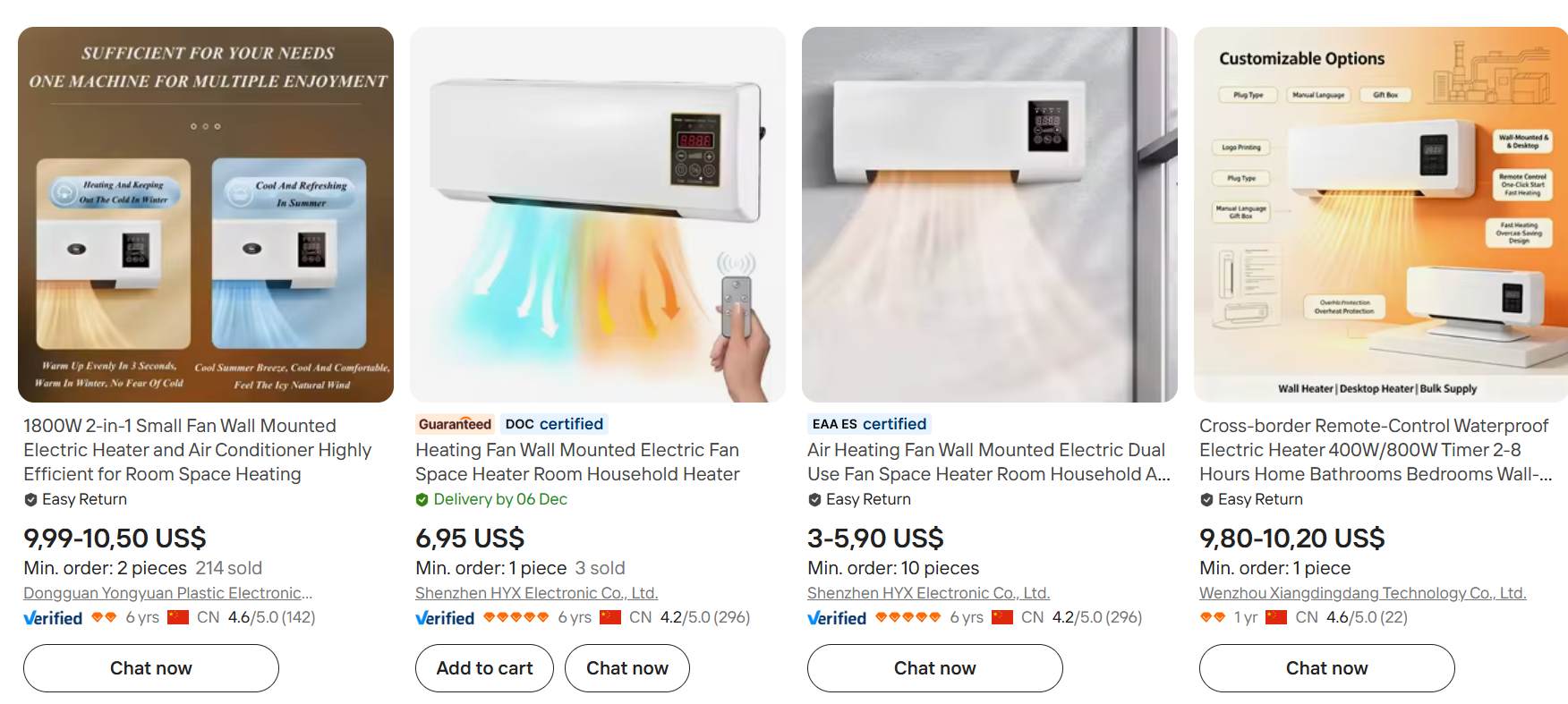
Cozy Cove Pro’s pictured heater isn’t a distinctive new invention. Its white horizontal housing, lower black air outlet, and right-hand digital control panel appear in generic supplier offers.
An Alibaba listing from Wenzhou Xiangdingdang Technology Co., Ltd. advertises a visually matching wall-mounted electric heater with the same 400W/800W power options.
The displayed price is $9.80–$10.20, with a minimum order of one piece. The supplier is listed in China.
Compare that with Cozy Cove Pro’s $99.99 single-unit checkout price. That’s roughly ten times the displayed supplier price, before supplier shipping, taxes, and other costs.
This is a public listing-price comparison, not Cozy Cove Pro’s purchasing invoice or a calculation of its profit. No delivered unit was dismantled or tested.
Different listing names, familiar hardware
The supplier image advertises customization of logos, plug types, manual language, and gift boxes. Branding can change without making the underlying heater design an exclusive invention.
Other Alibaba offers use descriptions such as wall-mounted heating fan, dual-use space heater, and two-in-one heater and air conditioner around the same familiar white housing.
The pictured details matter more than those interchangeable labels: the long lower outlet, black right-hand control panel, numerical display, and wall-mounted or desktop presentation.
Some offers advertise 1800W or 2000W rather than 400W/800W. Similar pictures therefore don’t establish identical electrical components, output, certification, or manufacturer.
The finding is still important: this is a low-cost generic heater design available from Chinese suppliers, not evidence of unique Cozy Cove Pro energy-saving technology.
A fan heater is not a miniature refrigerated air conditioner
A ceramic fan heater warms passing air with an electrical heating element. A remote, touchscreen, or air-conditioner-shaped shell doesn’t change that basic function.
In fan-only mode, an ordinary fan circulates existing air. That isn’t refrigerated cooling, and blue airflow graphics don’t turn a heater into a split-system air conditioner.
Cozy Cove Pro’s own specifications identify ceramic heating. They don’t document a refrigeration system or independently measured cooling capacity.
Don’t buy this offer expecting a bargain replacement for proper air conditioning, or mistake its branded presentation for proof of better heating efficiency.
Can Cozy Cove Pro Really Cut Your Electric Bill by 30%?
A lower wattage doesn’t prove a household saving
Electric resistance heating converts electricity into heat. A new trademark for the airflow doesn’t give a basic heating element a special source of free energy.
Wattage tells you how quickly an appliance uses electrical energy. It doesn’t, by itself, tell you what happens to your entire home’s monthly bill.
A lower-powered heater may use less electricity each hour than a higher-powered one. It may also need longer operation or fail to maintain the same room temperature.
The meaningful comparison is equal comfort under comparable conditions. Otherwise, consuming less energy can simply mean delivering less heat.
To substantiate a fixed bill-saving claim, the seller would need a clear baseline: the previous system, electricity rate, occupied area, weather, thermostat settings, and operating hours.
The offer doesn’t provide a transparent household comparison establishing that a typical buyer will reduce the total bill by the promoted amount.
Its FAQ goes further, answering “Will it increase my power bills?” with “No.” An electric heater consumes electricity; adding it without reducing other heating adds cost.
A simple running-cost example
Using the advertised maximum output as an assumption, continuous operation at 800W for five hours consumes 4 kilowatt-hours.
At a hypothetical electricity rate of $0.20 per kilowatt-hour, that equals $0.80. Thirty similar days would cost $24 for that heater alone.
This is arithmetic, not a measurement of Cozy Cove Pro. Actual consumption depends on its real power draw, thermostat cycling, and how long it operates.
If your existing heating keeps running unchanged, the additional appliance adds consumption. A saving requires some other heating expense to fall by more than its added cost.
Heating one occupied space instead of the whole house may help in some circumstances. The result depends on the home and existing heating arrangement, not this brand name.
Five-minute warmth needs a defined meaning
Feeling warm air near the outlet isn’t the same as raising the temperature throughout a large room. Advertising often lets those two experiences blur together.
A useful room test would disclose starting temperature, target temperature, room volume, insulation, outside conditions, sensor placement, and whether other heating was operating.
The page’s own FAQ qualifies its coverage estimate with room layout, insulation, ceiling height, and surrounding conditions. Those qualifications matter more than a broad any-room headline.
Also, a displayed 113°F heating-range figure doesn’t establish a safe or attainable room temperature. Buyers need instructions explaining exactly what that specification measures.
A thermostat setting, outlet-air temperature, and room-temperature reading are different measurements. A glowing display should identify which one it shows before you rely on it.
The concern is the gap between an any-room promise and the conditions needed to achieve it. A small appliance’s warm outlet doesn’t settle that question.
How the Cozy Cove Pro Sales Funnel Works
Step 1: Sell warmth and savings together
The landing page starts with the two worries that make winter heating stressful: discomfort and cost. It presents the heater as an answer to both.
Warm-colored graphics, a remote control, and wall-mounted product images make the solution look convenient. None of those features establishes the advertised financial result.
Keep two decisions separate: whether the appliance suits your room, and whether the sales offer provides reliable value and protection.
Step 2: Reinforce the message with review counts and media logos
The page claims 17,673+ five-star reviews and displays an “As Seen On” strip with USA Today, CBS, Men’s Journal, Forbes, Fox, NBC, and Family Handyman logos.
Those recognizable names make the offer look independently vetted. Yet the strip supplies no linked product review, named journalist, dated test, or endorsement supporting that impression.
Targeted searches of the named publications didn’t locate coverage verifying this heater’s advertised savings. The logos are unsupported credibility cues, not evidence that those publishers recommend buying it.
The page also alternates between 27,392+ reviews and 17,673+ customers without explaining the different totals. Neither number leads to an independently checkable review collection.
Don’t treat a news logo as a safety certificate or performance test. Likewise, the seller’s five-star counter doesn’t document how that many purchases or reviews were authenticated.
Step 3: Offer progressively cheaper prices per unit
Checkout initially selects one heater at $99.99. Two are advertised at $79.99 each, and three at $59.99 each.
That makes the package totals $159.98 and $179.97 respectively, before any additional checkout charges. A lower unit price still means spending more overall.
Check the quantity and full order total before paying. The observed one-unit default is not evidence that customers are forced to buy multiple heaters.
Step 4: Use the refund promise to reduce hesitation
A 90-day trial sounds like time to compare utility bills. The page says dissatisfied buyers can get every penny back, without a difficult explanation.
But the checkout also excludes shipping and handling from its refund language, and the linked policy adds unused-product conditions and possible deductions.
That is the point where reassurance needs to become a precise written agreement. Don’t pay first and discover afterward that testing supposedly disqualifies the return.
The Return Rules Behind the 90-Day Trial
Onninest’s policy begins with 90 days from delivery. It then requires new, unused or unworn goods, intact packaging, and an authorization number from customer service.
It permits a 10% restocking fee on returned goods and mentions possible reconditioning charges. On a $99.99 item, 10% is approximately $10 before other exclusions.
The policy also contains a separate 14-day hygiene provision. Its application to this heater is unclear, which is another reason to demand product-specific confirmation.
For this heater, the central contradiction is the trial itself. Testing its promised effect on comfort and bills requires use, while the policy requires unused goods.
The page describes return processing that can take up to 90 days after receipt. That is very different from expecting a prompt refund after mailing a parcel.
For a genuine defect or misdescription, explain that issue specifically. A merchant’s change-of-mind conditions aren’t necessarily the whole of your rights under applicable law.
Company, Return Address, and Product Checks
Cozy Cove Pro leads to Onninest policies
The heater branding appears on cozycovepro.com, while the linked legal and support information uses Onninest. Buyers need to know which name appears on their actual receipt.
The return text also names Production Products, Inc. in its deduction clause. It doesn’t clearly explain that entity’s relationship to the heater offer.
Another paragraph describes wearable fitness trackers rather than heating equipment. That mismatch makes a generic policy less reassuring, not more suitable for the advertised trial.
The Ohio location is presented as a return facility
The policy lists Onninest returns at 7233 Freedom Avenue NW, North Canton, OH 44720. It still requires customers to confirm the destination with support.
A returns address isn’t proof of the manufacturer’s location, headquarters, or the origin of a dispatched heater. Nor does it replace the required return authorization.
Don’t send the unit anywhere until the seller confirms that the address accepts your particular order. Keep that confirmation with your shipping receipt.
Keep support requests specific and written
The published contacts are cs@onninest.com and 1-888-814-2188. These are listed contact details, not a report of a completed support test.
Ask whether a heater used for a heating-cost trial qualifies, which fees apply, and what the expected refund would be. Request the answer by email.
If you discuss the matter by phone, retain the call date and send a written summary afterward. A general satisfaction promise isn’t a substitute for those answers.
Identify the delivered model before relying on safety claims
The page advertises overheat protection and US dispatch. The Alibaba comparison identifies a generic pictured design, not Cozy Cove Pro’s factory contract or every delivered unit’s origin.
On arrival, examine the model label, voltage, power rating, instructions, and any certification marking. Confirm that they match your local electrical supply and the purchased product.
If the manual or safety details are missing, don’t improvise installation. Ask for the exact documentation before using or mounting the appliance.
Safe Heater Use Shouldn’t Depend on an Advertisement
Promotional images show comfortable furniture close to the heating scene. They aren’t installation diagrams and shouldn’t determine where you place a real appliance.
The CPSC’s current heater guidance recommends keeping portable heaters at least three feet from combustible items, plugging directly into wall outlets, and switching them off when sleeping.
Apply the actual manufacturer’s clearance and mounting instructions as well. Don’t use an extension cord or power strip to make an inconvenient placement possible.
If a plug, cord, or outlet appears damaged or overheats, stop using that setup. Get appropriate assistance rather than bypassing a protective feature.
Before buying an unfamiliar model, compare clearly documented alternatives with accessible manuals and straightforward returns. That’s a more useful comparison than discount percentages against unexplained reference prices.
You’re purchasing heating equipment, not a guaranteed utility-bill reduction. The specification sheet and return agreement should be understandable without relying on sales-page optimism.
What to Do If You Ordered Cozy Cove Pro
-
Confirm the actual package. Match the receipt to one, two, or three heaters. Record the full amount and any separate shipping expense.
For an unwanted extra unit, request cancellation immediately and attach the order confirmation. Don’t open a second package while seeking a quantity correction.
-
Keep the trial promise and the restrictions together. Save the sales page, checkout guarantee, Onninest policy, and the version supplied with your order.
If lower bills were the reason you bought, preserve that specific claim. It explains why you expected more than simply a device that blows warm air.
-
Ask for an order-specific remedy. Contact the published support route with your number and delivery date. Say whether you’re canceling, returning an unused item, or reporting misdescription.
Request confirmation of eligibility, authorization, address, deductions, and refund timing before posting the parcel. Ask explicitly how testing affects the advertised trial.
-
Document the delivered equipment. Photograph the box, model label, power rating, accessories, and visible problems. Retain the manual and packaging.
Don’t dismantle or modify a heater to prove a complaint. For a safety concern, stop use and describe the observable problem accurately.
-
Track the return and the refund separately. Keep the carrier receipt and delivery confirmation. Ask support to acknowledge receipt and state the amount approved.
Compare that amount with any agreed deductions. A return reaching a facility is not itself proof that your payment has been refunded.
-
Use the payment provider’s process if support doesn’t resolve the issue. Explain the claim, product received, attempted remedy, and amount disputed.
Ask promptly about applicable deadlines. Don’t let the merchant’s lengthy processing estimate cause you to miss your provider’s separate dispute window.
Frequently Asked Questions
Is Cozy Cove Pro a proven electricity-saving breakthrough?
The offer doesn’t provide a clear comparative test substantiating the promoted 30% household saving. Heating performance and reduced total bills are separate claims.
Can an 800W heater warm a room?
It can provide heat, but the result depends on the room and conditions. Wattage alone doesn’t establish five-minute heating of every advertised space.
Is the Cozy Cove Pro guarantee genuinely risk-free?
Not as straightforwardly as the headline suggests. The linked policy requires unused goods and permits deductions, which conflicts with evaluating a used heater’s effect on bills.
Does checkout force buyers to purchase three heaters?
The captured checkout selected one. Larger packages were offered, but that isn’t evidence that every customer receives or pays for an unwanted bundle.
Is the Cozy Cove Pro heater design available on Alibaba?
Yes. A Chinese supplier lists a visually matching 400W/800W design at $9.80–$10.20. That comparison doesn’t identify Cozy Cove Pro’s actual purchasing contract.
Should I wait 90 days before challenging an unresolved charge?
No. Ask your payment provider about its own deadlines promptly. A merchant’s processing estimate doesn’t extend your card or payment-service dispute protections.
The Bottom Line
Do not buy Cozy Cove Pro on these promises. The generic design is advertised around $10, the 30% bill saving lacks substantiation, and unused-only returns undermine the trial.
Already ordered? Check your quantity, retain the promise you relied on, and request a specific remedy. Keep payment-provider deadlines running independently of the seller’s refund timetable.

Reviews & discussion
0 commentsShare a firsthand experience, or ask a question.
Community reviews
Cozy Cove Pro Heater
Moderated reader experiences, not an editorial verdict.
Start the conversation
Have a question or something useful to share? Add the first comment.