

A remote logistics job gives a new worker a dashboard, package assignments, inspection steps, and a payday at the end of the month. The first parcel may be cheap, but later deliveries can contain expensive electronics.
The worker thinks the packages prove the employer is real. In fact, they may prove something far more dangerous.
Overview
The job turns a home address into a shipping relay
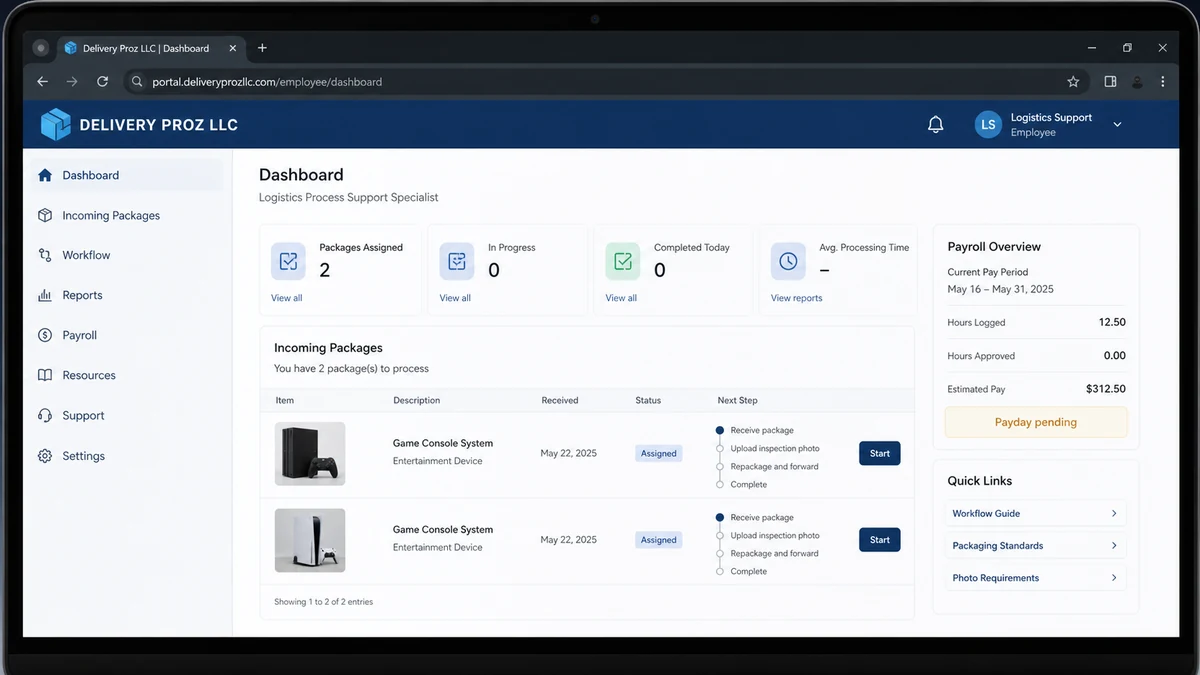
A detailed consumer report described a person recruited by Delivery Proz LLC as a “Logistics Process Support Specialist.” The worker received packages at home, photographed the contents, and forwarded them using instructions in an online portal.
The first package reportedly contained a cheap bracelet. Later, two game consoles arrived. The increasing value can make the worker believe they are trusted, while it also tests whether the address can receive and forward merchandise without being stopped.
Legitimate fulfillment companies use warehouses, employees, inventory controls, carrier contracts, insurance, and documented customers. Routing retail goods through an unknown worker’s house adds cost and risk without a normal logistics benefit.
The promised payday keeps the worker active
The reported worker planned to continue until the end of the month to see whether a paycheck arrived. They changed bank details and selected a paper check, believing that this reduced risk.
Waiting does not make the merchandise legitimate. A check can be counterfeit, the operator can disappear before payday, or the worker can be paid from proceeds tied to fraud. Payment would not prove that the activity was lawful.
The US Postal Inspection Service warns that reshipping job scams often involve merchandise bought with stolen cards and that the supposed paycheck may also be counterfeit.
The portal collects identity data as well as labor
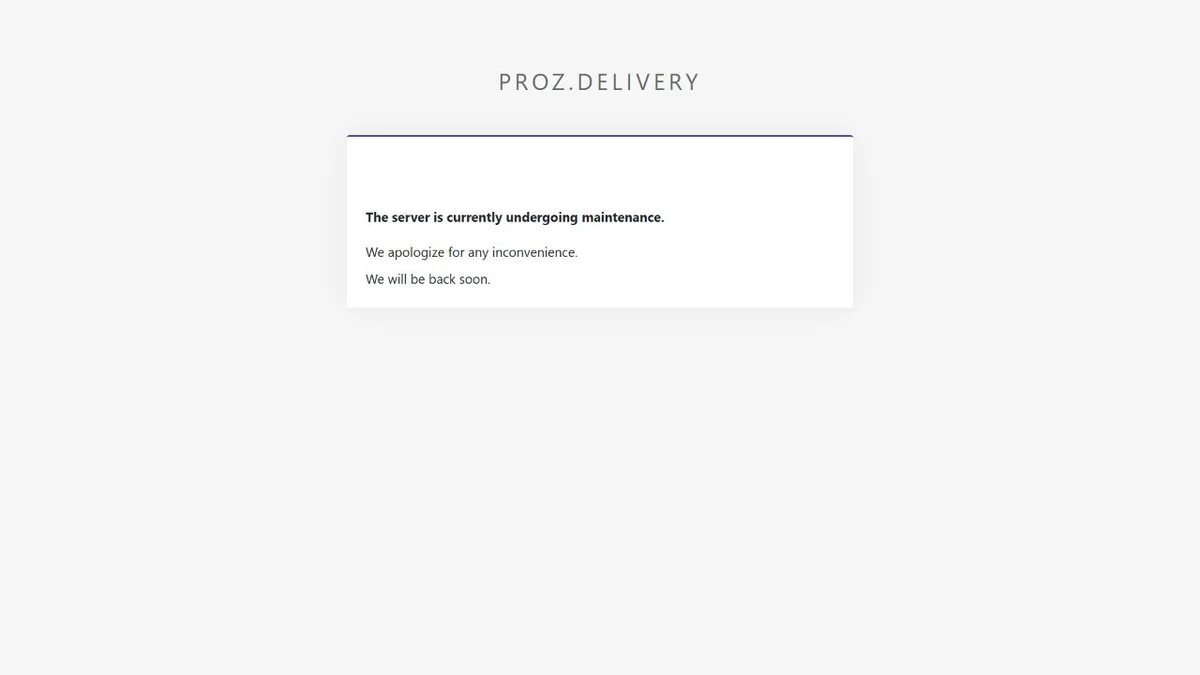
When MalwareTips checked the live proz.delivery registration page, it requested an ID, passport, or driver’s-license image along with name, birth date, address, ZIP code, home phone, and cell phone. The site later displayed a maintenance message.
The Reddit reporter said the worker had already provided ID and bank details. That creates a second risk even if no package is forwarded: the operator may retain enough information for targeted impersonation, account applications, or later recovery scams.
Ask these questions before accepting any reshipping role:
- Why can the retailer not ship directly to the final customer?
- Why is inspection performed in a private home rather than a warehouse?
- Who purchased the merchandise and with what authorization?
- Whose name appears on the original order?
- Where do the new shipping labels send the goods?
- Is the postage account legitimate?
- Who insures loss, damage, and chargebacks?
- Why does a job portal need a passport image before an interview?
- Can the company’s customer and warehouse be independently verified?
- Why is pay delayed until many packages have moved?
If the employer cannot answer without blaming international shipping, quality control, or a probation period, do not accept or forward another parcel.
The Package Is Evidence, Not Proof of Employment
Victims often say the job must be real because physical goods arrive. That reverses the evidence. In a parcel-mule scheme, the merchandise is the reason the criminal needs a domestic address.
Fraud controls at retailers and carriers watch for orders sent directly to known freight forwarders, high-risk addresses, or foreign destinations. A newly recruited home address may look like an ordinary consumer and help the order pass.
Once the package arrives, the worker removes the original relationship between the merchant and final recipient. Repackaging, applying a new label, and sending it onward adds a human buffer between the stolen payment and the criminal.
The inspection photo serves several purposes. It confirms the item arrived, proves the worker opened the parcel, and provides evidence that the asset is ready to forward. The task looks like quality control but functions as operational tracking.
A cheap first item can be a test. The operator learns whether the address works, whether the recruit follows instructions, how quickly they respond, and whether they ask questions. Higher-value goods follow after the route is trusted.
The worker may also receive prepaid labels. A label provided by a criminal can be purchased through a compromised carrier account or stolen payment method. Printing it does not transfer responsibility away from the person who mails the parcel.
How the Delivery Proz Package Mule Job Works
Step 1: A remote logistics vacancy appears
The offer uses a professional title such as package inspector, shipping coordinator, logistics process specialist, or quality-control agent. Duties sound mechanical and require no specialist training.
The recruiter may advertise on job boards, social media, or direct email and promise monthly pay plus a bonus per package.
Step 2: Onboarding collects a clean identity and address
The applicant uploads ID, date of birth, telephone numbers, bank details, and a home address. The information is framed as payroll and employment verification.
For the operator, the address is a fresh delivery point. The ID may help make shipping or account records look consistent.
Step 3: A portal creates the appearance of work
The dashboard lists incoming packages, deadlines, inspection tasks, forwarding labels, bonuses, and an accumulating wage. A login page and task history make the process feel like real employment.
Dashboard balances are only numbers controlled by the site’s operator. They are not funds held by a bank or payroll provider.
Step 4: A low-value parcel tests compliance
The first item may be inexpensive so that a problem attracts little attention. The worker photographs it, removes paperwork, repackages it, and proves they will follow the process.
Successful completion raises the value and frequency of later shipments.
Step 5: Valuable merchandise moves through the home
Phones, laptops, game consoles, designer goods, and other easily resold items may arrive. Some can be bought using stolen card details or accounts taken over from real customers.
The merchant, cardholder, carrier, or police may see the recruit’s name and address first when the fraud is investigated.
Step 6: The worker forwards the trail
The new label may point to another mule, freight forwarder, short-term rental, parcel locker, or export route. The worker is told not to include the original invoice.
Each hop makes it harder for a victim or merchant to identify the organizer while making the local sender easier to identify.
Step 7: Payday never settles the risk
The portal can delay pay for 30 days, keeping the recruit active long enough to move many parcels. At payday, the account may be closed or a fake check may be issued.
If real money arrives, the work can still expose the recipient to civil claims, bank closures, carrier investigations, or criminal scrutiny. This is a situation for immediate legal advice, not another shipment.
Why Changing Bank Details Does Not Protect the Worker
The reported worker changed direct-deposit information and asked for a paper check. That may reduce access to one bank account, but it does not remove the name, address, ID image, package records, messages, or shipping activity already collected.
A fake check creates its own loss. Funds can appear available before the bank completes fraud review. If the worker spends the balance or sends part elsewhere, the reversal can leave the account negative.
Using a new account may cause a second bank to receive the suspicious item. Banks share fraud signals and may close accounts that receive counterfeit checks or appear connected to money-mule activity.
A paper check also gives the operator another reason to request fees, tax forms, or updated identity documents. It may be described as proof that the company is real even though anyone can print a convincing check.
The safe response is to stop receiving and shipping goods, preserve every record, contact the carriers and merchants, and obtain legal guidance if merchandise has already moved.
Do not keep expensive goods, sell them, return them to a store for cash, or send them to a new address without instructions from the merchant, carrier, law enforcement, or counsel. Improvised solutions can create additional problems.
Warning Signs of a Reshipping Job
- The job can be done from home with no logistics experience.
- Your house becomes the company’s warehouse.
- Packages arrive in other people’s names.
- You must open, photograph, and repackage retail goods.
- The employer supplies new labels after delivery.
- Original invoices must be removed.
- Pay is delayed until a month of packages is complete.
- The portal displays wages but no verifiable payroll provider.
- Identity documents are collected before a live interview.
- The company cannot name its retail customers.
- There is no warehouse or local supervisor.
- High-value electronics appear after a cheap test parcel.
- A paper check is offered as reassurance.
- The site goes offline while packages are still moving.
The USPS advice is direct: do not accept packages for unknown people or companies, and do not reship items from a work-from-home offer.
MalwareTips covers related recruitment tactics in its guide to fake WhatsApp job offers.
What to Do When a Package Is Already at the Door
If you recognize the scheme before accepting delivery, tell the carrier you are refusing an unexpected package. Do not sign on behalf of the named recipient or follow instructions from the recruiter.
If the parcel is already inside, do not open it merely to satisfy the dashboard. Photograph the outside, label, condition, and location without publishing personal address details.
Keep children, roommates, and family members from moving or forwarding the box. Everyone at the address should understand that the recruiter’s labels and instructions are no longer trusted.
Identify the original merchant from the label, invoice pocket, order notice, or carrier record. Use the merchant’s official website to find fraud support rather than calling a number printed in a recruiter’s message.
Explain that the package arrived through a suspected reshipping job. Provide the tracking number privately and ask whether the order was authorized and how the merchant wants the item secured.
Do not drive the item to a store and request cash. Do not sell it, keep it as unpaid wages, or use it. Those actions can make the situation harder to explain.
Do not print a replacement label from the portal. The new destination may be the criminal’s preferred route, and the postage account may be compromised.
If several packages are scheduled, contact the carriers and ask whether future deliveries can be refused or held. Also watch for names that do not belong to anyone at the address.
Give authorities a complete package list, including dates, retailers, items, tracking numbers, original names, new labels, and final destinations. Patterns are more useful than one isolated box.
If a package was already forwarded, do not delete the receipt or tracking history out of embarrassment. The timestamp and destination may be the strongest evidence that you can provide.
Tell the recruiter only what law enforcement or counsel advises. Confronting the operator can prompt deletion of the portal, changes to destinations, or pressure to destroy evidence.
The goal is to stop movement, preserve the chain, and return control to the merchant, carrier, and investigators.
Review every account used during hiring. Recruiters may have obtained job-board credentials, email access, banking details, tax information, or copies of documents before the first parcel arrived.
Ask carriers whether an online delivery manager, forwarding request, or pickup authorization was added in your name. Remove anything you did not create and secure carrier accounts with unique passwords.
Watch for return labels delivered by email after you report the scheme. A criminal may pose as the merchant or carrier and send the parcel toward another mule.
If the package is addressed to a stranger, do not contact that person using details supplied by the recruiter. The named recipient may be another victim whose account or payment method was stolen.
Keep the household informed for several months. An address tested successfully can remain on criminal lists even after one portal disappears, leading to packages under new company names.
Check credit reports and retailer accounts for unfamiliar orders tied to the address. The operation may combine package forwarding with identity misuse collected during onboarding.
Do not accept a new recruiter who claims to be the compliance department fixing the first company’s mistakes. Verify any follow-up through carriers and authorities.
Company, Address, and Fulfillment Checks
Separate the legal entity from the portal
Florida records show an entity named Delivery Proz LLC, but a public company filing does not prove that proz.delivery belongs to that entity or that a recruiter is authorized.
Contact the registered company independently and ask whether it hires home-based package inspectors through that domain.
Verify the registered and operating addresses
A legal filing lists a principal address, while the job uses workers’ homes as receiving points. Ask for the warehouse, manager, customer contracts, and insurance covering each shipment.
A legitimate logistics operation should not hide its operational chain from the person handling inventory.
Inspect the domain and registration form
RDAP shows proz.delivery was registered on May 2, 2026 through NameCheap. The public registration form requested extensive identity and address data, and the portal later displayed a maintenance notice.
Save screenshots and do not upload documents while ownership remains unverified.
Trace fulfillment back to the merchant
Use packing slips and carrier information to identify the original merchant. Call through its official site, explain that you were recruited to reship the item, and request safe instructions.
Do not use a return label sent by the recruiter after concerns are raised.
What to Do if You Have Fallen Victim to This Scam
- Stop receiving and forwarding packages. Do not complete another dashboard task.
- Do not dispose of evidence. Keep packaging, labels, invoices, messages, portal screenshots, and tracking records.
- Contact the merchant. Use independently verified support details and ask how to secure or return the goods.
- Contact the carrier. Explain that the label may be connected to a reshipping scheme and request instructions.
- Report to the Postal Inspection Service. File at USPIS.gov or use its published telephone route.
- Consider local legal advice. If goods have already been forwarded, a lawyer can help you communicate accurately without guessing about liability.
- Notify your bank. Replace exposed account details and warn the fraud team before depositing any paycheck.
- Protect your identity. Use IdentityTheft.gov, freeze credit if necessary, and monitor new accounts.
- Secure email and job-board accounts. Change passwords and review active sessions.
- Run Malwarebytes. Scan devices used for portal downloads, attachments, labels, or remote-access software.
- Use AdGuard as a supporting layer. It can block many malicious domains, but it cannot determine whether merchandise was bought with stolen funds.
- Report the job listing. Send the platform the company name, portal domain, messages, and package workflow.
- Ignore recovery offers. Do not pay anyone who promises to erase shipping records or guarantee immunity.
Frequently Asked Questions
Is Delivery Proz LLC a real registered company?
A Florida entity with that name exists. That does not authenticate the proz.delivery portal, a recruiter, or the home-based package workflow.
Does receiving real merchandise prove the job is real?
No. Reshipping schemes need real goods to move through clean addresses. The package can be genuine while the payment method and employment story are fraudulent.
Should I forward a package that already arrived?
No. Preserve it and contact the merchant, carrier, Postal Inspection Service, or legal counsel for instructions. Do not use a new label supplied by the recruiter.
Will a paper paycheck make the job safe?
No. The check may be counterfeit, and even a real payment would not prove that the goods were lawfully purchased or that the shipping activity was authorized.
Can I be blamed if I did not know?
Legal consequences depend on facts and jurisdiction. Continuing after clear warnings can increase risk. Stop, preserve evidence, report promptly, and seek qualified legal advice.
What should I do with the ID uploaded to the portal?
Treat it as exposed. Document the upload, contact the issuing authority for guidance, freeze credit where appropriate, and monitor for identity misuse.
The Bottom Line
The Delivery Proz job turns the strongest apparent proof of employment, real packages arriving at the door, into the worker’s greatest risk. The home address becomes a buffer between questionable purchases and their final destination.
Do not wait for payday to decide. Stop forwarding goods, preserve every label and message, contact the real merchants and Postal Inspection Service, and protect the identity and bank data collected during onboarding.








