

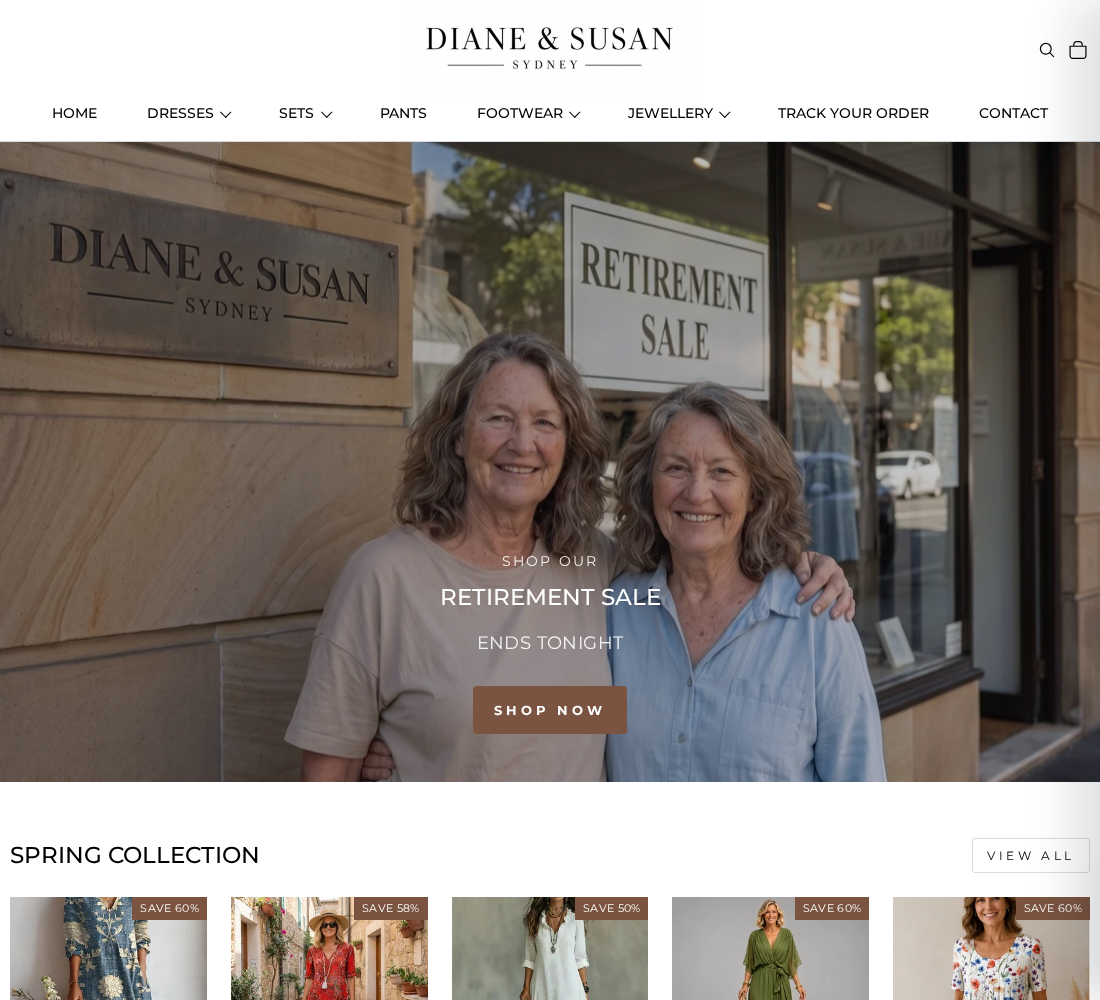
Two sisters, a Sydney boutique, and a retirement sale ending tonight. Diane & Susan wraps an ordinary clothing order in a much more personal story.
If that story made you pause over a dress, there are several details worth seeing before the countdown makes the decision for you.
Overview
The Sydney story does not establish local stock
Diane & Susan promotes a Sydney retirement sale, presenting two sisters preparing to close an important chapter of their lives.
The advertised boutique identity is not accompanied by a physical Sydney shop address in the inspected legal notice. That leaves the local shopping impression unverified.
The homepage also refers to experience dressing American women, while other material emphasizes Sydney and shipping across Australia and New Zealand.
That distinction matters because the store asks shoppers to trust a personal, local boutique identity rather than simply compare an anonymous garment.
The China connection is in the seller’s own policies
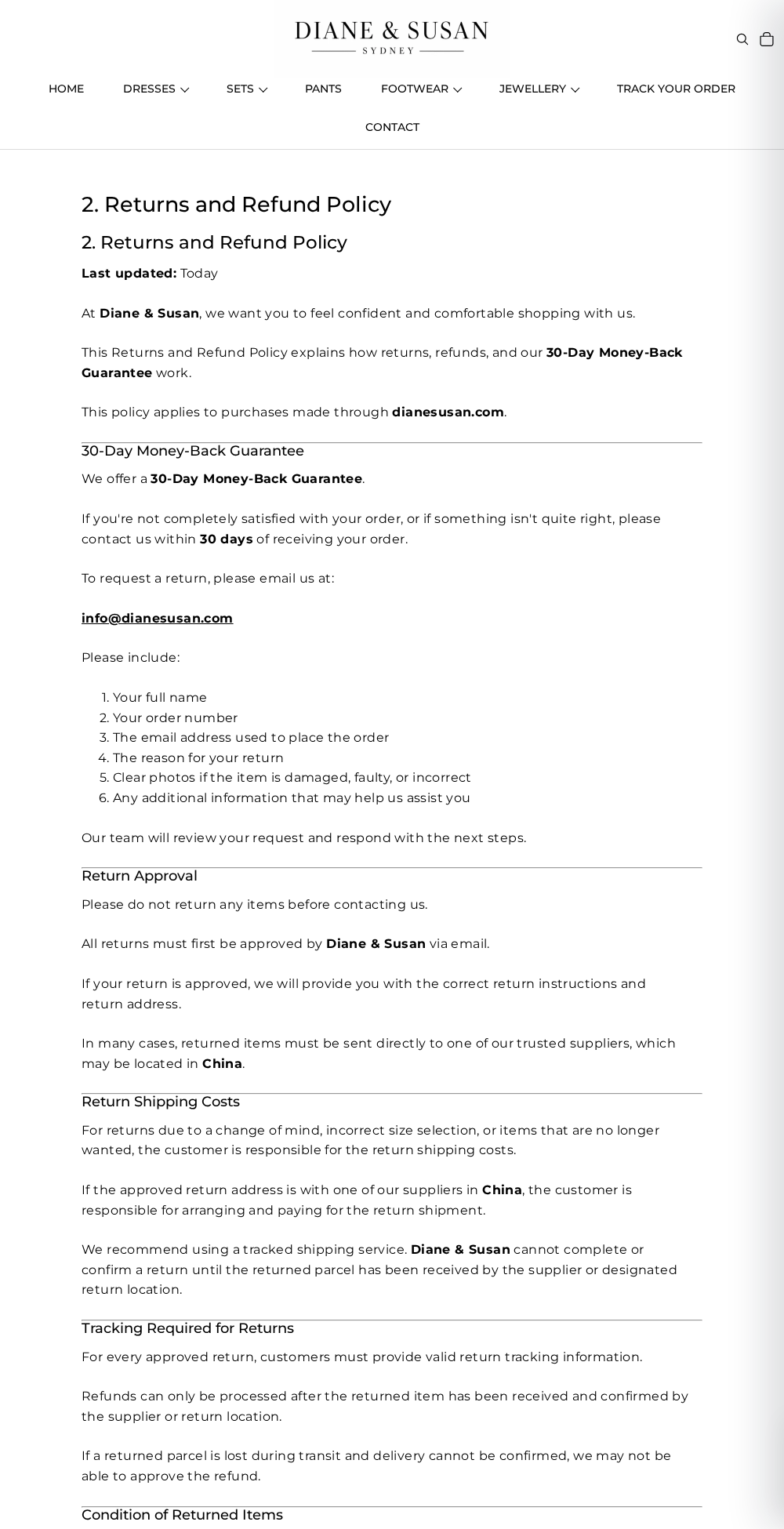
The shipping policy says some orders go directly from overseas suppliers, including China. The return policy says many approved returns go to suppliers that may be there.
For change-of-mind or sizing returns, buyers are assigned the postage cost. A local-sounding storefront can therefore lead to an overseas return expense.
- The store advertises a 30-day money-back guarantee.
- Returns require prior approval and tracking.
- Refund processing depends on the return reaching the supplier or designated location.
- The published subscription policy says no paid recurring service currently exists.
The practical verdict
Do not rush an order because of the retirement story or pay a local-boutique premium without a complete product description and workable return arrangement.
The overseas return expense and incomplete seller identity justify a firm buying warning. They do not prove every parcel contains defective goods or every image is AI-generated.
Anyone who already ordered should save the exact listing and request cancellation or return instructions promptly, especially before paying international postage.
A Personal Boutique Story Is Not a Shipping Commitment
The homepage announces retirement and a sale ending that night. The Karin dress page reinforces that message with a longer farewell from two sisters in Sydney.
Its story says they are slowing down, spending more time with family, and offering remaining pieces that will not return after selling out.
The collection page also presents a final chapter and retirement sale. The current pages do not, however, independently authenticate the sisters or their claimed boutique history.
A genuine retirement can explain a clearance. But a personal story is not a substitute for identifying the company, stock location, and practical after-sales arrangements.
Notice what the presentation encourages you to assume: an established nearby shop, carefully selected clothes, and someone familiar who will help if the dress is unsuitable.
The overseas return policy describes a different practical experience. Your remedy may depend on mailing a parcel to a supplier rather than visiting a neighborhood boutique.
A single visit cannot establish an endlessly repeated deadline. The warning rests on the purchase and return conditions, not an invented history of perpetual sales.
The same caution applies to the sisters’ photograph. A polished image is not independent proof of identity, but appearance alone does not prove fabrication either.
What would help is a verifiable boutique address and a clear accountable business. The inspected legal notice supplies an email contact rather than those details.
How the Diane & Susan Sales Journey Works
Step 1: A personal farewell creates a reason to buy now
The imagery and copy place two named women at the center of the offer. Shopping is framed as supporting the final chapter of a familiar boutique.
That is more persuasive than a standard discount because it gives the purchase emotional meaning. Waiting can feel like missing the chance to support them.
Separate the story from the item. Would you still want the same garment at the same delivered price if the farewell message were removed?
If not, the story is doing more work than the product description. That is a reason to step away from the deadline.
Step 2: Large reductions turn the story into apparent value
The Karin dress is displayed at A$99.95 against an A$248.95 comparison price. Other garments use substantial reductions and bundle-saving messages.
A comparison price does not establish that the same dress was commonly sold at that amount. The actual value depends on what arrives.
The homepage promises natural fibers, but the inspected Karin description uses general fabric language without giving a complete fiber composition.
For an A$99.95 dress, ask for the material percentages, lining, measurements, and care instructions. Comfortable-looking photographs cannot answer those questions.
The Karin listing offers sizes from S through 5XL. That range does not establish whether the same fabric, cut, or measurements apply consistently across variants.
Save the chart for the selected size rather than relying on the boutique’s general promise of honest sizing. An exact measurement creates a useful purchase expectation.
Step 3: Australian branding does not guarantee Australian dispatch
The storefront highlights Australia Post and free delivery. A buyer could easily expect stock held close to the advertised Sydney boutique.
The shipping policy instead permits direct supplier fulfillment, including from China. That is the seller’s own disclosure, not a guess based on a generic dropshipping template.
Use of Australia Post can describe the final delivery leg. It does not establish that a garment was made or originally dispatched in Australia.
The stated schedule separates one to three business days of processing from an estimated three to seven business days after dispatch.
Those estimates are not a verified delivery test. Ask where the selected item is currently held if arrival timing matters.
Step 4: The guarantee can lead to a buyer-paid international return
The return request period starts when the order arrives. Contact must be made within 30 days, and the store must approve the return first.
For an unwanted item or incorrect size selection, the policy assigns return postage to the customer. The approved destination may be a supplier in China.
This can change the economics of a clothing order. The outward shipping may be free while sending an unsuitable dress back is not.
The policy also makes refund completion dependent on confirmed receipt. Tracking, customs handling, and the supplier’s acceptance become part of the practical refund route.
Obtain the destination and cost estimate before buying. A 30-day headline is not enough if the return journey is too expensive to use.
Step 5: A problem must be handled through inconsistent contact presentation
The formal policy pages and product contact instructions use info@dianesusan.com. The footer also displays info@susandiane.com, reversing the names in the domain.
Those are different email domains. A shopper should not assume that sending a request to one proves it reached the team responsible for the other.
Use the address repeated in the applicable order and policy material, and keep a copy. If correspondence fails, preserve the failure notice too.
No response test established that either mailbox is inactive. The finding is the mismatch and the confusion it creates at a time-sensitive stage.
Diane & Susan Business, Address and Supplier Checks
The legal notice repeats a storefront name
The page labeled contact information and legal notice provides Diane & Susan, the website, and an email address.
It does not identify a complete registered legal entity, registration number, or physical Sydney shop address in the inspected text.
That gap matters when a sale relies on local boutique history. Ask who accepts the payment and compare that name with the order receipt.
A trading name can be legitimate, but it should be connected to someone accountable for the contract rather than left floating above an email form.
A Sydney image is not a verified place to return a dress
The storefront photograph presents a shopfront. It does not provide an independently verified location or establish that online orders can be returned there.
The policy directs approved returns to a supplier or another designated location. Buyers must not assume a local walk-in exchange exists.
Request the actual return country and address for the exact item. A broad statement that suppliers are trusted does not tell you the postage cost.
Support availability changes across the pages
The product page advertises round-the-clock customer service. The footer lists specific weekday and weekend hours, while the legal notice allows slower replies during busy periods.
Those statements do not establish that support never answers. They do make the unqualified 24/7 presentation less useful for planning a cancellation.
A request sent promptly can document your attempt even if the merchant replies later. Do not wait for a convenient business hour before recording it.
Direct supplier shipping is disclosed, not automatically fraudulent
China-based fulfillment can supply legitimate goods. The concern here is whether the boutique story gives buyers an accurate expectation of product origin and after-sales logistics.
The policies establish that China is possible for dispatch and returns. They do not establish the factory or quality of every garment.
Request the garment label and manufacturer information if those details influenced the purchase. Do not confuse a marketing location with a production record.
Why a Sizing Return Is Different From a Misdescribed Dress
Someone choosing the wrong size has a different complaint from someone receiving measurements that materially contradict the listing. Keep that distinction clear.
If the listing promised a particular fiber and the delivered label says something else, photograph both. That is more specific than disliking the texture.
If a garment is damaged, show the problem before washing or altering it. Preserve packaging and any label identifying the item.
The ACCC distinguishes faulty clothing remedies from change-of-mind returns. A retailer’s voluntary policy is not the whole consumer-rights picture.
Which legal remedy applies depends on the circumstances. Do not assume that a seller can convert every genuine defect into a buyer-funded preference return.
Equally, do not claim a defect merely because the garment is no longer wanted. An accurate description helps the merchant and payment provider assess the real issue.
For an ordinary sizing return, work out the likely net refund before posting. Subtract the quoted tracked postage from the refundable amount, without assuming reimbursement.
That calculation is not an argument for accepting an unfair remedy. It shows why the return destination should have been understood before the purchase.
Ask whether several items can share one approved parcel and whether they go to the same supplier. Multiple destinations could change the practical cost.
Keep each garment’s authorization linked to its tracking record. A package reaching one supplier may not resolve a return involving a different item or recipient.
What to Do If You Ordered From Diane & Susan
-
Act quickly if you want to cancel. Send the order reference to info@dianesusan.com and clearly request cancellation before processing or dispatch.
The policy offers best efforts rather than a guaranteed grace period. Save the timestamp and ask whether the parcel has actually entered fulfillment.
-
Keep the sales story and product details. Save the retirement promotion and the listing for your selected garment, including the exact size and variant.
Retain material, price, and delivery statements. Your own purchase evidence is more useful than a later screenshot of a changed homepage.
-
Inspect the delivery without altering it. Check size labels, garment measurements, composition, seams, and quantity against the order.
For a fault or mismatch, take clear photographs before laundering. Explain exactly what differs and which advertised feature influenced the decision.
-
Get a complete return authorization. Contact the merchant within the stated 30-day delivery-based period and request the destination, accepted condition, and postage allocation.
If China is specified, price a tracked shipment before accepting a partial refund or paying postage. Clarify how the supplier will confirm receipt.
-
Distinguish a refund from store credit. Ask what amount will return to the original payment method and whether any proposed alternative is optional.
A discount on another order does not resolve a defective first order unless you knowingly choose that settlement.
-
Escalate when correspondence does not resolve the problem. Give the payment provider the receipt, listing, photographs, requests, replies, and any tracking evidence.
Ask about its deadline and the appropriate dispute category. Do not let an open-ended exchange about overseas returns consume that period.
Frequently Asked Questions
Is the Diane & Susan retirement story verified?
The seller presents retirement consistently on its current pages. That sales narrative was not independently authenticated through a physical boutique address or complete legal business record.
Can a Diane & Susan order ship from China?
Yes. The shipping policy expressly allows some direct supplier shipments from China. It does not say that every order follows that route.
Will I have to return clothing to China?
The return policy says approved returns may go to suppliers there. Ask for the destination applicable to your specific purchase rather than assuming a Sydney return.
Does free shipping include return postage?
Not for the change-of-mind and size-selection returns described in the policy. Those postage costs are assigned to the buyer.
Is Diane & Susan a refill subscription?
Its current subscription policy says it does not offer paid recurring products or services. A free newsletter is different from a paid auto-delivery plan.
Which support email should I use?
The formal order policies repeatedly identify info@dianesusan.com. Preserve any conflicting footer address and use your receipt to confirm the relevant merchant contact.
The Bottom Line
Do not let Diane & Susan’s farewell story rush you into paying boutique prices. Possible buyer-paid China returns and incomplete seller details deserve attention first.
If you already ordered, preserve the description, request a precise remedy, and calculate the real return cost. Escalate an unresolved material problem before your payment deadline passes.

Join the discussion
0 commentsShare your experience or ask a question about this article.
Discussion
Start the conversation
Have a question or something useful to share? Add the first comment.