

A family boutique, a heartfelt farewell, and dresses at clearance prices. Isabelle New York presents the kind of offer that can turn casual browsing into a purchase.
There is more to consider than the sale banner. Before choosing a size, it is worth checking which version of the store’s story holds together.
Overview
Which Isabelle New York website this covers
This investigation concerns isabellenewyork.com, the clothing storefront without a hyphen. A similarly named, hyphenated jewelry website is not the merchant assessed here.
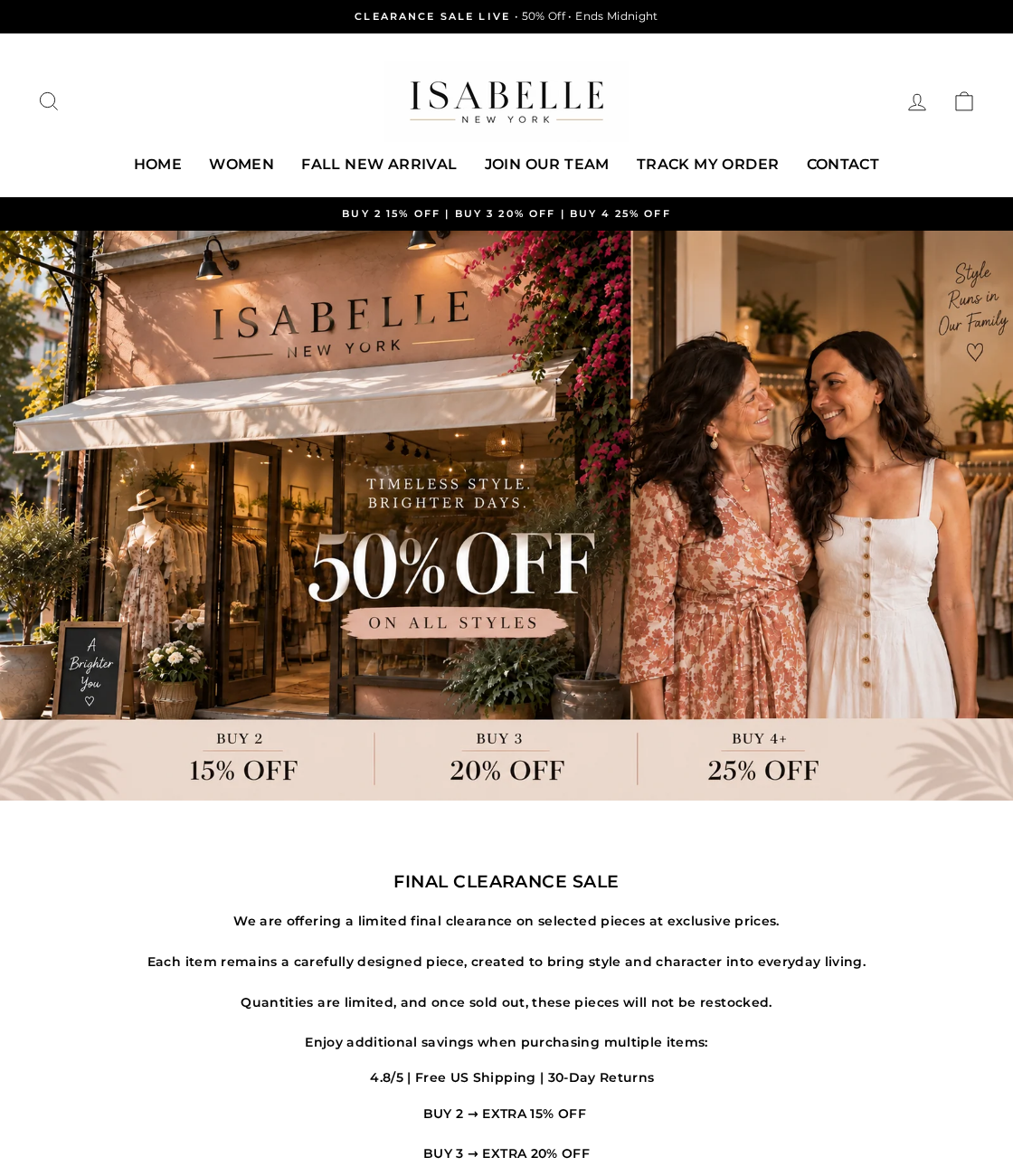
The clothing store promotes a 50% clearance sale, free shipping, and larger discounts for buying several items. Its branding suggests an established, personal New York boutique.
The underlying pages tell a less consistent story. Founder names change, a retirement narrative conflicts with other messaging, and the return policy repeatedly names another store.
The China shipping disclosure matters
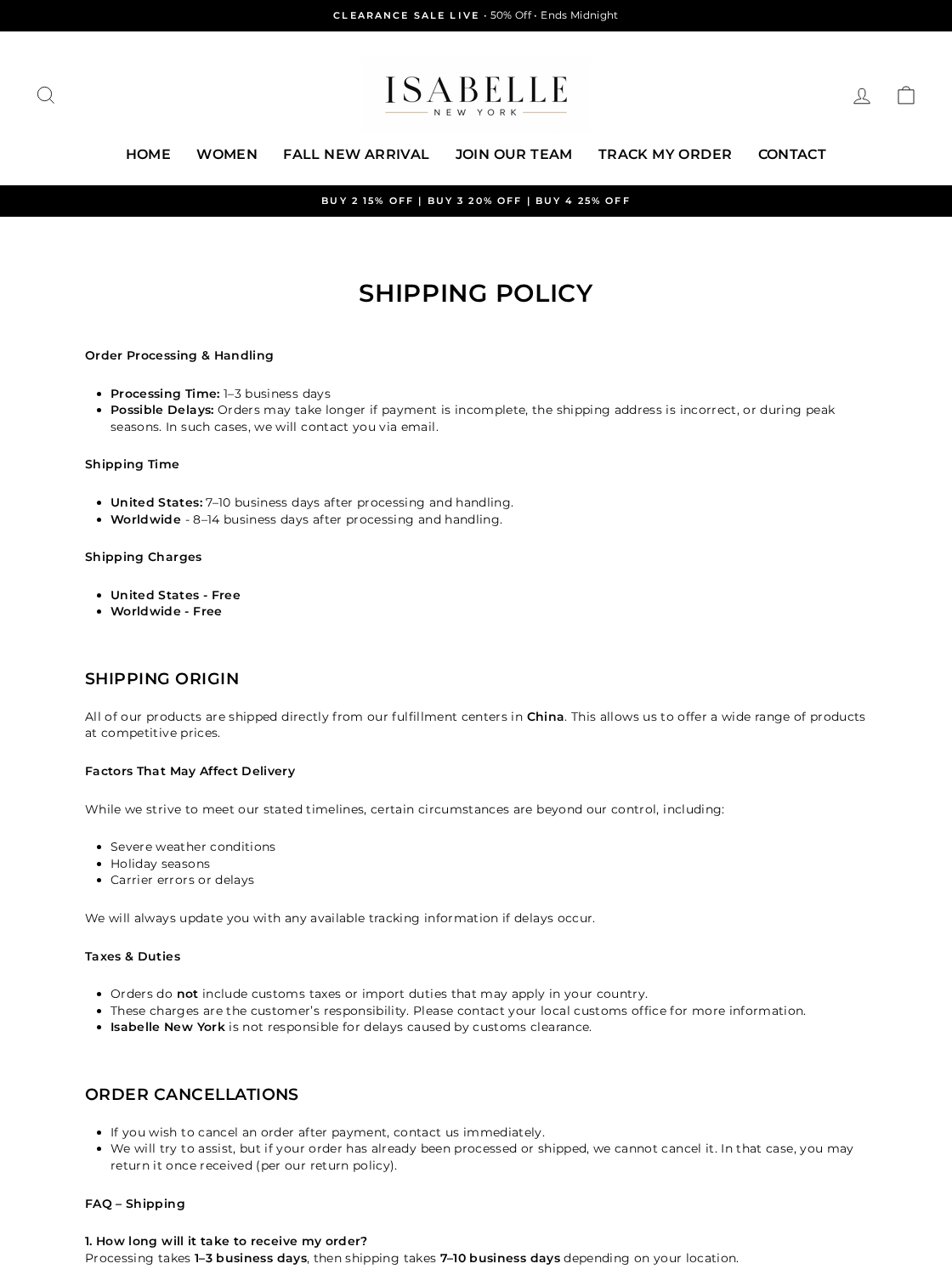
The shipping policy explicitly says all products are dispatched from fulfillment centers in China. That is a seller disclosure, not a guess based on delivery speed.
Chinese fulfillment does not automatically make clothing defective or fraudulent. It does mean buyers should not assume locally stocked New York merchandise from the boutique imagery.
Here are the points that deserve attention before any payment:
- The homepage and About page give different founder surnames.
- The return document names Clara Miami and Webforest LLC.
- The shipping page describes worldwide delivery but also says it serves only the US.
- Cancellation is limited to a short period and may end once processing starts.
- Ordinary return postage falls on the customer.
Our assessment of the current offer
This is an inconsistent boutique sales offer with meaningful fulfillment and return risks. We recommend not ordering until the merchant resolves the conflicting identities and policies.
We did not place an order, examine a garment, or prove that every customer receives junk. The published inconsistencies are enough to justify walking away.
Calling every overseas store a scam would obscure the real problem. Buyers need accurate seller information and workable terms, not an appealing story that changes between pages.
The Boutique Story Does Not Stay Consistent
One founder becomes another
The homepage describes Isabelle Madison and includes a personal message connected to her mother, Jennifer. The About page instead tells a retirement story about Isabelle Roberts.
The About narrative gives an age of 64. Elsewhere, the site talks about ten years in business and looks forward to the next ten.
A footer describes two sisters. These variations do not establish who owns the business, and they should not be treated as independently verified family history.
A straightforward merchant can explain a founder, a current operator, and a brand’s history without making the customer guess which account is accurate.
The photographs are not proof of a physical boutique
The clearance page shows warm boutique imagery and women alongside the brand. Those pictures contribute to the emotional appeal, but they do not verify a storefront.
We cannot reliably determine from appearance alone whether an image is AI-generated, edited, licensed, or an original photograph. That limitation should remain explicit.
The useful question is whether the merchant supplies independently checkable information about the pictured location and people. A polished visual is not that information.
Do not infer handmade production, local inventory, or a public New York shop from a picture. Those are separate factual claims requiring separate evidence.
Clearance language pushes a decision before the details
The header says the 50% sale ends at midnight. The offer also encourages larger baskets: buy two for 15% extra, three for 20%, or four for 25%.
Limited-stock wording says sold-out pieces will not return. That creates an immediate reason to buy more before checking shipping origin or return costs.
We did not observe the banner across multiple days, so we cannot establish that its deadline resets. The deadline nevertheless should not replace due diligence.
A sale only saves money if the delivered goods meet your needs and the total includes costs you can live with. Four unsuitable items remain four problems.
How the Boutique Sales Funnel Works
Step 1: The personal story creates familiarity
The storefront introduces a family-style brand rather than an anonymous catalog. A personal narrative can make a buyer feel they are supporting someone they understand.
That feeling develops before the buyer knows the legal operator, warehouse location, or return destination. The order begins with trust built through presentation.
In this case, the conflicting founder accounts weaken that trust. The website itself does not provide a stable explanation of whose business the customer is supporting.
Read the About page alongside the footer and policies. Do not let one emotional paragraph stand in for a consistent merchant identity.
Step 2: Clearance discounts encourage a larger order
The 50% headline creates an anchor against a higher crossed-out price. Multi-item discounts then make adding another dress or top feel like a better deal.
A higher reference price does not independently establish the garment’s usual market value. We did not verify prior sales at those crossed-out amounts.
Before increasing the basket, check measurements, fabric composition, actual product specifications, and the payable total. Buying several uncertain items multiplies the amount at stake.
A discount does not reduce the difficulty of returning something. It can make that difficulty more expensive if the shipment contains multiple items.
Step 3: The order enters overseas fulfillment
The shipping policy states that all products leave fulfillment centers in China. Processing is described as one to three business days.
US delivery is listed as another seven to ten business days. The page also lists worldwide delivery of eight to fourteen business days.
Yet its FAQ says the store currently delivers only within the US. That conflict matters to international customers deciding whether an order can actually be fulfilled.
Processing and transit are separate periods. A buyer should not count the shorter transit estimate from the payment date and assume the parcel is already moving.
Step 4: The opportunity to cancel narrows quickly
The return policy permits cancellation requests within 24 hours. It also says cancellation may be unavailable after processing, with custom or print production potentially starting earlier.
That is not a leisurely cooling-off promise from the seller. Someone who discovers the shipping disclosure the next morning may already face a disputed cancellation.
Send any request immediately, in writing, and keep its timestamp. Ask whether processing actually began and which policy provision the merchant is applying.
A seller’s cancellation wording does not determine every consumer right in every jurisdiction. Do not assume it eliminates remedies for defective goods or other actionable problems.
Step 5: A return requires permission and a destination
The policy describes a 30-day return period from receipt, with condition requirements. Buyers must contact support and obtain instructions before sending items back.
Ordinary return shipping is the customer’s responsibility. Verified damaged, defective, or incorrect merchandise is treated differently, with seller-paid return costs described in the policy.
The published business address is not automatically the authorized return location. Ask where your specific order must go and what shipping method is accepted.
That answer should come before purchase if return feasibility determines your decision. An overseas destination can change the economics of returning a low-priced garment.
Isabelle New York Company, Contact, and Fulfillment Checks
The return policy names Clara Miami
The return document opens with Clara Miami and repeats that name. It later identifies Clara Miami with Webforest LLC, despite the storefront being Isabelle New York.
This could reflect reused policy text, a brand relationship, or another arrangement. The examined pages do not explain which entity is responsible for this clothing order.
That missing explanation is commercially important. A buyer needs to know whom to contact, whose terms apply, and which company owes an approved refund.
The Wyoming address does not establish New York stock
The policy publishes 312 West 2nd Street #1346, Casper, WY 82609, US. We have not independently verified its role or the operator’s current registration.
A business can use a mailing address away from its warehouse. The problem is assuming that this address proves a local boutique or accepts returned clothing.
The shipping policy’s China disclosure is more useful for locating fulfillment. Require a separate, written return address rather than guessing from branding or a footer.
Use the actual support details and preserve replies
The site provides support@isabellenewyork.com and +1 773-322-1515. We did not call the number or test the email’s response time.
Some email hyperlinks in the return page instead target support@olivianewyork.com. That is another unexplained brand mismatch. Check the destination before sending order information.
Ask which company will appear on the receipt, where goods ship from, and where a change-of-mind return would go. Specific answers are more useful than reassurances.
If the response contradicts the published policy, request clarification. Keep both versions instead of assuming the more favorable statement will govern the order.
Fulfillment country is not a quality test
China is the shipping origin declared by this merchant. That does not prove where every fabric was made, how a garment was sewn, or its eventual quality.
We have no physical product inspection supporting claims of hazardous fabric, counterfeit labels, or universal poor construction. Those allegations would require additional evidence.
The justified concern is the mismatch between the boutique presentation and unclear, inconsistent operational details. Buyers should not have to discover those details after paying.
What the Return Promise Leaves Out of the Sale Banner
The homepage’s refund reassurance is shorter than the actual rules. The return document requires unworn, unused items with tags, original packaging, and proof of purchase.
It describes a 30-day period beginning at receipt and says no restocking fee applies. These are meaningful terms, not a blanket refusal of all returns.
However, customers pay ordinary return postage. The full purchase price being refundable does not mean that every associated shipping cost disappears.
Damaged, incorrect, or defective items belong in a different category. Describe the actual defect and ask the seller to apply the promised seller-paid remedy.
The shipping policy also warns that import duties or taxes may be payable where applicable. Their amount depends on the destination and current rules.
We did not calculate a customs bill or complete checkout. Ask for the total applicable costs rather than assuming the free-shipping banner covers every possible expense.
Nothing examined establishes a refill subscription for this clothing offer. Do not confuse an email newsletter or multi-item discount with recurring billing.
What to Do If You Ordered
- Save the offer and the policy version.
Keep screenshots of the product, measurements, sale terms, shipping origin, and refund conditions. Save your confirmation and the legal name shown on the receipt.
Record when you paid and when the order was marked processed. These timestamps become important if you request cancellation within the stated period.
- Request cancellation immediately if you reconsidered.
Email the published support address with the order number and a clear cancellation request. Ask for confirmation that fulfillment has been stopped.
If the seller refuses because processing began, request the processing timestamp and the applicable condition. Do not wait for a phone conversation to create a record.
- Track the shipment using the carrier.
Separate processing time from transit time. Ask for the carrier’s name and tracking number, not just a reassuring status on the storefront.
If delivery is claimed but no parcel arrived, contact the carrier about the shipment’s destination. Preserve the response without publishing your private address.
- Document what arrives before altering it.
Photograph the unopened parcel, shipping label, garment tags, measurements, and any damage. Compare the delivered item with the specification saved before ordering.
A documented mismatch is more persuasive than calling the item cheap. Keep packaging and avoid washing or modifying garments while a return is being arranged.
- Obtain the correct return instructions.
State whether the issue is sizing preference, a wrong item, a defect, or damage. Request the appropriate label, destination, deadline, and refund amount in writing.
For an ordinary return, compare tracked postage with the money recoverable. Do not mail clothing to the Wyoming address without explicit authorization.
- Escalate an unresolved transaction accurately.
Contact your payment provider about non-delivery, a documented mismatch, or an agreed refund that has not arrived. Ask about evidence and applicable deadlines.
Explain the transaction honestly. Avoid claiming unauthorized payment if you approved the order, and do not pay a stranger offering guaranteed refund recovery.
Frequently Asked Questions
Is Isabelle New York definitely a scam?
The examined site contains serious identity and policy inconsistencies, plus an explicit China fulfillment disclosure. We have not established criminal fraud or tested a completed purchase.
We advise avoiding this offer until the merchant resolves those issues. That is a buying recommendation grounded in current evidence, not a verdict about every customer.
Does Isabelle New York ship from China?
The clothing site’s shipping policy says all products are dispatched from fulfillment centers in China. This is the merchant’s own published statement.
It does not establish that every manufacturing step occurs there. It does contradict an assumption that the boutique branding means locally stocked New York goods.
Why does the policy mention Clara Miami?
The return page names Clara Miami and Webforest LLC without clearly explaining their relationship to Isabelle New York. The current pages do not resolve that discrepancy.
Ask the seller to identify the entity responsible for your purchase. A reused policy should not leave you uncertain about who handles a refund.
Can I cancel after placing an order?
The policy describes a 24-hour request window, subject to processing and certain production restrictions. Send your request immediately and preserve the timestamp.
A request is not the same as confirmed cancellation. Ask for a written response and consult your payment provider if an unresolved charge remains.
Are all returns sent to China?
We did not establish the authorized destination for every return. The published policy requires contacting support before shipping an item back.
Get the complete return address and costs in writing. Do not assume either China or Wyoming simply because one is mentioned elsewhere on the site.
Are the boutique pictures AI-generated?
We cannot reliably prove that from the images alone. Their presence also does not independently verify a real shop, founder, or local production process.
Base the purchase decision on consistent seller identity, specifications, fulfillment disclosures, and practical remedies. Photographic warmth is not evidence that those requirements are met.
The Bottom Line
Isabelle New York’s boutique story is not backed by a consistent set of identities and policies. Do not order on the strength of its clearance presentation.
If you already bought, act promptly on cancellation or return terms, document the goods, and escalate specific unresolved problems through your payment provider.








