

UFNA Batana Oil appears beside a Snidin spray in a hair-growth set promising a fuller-looking result. For anyone watching their hair thin, that is an appealing prospect.
Before turning that hope into a new routine, look closely at the page selling the set. Its smaller details deserve just as much attention.
Overview
The FDA claim is the biggest warning sign
The UFNA Batana Oil and Snidin hair-growth offer uses an FDA-certification claim without providing a product-specific basis that we could verify.
Ordinary cosmetics are not preapproved by the FDA, apart from certain color additives. An authoritative-looking phrase is not proof this set grows hair.
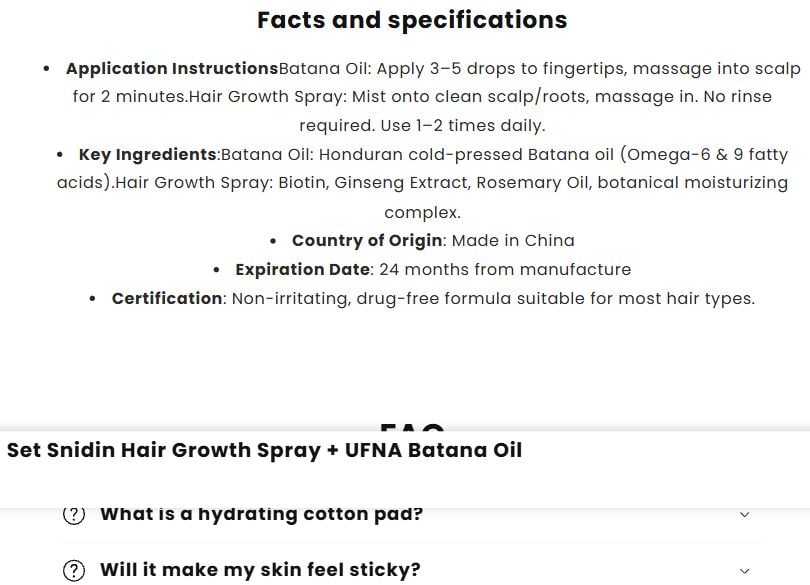
The listing also contains unrelated cotton-pad FAQ questions and unfinished customer-review text. These are visible defects in the sales presentation, not speculation about the bottle.
On October 8, 2026, the reviewed kit was marked sold out. We could examine its claims and policies, but not complete an available purchase.
What our inspection found
- The set combines a spray marketed under Snidin with UFNA-branded batana oil.
- The description claims Honduran oil, while the specifications list the finished offering’s country of origin as China.
- The displayed US-price version showed $69.99 against $89.99; regional pricing can differ.
- Published growth claims rely on survey-style figures and botanical explanations, not an identified controlled trial of this kit.
- The refund page contains a broken email string, and the contact page contains an unfinished company-name placeholder.
We did not authenticate the ingredients, inspect a delivered set, or find evidence establishing a refill subscription for this offer.
Our conclusion: do not rely on the medical-sounding assurances
We would not buy this set on its current presentation. Unverified FDA language, mismatched content, and weak merchant information undermine confidence before effectiveness is even considered.
A conditioning oil may make hair feel smoother. That is different from demonstrating new growth or treating an underlying cause of hair loss.
The merchant should correct the page, identify the responsible business, and substantiate its claims. Until then, the buyer carries too much uncertainty.
What UFNA Batana Oil Is Being Sold to Do
A cosmetic routine is presented as a growth solution
The Snidin product listing combines scalp application, botanical ingredients, reduced breakage, added shine, and fuller-looking hair in one sales narrative.
These are not interchangeable outcomes. Making existing strands less frizzy can improve appearance without increasing the number of hairs growing from follicles.
Likewise, reducing visible breakage is not the same as reversing shedding caused by a medical condition. Buyers should know which outcome has actually been measured.
The page does not provide enough product-specific clinical evidence to bridge that gap. Ingredient names alone do not establish the finished formula’s performance.
The product is topical, not an oral supplement
This reviewed offer concerns oil and spray applied to hair or scalp. It should not be confused with gummies, capsules, or an ingestible batana supplement.
That distinction matters when searching UFNA reviews. A product with a similar name or packaging on another marketplace may have a different formula and seller.
We also found existing coverage of Snidin’s facial serum. That is a separate product and does not establish the facts about this hair-growth set.
Keep the exact product URL and label when comparing claims. Do not transfer directions, safety assumptions, or testimonials between unrelated cosmetics.
How the UFNA and Snidin Hair-Growth Sales Funnel Works
Step 1: Hair-loss concerns make the promise feel urgent
The presentation speaks to thinning, patchiness, breakage, and confidence. Those concerns can make a simple at-home routine seem especially attractive.
Someone noticing more hair in the shower may interpret fuller-looking results as evidence that the set addresses the underlying problem.
Slow that connection down. The first useful question is whether you need a cosmetic conditioner or an assessment of persistent or sudden hair loss.
A sales page cannot determine the cause for you. Buying immediately may delay the step that would actually clarify what is happening.
Step 2: Botanical descriptions give the kit a scientific appearance
The page discusses batana oil, biotin, ginseng, rosemary oil, and moisturizing compounds. It also uses professional-approval language around the formula.
We did not locate a named approving specialist with a disclosed evaluation protocol for this exact set. That omission limits what the approval wording establishes.
Knowing that an ingredient has attracted research interest is not equivalent to knowing the tested concentration, preparation, or performance of this product.
Ask for the complete ingredient panel and actual formulation details. A short benefits list cannot reveal every fragrance, preservative, or potential allergen.
Step 3: Survey percentages substitute for a published trial
The listing attributes positive figures to feedback from 1,884 users during a period from December 2025 to February 2026.
It refers to Amazon and TikTok feedback. We did not find a published protocol identifying participants, comparison groups, measurement methods, or independent investigators.
A satisfaction survey can describe how respondents felt. It cannot automatically establish how many new hairs grew or whether another routine produced the same effect.
Before interpreting the percentages as clinical results, ask what was measured and where the underlying report can be read.
Step 4: Authority claims distract from unfinished page content
The same page using FDA-certification language also displays questions about hydrating cotton pads. Those questions are unrelated to the hair-growth set being sold.
It includes customer-feedback placeholders rather than fully completed testimony in that section. That is a concrete editing failure a shopper can verify.
These errors suggest the page has not received careful product-specific review. They do not prove that every photograph or separate customer comment is fabricated.
Nevertheless, a merchant seeking trust for a scalp product should not ask buyers to overlook obvious template leftovers while accepting technical claims at face value.
Step 5: Price and bundle presentation need a final check
The reviewed page was sold out, although promotional urgency and quantity choices remained visible. Availability messaging should be understood before planning an order.
The bundle selector displayed multiple quantities. We did not establish a hidden six-unit order, forced upsell, or automatically selected refill.
If the product becomes available, inspect the final cart yourself. Confirm the number of sets, current currency, shipping, and whether any future payment is authorized.
Do not turn a familiar subscription-trap pattern into an assumption about this kit. Its verified problems are already serious without adding an unproven billing allegation.
Company, Address, Support, and Manufacturing Checks
The responsible company is not clearly identified
The reviewed contact page contains the literal placeholder “[Your company].” That is not an adequate legal-operator disclosure.
Snidin and UFNA are brand names in the presentation. Neither, by itself, identifies the business legally responsible for supplying the set.
We could not verify a complete operator identity from the reviewed contact material. This is not proof no business exists; it is a disclosure gap.
Before paying, request the merchant’s legal name, business address, and the entity responsible for product-quality complaints. Those should be ordinary answers, not mysteries.
A usable return address must be provided before mailing
The general refund text does not give shoppers a clear, product-specific returns destination in the material reviewed. It tells buyers not to return purchases to the manufacturer.
That leaves an important practical question unanswered: where should an authorized return of this particular set actually go?
Ask for the full address and recipient before sending the kit. The outside parcel label may identify fulfillment, not the department authorized to issue repayment.
Shipping a used scalp product without approval can add postage costs while leaving the original refund dispute unresolved.
The refund contact contains a broken email string
The policy prints support@my store .com as a contact. Spaces and unfinished wording make that string unsuitable as a normal support email address.
We did not test an inbox or submit the contact form. We cannot claim every support route is dead, but the published refund instruction is plainly defective.
A buyer should not need to guess the merchant’s email while a return deadline is running. Use verified information from your receipt and retain correspondence.
If no usable route is provided, record the failed instruction and seek help through the payment provider. Do not invent a replacement address and assume it reaches support.
The site itself says Made in China
The specifications list China as the country of origin. This is a direct seller disclosure, not an inference from website design or pricing.
The same description says the batana oil is Honduran. Raw-material sourcing and finished-product manufacture can occur in different countries, so those statements are not inherently impossible.
What remains missing is traceability: the actual manufacturer, importer, batch identification, and evidence connecting the advertised oil to the delivered product.
Chinese manufacture alone does not prove contamination or danger. Without testing, we cannot assert either. The problem is inadequate accountability for the claims being made.
What FDA Language Really Means for a Hair Product
FDA oversight is not a product endorsement
The FDA explains that most cosmetics do not receive premarket approval. Some color additives are the exception, as its cosmetics guidance describes.
Therefore, a cosmetic seller needs to explain precisely what an FDA-certification statement refers to. Registration, manufacturing claims, and approval are not synonyms.
We did not verify product-specific FDA approval or enforcement action concerning this set. The appropriate finding is an unsupported assurance, not an invented regulator ruling.
Hair-growth claims can change the regulatory question
US classification depends partly on intended use. Claims about restoring growth or affecting bodily function can raise drug-regulation questions beyond ordinary cosmetic appearance claims.
The FDA’s cosmetic-versus-drug explanation helps distinguish those categories. Calling a formula natural or drug-free does not settle how its claims are regulated.
For the shopper, the immediate point is simpler: a medical-sounding badge is not proof of effectiveness, lawful approval, or suitability for your scalp.
The Refund Conditions Also Need Repair
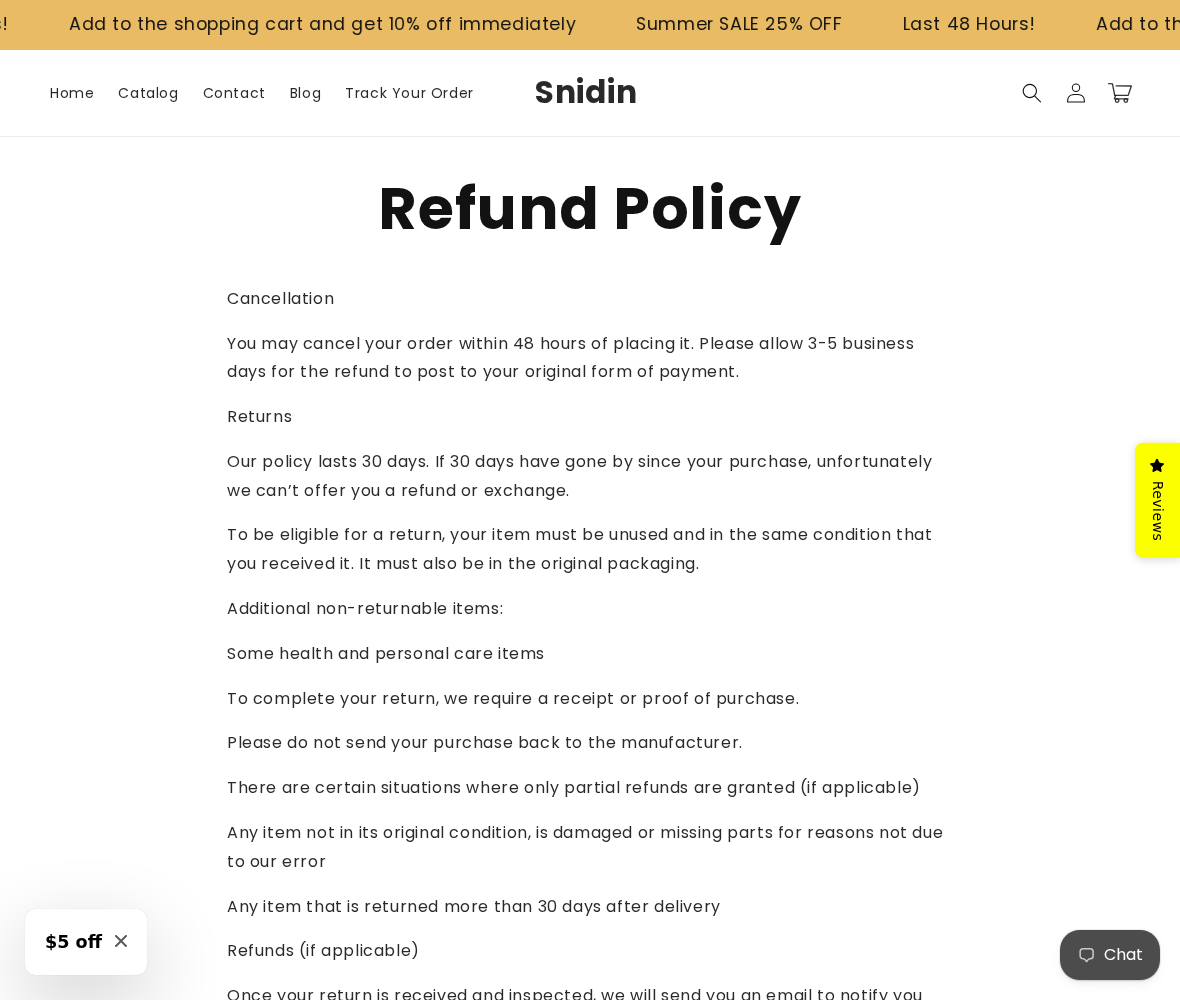
The refund policy starts its window at purchase but uses delivery-based language elsewhere. That can leave buyers unsure when their opportunity to act expires.
Unused-item conditions and sale-item exclusions create another concern. A discounted topical set may be difficult to evaluate without opening or using it.
Ask explicitly whether the advertised set qualifies for a cash refund and whether trying it affects eligibility. Do not assume a general return headline answers either question.
A merchant can clarify these rules before purchase. Until it does, the uncertainty sits with the shopper rather than disappearing behind the hair-growth promise.
What to Do If You Bought the UFNA and Snidin Set
- Keep the sales evidence tied to the exact kit.
Save the product name, FDA wording, origin statement, survey claims, price, and quantity. Include confirmation emails and any ad that led to this listing.
Do not substitute a screenshot of another UFNA seller. Different merchants may use similar names while offering different products.
- Inspect the delivered labeling before applying anything.
Look for a complete ingredient list, batch or lot details, expiry information, and the responsible manufacturer or distributor. Photograph the packaging and seals.
If essential information is missing or the label conflicts with the order, ask for clarification before experimenting with the product.
- Request cancellation or return instructions using a verified route.
The policy describes a cancellation interval, but its broken email string is not dependable. Use contact information connected to your receipt or the live order interface.
State the order reference and requested remedy clearly. Keep a record if the merchant provides no usable destination or authorization.
- Explain the specific mismatch rather than making unsupported claims.
A complaint may concern unsubstantiated FDA language, a wrong item, missing labeling, or a promised refund. Attach evidence of that particular issue.
Do not allege contamination solely because the product was made in China. A precise complaint is more credible and easier to assess.
- Stop use if you develop a concerning reaction.
Seek appropriate medical advice for irritation or other unexpected symptoms, and bring the ingredient label if available. Do not assume discomfort means the treatment is working.
Persistent or sudden hair loss also deserves a qualified assessment. A refund request should not delay attention to the underlying concern.
- Escalate an unresolved transaction with your payment service.
Ask about dispute options and time limits for the actual problem. Provide the merchant’s response, delivery record, and conflicting claims.
If you identify an unexpected recurring payment, address it separately. This investigation did not establish that the reviewed kit automatically enrolls buyers in refills.
Frequently Asked Questions
Is UFNA Batana Oil FDA approved for hair growth?
We did not verify that. The reviewed kit makes FDA-certification claims, but ordinary cosmetic oversight is not proof of product approval or hair-growth effectiveness.
Does the Snidin listing say the set is made in China?
Yes. Its specifications state Made in China. A separate Honduran-oil description concerns claimed ingredient sourcing, which does not independently identify the finished product’s factory.
Is UFNA an oral supplement?
The reviewed set contains topical batana oil and a spray. Do not ingest it or transfer directions from unrelated capsules or gummies with similar branding.
Do the user-survey percentages prove new hair growth?
No. The page does not provide a controlled trial demonstrating that result. Satisfaction, reduced breakage, and fuller appearance are different from verified follicular growth.
Is this a confirmed refill subscription trap?
We did not find evidence establishing automatic refills for this sold-out listing. Check any future available checkout rather than assuming another seller’s billing model applies.
Why avoid ordering if the kit might contain ordinary conditioning oil?
The current FDA assurance, unfinished page content, and defective support instructions undermine an informed purchase. A potentially ordinary cosmetic does not excuse unreliable selling information.
The Bottom Line
UFNA Batana Oil and the Snidin spray are sold through a page that asks for medical confidence while leaving basic merchant and product questions unresolved.
Do not order based on its FDA wording or survey percentages. Require a complete label, identifiable responsible seller, credible evidence, and usable return instructions first.
For ongoing hair loss, get the cause assessed. A polished growth promise is not a substitute for knowing what your scalp needs.








