

A dress catches your eye, the sale looks generous, and the store’s name feels familiar. Olivia New York makes an easy first impression.
Before you choose a size, take a few minutes with this Olivia New York review. The most useful details are not all beside the photographs.
Overview
A New York Name Does Not Set the Return Destination
This investigation concerns olivianewyork.com, without a hyphen. We reviewed its storefront and policies on October 4, 2026, alongside public customer complaints.
The branding suggests an American fashion business. However, the public return policy does not name a return country. Customers receive the destination after contacting support.
A September 17 BBB Scam Tracker report alleges that a buyer was directed to return clothing to India. That is a customer account, not a regulatory finding.
Published Protections and Reported Experiences Do Not Always Match
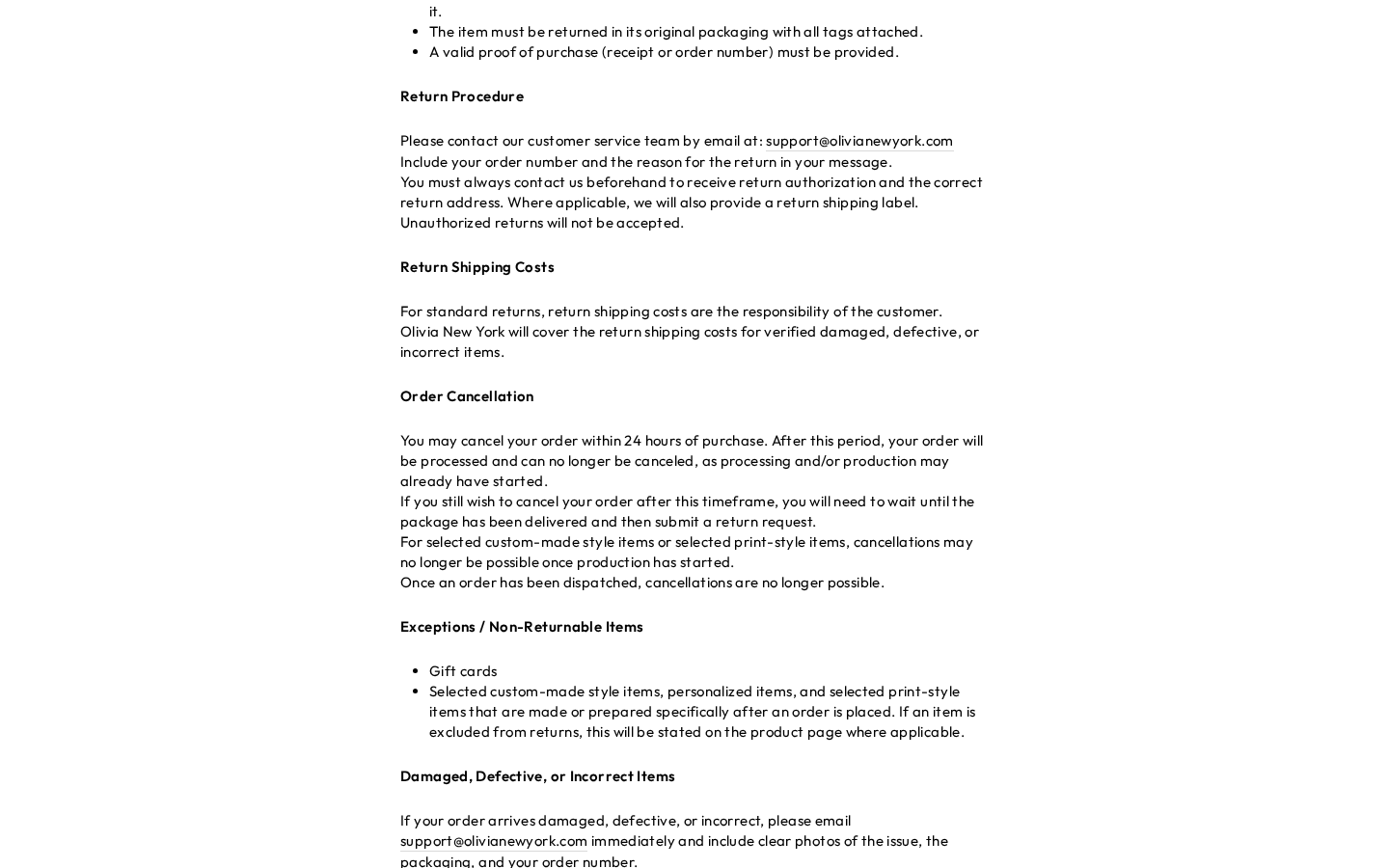
The current policy offers a 30-day return period for eligible clothing and states that there is no restocking fee. Ordinary return postage falls to the customer.
Some Trustpilot reviewers describe overseas returns, disappointing garments, or a $20 deduction. Other reviewers describe satisfactory purchases. We cannot independently authenticate their orders.
Those complaints deserve scrutiny, particularly where a claimed deduction conflicts with the published promise. They do not establish that every transaction ends the same way.
- The legal contact address is in Wyoming, not a verified New York boutique.
- The return destination is not disclosed in the reviewed public policy.
- Individual buyers report being instructed to send returns to India.
- The current policy rejects restocking fees, despite some contrary complaints.
- Clothing quality cannot be confirmed from website photographs alone.
The Finding Is Buyer Risk, Not a Proven Criminal Operation
There is enough documented concern to advise caution. There is not enough independently verified evidence to label the whole business a confirmed criminal scam.
We did not order a garment, test the telephone, or inspect a warehouse. We also did not establish AI-generated product photographs or universal China-based manufacturing.
The important question is whether the seller will honor the offer you actually accept, including the cost and destination of returning an unsuitable item.
The Real Cost of a Clothing Purchase Includes Getting It Back
Most people judge an online clothing offer by the dress price and delivery charge. That leaves out the expense that matters when it does not fit.
A low purchase price can stop looking attractive once tracked international postage enters the calculation. The refund might be available in principle yet expensive to pursue.
For example, suppose a shopper pays $60 and later obtains a $35 return quote. Those figures are illustrative, not Olivia New York’s advertised prices.
Even with a full merchandise refund, that buyer could still lose $35 on postage. A discounted dress is not necessarily a low-risk trial.
Before ordering, ask for the return country and a usable address. Then check the carrier’s price for a tracked parcel of the likely size.
It is reasonable to ask this before you become a customer. Clothing sellers know that fit, fabric, and appearance can differ from a shopper’s expectations.
If support will not disclose the destination until after payment, you cannot calculate the full downside. That missing answer is a reason to postpone the purchase.
It does not require proving who owns a warehouse. You simply need enough information to decide whether an unsuccessful order would be affordable to reverse.
How the Olivia New York Shopping Journey Works
Step 1: Branding and a Personal Story Establish Familiarity
The storefront presents a fashion story associated with Olivia Bennett and clothing for women over 40. We have not independently verified that personal biography.
A story can explain a brand’s intended audience, but it cannot confirm where garments are made, stocked, or returned. Those are separate operational questions.
The words New York may lead shoppers to picture a local boutique. Do not turn that mental picture into an assumption about domestic fulfillment.
Look for the legal business name, not just the name above the collection. Then ask whether its contact address is also a retail or returns location.
At this stage, photographs should be treated as sales illustrations of the goods. They do not establish fabric composition, workmanship, or the supplier’s identity.
Step 2: A Large Discount Encourages a Quick Choice
On our October visit, the storefront advertised a summer sale with discounts up to 70% and an ending-tonight message. The seasonal wording was still visible.
We did not monitor the offer across consecutive days. Therefore, we cannot claim its deadline repeatedly resets or that the previous price was never charged.
The sensible response is nevertheless to ignore the pressure while you check the item. A countdown cannot answer whether its material or measurements suit you.
Compare the garment’s actual size measurements with something that fits you well. A familiar size label can hide differences between suppliers or garment cuts.
Save the exact product description and any restrictions beside it. A broad store promise may not apply to an item explicitly excluded from returns.
Do not increase the order just to make a discount feel worthwhile. Several unsuitable pieces multiply the exposure without making the underlying information more reliable.
Step 3: Delivery Expectations Need More Than a Free-Shipping Banner
The shipping page gives an estimated total of 6 to 10 business days. Selected custom or print styles can add 4 to 5 production days.
Those are estimates, not evidence that our own parcel arrived on schedule. We did not complete a purchase to test dispatch or delivery.
The policy focuses on US destinations but does not identify the shipment’s origin. Serving American customers is different from sending merchandise from an American warehouse.
Ask which carrier handles the final delivery and how tracking becomes available. Be cautious about planning an important event around an untested arrival estimate.
Once an order exists, separate a carrier’s confirmed scan from a seller’s order-status message. A tracking number alone does not show that the carrier has the parcel.
Step 4: A Return Requires More Than Deciding You Want One
The reviewed refund policy requires prior authorization, proof of purchase, original packaging, and clothing that remains unworn with its tags. Unauthorized returns may be rejected.
These conditions matter when you first inspect the delivery. Photograph it before removing labels, washing it, or making alterations that could complicate a normal fit return.
Different rules can apply when the item is wrong or defective. The policy says the seller covers return postage for verified problems of that kind.
Explain which situation you are reporting. A dress that simply does not suit you is different from a missing item, a torn seam, or an incorrect garment.
If a proposed solution introduces an unexpected overseas address or fee, pause before agreeing. Compare the written instructions with the terms saved when you ordered.
Step 5: An Attractive Partial Refund Can Leave the Main Problem Unresolved
One reviewer described being offered a small partial refund instead of timely cancellation. That report is unverified, but it illustrates an important decision buyers may face.
Keeping an unwanted garment for a small refund can be practical if the alternative postage is expensive. It should be a deliberate choice, not a pressured concession.
Calculate the amount you would still lose under each proposal. Ask whether accepting it closes the complaint or affects other remedies before giving your agreement.
Do not confuse a response from support with a satisfactory resolution. The useful outcome is a clear, enforceable arrangement that matches what was promised.
Company, Address, and Fulfillment Checks
The Store Names Techfry Global LLC
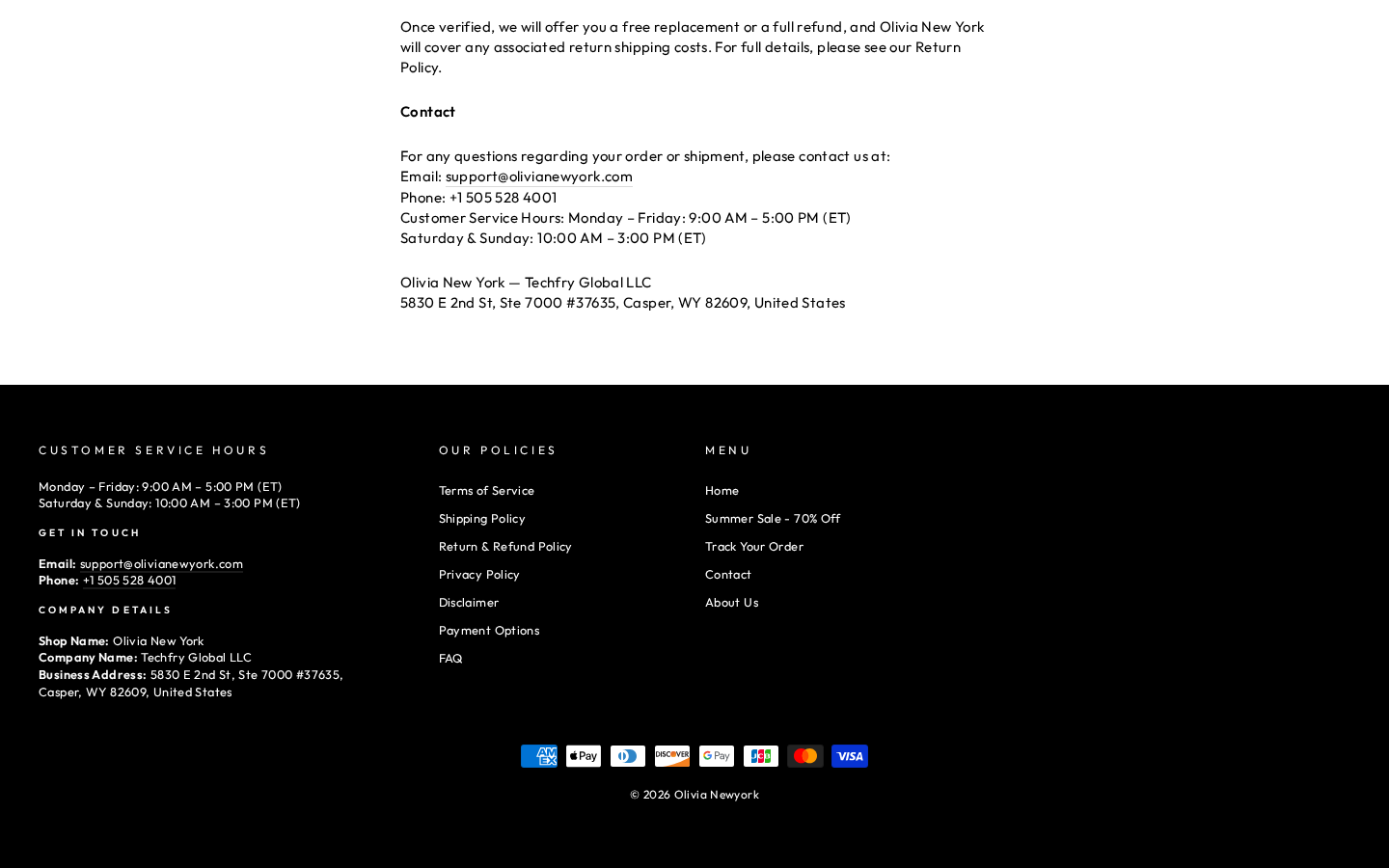
The shipping policy identifies Techfry Global LLC and lists 5830 E 2nd St, Ste 7000 #37635, Casper, WY 82609, United States.
That is the entity and address disclosed by this storefront. We have not independently confirmed its current registration standing or inspected its operations.
An LLC name gives you a useful identifier for correspondence. It is not, by itself, proof of garment quality, domestic manufacturing, or reliable complaint handling.
Keep that name with your receipt. If the payment statement uses another descriptor, ask the seller to explain the relationship before assuming the charges are unrelated.
A Legal Address Is Not Automatically a Returns Warehouse
The disclosed Wyoming address does not prove there is a customer-facing shop or clothing depot there. Our investigation did not establish either function.
Likewise, a unit or mailbox-style identifier should not automatically be called fake. Businesses can legitimately use administrative addresses without keeping stock at them.
The concern is the impression created when local branding leaves overseas return logistics unclear. Legal contact details and practical parcel handling must not be confused.
Do not mail clothing to the footer address merely because it is American. Request the authorized destination for your particular order and keep the reply.
Listed Contact Details Need a Specific Answer
The site lists support@olivianewyork.com and +1 505 528 4001. We did not call or email them, so this is not our own responsiveness test.
A useful pre-purchase question is simple: if this standard item does not fit, where do I send it and what fees will you deduct?
Follow up if the answer only repeats that returns are available. You need the destination, authorization procedure, and cost allocation, not another general reassurance.
When you do call, request an email summary of any promise. A dated written answer is easier to compare with later instructions than an unsupported recollection.
Similar Store Names Should Not Be Merged
A separate hyphenated domain, olivia-newyork.com, also appears online. We did not establish shared ownership, so its contact details and reviews are not evidence about this store.
This distinction matters when searching for Olivia New York complaints. A review score attached to a different domain can give a misleading impression.
Match the URL on the review profile, order confirmation, and seller correspondence. Do not combine businesses merely because their names sound alike.
The same care applies to photographs and origin claims. No supplier-level evidence established that every item here comes from China or that its images are generated.
Reading the Complaints Without Losing the Important Point
The BBB report concerns alleged overseas return requirements. It provides a concrete lead, but the platform’s publication of a complaint does not independently prove each allegation.
Trustpilot contains both favorable accounts and complaints about the return experience. A numerical score can change and should not replace examining what the reviews actually describe.
We have not obtained the underlying support records for those buyers. The store also replies to some complaints, which is different from proving they were resolved.
For a new shopper, the actionable question is whether those disputed conditions will apply to their order. Get that answer before entering payment details.
The reviewed policy also contains an editing inconsistency: it says no restocking fees, then discusses waiving one for a defective item. That deserves clarification.
It is not evidence that a fee was charged to us. If support demands one, the no-fee statement is the relevant document to raise.
What to Do If Your Olivia New York Order Goes Wrong
-
Build a small evidence folder. Save the item listing, size chart, checkout total, receipt, policies, and every support message. Keep the original dates visible.
For delivered clothing, photograph the parcel, garment, labels, and specific problem. Clear pictures are more useful than a general statement that the order is disappointing.
-
Describe the problem precisely. State whether the order never arrived, the wrong item came, the garment is damaged, or the fit is unsuitable.
Include the order number and the outcome you want. This lets support address the actual issue instead of treating every complaint as a routine change of mind.
-
Request cancellation immediately if you have just ordered. The policy advertises a 24-hour window, with dispatch and selected production exceptions. Preserve the timestamp of your request.
If cancellation is refused, ask when dispatch or production began. Avoid accepting an alternative settlement until you understand why the advertised window was not applied.
-
Get the full return instructions before spending more. Ask for authorization, destination country, address, parcel requirements, and any proposed deduction.
Obtain a tracked-postage quote before agreeing. If the goods are wrong or damaged, ask the seller to address its stated responsibility for those return costs.
-
Challenge terms that changed after payment. Send the saved no-fee statement if a restocking deduction appears. Explain the discrepancy calmly and request a written correction.
A support reply should specify the actual refund amount. Do not rely on an ambiguous promise that leaves postage, deductions, or the handling of your parcel unresolved.
-
Document an authorized shipment carefully. Photograph the packed return and retain the carrier receipt, tracking number, and delivery confirmation.
Follow the agreed instructions, but do not falsely label a commercial parcel as a gift. Ask the carrier about proper customs paperwork for its destination.
-
Contact your payment provider before its dispute deadline. Present the issue that actually occurred and the steps you took to resolve it.
A dispute is not an automatic refund guarantee. Ask which records are needed and whether the seller’s proposed return condition affects how your claim should be handled.
-
Report an unresolved misleading transaction factually. Appropriate consumer-protection channels can assess the documents. Your account should distinguish observations from suspicions.
Do not expose personal order details in public comments. Keep a private copy for the provider or authority handling the complaint.
Frequently Asked Questions
Is Olivia New York a Confirmed Scam?
We found substantial buyer concerns, not independently established criminal fraud. The strongest issues concern return logistics, reported policy disputes, and the difference between branding and operations.
Do Olivia New York Returns Go to India?
Some customers report that destination. The public policy reviewed does not specify a country. Ask for the address applicable to your order before buying.
Does Olivia New York Charge a Restocking Fee?
The current policy says no. Some reviews allege a deduction. Preserve the policy and challenge any conflicting demand with a request for written explanation.
Is Olivia New York Based in New York?
The brand uses that name, but the published legal contact is Techfry Global LLC in Wyoming. A New York store or warehouse was not independently verified.
Are the Clothing Photographs AI Generated?
We did not establish that. Attractive or stylized photographs alone are insufficient evidence. Request fabric details and realistic garment measurements instead of relying on appearance.
Should I Return a Parcel to the Address in the Footer?
Not without authorization. Obtain the destination assigned to your order, assess the postage, and retain a written record of the arrangement.
The Bottom Line
Olivia New York’s return logistics deserve attention before its sale prices. Current promises and customer reports leave questions that a buyer should resolve before ordering.
Ask for the return country, confirm the no-fee promise, and save the listing. If the answers are evasive, you can simply leave the dress in the cart.








