

Scammers are constantly inventing new tricks to exploit kindness and vulnerability. One of the most persistent schemes in recent years is the “Donation to Someone with Good Intentions” email scam. These messages typically come from someone claiming to be a wealthy individual with a terminal illness who wants to donate their fortune to a trustworthy person. At first glance, the email may look like an act of generosity. In reality, it is a dangerous scam designed to trick recipients into handing over their personal information, financial details, or even paying upfront fees.
In this in-depth guide, we will explore everything you need to know about this scam. You will learn how it works, why it’s so effective, and what you should do if you ever encounter such emails. Most importantly, you’ll discover what steps to take if you or someone you know has already fallen victim.

The Donation to Someone with Good Intentions Email Scam
The Donation to Someone with Good Intentions email scam is a variation of advance-fee fraud, a scheme that has been around for decades. Unlike phishing scams that impersonate banks or streaming services, this one plays on emotions by presenting an opportunity to inherit or receive a large sum of money from a dying benefactor.
At first glance, the scam looks like a heartwarming story. The email is usually written by someone who claims to be terminally ill, often with cancer or another serious medical condition. The sender claims to be wealthy and states they do not have close family members or heirs to inherit their fortune. As a result, they are searching for a stranger with “good intentions” to whom they can entrust their wealth.
In the email shown above, the sender introduces themselves as “Mrs. Cecilia Maria,” a woman allegedly living in England but originally from Italy. She claims to have been diagnosed with terminal throat cancer and given only a few days to live. To support her story, she says she possesses $3,700,000.00 in her account and wants to donate it to someone she can trust. She urges the recipient to contact her via a personal email for further details.
This narrative is compelling because it appeals to three strong human emotions:
- Compassion: Most people feel sympathy when hearing about someone suffering from terminal illness.
- Greed or Hope: The idea of suddenly receiving millions of dollars is enticing, especially for individuals struggling financially.
- Urgency: The claim that the sender only has a few days left to live pressures recipients to act quickly without thinking critically.
The Anatomy of the Scam Email
While individual scam emails vary, they often share common characteristics:
- Personal Story: The scammer introduces themselves with a dramatic life story involving illness or tragedy.
- Large Sum of Money: A precise amount is usually mentioned, often in the millions, to make the offer more believable.
- Moral Obligation: The scammer insists they want to donate money only to someone with “good intentions” to make it sound noble.
- Urgency: They stress that time is short, which creates pressure to reply immediately.
- Personal Email Contact: Instead of continuing the conversation through the original email address, they provide a “personal email” where they can isolate the victim.
- Flattery and Trust: Phrases like “I trust you will use this money for good causes” are included to make the recipient feel special.
Why People Fall for It
Despite how unbelievable these emails may appear, people still fall victim to them. There are several reasons for this:
- Emotional Manipulation: The story pulls at heartstrings, making people more willing to trust.
- Financial Desperation: In tough economic times, the promise of free money seems irresistible.
- Lack of Awareness: Many individuals, especially the elderly or less tech-savvy, are unfamiliar with internet scams.
- Social Engineering: Scammers exploit human behavior rather than relying solely on technical tricks.
The scam may sound obvious to experienced internet users, but the statistics reveal the harsh reality. According to the FBI’s Internet Crime Complaint Center (IC3), advance-fee fraud is still one of the most commonly reported internet crimes worldwide, costing victims millions of dollars annually.
How the Scam Evolves After Initial Contact
If a recipient replies to the email, the scam enters its next stage. The scammer will respond with more personal details to strengthen their story. They may even send fake documents, legal papers, or medical records to prove their authenticity.
Eventually, they introduce the advance fee requirement. This could be framed as:
- Bank transfer fees
- Legal processing costs
- Customs clearance charges
- Donation certification paperwork
The fees are often small at first, such as $200 or $500, making the victim think it’s a minor investment for a multi-million-dollar reward. Once paid, the scammer continues requesting more money under new excuses until the victim either catches on or runs out of funds.
How the Scam Works
To truly understand the mechanics of the Donation to Someone with Good Intentions scam, it helps to look at it step by step. Each stage is carefully designed to hook the victim deeper into the trap.
Step 1: The Initial Email
The scam begins with a mass email blast. Scammers send thousands, sometimes millions, of emails to random addresses. They know most recipients will ignore or delete the message, but all it takes is a small percentage of responses to make the scam profitable.
The initial email contains:
- The scammer’s fabricated backstory.
- The claim of having millions of dollars in a bank account.
- A plea to find someone trustworthy to inherit the money.
- An invitation to respond for more information.
Because these emails are sent in bulk, the grammar and spelling are often poor. While this seems like a mistake, experts say it’s intentional. Poorly written emails filter out skeptical individuals, leaving only those more likely to fall for the scam.
Step 2: Establishing Trust
Once a victim replies, the scammer begins building a relationship. They will:
- Express gratitude for the reply.
- Share more details about their illness or background.
- Promise that the victim has been “chosen” because of their perceived kindness.
- Sometimes invoke religious language, claiming God guided them to the recipient.
The scammer’s goal is to make the victim feel like they are part of something meaningful.
Step 3: Fake Documentation
To make the story more convincing, scammers often provide forged documents. These may include:
- Bank statements showing millions in an account.
- Death certificates.
- Letters from fake lawyers or doctors.
- Passports and IDs.
These documents are usually created with photo-editing software. To an untrained eye, they may look legitimate.
Step 4: The Advance Fee
Eventually, the scammer introduces the advance-fee requirement. They claim that before the money can be transferred, some administrative cost must be covered. Common excuses include:
- Bank Fees: “The bank requires $500 to release the funds.”
- Customs Clearance: “The donation is stuck at customs and needs $800 to be cleared.”
- Lawyer Charges: “My lawyer needs $1,200 to finalize the will paperwork.”
At this point, victims are already emotionally invested and believe they are close to receiving millions. Many agree to pay.
Step 5: Repeated Payments
Once the first payment is made, the scammer will continue inventing new reasons for additional payments. Each time, they assure the victim that this is the “final step” before receiving the money. Some victims have paid tens of thousands of dollars before realizing it’s a scam.
Step 6: Financial and Personal Damage
The consequences of falling for this scam can be devastating:
- Financial Loss: Victims may lose significant amounts of money.
- Identity Theft: Scammers often ask for personal information like IDs, addresses, and bank details, which can be used for further fraud.
- Emotional Trauma: Victims often feel ashamed, embarrassed, and betrayed after realizing they were manipulated.
What To Do If You Have Fallen Victim to This Scam
If you or someone you know has already engaged with this scam, it’s important to act quickly. The longer you wait, the greater the potential damage. Here’s what you should do:
1. Stop All Communication Immediately
Do not respond to any more emails. Block the sender’s address and avoid clicking on any links they send.
2. Report the Scam
- In the United States, report to the FBI Internet Crime Complaint Center (IC3) at ic3.gov.
- In the UK, report to Action Fraud, the national fraud reporting center.
- In other countries, report to your local cybercrime authority or police department.
3. Contact Your Bank
If you have sent money, immediately contact your bank or credit card company. They may be able to reverse transactions or flag suspicious activity.
4. Monitor Your Identity
If you provided personal documents, monitor for signs of identity theft. Consider placing a fraud alert or credit freeze with major credit bureaus.
5. Warn Others
Scammers thrive on secrecy. Sharing your story can prevent others from falling victim.
6. Seek Emotional Support
Falling for a scam can be emotionally draining. Speak to trusted family or friends and consider professional counseling if needed.
Is Your Device Infected? Run a Free Malware Scan
Slow performance, constant pop-ups, or strange behavior? These are classic signs of a malware infection. The fastest way to find out is to scan your device with Malwarebytes Free — one of the most trusted malware removal tools available.
The free version detects and removes the most common threats, including:
- Adware — the cause of those annoying pop-ups
- Browser hijackers — unwanted redirects and changed homepages
- Trojans and spyware — hidden programs stealing your data
- Potentially unwanted programs (PUPs) — software you never asked for
👉 Select your device below — Windows, Mac, or Android — then follow the simple steps to download Malwarebytes, scan your system, and remove any threats it finds. The scan usually takes 5 to 20 minutes.
Run a Malware Scan with Malwarebytes for Windows
Malwarebytes is one of the most popular and trusted anti-malware tools for Windows — and it’s completely free for removing infections. It catches threats that many antivirus programs miss, including adware, browser hijackers, and trojans. Follow the steps below to scan and clean your PC in just a few minutes.
Download Malwarebytes
Click the button below to download the latest version of Malwarebytes for Windows from the official source. The free version is all you need — it will scan your computer and remove adware, browser hijackers, and other malicious software at no cost.
Download MalwarebytesOfficial installer for Windows 11 and 10. Your download starts right away.Want real-time protection? See Malwarebytes Premium Malwarebytes Free for WindowsScans and removes malware at no cost
-
Install Malwarebytes
When the download finishes, open your Downloads folder and double-click the MBSetup file. If Windows shows a User Account Control pop-up, click “Yes” to allow the installation.
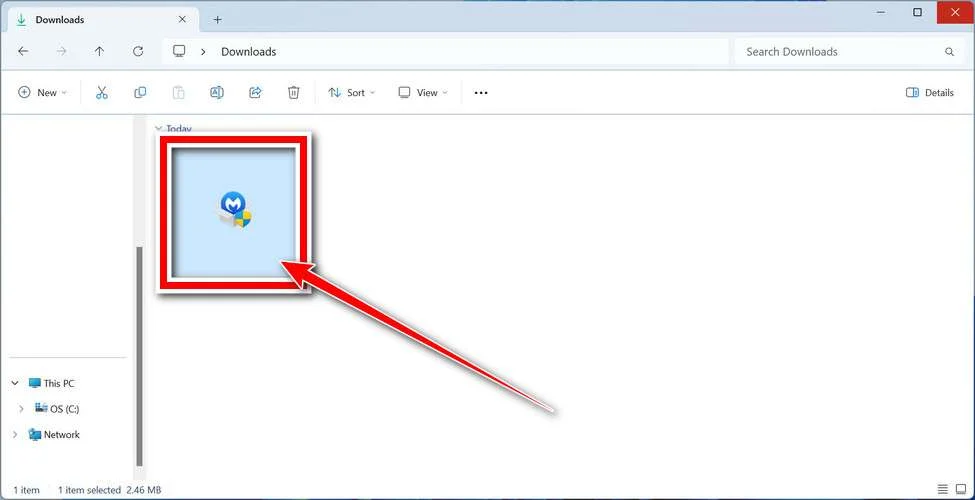
Follow the On-Screen Prompts to Install Malwarebytes
The setup wizard will walk you through a few quick screens:
-
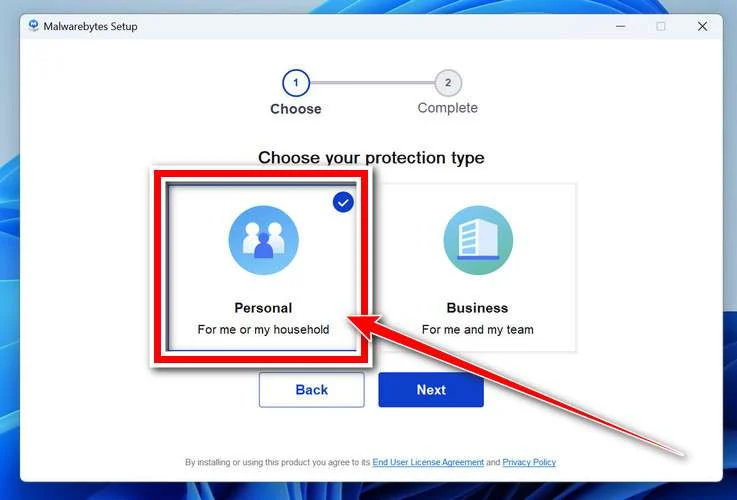
Choose where you’re installing the program — “Personal Computer” or “Work Computer” — then click Next.
-
Malwarebytes will now install on your device. This usually takes under a minute.

-
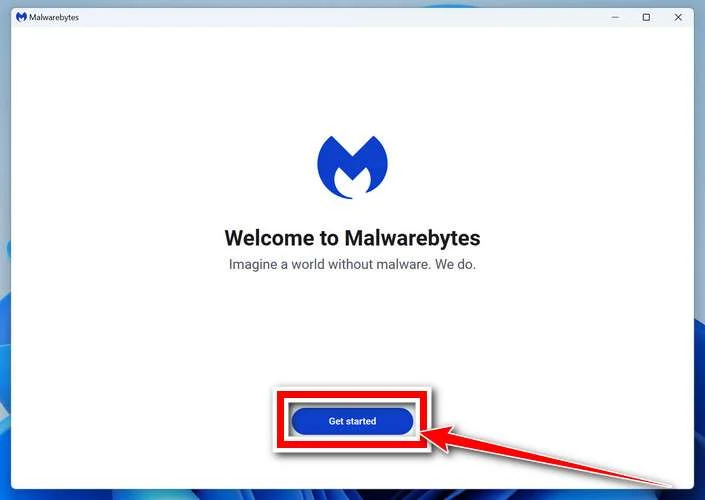
When installation is complete, the “Welcome to Malwarebytes” screen will open automatically.
-
On the final screen, click Open Malwarebytes to launch the program.

-
Enable “Scan for Rootkits”
Before scanning, turn on rootkit detection so Malwarebytes can find even the most hidden threats. Click the Settings gear icon on the left side of the screen.
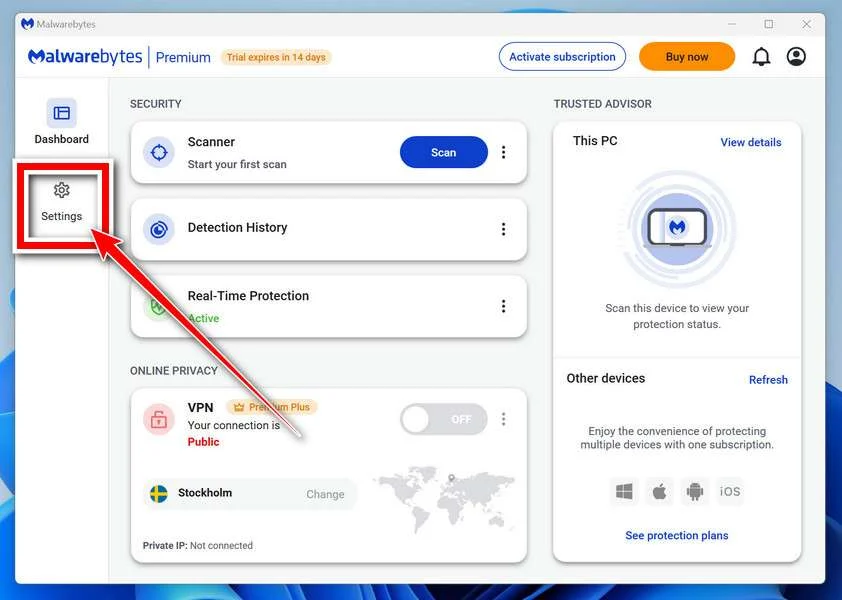
In the settings menu, find “Scan for rootkits” and click the toggle so it turns blue.

Done? Click “Dashboard” in the left pane to return to the main screen.
Start the Scan
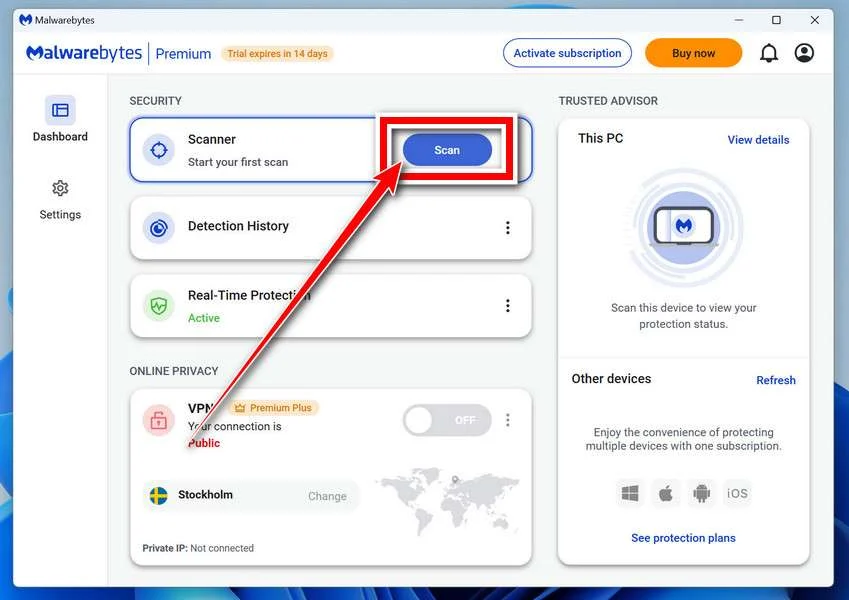
Click the blue Scan button. Malwarebytes will automatically update its virus database and start checking your computer for malware.
-
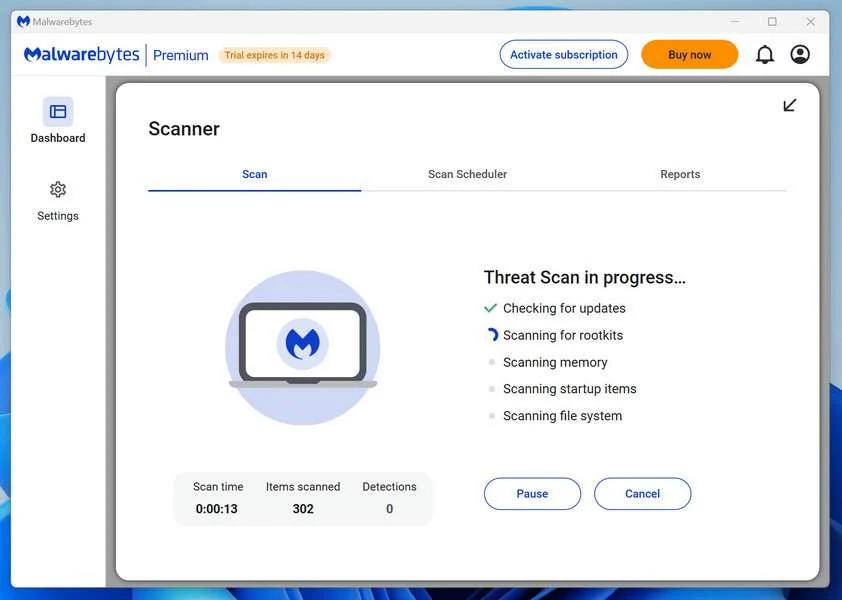
Wait for the Scan to Finish
The scan checks your entire system for browser hijackers and other malicious programs, so it can take 5 to 20 minutes depending on your computer. Feel free to do something else — just check back occasionally to see the progress.
-
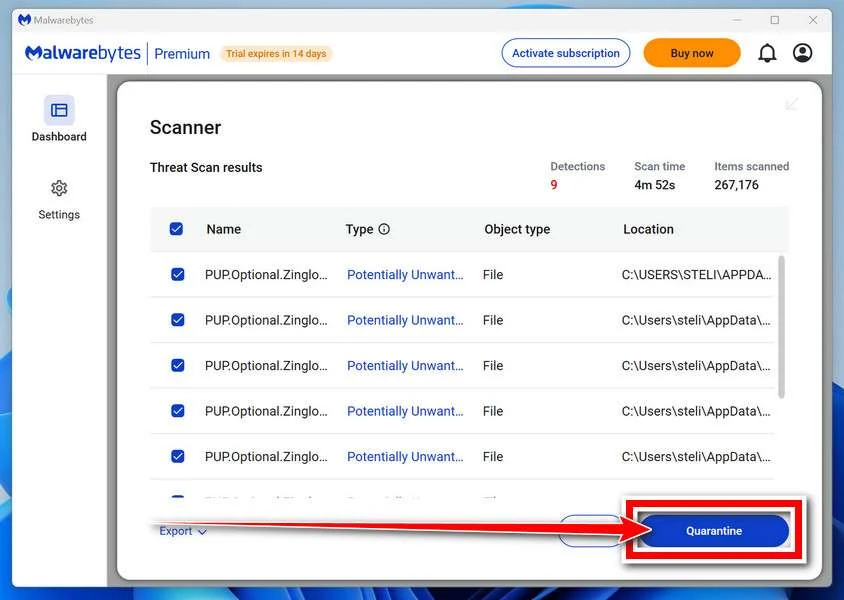
Quarantine the Detected Threats
When the scan is done, you’ll see a list of everything Malwarebytes found — malware, adware, and potentially unwanted programs. Click the “Quarantine” button to remove all of them at once.
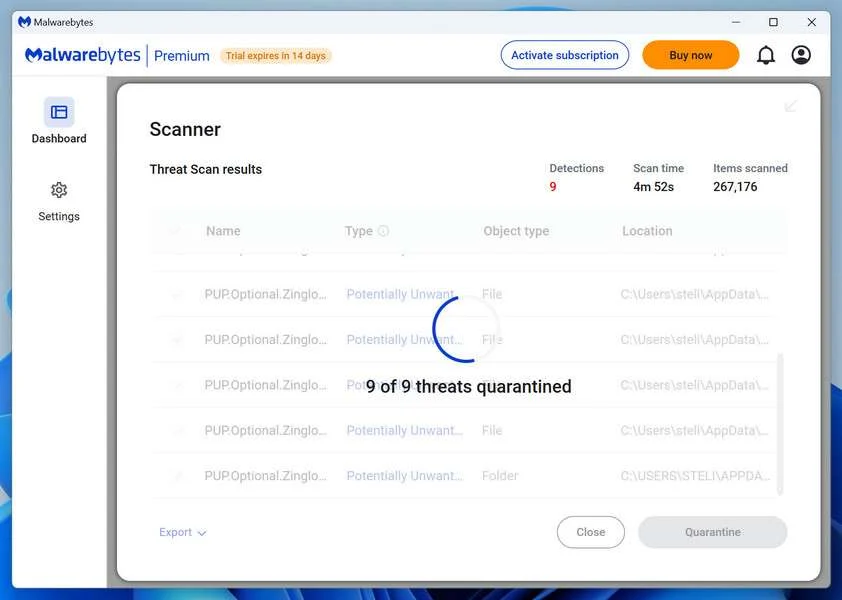
Malwarebytes will now remove the malicious files and registry entries and move them safely into quarantine.
-
Restart Your Computer
Some threats can only be fully removed after a reboot. If Malwarebytes asks you to restart, click Yes. Once you’re logged back in, Malwarebytes has finished removing the threats it found.
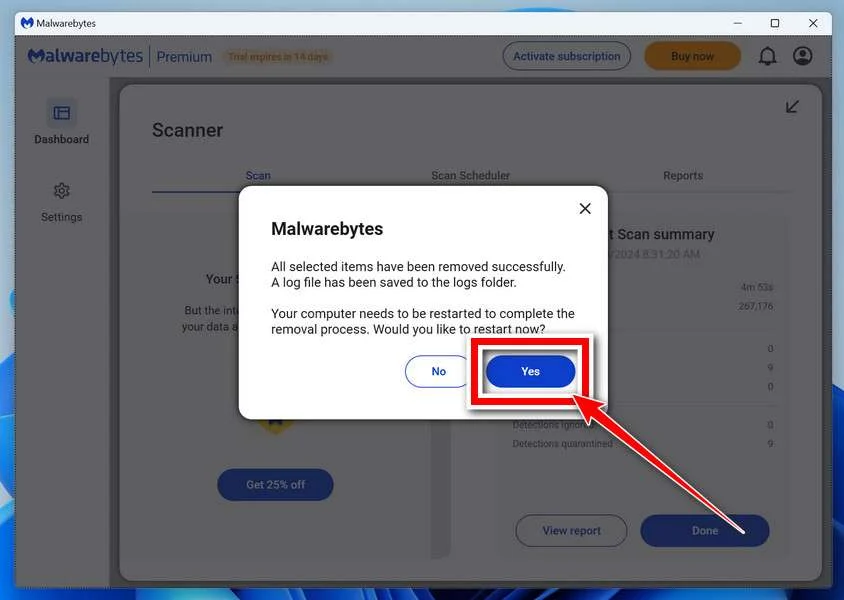
That’s it — your Windows PC is now clean of trojans, adware, and other malware, and should be back to running smoothly.
If you are still having problems with your computer after completing these instructions, then please follow one of the steps:
- Run a computer scan with ESET Online Scanner
- Ask for help in our Windows Malware Removal Help & Support forum.
Run a Malware Scan with Malwarebytes for Mac
Malwarebytes for Mac is a free on-demand scanner that removes the malware other security software tends to miss — adware, browser hijackers, and unwanted programs included. Cleaning an infected Mac with Malwarebytes has always been completely free, and it’s our go-to recommendation. Follow the steps below to scan and clean your Mac in just a few minutes.
-
Download Malwarebytes for Mac
Click the button below to download the latest version of Malwarebytes for Mac.
Download MalwarebytesOfficial installer for macOS. Your download starts right away.Want real-time protection? See Malwarebytes PremiumMalwarebytes Free for MacScans and removes malware at no cost -
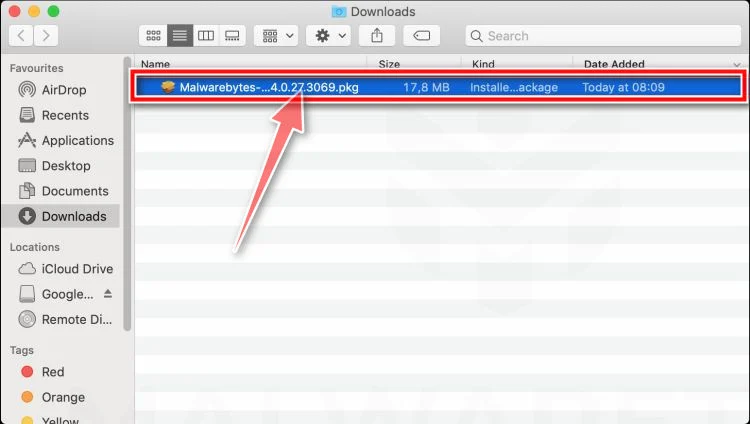
Open the Malwarebytes setup file
When the download finishes, open your Downloads folder and double-click the setup file to begin the installation.
-
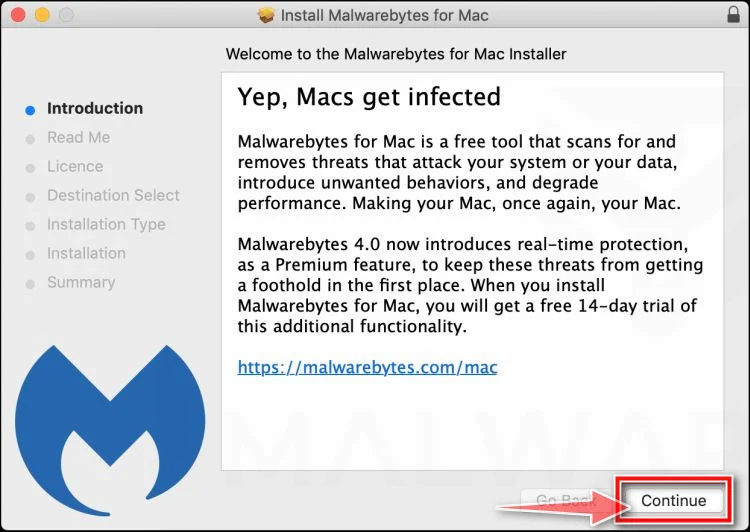
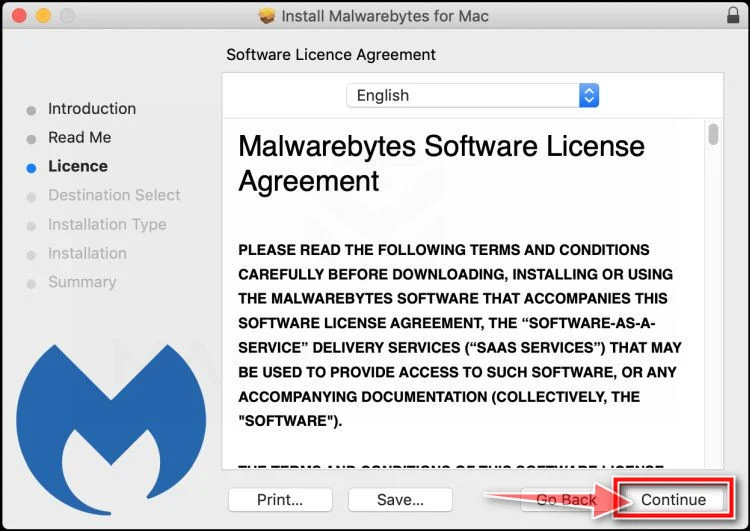
Follow the On-Screen Prompts to Install Malwarebytes
The Malwarebytes for Mac Installer will guide you through a few quick screens. Click “Continue” and keep following the prompts until the installation completes.
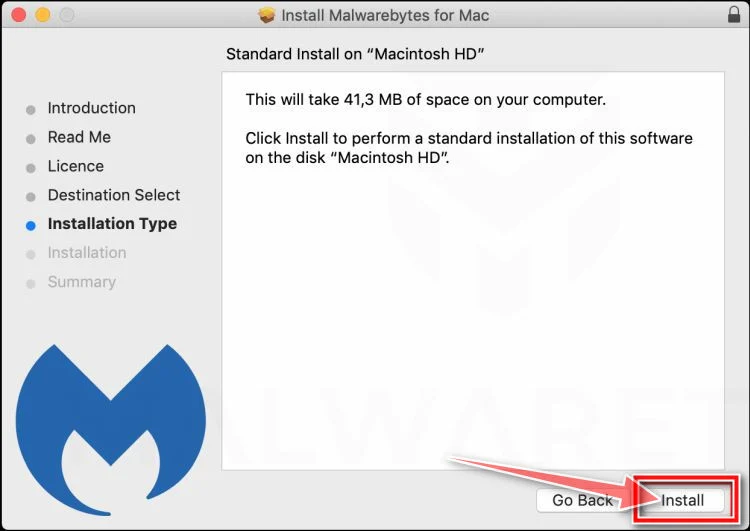
When the installation is complete, Malwarebytes opens to the Welcome to Malwarebytes screen. Click “Get started“.
-
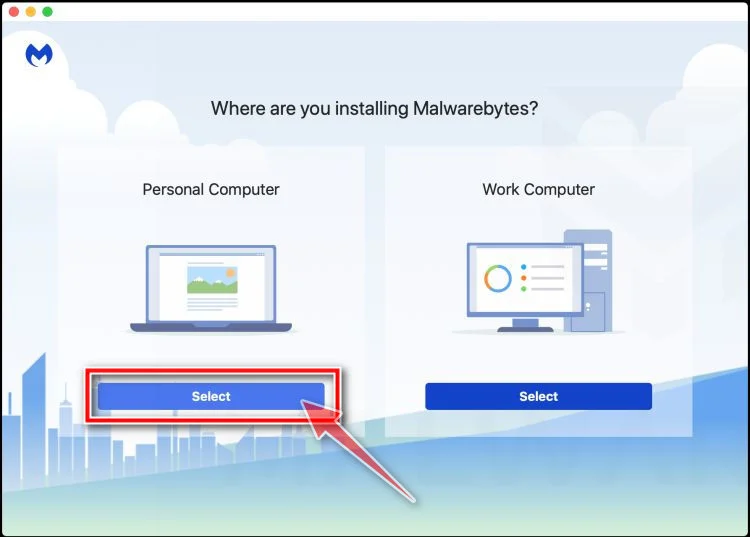
Select “Personal Computer” or “Work Computer”
Malwarebytes will ask what type of computer you’re installing it on. Click either Personal Computer or Work Computer, whichever applies.
-
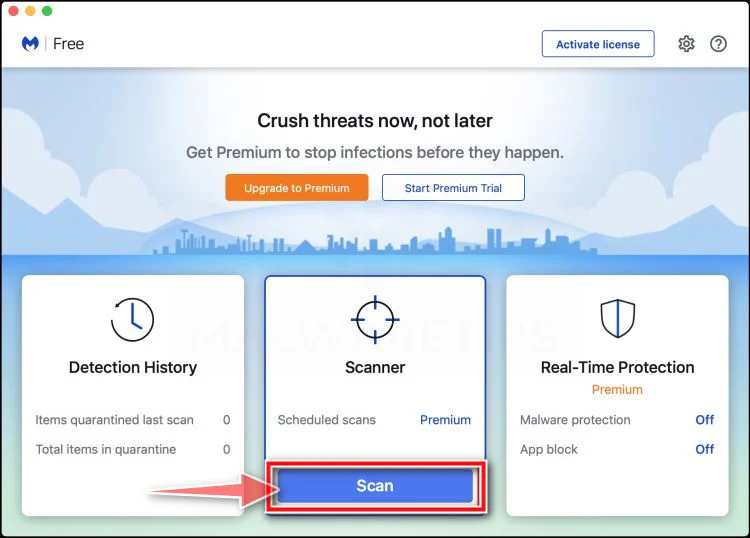
Start the Scan
Click the “Scan” button. Malwarebytes will automatically update its detection database and begin checking your Mac for malware.
-
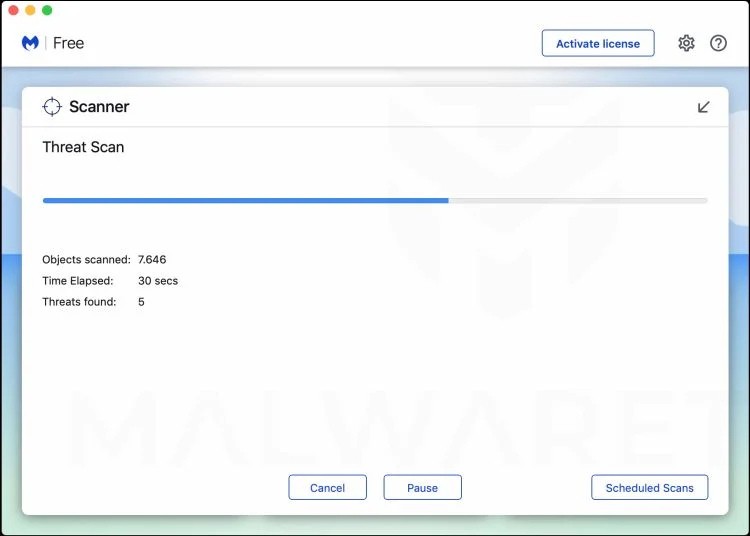
Wait for the Scan to Finish
Malwarebytes will scan your Mac for adware, browser hijackers, and other malicious programs. This can take a few minutes, so feel free to do something else — just check back occasionally to see the progress.
-
Quarantine the Detected Threats
When the scan is done, you’ll see a list of everything Malwarebytes found. Click the “Quarantine” button to remove all the threats at once.
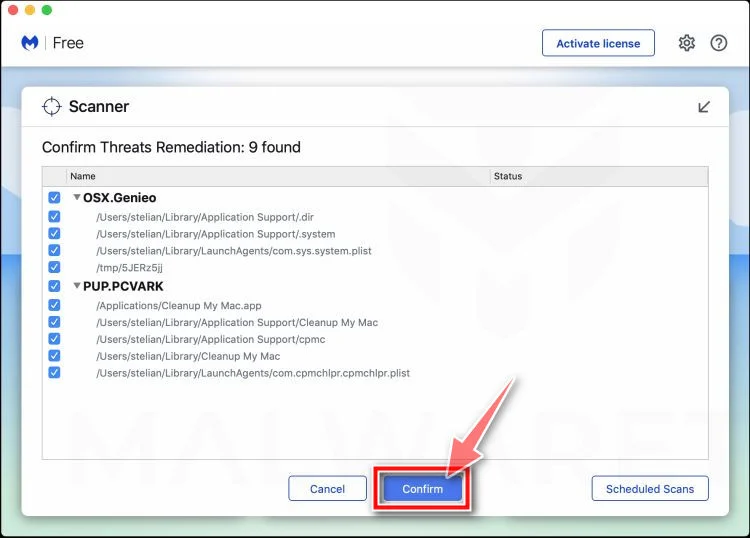
-
Restart Your Mac
Malwarebytes will now remove all the malicious files it found. Some threats can only be fully removed after a reboot — if Malwarebytes asks you to restart, allow it. Once you’re logged back in, your Mac is clean.
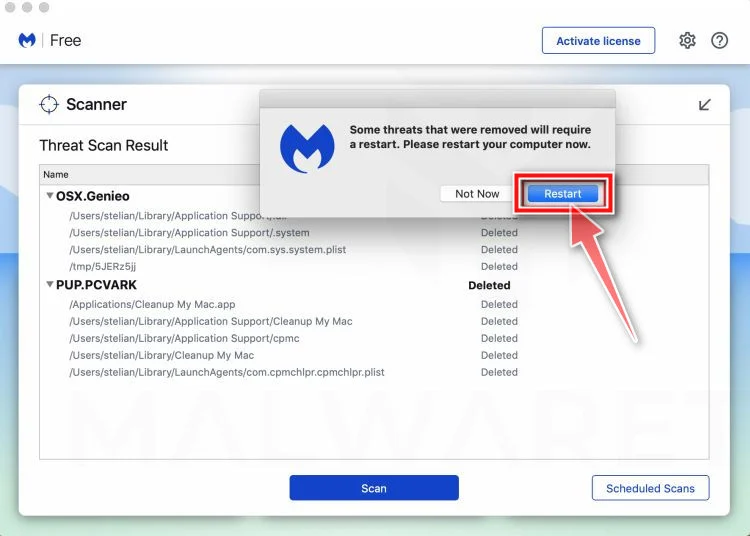
That’s it — your Mac is now free of adware, rogue browser extensions, and other potentially harmful software.
If you are still experiencing problems while trying to remove a malicious program from your computer, please ask for help in our Mac Malware Removal Help & Support forum.
Run a Malware Scan with Malwarebytes for Android
Malwarebytes for Android automatically detects and removes dangerous threats like malware and ransomware so you don’t have to worry about your most-used device being compromised. Aggressive detection of adware and potentially unwanted programs keeps your Android phone or tablet running smooth.
-
Download Malwarebytes for Android.
You can download Malwarebytes for Android by clicking the link below.
Get Malwarebytes for AndroidOpens Google Play in a new tab.Want real-time protection? See Malwarebytes Premium for AndroidMalwarebytes for AndroidScans your phone and removes malware at no cost -
Install Malwarebytes for Android on your phone.
In the Google Play Store, tap “Install” to install Malwarebytes for Android on your device.

When the installation process has finished, tap “Open” to begin using Malwarebytes for Android. You can also open Malwarebytes by tapping on its icon in your phone menu or home screen.

-
Follow the on-screen prompts to complete the setup process
When Malwarebytes will open, you will see the Malwarebytes Setup Wizard which will guide you through a series of permissions and other setup options.
This is the first of two screens that explain the difference between the Premium and Free versions. Swipe this screen to continue.
Tap on “Got it” to proceed to the next step.
Malwarebytes for Android will now ask for a set of permissions that are required to scan your device and protect it from malware. Tap on “Give permission” to continue.
Tap on “Allow” to permit Malwarebytes to access the files on your phone.
-
Update database and run a scan with Malwarebytes for Android
You will now be prompted to update the Malwarebytes database and run a full system scan.

Click on “Update database” to update the Malwarebytes for Android definitions to the latest version, then click on “Run full scan” to perform a system scan.

-
Wait for the Malwarebytes scan to complete.
Malwarebytes will now start scanning your phone for adware and other malicious apps. This process can take a few minutes, so we suggest you do something else and periodically check on the status of the scan to see when it is finished.

-
Click on “Remove Selected”.
When the scan has been completed, you will be presented with a screen showing the malware infections that Malwarebytes for Android has detected. To remove the malicious apps that Malwarebytes has found, tap on the “Remove Selected” button.

-
Restart your phone.
Malwarebytes for Android will now remove all the malicious apps that it has found. To complete the malware removal process, Malwarebytes may ask you to restart your device.
That’s it — your Android phone is now clean — no more malicious apps, adware, or browser redirects.
If you are still having problems with your phone after completing these instructions, then please follow one of the steps:
- Restore your phone to factory settings by going to Settings > General management > Reset > Factory data reset.
- Ask for help in our Mobile Malware Removal Help & Support forum.
Stay Protected: Block Ads and Malicious Sites
Now that your device is clean, keep it that way. Most infections start with a malicious ad or a fake download button — so blocking them at the source is your best defense.
We recommend AdGuard, which blocks malicious ads, phishing pages, and dangerous redirects before they can reach you.
👉 Download AdGuard and browse safely
Frequently Asked Questions (FAQ) About the Donation to Someone with Good Intentions Email Scam
What is the “Donation to Someone with Good Intentions” email scam?
The “Donation to Someone with Good Intentions” scam is a type of advance-fee fraud. It begins with an email from a person who claims to be wealthy, terminally ill, and looking for someone to inherit or manage their fortune. The scammer often promises millions of dollars in donations. However, before the money can supposedly be transferred, the victim is asked to pay “processing fees,” “bank charges,” or “legal costs.” In reality, there is no donation, and the victim loses money and may also expose sensitive personal details.
Why do scammers use stories about terminal illness or inheritance?
Scammers use emotional stories to manipulate victims. By claiming to be dying from cancer or another serious illness, they create sympathy and urgency. The idea of inheriting money from someone’s last wish appeals to human compassion while also tempting victims with the promise of wealth. This combination of emotional manipulation and financial incentive makes the scam highly effective.
How can I recognize a “Donation with Good Intentions” scam email?
Here are common red flags that indicate the email is a scam:
- The sender claims to be terminally ill and urgently needs someone to manage their fortune.
- The email promises an unusually large sum of money (often millions).
- There are spelling mistakes, odd phrasing, or inconsistent grammar.
- The sender insists you reply quickly due to their “limited time left.”
- You are asked to switch communication to a “personal email” outside the original message.
- The sender pressures you to pay fees for bank transfers, legal paperwork, or taxes.
If you notice any of these signs, it is almost certainly a scam.
Who do scammers usually target with this type of email?
Although anyone can receive these emails, scammers often target:
- Elderly individuals who may be less familiar with online fraud.
- Financially vulnerable people who may be more tempted by the promise of millions.
- Charitable or religious individuals who may feel compelled to help.
Scammers cast a wide net by sending thousands of emails at once. Even if only a handful of people reply, it can still generate large profits.
What happens if I reply to the scam email?
If you reply, the scammer will:
- Send more personal details to build trust.
- Share fake documents, such as bank statements or medical certificates.
- Eventually request small payments for “processing” or “legal fees.”
- Continue demanding more money until you stop replying.
The longer you engage, the higher your risk of financial loss and identity theft.
Is it illegal to receive money from these scams if they were real?
Yes. Even though no money will ever be sent, legitimate laws exist to prevent accepting suspicious foreign transfers. If you knowingly participate in schemes involving “donations” from strangers, you could face money laundering accusations. Scammers often disguise illegal funds as donations, so even attempting to process such transactions is risky.
What should I do if I receive one of these scam emails?
- Do not reply. Ignore and delete the message immediately.
- Mark it as spam. This helps email providers block similar messages in the future.
- Report it. In the U.S., you can report scams to the FBI’s IC3 website. In the U.K., report to Action Fraud. Many countries have their own fraud reporting centers.
- Warn others. Share awareness with friends and family so they don’t fall victim.
What if I already sent money to the scammer?
If you’ve already transferred funds, take these steps immediately:
- Contact your bank or credit card company and request a stop payment or reversal.
- Report the scam to local law enforcement and cybercrime authorities.
- Monitor your accounts for unusual transactions.
- Consider a credit freeze or fraud alert with credit bureaus to prevent identity theft.
Can scammers steal my identity from these emails?
Yes. Many scammers ask for copies of personal documents such as passports, driver’s licenses, or bank account numbers. If you’ve shared these, you are at high risk of identity theft. They may use your details to open accounts, commit fraud, or impersonate you. If this happens, report it immediately to your local fraud prevention agency and take protective steps like placing credit alerts.
Why don’t authorities shut down these scammers?
Authorities around the world do fight these scams, but several challenges make it difficult:
- Many scammers operate from countries with limited law enforcement resources.
- They frequently change email addresses, phone numbers, and bank accounts.
- The scams are global, making jurisdiction complicated.
While complete eradication is difficult, reporting scams helps authorities track trends and warn others.
Are there legitimate emails about donations or inheritance?
Legitimate inheritance notifications typically come through a lawyer, not a random stranger. If you are genuinely entitled to an inheritance, you would receive official legal documents, not an unsolicited email promising millions. As a general rule: if it sounds too good to be true, it is.
How do I protect myself from email scams in general?
- Be skeptical of any unsolicited messages promising money or prizes.
- Avoid clicking links or downloading attachments from unknown senders.
- Use spam filters and security software.
- Never share sensitive personal or financial details over email.
- Regularly update your passwords and use two-factor authentication.
The Bottom Line
The Donation to Someone with Good Intentions email scam is a dangerous blend of emotional manipulation and financial fraud. While the promise of inheriting millions from a dying stranger may sound appealing, it is nothing more than a trap designed to steal money and personal information.
If you receive such an email, the best course of action is simple: delete it and never reply. If you’ve already fallen victim, act quickly to minimize the damage.
Awareness is the strongest weapon against scams. By understanding how these frauds work, you can protect yourself and help others avoid falling into the same trap.

Join the discussion
0 commentsShare your experience or ask a question about this article.
Discussion
Start the conversation
Have a question or something useful to share? Add the first comment.