

Celebrities praising a “breakthrough” tinnitus cure. AI-generated videos spreading rapidly across social media. Big promises backed by questionable marketing.
EchoZen Drops has generated significant attention online—but also serious doubts. This article breaks down what’s real, what’s misleading, and the risks you should consider before trying it.
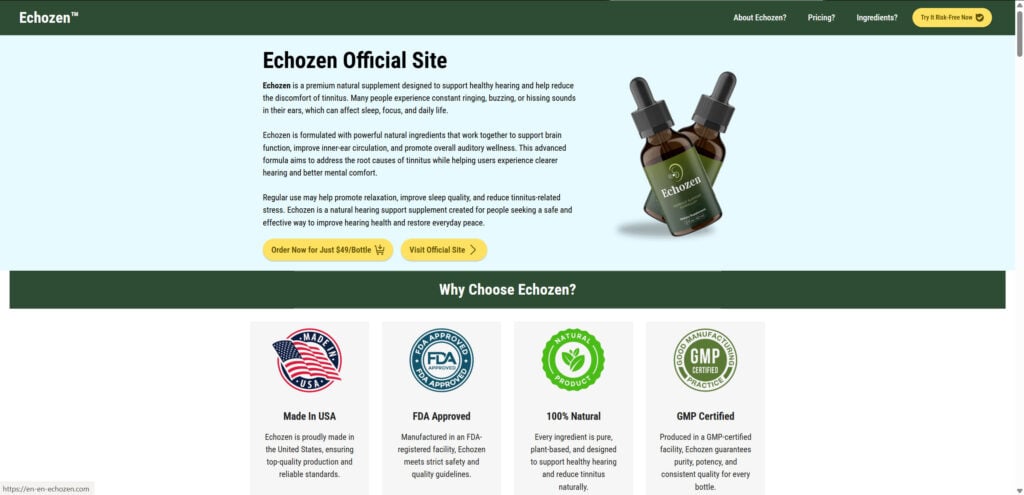
Overview of EchoZen Drops
EchoZen Drops is marketed as a natural ear care solution designed to:
- Improve ear health
- Reduce tinnitus intensity and frequency
- Enhance hearing clarity
According to its website, the product:
- Uses “natural ingredients” that penetrate ear tissue
- Helps balance the auditory system
- Promotes ear circulation
- Provides a cooling, soothing sensation
Additional Claims
The marketing goes beyond hearing support and suggests broader benefits, including:
- Better sleep quality
- Improved focus and concentration
- Enhanced emotional well-being
- Overall improved quality of life
These claims are presented as part of a “complete” solution for tinnitus sufferers.
Questionable Marketing Tactics
1. AI-Generated Celebrity Endorsements
One of the most concerning elements is the use of AI-generated videos featuring well-known figures such as:
- Dr. Oz
- Joe Rogan
- Kevin Costner
These videos create the impression that celebrities endorse the product. There is no credible evidence that these individuals have any connection to EchoZen Drops.
Why This Matters
- It falsely builds trust
- It exploits the credibility of public figures
- It misleads consumers into believing the product is validated
Fabricated endorsements are not only deceptive—they are unethical.
2. Fake Testimonials
EchoZen Drops heavily relies on customer reviews that claim dramatic improvements, such as:
- Significant tinnitus relief
- Better sleep and focus
- Improved daily life
Red Flags in These Reviews
- Overly enthusiastic language
- Lack of specific details
- Repetitive or similar phrasing
- Large volumes posted in a short time
These patterns strongly suggest the testimonials may not be genuine.
3. Exaggerated Claims
The product’s marketing promises multiple benefits that go far beyond typical ear care:
- “Immediate relief” from tinnitus
- Emotional and psychological improvement
- Enhanced mental clarity
Key Issue
There is no credible scientific evidence or clinical data provided to support these claims.
Particularly concerning is the suggestion that the product can support mental health—something that requires professional care, not topical drops.
Lack of FDA Evaluation
There is no indication that EchoZen Drops has been evaluated by the FDA.
Why This Is Important
The FDA regulates:
- Safety
- Effectiveness
- Quality of medical products
Without FDA evaluation:
- Safety is unverified
- Effectiveness is unproven
- Ingredient claims cannot be confirmed
If a product had proper approval, it would typically be highlighted prominently.
Potential Risks
1. Unverified Safety
- No confirmed testing for adverse reactions
- Unknown interactions with medications
- No regulatory oversight
This creates uncertainty about how safe the product actually is.
2. Ineffectiveness
There is no scientific evidence that the ingredients:
- Reduce tinnitus
- Improve hearing
- Deliver the advertised benefits
Using an ineffective product can:
- Waste money
- Delay proper treatment
- Allow symptoms to worsen
3. False Hope
Tinnitus can be frustrating and difficult to manage. Products like EchoZen Drops often target that frustration.
The Risk
- Creates unrealistic expectations
- Leads to disappointment when results don’t match promises
- Can increase emotional stress
False hope can be more damaging than no treatment at all.
Why You Should Consult a Healthcare Professional
Before trying any tinnitus treatment, consult a specialist such as:
- Audiologist
- ENT (ear, nose, and throat doctor)
Benefits of Professional Guidance
- Accurate diagnosis
- Identification of underlying causes
- Access to proven treatments
In some cases, tinnitus may be linked to serious conditions such as:
- Ménière’s disease
- Vestibular disorders
- Cardiovascular issues
These require proper medical care—not over-the-counter drops.
Similar Products Using the Same Tactics
EchoZen Drops follows a pattern seen in other tinnitus products, including:
- Cortexi
- CerebroZen
- Echo Ease
Common Characteristics
- “Revolutionary” formulas
- Natural ingredient claims
- Aggressive marketing
- Fake testimonials
- Limited-time offers
These products often:
- Share similar website designs
- Use identical sales language
- Lack scientific backing
This suggests a broader trend rather than a unique solution.
FAQs
What is EchoZen Drops?
A product marketed as a natural solution for tinnitus and ear health, claiming to improve hearing and overall well-being.
Are the celebrity endorsements real?
No. The videos featuring celebrities appear to be AI-generated and are not genuine endorsements.
Has it been approved by the FDA?
There is no evidence that EchoZen Drops has been evaluated or approved by the FDA.
Should you try it?
Not without consulting a healthcare professional. The lack of evidence and questionable marketing raise significant concerns.
The Bottom Line
EchoZen Drops presents itself as a breakthrough tinnitus solution, but several red flags stand out:
- AI-generated celebrity endorsements
- Likely fake testimonials
- Exaggerated, unsupported claims
- No FDA evaluation
These factors indicate a high risk that the product will not deliver on its promises.
Tinnitus management requires a careful, evidence-based approach. The safest path is to work with a qualified medical professional and rely on treatments backed by real research—not marketing hype.
This content is for informational purposes only and should not be considered medical advice. Always consult a qualified healthcare provider for diagnosis and treatment options.








