

Fake crypto casino websites are spreading through social media, and many of them use Elon Musk’s name, image, or brand associations to look legitimate.
These sites usually promise free crypto bonuses, easy winnings, and fast withdrawals. But behind the polished casino design is a familiar trap: victims are shown fake account balances, then asked to deposit real cryptocurrency before they can “unlock” their winnings.
Scam Overview
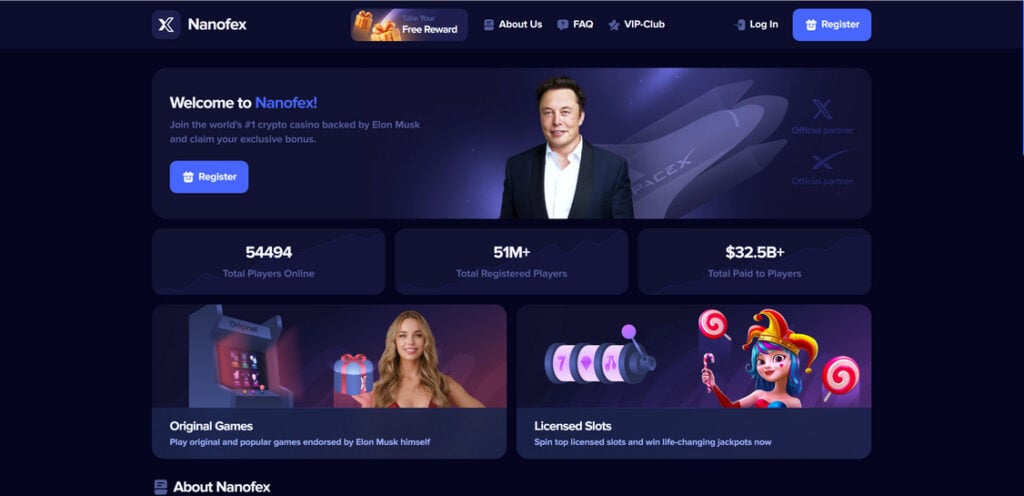
Elon Musk crypto casino scam sites are fake gambling platforms that use celebrity impersonation to make a suspicious offer look trustworthy.
These sites claiming to be a “#1 crypto casino backed by Elon Musk.” It also shows large numbers like “51M+ total registered players” and “$32.5B+ total paid to players.” These kinds of claims are typical trust-building tricks used by scam websites.
The problem is simple: there is no verified evidence that Elon Musk is backing these casino platforms. Scammers often pretend that celebrities are connected to crypto giveaways or investment opportunities because famous names make people pause less and trust faster. The FTC specifically warns that scammers may pretend to be celebrities offering cryptocurrency opportunities, but the money goes to scammers instead.
These fake casino sites usually follow the same pattern:
- They use Elon Musk’s name, photo, or related brands like SpaceX or X.
- They claim users can receive a free crypto bonus.
- They show fake player numbers and fake payout totals.
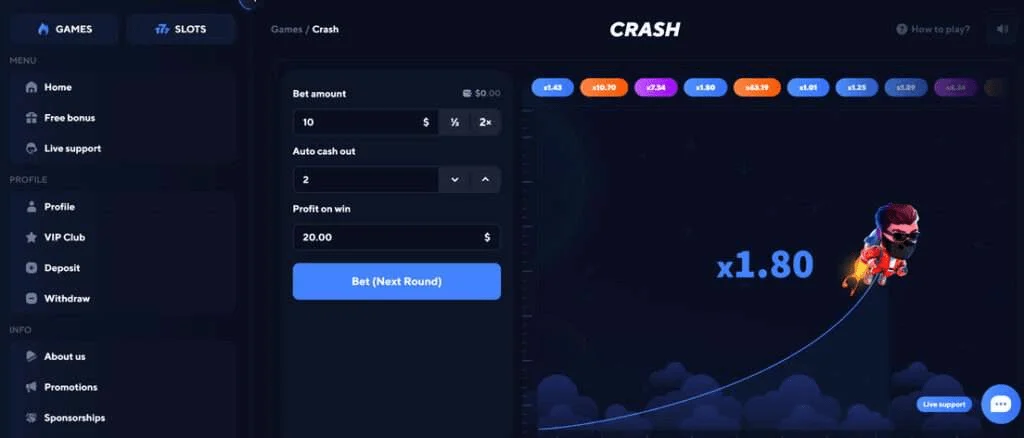
- They include games that look real, such as slots, crash games, dice, mines, or Plinko.
- They make users believe they have won money.
- They block withdrawals until the user sends a deposit.
- After payment, they invent more fees or disappear.
At first, the website may look professional. That is part of the scam.
Modern scam sites are no longer always ugly or full of spelling mistakes. Many are clean, dark-themed, mobile-friendly, and designed to look like real crypto casinos. They may include login buttons, VIP clubs, FAQ pages, game categories, support chat, and animated casino graphics.
The goal is to make the visitor think, “This looks too polished to be fake.”
That is exactly why these scams work.
Why Scammers Use Elon Musk’s Name
Elon Musk is one of the most abused names in crypto scams because he is closely associated with technology, cryptocurrency discussions, X, Tesla, SpaceX, and online culture.
Scammers know that many people connect his name with innovation and big financial moves. So they use fake promotions that make it appear as if he launched, sponsored, endorsed, or backed a crypto casino.
This is not new. We have documented fake Elon Musk crypto giveaway campaigns for years, including social media videos and fake promotions that promise fast crypto profits.
The fake celebrity angle works because it creates instant borrowed trust.
A normal unknown casino site would make users suspicious.
But a casino site claiming to be “backed by Elon Musk” feels more exciting. It sounds like a limited opportunity. It makes the victim wonder if they discovered something early.
That emotional reaction is what scammers want.
They are not trying to prove the claim. They are trying to make the victim act before checking it.
Common Red Flags on These Fake Crypto Casino Sites
Fake Elon Musk crypto casino sites usually share several warning signs.
1. Fake celebrity endorsement
Any site claiming Elon Musk, Bill Gates, MrBeast, Donald Trump, or another public figure launched a crypto casino should be treated with extreme caution.
The FTC warns that even if a crypto opportunity appears to have a celebrity endorsement, consumers should not trust it without verification.
2. Free crypto bonus offers
These sites often claim you can receive a large bonus just for registering.
Examples may include:
- $500 free crypto
- $1,000 sign-up bonus
- $2,500 Elon Musk promo code
- Free Bitcoin for new users
- VIP casino reward
Real platforms do not randomly give away large amounts of money to strangers with no serious verification.
3. Fake player and payout statistics
Scam sites often show impressive numbers, such as millions of users or billions paid out.
These numbers are usually not verifiable. They are placed there to make the platform look popular and safe.
4. Withdrawal blocked until deposit
This is the biggest red flag.
If a site says you won money but must first deposit crypto to withdraw it, you are almost certainly dealing with a scam.
Legitimate platforms do not require you to pay money to unlock fake winnings from a free bonus.
5. No real company information
Many fake crypto casino sites hide or fake:
- Company name
- License details
- Physical address
- Ownership information
- Support identity
- Legal registration
- Gambling license
A real online casino should clearly show licensing, ownership, terms, responsible gambling information, and jurisdiction details.
6. Recently created domain
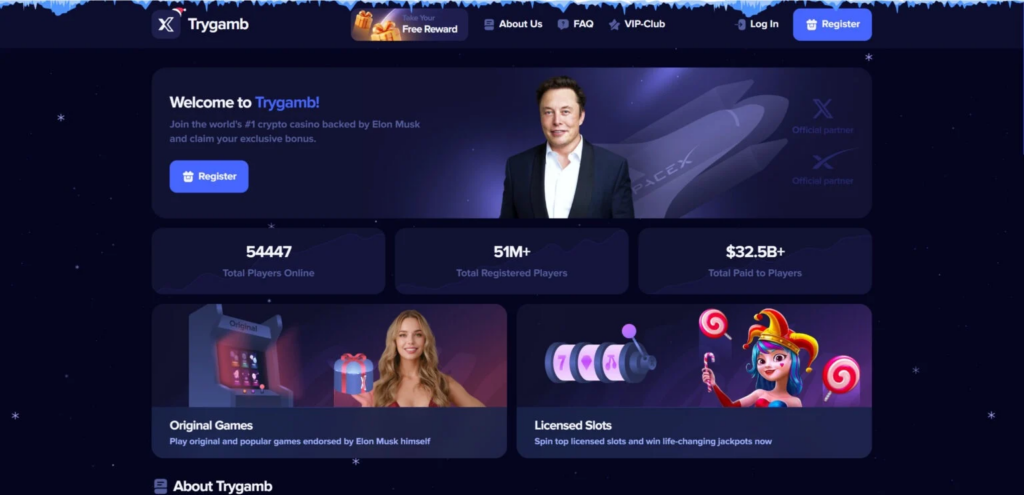
Many scam platforms operate on short-lived domains. Once exposed, they vanish and reappear under a new name.
This is common in crypto scams because scammers can quickly copy the same site design, change the logo, and launch again.
How The Elon Musk Crypto Casino Scam Works
Step 1: The victim sees a fake promotion
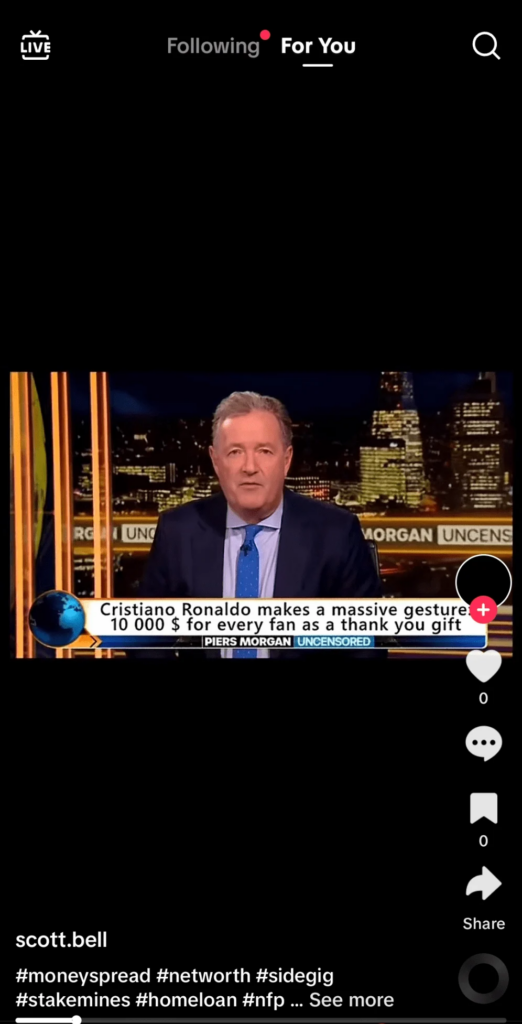
The scam usually begins on social media.
The victim may see:
- A TikTok video
- A Facebook ad
- An Instagram post
- A YouTube Short
- A Discord message
- A Telegram post
- A fake news article
- A sponsored-looking banner
The promotion claims Elon Musk is backing a new crypto casino or giving away free crypto to users.
Sometimes the ad includes fake screenshots, fake comments, or AI-generated celebrity-style content. Scammers increasingly use celebrity impersonation and deepfake-style content to make these schemes look believable.
Step 2: The user clicks the link
The link sends the victim to a professional-looking website.
The site may have a name like Nanofex or another short crypto-style brand. It may use words like:
- Casino
- Crypto
- Rewards
- VIP
- Bonus
- X
- Musk
- Space
- Token
- Bet
- Game
The design is usually made to feel modern and high-value. Dark colors, glowing buttons, casino graphics, and large payout claims are common.
Step 3: The site asks the user to register
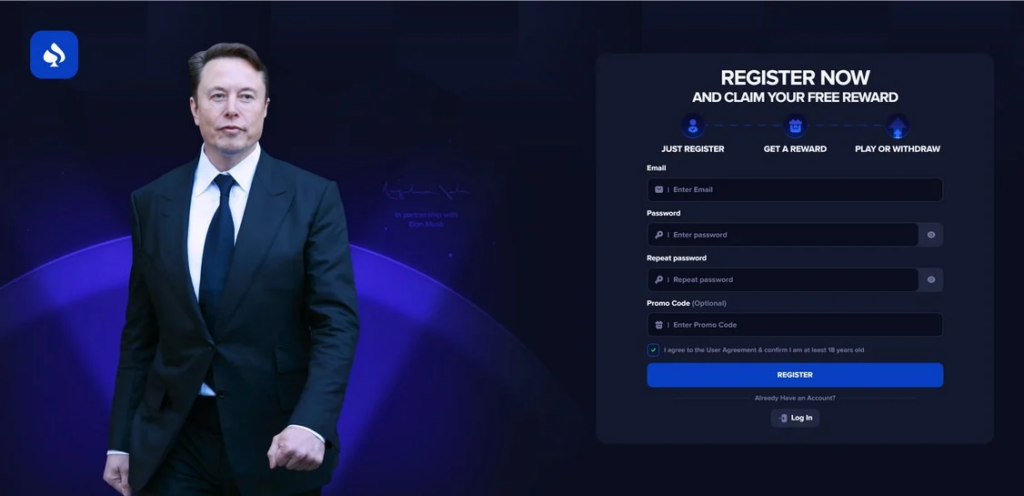
The registration process is simple.
Usually, the victim only needs:
- Email address
- Username
- Password
- Promo code
The scam keeps the signup easy because it wants people inside the platform quickly.
The longer the signup process takes, the more time the victim has to think.
Step 4: A fake bonus appears in the account
After registration, the user may receive a fake crypto balance.
For example:
- $500
- $1,000
- $2,500
- $5,000
- $10,000
This money is not real. It is just a number on the website.
But psychologically, it works.
Once people see a balance inside an account, they start to feel like they own it. They become more willing to follow instructions because they believe they are protecting or unlocking something valuable.
Step 5: The victim plays games and “wins”
The site may allow the victim to play casino games with the fake balance.
The games may show winning results, increasing balances, or lucky streaks. This creates excitement and lowers suspicion.
The victim starts thinking:
- “Maybe this is real.”
- “Maybe Elon Musk really is promoting this.”
- “Maybe I can actually withdraw this.”
- “I should not miss this chance.”
That emotional shift is important.
The scam is no longer just about curiosity. It becomes about getting access to a visible balance.
Step 6: The user tries to withdraw
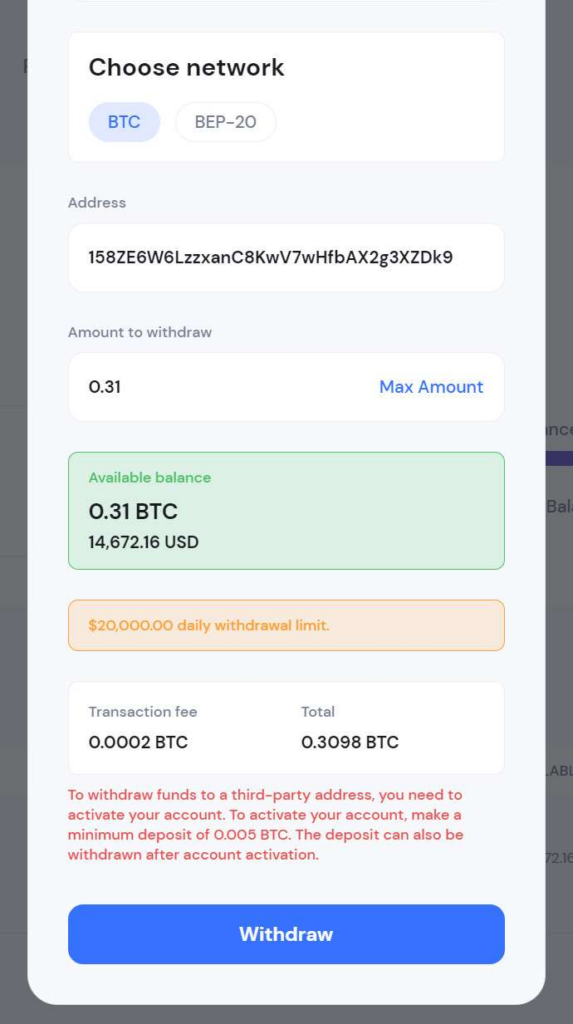
Eventually, the victim clicks the withdrawal button.
This is where the scam reveals its real purpose.
Instead of sending the money, the site blocks the withdrawal and says the account must first be verified.
The message may say:
- Deposit crypto to activate withdrawals
- Pay a verification fee
- Confirm your wallet with a small payment
- Upgrade to VIP status
- Pay a network fee
- Complete anti-fraud validation
- Cover tax or processing costs
This is the trap.
The victim is not paying to unlock real winnings. They are sending real crypto to scammers.
Step 7: The scammers request more money
If the victim pays once, the site often creates another problem.
It may claim:
- The deposit was too small
- The wrong network was used
- The account is under review
- A second verification is required
- A tax fee must be paid
- The withdrawal is pending final approval
- VIP activation is incomplete
This cycle can continue until the victim stops paying.
The FBI advises victims of cryptocurrency investment fraud to stop sending money immediately and report the scam to IC3.
Step 8: The site disappears or stops responding
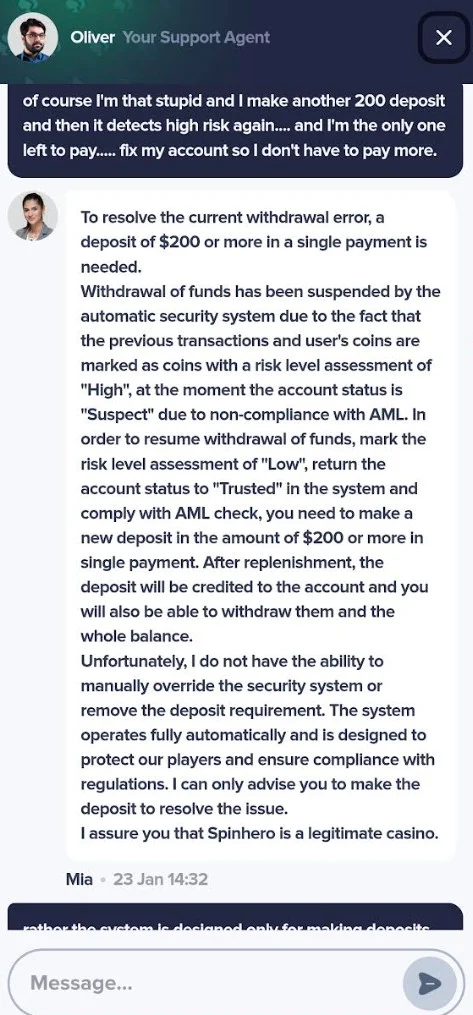
Once the scammers have taken enough money, support may stop replying.
The site may:
- Lock the account
- Delete the balance
- Block the user
- Stop processing withdrawals
- Move to another domain
- Rebrand under a new casino name
This is why many victims struggle to recover funds. Crypto transfers are difficult to reverse, especially after scammers move the funds through multiple wallets.
Why These Scam Sites Look So Convincing
These fake casino platforms are designed around trust signals.
They do not rely on one trick. They combine many small details that make the scam feel real.
Fake authority
Using Elon Musk’s name gives the site instant attention.
Fake popularity
Huge player numbers make users feel like millions of others are already using the platform.
Fake success
Large payout claims make the site look profitable and established.
Fake urgency
Bonus offers push users to act quickly.
Fake interactivity
Casino games and dashboards make the balance feel real.
Fake support
Live chat or FAQ pages make the platform feel operational.
Each piece adds another layer of believability.
By the time the site asks for a deposit, the victim has already seen enough “proof” to make the request feel less suspicious.
What To Do If You Used One of These Sites
If you registered on a fake Elon Musk crypto casino site or sent money, act quickly.
1. Do not send more crypto
Do not pay another deposit, verification fee, tax fee, or wallet activation fee.
If the site says one more payment will release your funds, it is almost certainly another attempt to steal more money.
2. Save evidence
Take screenshots of everything:
- Website homepage
- Account dashboard
- Balance page
- Withdrawal page
- Error messages
- Support chats
- Crypto wallet addresses
- Transaction hashes
- Emails
- Social media ads
- Promo codes
This evidence can help when filing reports.
3. Contact your crypto exchange
If you sent crypto from an exchange account, contact the exchange immediately.
Ask if they can:
- Flag the receiving wallet
- Freeze suspicious activity, if possible
- Preserve transaction records
- Help with fraud reporting
The FTC recommends contacting the company you used to send cryptocurrency if you paid a scammer.
4. Report the scam to IC3
In the United States, report crypto fraud to the FBI’s Internet Crime Complaint Center.
The IC3 crypto fraud page explains that victims should file a complaint and include transaction details when available.
5. Report it to the FTC
You can also report the scam to the FTC at ReportFraud.ftc.gov.
Fraud reports help authorities identify scam patterns and warn other consumers.
6. Watch out for recovery scams
After losing money, victims are often targeted again.
Someone may contact you claiming they can recover your stolen crypto. They may pretend to be a hacker, investigator, lawyer, blockchain expert, or government agent.
Be careful.
Many “crypto recovery” offers are scams too. The FBI warns that victims should be cautious and report cryptocurrency fraud instead of sending more money to people promising guaranteed recovery.
7. Change passwords
If you used the same password on other websites, change it immediately.
Also enable two-factor authentication on:
- Email accounts
- Crypto exchange accounts
- Banking apps
- Social media accounts
Even if the main scam was financial, the information you entered can be reused in future attacks.
How to Protect Yourself From Fake Crypto Casino Sites
Use this simple checklist before trusting any crypto casino promotion.
Ask these questions first
- Is the celebrity endorsement verified on the celebrity’s official account?
- Is the company licensed and regulated?
- Can you verify the business name and address?
- Does the site require a deposit before withdrawal?
- Is the offer too generous to make business sense?
- Was the link sent through social media, Telegram, Discord, or a random ad?
- Are there real reviews from trustworthy sources?
- Is the domain new or suspicious?
- Does support pressure you to act quickly?
If the site fails these checks, leave immediately.
Remember this rule
If a platform shows you free winnings and then asks you to send crypto before withdrawal, it is almost certainly a scam.
That one rule can save people from most fake crypto casino traps.
FAQ
Is Elon Musk really backing crypto casino websites?
There is no verified evidence that Elon Musk is backing these random crypto casino bonus sites. Scammers commonly use celebrity names to make crypto scams look trustworthy. (Consumer Advice)
Are the casino winnings real?
Usually, no. The balance shown on the site is typically fake and controlled by the scam platform. It is designed to make you believe you have money waiting to be withdrawn.
Why does the site ask for a deposit before withdrawal?
That is the main scam. The site claims the deposit is needed for verification, activation, or security, but the real goal is to steal your crypto.
Can I recover crypto sent to a scam casino?
Recovery is difficult, but you should still report it. Contact your exchange, save all transaction details, and file reports with IC3 and the FTC if applicable.
Are all crypto casinos scams?
No. But any crypto casino using fake celebrity endorsements, unrealistic bonuses, unverifiable payout claims, or withdrawal fees should be treated as highly suspicious.
The Bottom Line
Elon Musk crypto casino scam sites are fake platforms built to look exciting, modern, and trustworthy.
They use celebrity names, free crypto bonuses, fake player numbers, and polished casino games to make victims believe they have found a real opportunity. But when users try to withdraw, the truth appears: the site demands a crypto deposit before releasing winnings that were never real.
Do not trust a casino site just because it uses Elon Musk’s name or image.
Do not trust huge free bonus claims.
And never send cryptocurrency to “unlock” money shown on a website.
If the platform says you must deposit first to withdraw, close the site and report it.








