

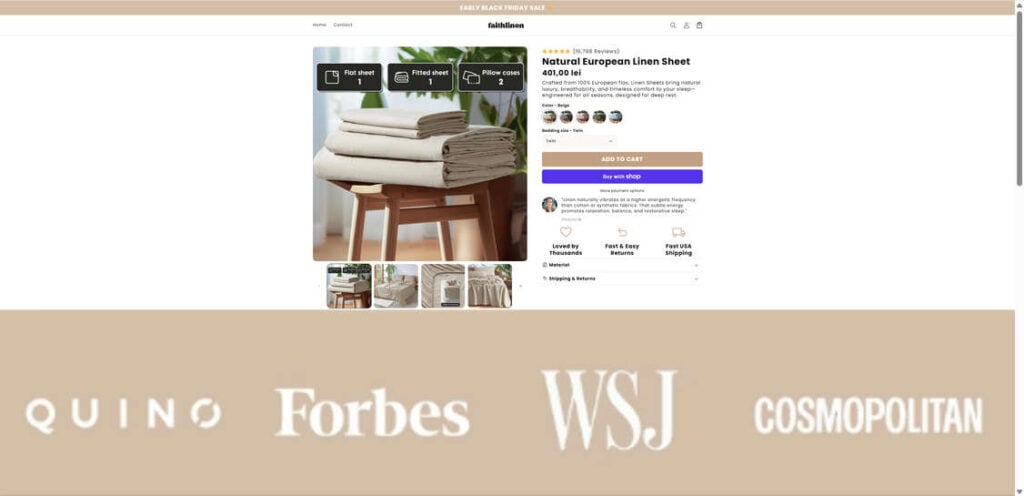
Faith Linen Sheets are being promoted across social media and Google Ads as “luxurious 100% European flax linen” that can supposedly transform your sleep. Their ads promise cooler nights, deeper rest, and natural antibacterial properties. Shoppers are also shown logos of Forbes, WSJ, and Cosmopolitan, implying major media endorsements.
But when you scratch beneath the glossy marketing surface, serious red flags emerge:
- No verifiable OEKO-TEX certification despite bold claims
- AI-generated or stock photos used
- Dubious endorsements from media outlets that can’t be confirmed
- Fulfillment from China despite claims of European origin
- Extremely difficult (or impossible) return process
In this investigation, we’ll break down how the Faith Linen operation actually works, what real buyers have reported, and what to do if you’ve already placed an order.
Overview
1. Heavy Advertising on Meta & Google
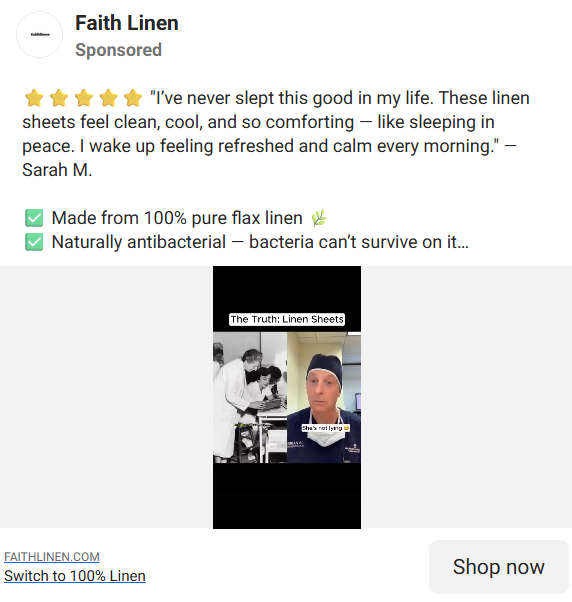
Faith Linen is aggressively advertised on platforms like Facebook, Instagram, and Google Ads. The ads use emotional language and five-star “reviews” from supposed customers claiming miraculous sleep improvements.
Many ads follow the same formula:
- A quote about the “best sleep of their life”
- Claims of “100% pure flax linen”
- Green checkmarks for “naturally antibacterial” properties
- A TikTok-style video or AI-generated image of someone using linen
These ads are designed to appear organic and authentic, often featuring everyday people rather than polished studio shots — a common dropshipping tactic to build trust quickly.
2. Fake Media Endorsements
Logos from Forbes, WSJ, and Cosmopolitan are displayed on the site to make the product appear credible. However, searches on these publications return no coverage of Faith Linen whatsoever. This is a misleading tactic to build false authority.
3. Manipulated Reviews and Testimonials
The website displays thousands of five-star reviews with suspiciously similar wording. Many include generic names and stock images or AI-generated profile pictures. Independent verification of these reviews is not possible, and there is no third-party review platform integration (like Trustpilot or Judge.me) — another major red flag.
4. Lack of Transparent Contact Information
The Contact Us page is extremely vague — usually just an email like shop@faithlinen.co. There’s no physical address, no phone number, and no clear business registration information. This is typical of untraceable dropshipping operations, where accountability is minimized.
5. Origin of Products vs. Claims
Although the sheets are advertised as “European flax linen,” the product is actually shipped from China. The shipping times (7–20 days), customs labeling, and order tracking patterns all indicate fulfillment from warehouses in Asia, not Europe or the USA. This mismatch between claims and reality is a classic hallmark of deceptive online retail schemes.
How the Operation Works
To understand why Faith Linen has spread so quickly, let’s look at the funnel they use to target and convert buyers.
Step 1: Targeting Through Emotional Ads
The company runs emotionally charged ads with personal testimonial quotes like:
“I’ve never slept this good in my life. These linen sheets feel clean, cool, and so comforting — like sleeping in peace.”
This emotional angle builds instant trust, bypassing critical thinking and pushing the viewer toward an impulse purchase. The ads often feature women over 30, a demographic statistically more likely to engage with home comfort products.
Step 2: Social Proof via Fake Logos and Statistics
Once users land on the product page, they’re greeted with:
- “Loved by thousands”
- Fake survey results like “100% would never go back to cotton”
- Media logos (Forbes, WSJ, Cosmopolitan)
None of these claims are verifiable. They’re simply psychological nudges to make the product appear reputable.
Step 3: Urgency and Scarcity Triggers
The page displays “Early Black Friday Sale” banners and countdown timers, even when no real sale is happening. Scarcity marketing pushes users to buy now to “lock in the discount.”
Step 4: No Clear Returns — Only Partial Refunds
Once customers receive the product (usually weeks later), many report:
- Lower quality material than advertised (thin, rough polyester-linen blends)
- No branding, care labels, or certifications
- Poor stitching or incorrect sizes
When buyers try to return the product, they face:
- No return address
- Unresponsive or slow email replies
- “Refund offers” of only 15–30% to avoid returns
This tactic traps victims into accepting a partial refund rather than paying international shipping fees to send the product back.
Step 5: Review Flooding and Ad Scaling
Faith Linen floods its store with fake reviews and then scales its ad spend. The site collects as many orders as possible before public complaints catch up. If negative feedback builds up, these operations simply rebrand under a new name and start over.
Red Flags That Suggest Faith Linen Is Not a Premium Brand
- Unverified Media Endorsements: No actual articles on Forbes, WSJ, or Cosmopolitan confirm any feature.
- No OEKO-TEX or Similar Certifications: A genuine flax linen brand would prominently display verifiable certifications.
- AI-Generated Photos: Profile pictures and testimonial images are obviously synthetic or stock.
- Poor Transparency: No business registration or physical address provided.
- Dropshipping Fulfillment: Shipping delays and packaging point to Chinese suppliers.
- Refund Manipulation: Customers are offered partial refunds to discourage actual returns.
What To Do If You Have Bought This
If you’ve already ordered from Faith Linen and suspect you’ve been misled, take the following steps immediately:
1. Document Everything
- Take screenshots of the website, product description, ads, and your order confirmation.
- Save any email communication with the seller.
- Photograph the product upon arrival, including packaging and labels.
2. File a Chargeback or Payment Dispute
If you paid by:
- Credit card: Contact your bank and file a chargeback citing misrepresentation.
- PayPal: Open a dispute for “item not as described.” PayPal typically sides with buyers if enough documentation is provided.
Make sure to provide:
- Evidence of false advertising (e.g., “European flax” vs. “Made in China” label)
- Any communication showing refund refusal or partial refund offers.
3. Do Not Agree to Partial Refund Traps
Scammers often offer 15–30% refunds to close the case without return shipping. If you accept, your dispute will likely be closed permanently. Instead, insist on a full refund or escalate the dispute with your payment provider.
4. Report the Website
To help prevent others from falling victim:
- Report to Google Ads for misleading claims.
- Report the store to Meta/Facebook if you saw the ad there.
- Submit complaints to your local consumer protection agency or the EU Consumer Centre if applicable.
5. Leave a Factual Review
Many of these stores rely on hiding negative feedback. Posting your real experience on forums, consumer review platforms, and scam reporting sites can help alert others before they buy.
How to Identify Similar Dropshipping Scams in the Future
Faith Linen is not unique — this is part of a larger dropshipping network that creates new brands overnight. Here’s how to spot them early:
- Check for verifiable contact info. A real company will list a physical address and phone number.
- Search media endorsements. If they claim Forbes or WSJ features but nothing shows up, it’s fake.
- Reverse image search. If review photos appear on multiple unrelated sites, they’re stolen or AI-generated.
- Look for certification proof. Real linen brands show OEKO-TEX or GOTS certification with a verifiable number.
- Check shipping origin. If the product ships from China despite claiming “European,” that’s a red flag.
The Bottom Line
Faith Linen Sheets are marketed as luxury European flax linen with incredible sleep benefits. In reality, this is a typical dropshipping operation:
- False claims of origin and certification
- Fake or manipulated reviews
- Misleading media endorsements
- Difficult refund process and partial refund traps
If you want genuine linen bedding, it’s best to buy from a verified retailer with a clear business address, certifications, and trustworthy reviews.
Faith Linen is a reminder that a beautiful website and convincing ads don’t equal legitimacy. Protect yourself by verifying claims, checking for independent reviews, and using payment methods with strong buyer protection.
FAQ Section
What is Faith Linen?
Faith Linen is an online store that claims to sell 100% European flax linen sheets. However, evidence suggests it is a dropshipping operation fulfilling orders from China with questionable quality.
Are Faith Linen Sheets actually made in Europe?
No. Despite their marketing, products appear to be shipped from China, and there’s no proof of European manufacturing or OEKO-TEX certification.
Are the reviews on Faith Linen real?
Many of the reviews on the website and ads show clear signs of being fabricated or AI-generated, with repeated wording and stock profile images.
Can I return products to Faith Linen?
Returns are extremely difficult. Victims report receiving partial refund offers instead of full refunds and facing unresponsive customer support.
How can I get my money back from Faith Linen?
If you paid by credit card or PayPal, immediately open a chargeback or dispute. Provide screenshots, packaging photos, and evidence of misleading claims.
Is Faith Linen a scam?
While the store technically ships products, the marketing is deceptive, the product quality is not as advertised, and refunds are hard to obtain. Many consumer protection experts classify such operations as scam-like dropshipping schemes.
How can I avoid similar scams?
Always verify media claims, look for certification numbers, search independent reviews, and avoid buying from stores with vague contact information or unclear return policies.
Final Thoughts
Faith Linen’s website looks sleek, polished, and trustworthy — exactly how many high-level dropshipping scams are designed. Their marketing strategy leverages fake authority, emotional testimonials, and urgency tactics to convert unsuspecting buyers fast.
If you’re considering buying linen sheets, don’t fall for fake endorsements and too-good-to-be-true promises. Buy from reputable, traceable brands that offer verifiable quality and transparent return policies.
If you’ve already ordered, act quickly: document, dispute, and report. And most importantly, share your experience — because transparency is one of the best defenses against online shopping scams.

Join the discussion
0 commentsShare your experience or ask a question about this article.
Discussion
Start the conversation
Have a question or something useful to share? Add the first comment.