

A wave of sophisticated phishing pages has been targeting crypto holders by pretending to offer token rewards or governance votes for established projects. These scams follow the same playbook: fake a credible website, promise limited-time BNB MEME SZN rewards for voting, and trick users into connecting their wallets. Within moments of a wallet connection, malicious smart contract approvals can empty balances.
Read on to learn how these scams work, how to spot them, and what to do if you have been targeted.
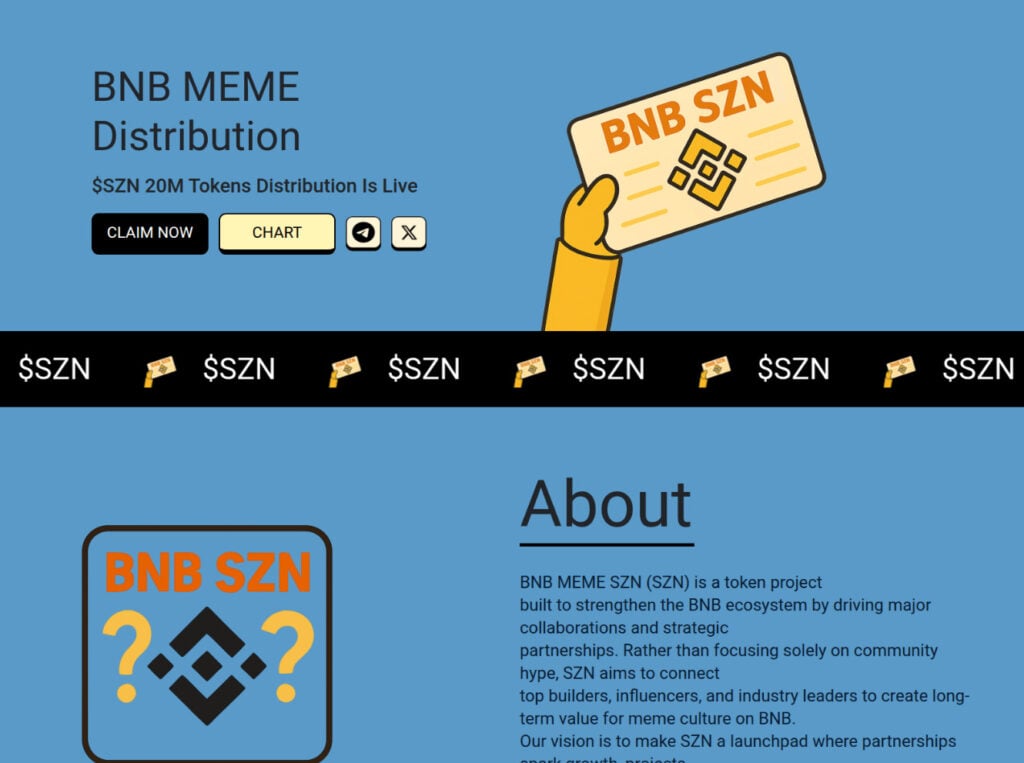
Scam Overview
The BNB MEME SZN Vote Rewards Scam is a type of phishing and wallet-drainer fraud that impersonates legitimate project updates to coax users into authorizing malicious contract interactions. Scammers construct convincing landing pages that claim token holders who vote on a proposed rewards distribution, staking change, or treasury decision will receive an early allocation of BNB MEME SZN tokens. The incentive is usually time limited, creating urgency that leads to rushed decisions.
Why attackers pick “vote” or “rewards” narratives
Using governance or rewards messaging is effective because many genuine projects use community votes and airdrops as part of governance and distribution. Scammers borrow that language to make the offer plausible. Promises like “vote within 24 hours to receive early reward” exploit FOMO, which causes otherwise cautious users to act before verifying a site or link.
Typical elements of a fake BNB MEME SZN rewards page
Fraudulent pages commonly include:
- A header with a project-like logo and a token price ticker.
- Calls to action such as “Vote Now” or “Claim Rewards.”
- A modal prompting wallet connection via MetaMask, WalletConnect, Trust Wallet, or other popular wallets.
- Visual elements like NFT galleries, progress bars, or “treasury” metrics to appear trustworthy.
- Short policy copy referencing “Treasury Pool Funds” or “TPF” to mimic legitimate terminology.
These elements make the page look authentic at a glance. The presence of a padlock icon or https does not mean a site is safe, because SSL certificates are easy to obtain.
The technical goal: approvals, not direct theft
Rather than asking for private keys or seed phrases, today’s scams rely on users granting a smart contract approval. In ERC-20 token terms the attacker attempts to get the user to sign an approve() transaction, which gives the contract permission to spend tokens on the user’s behalf. Once granted, the attacker uses standard functions such as transferFrom() to move assets out. This method bypasses traditional security warnings because users are used to signing transactions when interacting with DeFi apps.
Typical distribution and reach
Scam links spread fast through:
- Fake or hijacked social accounts mimicking project teams.
- Telegram and Discord groups where fraudsters pose as moderators.
- Targeted ads or manipulated search results.
- Email phishing that appears to originate from recognized community contacts.
Scammers often rotate domains and slightly change URLs, for example by inserting extra words, misspellings, or subdomains. This domain churn avoids domain blacklists and keeps the scam live longer.
Why these scams cause large losses
There are three big reasons victims lose significant funds:
- Immediate execution. Scammers can transfer high-value tokens seconds after approval.
- Mixed assets. If NFTs, staked positions, or multiple tokens share a wallet, a single approval can expose many assets.
- Irreversible transactions. Blockchain transfers are final, which makes recovery difficult.
Key red flags to watch for
- URLs that approximate a trusted domain, but are not exact matches.
- Time-limited reward language that pushes immediate action.
- Wallet connection prompts on pages with no clear governance record.
- Requests to “sign” transactions described only as generic confirmations.
- Lack of official announcements on verified channels.
By understanding those signs, users can avoid many common traps.
How The Scam Works (Step-by-Step)
Here is a detailed, step-by-step technical and social breakdown of how a typical BNB MEME SZN Vote Rewards Scam unfolds. This section explains the attacker’s playbook so you can better anticipate and detect similar threats.
Step 1: Reconnaissance and preparation
Scammers first survey the targeted project’s branding, community language, and recent announcements. They copy logos, colors, and common phrasing to produce a believable copy of the project’s website. Tools that scrape site assets and templates make cloning fast. Next they register one or more lookalike domains. Domain names are chosen to resemble legitimate addresses, often including extra words such as “vote,” “rewards,” “proposal,” or small typos.
Step 2: Build a convincing UI
The attacker builds an interface that mimics the expected voting or reward page. The UI often shows:
- A headline stating a rewards update or proposal.
- A prominent “Vote Now” button.
- Fake metrics like “Treasury Pool Funds,” progress bars, or token burning counters.
- Wallet connect integration using standard libraries so the modal appears identical to legitimate services.
This front end is purely cosmetic. The dangerous behavior happens in the JavaScript that runs after the wallet connection.
Step 3: Distribution and social engineering
With the fake site live, scammers promote it via social channels. They create or hack accounts that users trust, or they buy ad placements to push the link higher in search results. In private chat groups they pose as team members, sometimes using slight account impersonation techniques to fool moderators. They also post announcements claiming urgency, which triggers impulsive actions from holders.
Step 4: Wallet connection and request for a signature
Once a user clicks “Vote Now,” the site requests a wallet connection. The wallet populates a public address in the page. The scam then requests a signature with a misleading description, such as “Confirm your vote” or “Sign to claim early reward.” At this point a risky approval is presented to the wallet.
Step 5: The approval trick
The signature requested is not a simple message signature. It often calls a contract method such as approve() for ERC-20 tokens, or it might ask for a contract interaction that sets a high allowance. The approval may be for a large amount, or it may be an unlimited allowance. Users often do not read the full details in their wallet prompts, and they assume the request is benign.
Step 6: Automated asset discovery
After approval is granted, the attacker’s contract or server-side script queries the connected address to list token balances and NFT holdings. This is a fast, automated process. The attacker decides which assets to transfer first based on liquidity and value. Scripts can prioritize stablecoins and high value tokens to maximize immediate profit.
Step 7: Asset transfer and mixing
The attacker invokes transferFrom() or similar methods to move tokens from the victim wallet to one or more collection addresses. To obscure the flow of funds, the attacker:
- Breaks the assets into smaller transfers to many wallets.
- Uses atomic swaps and DEXs to convert tokens.
- Bridges assets across chains to complicate tracing.
- Sends assets through mixers or privacy layers where available.
These steps increase the difficulty for investigators and exchanges to recover or freeze funds.
Step 8: Cleanup and domain rotation
After draining wallets, scammers rotate domains and reset their UI to attract more victims. They may run dozens or hundreds of domains at once. Each domain is taken down or abandoned quickly when reported, and new clones appear. The rapid churn makes takedown efforts slow to catch up.
Step 9: Recovery scams and social manipulation
In some cases, attackers follow up by contacting victims directly, offering “recovery services.” These are secondary scams. Attackers ask for additional funds, private keys, or secret phrases, claiming they can reverse the transaction. Victims who engage typically lose more. Always treat unsolicited recovery help as part of the scam.
Technical notes for developers and defenders
- The
approve()mechanism is a standard part of ERC-20, and it can be abused when users grant unlimited allowances. Wallet providers could improve UX by showing more explicit warnings, but until that happens, user caution is the primary defense. - Smart contracts used by attackers can be analyzed on-chain. Analysts can publish blacklists of malicious contract addresses and collection addresses to support community defenses.
- Automated monitoring tools can scan social channels for suspicious links and alert moderators, but human review is still necessary due to rapid domain rotation.
Understanding these steps helps both end users and community moderators identify and respond quickly to active scams.
What to Do If You Have Fallen Victim
If you connected your wallet to a fraudulent BNB MEME SZN vote or rewards page, take immediate action. The following steps are prioritized for speed and effectiveness. Perform them in order to minimize additional loss.
- Disconnect your wallet from the malicious site immediately
Open your wallet extension or mobile app, go to security or connections, and remove any connected sites you do not recognize. This prevents the page from initiating further interactions. - Revoke token approvals without delay
Use trusted approval revocation tools such as Revoke.cash, Etherscan Token Approval Checker, or the relevant chain explorer’s approval interfaces. Connect your wallet to the tool, list all token allowances, and revoke approvals to unknown contract addresses. Revoking approvals prevents an attacker from using previously granted permissions. - Move remaining assets to a new wallet
Create a fresh wallet and seed phrase using a trusted wallet application or hardware wallet. Transfer any remaining funds and digital assets to the new wallet immediately. Do not reuse the compromised wallet for further transactions. - Document everything for reporting and traceability
Take screenshots of the scam page, wallet prompts, transaction IDs, and the domain name. Record the time and any communications you received. This documentation is crucial when you report the incident to exchanges, law enforcement, and community defenders. - Report the scam to the project’s official channels and community moderators
Notify the legitimate project team through verified channels such as their official website, verified social media accounts, or moderated Discord/Telegram. Do not contact unverified accounts that may be part of the scam. - Report to blockchain security companies and analytics providers
Submit the scammer’s wallet addresses and transaction hashes to services such as Chainalysis, CertiK, SlowMist, or other regional blockchain security firms. These companies can add addresses to watchlists and coordinate with exchanges. - File a report with local law enforcement and cybercrime units
Provide all gathered evidence to local authorities. Some countries have dedicated cybercrime units that handle cryptocurrency-related fraud. Include transaction IDs and any contact information you have. - Notify major exchanges proactively
If you see the stolen assets move toward centralized exchanges, alert those exchanges with the transaction IDs and ask them to freeze the funds. Provide documentation proving you are the victim. - Warn your community and share the details publicly
Post warnings in forums, social media, and community groups where the scam circulated. Publicly flagged addresses and domains help other users avoid the same trap. - Consider professional recovery services with caution
If you choose to hire a recovery service, select one with verifiable track records and references. Be highly skeptical of anyone who requests payment in advance, or asks for private keys, seed phrases, or additional approvals. - Harden your future security posture
Use hardware wallets for large holdings. Regularly check for active approvals and revoke those that are unnecessary. Bookmark official websites, and always verify announcements via multiple verified sources. - Learn and share prevention best practices
Educate yourself and your contacts about common phishing tactics, the importance of reading wallet prompts, and the dangers of unlimited approvals. Prevention reduces the likelihood of repeat incidents.
Act quickly and methodically. While stolen cryptocurrency is difficult to recover, these steps reduce the chance of further loss and improve the odds that investigators can track the attacker.
The Bottom Line
Scams that promise BNB MEME SZN vote rewards are a modern variation of phishing, weaponizing standard blockchain interactions like wallet approvals. These attacks look polished, feel legitimate, and rely on people’s trust of familiar wallet prompts. The best defenses are caution and habit: verify every URL, avoid impulse responses to time-limited offers, read wallet messages carefully before signing, and use hardware wallets and approval revocation tools regularly. If you suspect compromise, disconnect, revoke, move assets, document, and report quickly.
Here’s a universal, SEO-optimized FAQ section template you can reuse for any BNB MEME SZN Vote Rewards Scam article.
Just replace BNB MEME SZN with the token’s name (e.g., Onyx, Orderly, HYPSTR), and update any specific scam URLs, community links, or details.
This version is structured for clarity, keyword optimization, and improved readability, so it ranks well in Google and fits seamlessly into your articles.
Frequently Asked Questions
What is the BNB MEME SZN Vote Rewards Scam?
The BNB MEME SZN Vote Rewards Scam is a fraudulent phishing campaign designed to look like an official governance or voting event for BNB MEME SZN holders. The fake websites typically promise users early BNB MEME SZN token rewards or allocations for voting on a proposal. When users connect their crypto wallets, the scammers deploy malicious contracts that can transfer funds to attacker-controlled wallets.
These sites imitate legitimate blockchain project interfaces and are often promoted through fake social media accounts or community messages, making them appear trustworthy.
Is the BNB MEME SZN Vote Rewards Program Real?
No. There is no official BNB MEME SZN vote rewards or early allocation campaign at this time. Any website claiming to offer bonus BNB MEME SZN tokens for voting, staking, or participating in a governance proposal is not legitimate. Always verify information through BNB MEME SZN’s official channels, such as its verified website, Twitter account, or Discord server.
How Does the BNB MEME SZN Vote Rewards Scam Work?
- Fake Website Setup: Scammers clone a legitimate project’s design and launch a domain that looks authentic (for example, votes-[coin].com or [coin]rewards.net).
- Promotion: Links are shared through fake announcements on Twitter, Telegram, and Discord, often using names and logos of real project members.
- Wallet Connection: Users click “Vote Now” or “Claim Rewards” and connect their wallet (e.g., MetaMask, Trust Wallet, WalletConnect).
- Malicious Approval: The site prompts users to sign or approve a transaction that grants the scam contract access to their tokens.
- Asset Drain: Once approval is granted, the malicious smart contract transfers available tokens and NFTs to attacker wallets.
Why Do These Scams Look So Real?
Fraudsters replicate authentic branding, color schemes, and interfaces from the official BNB MEME SZN platform. They often:
- Display fake token prices and treasury balances.
- Include “Vote” and “Ecosystem” links that mimic real navigation menus.
- Use SSL certificates so browsers show a “secure” lock icon.
- Include legitimate wallet connection modals to reduce suspicion.
The professionalism of the design makes the page indistinguishable from official platforms, which is why users must always verify the URL before connecting their wallet.
How Can I Identify a Fake BNB MEME SZN Vote Rewards Website?
Here are key signs that a page is a scam:
- The URL does not match the official BNB MEME SZN domain.
- It promises “early” or “limited-time” BNB MEME SZN rewards.
- There’s no announcement on the project’s official social channels.
- The page urges you to connect your wallet without providing documentation or governance links.
- Grammar, formatting, or slight design inconsistencies appear across the site.
What Happens If I Connect My Wallet to a Fake BNB MEME SZN Site?
Connecting your wallet doesn’t immediately send funds, but once you approve or sign the fake transaction, you authorize the scam’s smart contract to move tokens. The drainer then:
- Scans your wallet for valuable assets.
- Transfers tokens to the attacker’s address.
- May even list NFTs for sale or move them automatically.
Since blockchain transactions are irreversible, once assets are stolen, they cannot be recovered by normal means.
What Should I Do If I Already Connected My Wallet?
If you think you’ve interacted with a fake BNB MEME SZN Vote Rewards site, act immediately:
- Disconnect your wallet from the website.
- Revoke token approvals using trusted tools like Revoke.cash or Etherscan’s Token Approval Checker.
- Transfer remaining assets to a new wallet created with a fresh seed phrase.
- Report the incident to BNB MEME SZN’s official support and local cybercrime authorities.
- Warn others in community channels and share the scam domain.
Can I Recover My Lost BNB MEME SZN Tokens?
Unfortunately, blockchain transactions cannot be reversed once confirmed. However, you can:
- Report the attacker’s wallet address to blockchain analytics services (e.g., Chainalysis, CertiK, SlowMist).
- Notify centralized exchanges if you notice the stolen funds moving there.
- Provide transaction IDs and scam URLs to your local cybercrime reporting agency.
While funds are rarely recoverable, reporting helps build awareness and may lead to domain takedowns or flagged addresses.
How Can I Avoid Falling Victim to Future BNB MEME SZN Vote Scams?
Follow these essential security practices:
- Always verify URLs before connecting your wallet. Bookmark official sites.
- Never sign transactions you don’t understand.
- Use a hardware wallet for storing significant assets.
- Avoid clicking on links shared in DMs or unverified community groups.
- Revoke unused token approvals regularly.
- Stay informed about new scam tactics through verified blockchain security resources.
Are All BNB MEME SZN Vote or Governance Events Scams?
No. Some legitimate projects use governance votes for community decisions. However, official events will:
- Be announced only on verified project channels.
- Link to the project’s primary domain.
- Never promise instant rewards or bonuses for participation.
- Provide detailed documentation, including smart contract addresses and terms.
If you’re unsure, contact moderators on the verified Discord or Telegram before taking action.
Why Do Scammers Keep Using the “Vote Rewards” Theme?
Because it works. Many legitimate blockchain projects run governance votes or token airdrops, so scammers mimic these processes to exploit user familiarity. The combination of urgency, authenticity, and promise of free tokens drives engagement. Each version of this scam targets a different project, but the underlying method — fake voting page plus malicious contract — remains the same.
What Is a Wallet Drainer and How Does It Work?
A wallet drainer is a malicious contract that transfers assets from your wallet after you grant it spending permissions. It usually works by:
- Using
approve()to gain unlimited token allowances. - Calling
transferFrom()to move assets to attacker addresses. - Automatically sweeping NFTs and tokens using scripts.
Once permissions are granted, the attacker can access the wallet at any time until approvals are revoked.
Can Antivirus Software Detect These Scams?
Traditional antivirus software cannot detect smart contract drainers because the attack occurs on the blockchain, not on your device. However, browser extensions like WalletGuard, ScamSniffer, and Blockfence can help flag risky transactions and phishing URLs.
Even so, human caution remains your strongest defense. Always read what you are signing in your wallet, and reject transactions that request unusual permissions or unlimited approvals.
How Can I Report a BNB MEME SZN Vote Rewards Scam Website?
You can help protect others by reporting the domain through:
- Google Safe Browsing: https://safebrowsing.google.com/safebrowsing/report_phish/
- PhishTank: https://phishtank.com/
- The project’s official moderators or support team.
- Your local cybercrime authority.
Include screenshots, URLs, and transaction hashes when possible.
Final Thoughts on the BNB MEME SZN Vote Rewards Scam
The BNB MEME SZN Vote Rewards Scam is a growing example of how criminals use professional-looking websites to drain crypto wallets. By promising unrealistic rewards for simple actions like voting or connecting a wallet, these scams exploit trust and urgency.
Always double-check URLs, verify announcements, and remember that legitimate projects will never ask you to sign unexplained transactions. A few seconds of caution can prevent irreversible losses.








