

Dainese is an acclaimed manufacturer of motorbike safety gear and apparel trusted by riders worldwide. However, an elaborate scam website is falsely promoting a fake “Dainese Clearance Sale” with huge discounts in order to defraud customers.
This convincing scam has already duped many shoppers, so it’s important to understand how it works and avoid falling victim. Read on to learn all about identifying and steering clear of Dainese Clearance Sale scammer traps.
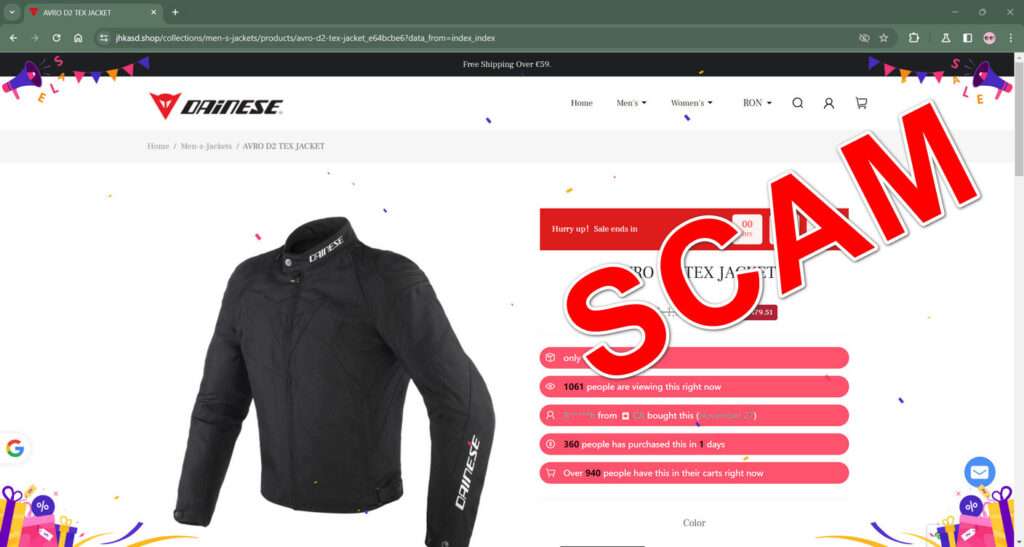
Overview of the Dainese Clearance Sale Scam
The Dainese Clearance Sale scam utilizes convincing fake websites engineered to closely mimic the appearance of the real Dainese shopping portal. Scammers aim to exploit consumer familiarity with the Dainese brand to lend credibility to their frauds.
These sophisticated sham sites advertise Dainese jackets, suits, gloves and other riding gear at extremely discounted clearance prices – often 70% to 95% off retail. However, the deals are only intended to trap victims rather than offer legitimate savings.
If riders make purchases through these fake sites, one of several disappointing outcomes typically occurs:
- No products are ever shipped after payments clear
- Cheap counterfeits made with inferior materials are sent instead
- Used, damaged or tampered gear arrives rather than new items
- Completely random products show up unrelated to the order
Besides not delivering as promised, these scam portals also harvest users’ personal and payment details during checkout to facilitate identity theft and credit card fraud.
The Dainese Clearance Sale scam is operated by an organized cybercriminal syndicate based out of China that manages a network of fraudulent stores to defraud motorcycle enthusiasts globally.
How the Dainese Clearance Sale Scam Works
The criminals running this scam have optimized how to closely imitate genuine shopping websites and entice victims:
Step 1: Create Highly-Realistic Fake Website
First, the scammers setup hosting infrastructure and register deceptive domain names incorporating Dainese’s actual brand assets to assemble fake portal with remarkable authenticity.
Dainese’s logos, product photos, web copy, customer testimonials and site templates are aggregated from various legitimate company sources to engineer counterfeit pages appearing genuine.
To encourage immediate purchases, scam pages showcase gear at 60-90% off MSRP alongside slogans like “Clearance prices won’t last!” and “Going out of business sale!”.
Step 2: Market Fake Site Extensively
Once built, ads for the scam Dainese website are blasted across numerous channels – from sketchy sponsored blog posts to video ads on Facebook and Instagram – to drive rider traffic.
Video ads highlight the extreme deals using urgent captions around flash sales ending in hours to prompt quick orders before safety-minded motorbike enthusiasts scrutinize the store too closely.
Step 3: Harvest Customer Payment & Personal Data
Victims land on polished, functional online store templates containing stolen Dainese brand assets and assume the site is legitimate without comparing URLs or validation certificates. Too-good-to-pass-up discounts distract from investigating further.
At checkout, personal info like names, addresses and phone numbers are collected alongside financial data including credit card numbers, security codes and expiration dates – everything identity thieves need.
Step 4: Process Payments & Disappear
After payments clear, unsurprisingly no orders ship nor does purchased gear ever arrive. Automated fake shipping notifications send to victims to delay alarm until maximum funds can be extracted, after which point fraud operations cease.
By managing each phase strategically in sequence, networks operate these stings at scale for months reaping substantial profits before sites are flagged.
Red Flags of the fake Dainese Clearance Sale Scam
While easy to be initially fooled by slick websites and tempting deals, studying these subtle suspicious signals can prevent being scammed:
- Extreme discounts of 80%+ should make riders highly skeptical of sales
- Missing phone numbers, physical addresses and other standard contact methods
- Identical privacy policies, terms of use and about us pages pointing to template sites
- Slight differences in domain names and URL spellings from real Dainese portal
- No business registration or ownership details provided whatsoever
- Demands unsafe payment methods like bank wires, gift cards or cryptocurrency
- Spelling/grammar errors suggesting non-native English speaking operators
- Complete lack of independent reviews, certifications or community references
If anything raises rider suspicions, trust intuition and avoid the site rather than risk hard-earned money. Following up to validate clearance sales often exposes them as total shams.
How to Spot This Scam on Social Media
A key element of this scam relies on promoting fake discounts through social media ads and posts. Here’s what to look for on various platforms:
- Watch for video ads in feeds demonstrating Dainese gear while overlaying text about clearance sales ending in hours.
- Be suspicious of sponsored posts telling motorcycle enthusiasts to “take an extra 50% off all sale items now!” before exaggerated deadlines.
- Click “Why am I seeing this” on questionable ads. Transparency sections showing real brand details indicate legitimate promotions.
- Fake Facebook pages also impersonate Dainese’s official handles and run clearance sale ads. Compare page creation dates and URLs to identify frauds.
- Scam Instagram accounts imitating Dainese promote similar video ads linking to their phony clearance sites, viewable by tapping the account profile.
- Such ads use high-pressure tactics claiming “midnight tonight only!” discounts on top-rated products, hoping to prompt urgency over sensible evaluation.
- Besides ads, these fake Dainese accounts also make regular feed posts announcing “flash sales” incorporating the brand’s logos and stolen photos.
- No contact information, business background or headquarters location can be found on scam profiles or websites, unlike on authentic Dainese pages.
TikTok
- Video ads demonstrate Dainese apparel with custom graphics boasting huge clearance markdowns, said to expire within minutes.
- Music trends, popular sounds and funny captions tactically distract from deceptive links while baiting engagement.
- No ad transparency showing paying advertisers can be found – a telltale signal of TikTok scams seeking to avoid scrutiny through misdirection.
- Comments are also disabled on fake branded accounts, blocking criticisms or scam accusations from genuine followers able to recognize duplicitous pages.
Careful social media users should leverage platforms’ transparency capabilities while verifying seller details on linked sites. Scrutinizing rather than impulse buying remains key to modern online safety.
What to Do if You Were Scammed
If you made purchases through a fake Dainese clearance sale website that never fulfilled orders or sent illegitimate products, quickly take these steps:
Begin a Payment Fraud Investigation
Notify your credit card provider, bank, or other payment processors that handled transactions for the scam purchases. Ask that they initiate a formal billing dispute or fraud investigation into reversing the unauthorized charges.
Monitor Accounts Closely
Keep close watch on financial accounts and payment methods used on the scam site for 6-12 months for any criminal misuse. Fraudsters frequently delay using stolen payment card data which may only arise later. Report any suspicious transactions immediately.
Address Security Risks
Reset passwords on accounts that may have reused similar login credentials entered on scam sites. Enable two-factor authentication on key logins for banking, email, and shopping cards as an extra preventative barrier.
Report Details to Relevant Agencies
File complaints with the FBI’s Internet Crime Complaint Center (IC3) and Federal Trade Commission regarding the fake website details, transactions, screenshots and associated losses. Such reports can aid law enforcement in investigating larger scam networks.
Post Warnings Online
Leave scam alerts on motorcycle forums, seller review sites, and anywhere else riders may unknowingly encounter fraudulent stores or advertisements posing as Dainese clearance events. Explicit warnings help prevent further victims.
Explore Legal Options
For high-value scam cases, consulting an attorney well-versed in consumer cyber fraud may provide options around civil litigation or criminal charges depending on evidence available. Laws vary by state.
Acting quickly limits damages scammers intend through their clearance sale deceptions and usage of stolen payment data. Preventing further rider targeting also remains important until shut down.
Frequently Asked Questions About The Dainese Clearance Sale Scam
The Dainese scam leaves many confused motorcycle gear shoppers with important questions. Here are answers to some often-asked FAQs regarding this fraud:
Are clearance or liquidation sales ever really offered directly by Dainese?
No. Unlike general retailers, Dainese rarely offers clearance pricing on apparel and gear due to fairly stable inventory controls and demand within the motorcycle market. Any website prominently advertising major Dainese discounts year-round should be treated as an immediate red flag pointing to potential fraud.
What are the telltale signs differentiating real Dainese websites from sophisticated scam fakes?
Genuine Dainese websites use official company domains like Dainese.com globally or region/country-specific variations. Conning sites utilize misspelled or slightly altered domains instead. Legitimate Dainese sites also publish working customer service phone numbers and full contact details on all pages – things deceptive stores lack. Scams additionally reuse legal pages plagiarized from unrelated sites under inspection.
Is it possible for me to get scammed when I shop directly on official Dainese sites?
Shopping exclusively through legitimate Dainese digital properties like Dainese.com, their verified social media stores, or official mobile apps ensures you completely avoid scammer impersonations. As with any major company today, only enter payment information at secure online checkout areas protected by SSL encryption indicators to keep data safe from any retail site risks.
What methods do fraudsters use on social platforms to promote Dainese clearance scam ads?
Scammers leverage Facebook, Instagram and TikTok to run video ads and fake profile posts showcasing Dainese products alongside custom graphics boasting massive, limited-time markdowns – often claiming “final hours to save!” or “selling out fast!”. Dainese branding and stolen gear photos are used within these scam social ads to dupe rush-blinded enthusiasts focused on discounts over legitimacy. Comments and platform transparency tools are also disabled to suppress questions.
Carefully inspecting seller credibility, not just social hype, remains crucial when encounters clearance sale offers online. Verify such promotions originate directly from branded company sites only before engaging.
Conclusion
The Dainese Clearance Sale scam offers a sobering view of how elaborate modern online fraud operations have become. Leveraging social engineering and fake websites, such scams convince even savvy shoppers to lower their guard with extreme discounts and polished experiences prior to stealing funds and information.
By spotlighting precise pitfalls however, customers can empower themselves to avoid clearance sale pretenders and their use of deception to professionally victimize consumers. Staying informed on the latest techniques and vigilantly cross-checking details remains our greatest armor against fast-moving digital scam threats. Ride informed and stay safe.

Join the discussion
0 commentsShare your experience or ask a question about this article.
Discussion
Start the conversation
Have a question or something useful to share? Add the first comment.