

The Snapchat friendship begins with daily conversation and a difficult family story. Helping with food feels like a small, humane response to something visible on camera.
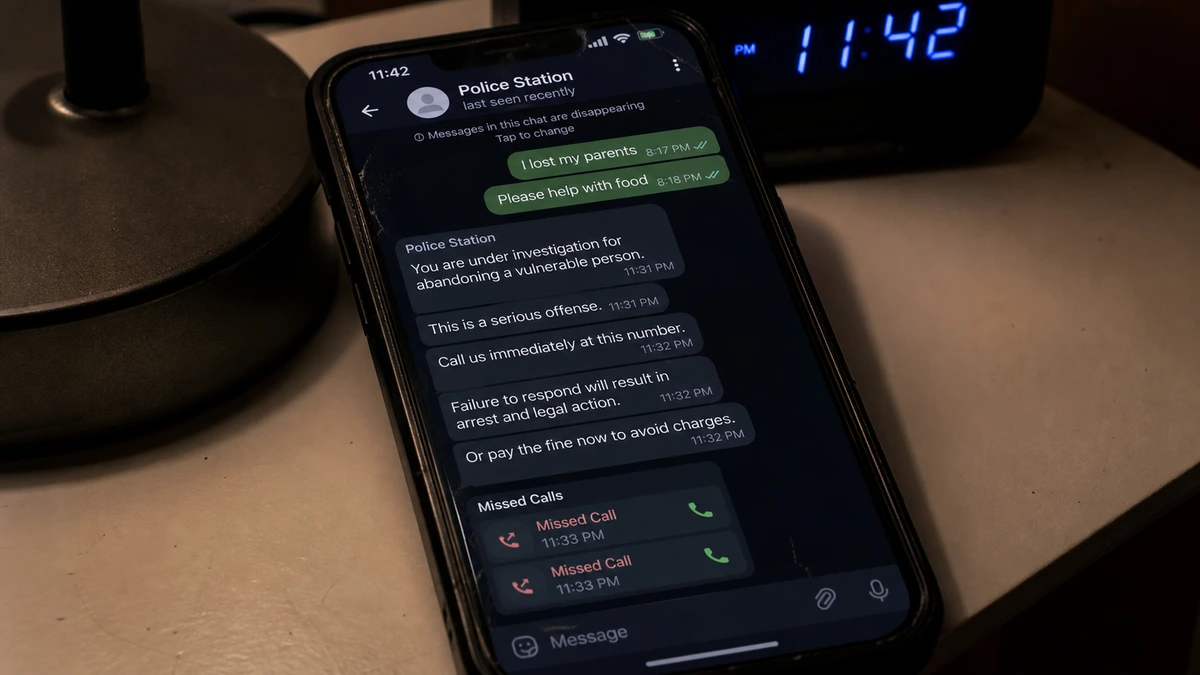
Later comes a request for phone money. When the target stops replying, a supposed police officer appears and turns sympathy into fear.
Overview
A friendship becomes a chain of emergencies
The case examined here involved a Snapchat contact who said he lived in The Gambia, had lost both parents, and cared for a sick grandmother.
Video calls showed a person and what appeared to be a modest home. The target bought food after seeing what looked like genuine hardship.
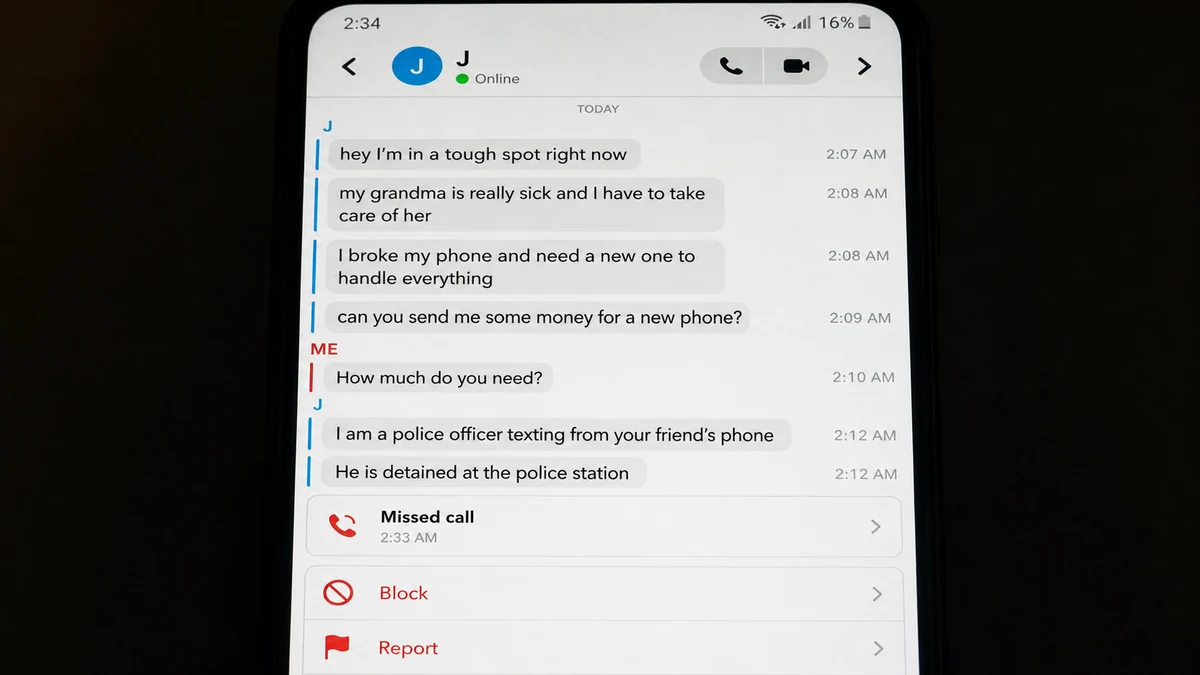
That first act did not end the need. The contact later asked for money to buy a phone, moving the relationship from one purchase toward continuing support.
Silence triggers a fake authority response
When the target stopped replying, another message appeared through the contact’s device or account. The writer claimed to be a police officer.
The message said the Snapchat contact had been detained at Brikama police station and implied that the target was responsible for what happened next.
Late calls followed. Guilt, official language, urgency, and repeated interruption were all used to break the target’s decision to disengage.
The country is not the warning sign
The problem is not that the person claimed to be in The Gambia. Real hardship exists everywhere, and fraud can originate in any country.
The warning lies in the behavior: escalating requests, emotional obligation, an unverified officer using the original contact’s phone, and threats after a boundary was set.
Key red flags include:
- A stranger building intimacy before requesting assistance.
- A tragedy story that makes the target feel responsible.
- Video calls treated as proof of every surrounding claim.
- A small food purchase establishing a payment precedent.
- A larger request for money to buy a phone.
- A “police officer” writing through the friend’s device.
- No verified officer, station channel, case number, or notice.
- Late calls and pressure after the target stopped responding.
How the Fake Gambia Snapchat Scam Works
Step 1: A stranger becomes familiar through daily contact
Snapchat makes conversation feel immediate. Photos, short videos, voice notes, and disappearing messages can create closeness faster than occasional email.
The contact may talk for days or weeks without asking for anything. That quiet period lets the target experience the relationship as friendship rather than preparation.
Step 2: A hardship story creates a duty to help
The conversation introduces bereavement, poverty, illness, hunger, caregiving, or unsafe housing. Each detail raises the emotional price of skepticism.
Not every detail must be invented. A real face, room, or hardship can be used to support an exaggerated financial need.
Step 3: A small food purchase tests the response
Food feels safer and more compassionate than sending cash. The target believes they are solving one immediate need rather than entering an arrangement.
For the requester, success proves that sympathy can produce value. It also creates a shared history that makes the next refusal feel inconsistent.
Step 4: The next request increases the commitment
A phone can be described as necessary for work, medical contact, safety, or staying connected. It is more expensive and easier to resell than a meal.
The request may be called the final missing piece. In a recurring assistance scheme, however, each successful payment can create another emergency.
Step 5: Disengagement is reframed as cruelty
When the target stops replying, the operator describes silence as abandonment. Previous generosity is used to claim that support should continue.
Calls, illness updates, and accusations turn a reasonable boundary into guilt. The target is pressured to defend why they will not help again.
Step 6: A supposed officer adds fear
The same person or an accomplice claims to represent police. Detention, investigation, or legal consequences are mentioned unless the target responds.
The emotional question changes from “Should I help?” to “Am I in trouble?” Panic can make someone call the supplied number or send money without checking.
Step 7: Repeated calls force an immediate decision
Late-night calls interrupt sleep and reduce time for calm verification. They make a distant contact feel physically intrusive.
If the target answers, the caller can demand secrecy, immediate payment, identity information, or a move to another app. Blocking interrupts that momentum.
Why a Live Video Does Not Prove the Story
A video call proves that someone appeared on camera at a particular moment. It does not verify their legal name, country, job, finances, or family history.
The room may be real without belonging to the person. It could be a relative’s home, rental, workplace, neighbor’s property, or space arranged for the call.
A sick relative may be real while the illness, treatment cost, or relationship is misrepresented. Truth in one frame does not validate every later claim.
A food delivery proves that goods reached an address. It does not confirm who received them, why they were needed, or whether the next request is connected.
No deepfake is required. An ordinary person can appear live and lie about the surrounding circumstances.
Independent authentication means checking the person, organization, and specific need through sources the requester does not control.
Even verified hardship creates no legal obligation to keep paying. Giving is a choice, not a debt that can be enforced with threats.
Why the “Police Officer” Fails Basic Checks
Writing “police officer,” naming a station, or displaying a uniform does not establish authority. Badges, names, profile images, and case numbers can be copied or invented.
The reported message came through the Snapchat contact’s private device or account. That channel is controlled by the same person whose story needs verification.
Police do not mediate a voluntary online friendship or force a foreign stranger to buy someone a phone. Ending a conversation is not a payment offense.
A real cross-border legal matter would involve a defined allegation, jurisdiction, formal process, and agency that can be reached independently.
Never call a number supplied by the threatening writer. Find the relevant agency through an official government source and use its published switchboard.
Do not send a passport, address, employer details, banking information, or verification code to prove innocence. The supposed check can be another data-collection step.
A real place name can still appear in a false story. Brikama’s existence does not authenticate the person writing from a private Snapchat account.
How One Helpful Purchase Turns Into Repeated Payment
The first request targets compassion rather than greed. Helping with food feels morally different from paying an investment or release fee.
The target sees a one-time need. The requester may see proof that another appeal will work.
Commitment bias keeps people engaged. After spending time, emotion, and money, questioning the story can feel like admitting the first decision was a mistake.
The operator leans on that discomfort: “You trusted me before,” “You are all I have,” or “Why would you abandon my family now?”
Requests can progress from food to phone service, rent, medicine, school fees, travel, customs, legal trouble, or release payments.
One more payment rarely produces independent proof. It more often demonstrates that pressure still works.
A useful boundary is simple: do not send money or goods to an online-only contact whose identity and need cannot be independently confirmed.
How to Help Without Trusting an Unverified Story
Ask for the name of a registered charity, clinic, school, or aid organization that can receive help directly. Then find that organization yourself.
Use an official public number to confirm the need while sharing as little personal information as possible.
Notice what happens when you offer an accountable alternative. Someone seeking food may reject a verified local charity because cash or resaleable goods were the real objective.
Do not accept identity documents sent in chat as final proof. Genuine documents can be stolen, edited, or presented by the wrong person.
Avoid cryptocurrency, gift cards, wire services, payment to unrelated intermediaries, and accounts in another name. Those routes reduce accountability.
Limit what the contact learns about you. Your address, employer, relatives, income, travel, and daily routine can make later threats sound more informed.
If you want to support people in a region, choose an established organization with transparent finances, independent governance, and a documented local program.
What to Do if the Threats Continue
Do not pay for peace. A final payment can prove that threats work and invite a supposed relative, officer, lawyer, or recovery agent to try again.
Keep a simple incident log with dates, usernames, numbers, call times, payment references, and exact threats. New accounts can then be connected to the original contact.
Tighten privacy on Snapchat and other networks. Hide location, workplace, relatives, contacts, and public posts that reveal routines.
Warn household members or coworkers if the caller knows their names. Another message may claim that you already approved a payment or need urgent help.
If a threat is specific and credible, contact local police through an official number. Explain that the relationship began online and provide the preserved evidence.
If You Shared Personal Information
Write down exactly what the contact learned, including your surname, address, workplace, relatives, bank, travel plans, identification, and photographs. Recovery should match the exposure.
Change any security answers that could be guessed from the conversations. A long friendship can reveal pet names, birthdays, schools, family details, and favorite places.
Warn close contacts about possible impersonation. The operator may use your photographs or private facts to create a new account that appears to belong to you.
If an identity document was sent, monitor accounts and follow the fraud-protection steps available in your country. Blocking Snapchat alone does not remove copied data.
Company, Address, and Fulfillment Checks
No charity or aid organization was identified
The contact acted as an individual. No registered charity, local program, audited organization, or accountable caseworker supported the requests.
Without that structure, there is no donor policy, complaint process, governance, or independent confirmation.
The location claims were not independently verified
The account claimed to be in The Gambia, and the police message named Brikama. Both statements came from the same untrusted conversation.
This article does not attribute the conduct to Gambians generally or to any genuine Brikama officer.
No official police channel or case was provided
The supposed officer appeared through a private device. No independently confirmed badge, official email, case record, or formal notice was documented.
Any genuine inquiry must be checked through contact information found on an official government source.
The food purchase did not verify later requests
A completed order shows only that something was purchased or delivered. It does not prove the illness, phone need, detention, or police story.
Every new claim requires fresh verification. Earlier kindness is not collateral for a later emergency.
What to Do if You Have Fallen Victim to This Scam
- Stop payments and purchases. Do not send phone money, fines, release fees, travel costs, or another emergency payment.
- Do not answer the supposed officer. Save the message without arguing or providing identity details.
- Preserve the conversation. Capture profiles, numbers, receipts, calls, threats, and disappearing content still visible.
- Report and block the accounts. Use Snapchat’s official reporting controls for deceptive or abusive activity.
- Contact the payment provider. Ask whether transfers, card purchases, deliveries, or goods orders can be stopped.
- Secure financial accounts. Change reused passwords, enable multi-factor authentication, and review transactions.
- Limit identity exposure. Follow local identity-theft guidance after sending an ID, bank data, or home address.
- Tell someone you trust. An uninvolved person can review the timeline without emotional pressure.
- Report credible threats locally. Use your local police department’s official contact information.
- Run a full Malwarebytes scan. Do this if you opened files, installed an app, or followed suspicious setup instructions.
- Use AdGuard after cleanup. It can reduce malicious redirects, but it cannot stop accepted direct-message contacts.
- Reject recovery offers. An upfront-fee promise to recover money or punish the contact may extend the same scam.
Frequently Asked Questions
Does a Snapchat video call prove the person is genuine?
It proves someone appeared live. It does not verify the person’s identity, location, finances, family story, or reason for asking for money.
Could the hardship shown on video be real?
Yes. Real hardship and dishonest fundraising can coexist. The specific identity, need, and payment route still require independent verification.
Can police detain someone because I stopped replying?
Not for ending a voluntary online friendship or declining to buy a phone. A private message does not create a legal obligation.
Should I call Brikama police?
Only use contact information independently confirmed through an official government source. Never call the number supplied by the threatening account.
What if I already paid for food?
Stop further payments, save the receipt and chat, contact the provider, and treat every new emergency as unverified.
Is every request for help from The Gambia a scam?
No. Nationality is not the test. Focus on independent verification, escalating payment pressure, impersonated authority, and refusal to use accountable aid channels.
The Bottom Line
This Snapchat story became dangerous when sympathy turned into obligation and a supposed officer tried to punish the target for stepping away.
A real face and real hardship do not make every claim true. Do not pay under guilt or fear, verify institutions independently, and block any contact that answers a boundary with threats.

Join the discussion
0 commentsShare your experience or ask a question about this article.
Discussion
Start the conversation
Have a question or something useful to share? Add the first comment.