


Another negative test can make a small promise feel enormous. FertiFlow’s Glow & Grow Drops speak directly to that moment, offering a daily ritual and renewed hope.
Before making them part of your routine, pause over the details. What the page tells you to take matters just as much as its reassuring story.
Overview
A fertility pitch built around stress and hope
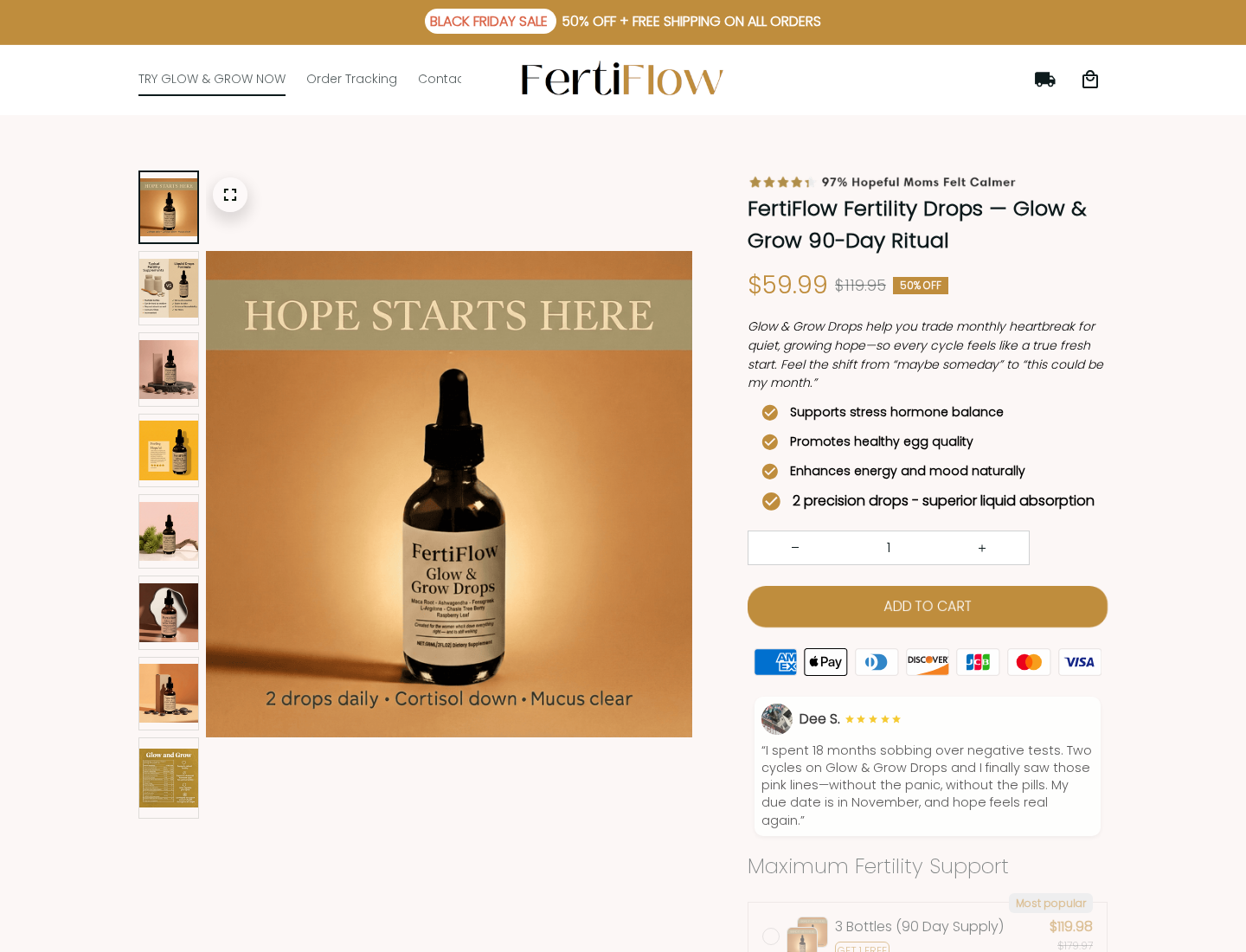
FertiFlow markets Glow & Grow as fertility drops supporting hormones, egg quality, and reproductive wellness. Pregnancy testimonials make the promised benefit feel personal.
The observed offer is $59.99, against a $119.95 reference price. Its 90-day ritual encourages consistent use for at least three months.
That is a substantial commitment for someone trying to conceive. It calls for clear directions, a traceable formula, appropriate medical advice, and realistic refund expectations.
The dosing instructions don’t agree
The page refers to two drops, ten drops, two full droppers daily, and two droppers twice daily. Those aren’t interchangeable instructions.
It identifies two full droppers as 2 mL in one section. That doesn’t establish how many milliliters its separate two-drop or ten-drop directions mean.
Don’t choose whichever version sounds reasonable. A supplement seller needs to provide one unambiguous serving instruction that agrees with the actual bottle label.
This offer doesn’t merit a fertility-treatment recommendation
Don’t buy FertiFlow as a fertility treatment or a substitute for clinical assessment. The inconsistent directions and narrow refund conditions are concrete reasons to avoid this offer.
- The page promotes a three-month routine.
- Different sections give materially different directions.
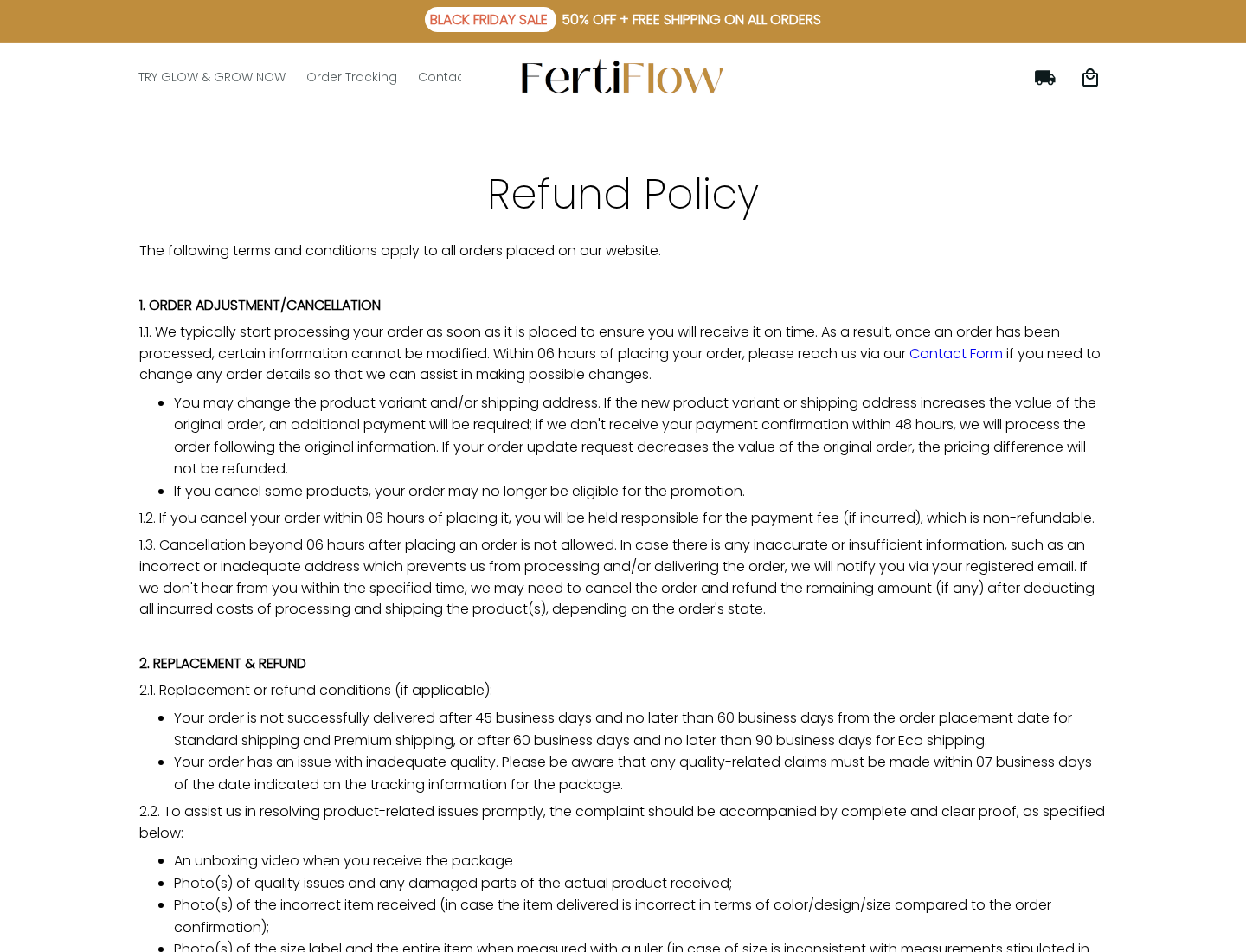
- The product’s refund summary mentions seven days after delivery.
- The full policy limits quality-related claims to seven business days.
- Pregnancy stories do not establish that this formula caused conception.
The clearest reasons to pass are in the offer itself: unclear instructions and a remedy that doesn’t match the advertised commitment.
Why the Dose Problem Comes Before the Testimonials
A drop is a small amount of liquid. A filled dropper contains multiple drops. They cannot be substituted merely because both words sound familiar.
The difference matters even before asking whether a formula works. Without a reliable serving instruction, you cannot meaningfully compare use with a label or ingredient study.
The page’s two-droppers-twice-daily wording also describes a different daily volume from its two-droppers-once-daily instruction. The customer shouldn’t have to resolve that conflict.
Don’t try to average the directions or increase the serving to make the bottle match a success story. Take the discrepancy to a pharmacist or clinician.
If you already received the product, photograph the label and keep its lot information. Ask the seller to identify the instruction that applies to that batch.
A written explanation should resolve the actual discrepancy, not simply assure you that the ingredients are natural. Safety depends on the preparation and its use.
How the FertiFlow Sales Funnel Works
Step 1: The page meets a deeply personal worry
The sales copy addresses monthly disappointment, expensive treatment, and concerns about egg quality. It offers a daily action when waiting can feel unbearable.
That emotional appeal isn’t clinical evidence. Someone can identify strongly with a testimonial without knowing whether their own medical circumstances have anything in common.
You aren’t failing by wanting something practical to do. The important distinction is between a supportive routine and an offer that can substantiate its fertility implications.
Step 2: Stress becomes the explanation for the problem
The page emphasizes stress hormones and cellular energy. That creates a straightforward story: address the underlying obstacle, and a more hopeful cycle may follow.
But a sales page cannot diagnose why a particular person hasn’t conceived. Stress language shouldn’t replace an assessment of their actual circumstances.
Don’t interpret difficulty conceiving as proof that you failed to stay calm. A product’s simplified explanation can make a complicated experience feel unfairly like your responsibility.
Step 3: Ingredient research stands beside finished-product promises
FertiFlow names ingredients including ashwagandha, CoQ10, myo-inositol, and NAC. The page describes a research-backed blend and presents reproductive-wellness benefits.
An ingredient studied for one outcome doesn’t automatically establish that this particular mixture improves pregnancy or live-birth rates.
Useful evidence would need to match the preparation, amount, relevant participants, and outcome. Feeling calmer and having a baby are not interchangeable study endpoints.
Nor does a list of scientific-sounding ingredients resolve conflicting serving instructions. You need a clear product specification before trying to apply research to its use.
Step 4: A three-month routine encourages a larger commitment
The product is presented as a 90-day ritual, and the page says to use it consistently for at least three months. Bundle marketing reinforces that commitment.
Don’t confuse a longer suggested routine with a longer refund trial. The time you are asked to use a product may exceed the time allowed for complaints.
Check the selected quantity and full order amount before any purchase. A recommended bundle is not proof of a forced bundle or an undisclosed subscription.
Step 5: The refund rules impose a different timetable
The product summary mentions seven days after delivery for an appropriate refund or replacement. The fuller policy addresses quality complaints within seven business days.
It also says cancellation beyond six hours after ordering isn’t allowed under its terms. That is the seller’s stated rule, not an assessment of your statutory rights.
A buyer waiting through the advertised three-month routine could be well beyond those complaint windows. Don’t assume a fertility outcome is covered by the refund policy.
FertiFlow Seller, Address, Support, and Formula Checks
The brand name doesn’t identify a verified manufacturer
The offer names FertiFlow and describes supplement manufacturing and testing. A product brand is not the same thing as an independently identified manufacturing business.
Before taking a supplement, you need the label, responsible manufacturer or distributor, serving amounts, and usable batch information. Broad quality claims don’t replace those details.
Ask for documentation that applies to the actual product and batch. A general facility claim doesn’t establish that the advertised formula was clinically tested.
A San Francisco contact address isn’t a factory inspection
The store publishes 548 Market St #14148, San Francisco, California 94104. That establishes the address it supplies to customers, not a verified production site.
Don’t assume the numbered address is a laboratory, warehouse, or factory. It doesn’t identify where your bottle was manufactured, tested, or dispatched.
The contact address alone cannot tell you where the bottle came from. Request the responsible distributor and batch documentation before trusting a manufacturing claim.
The published support route is generic
The policies list support@shops-support.net and +1 (844) 909-4899. The email doesn’t use the FertiFlow brand’s domain.
That is a contact detail worth retaining, not proof that messages go unanswered. No call or support request was made during this investigation.
If you already ordered, ask for written clarification of your order, serving instructions, and refund eligibility. Keep the seller’s response with your receipt.
The return policy includes instructions unrelated to drops
The policy refers to clothing-style issues such as size charts and packaging creases. Those clauses don’t explain how a liquid supplement’s quality should be assessed.
It also requests evidence such as unboxing footage and photographs for certain claims. Preserve packaging and delivery records rather than assuming a verbal complaint is sufficient.
Generic policy wording doesn’t prove every order fails. It does leave a fertility buyer without a clear, product-specific explanation of the promised remedy.
Ashwagandha Requires Special Care Around Pregnancy
The product advertises ashwagandha among its ingredients. The National Center for Complementary and Integrative Health says evidence is insufficient to establish its usefulness for female infertility.
Its guidance also says to avoid ashwagandha during pregnancy and breastfeeding. That deserves attention when a product is marketed to people hoping to become pregnant.
The guidance concerns an ingredient, not a laboratory finding that this bottle caused harm. You still need professional advice about your own circumstances and medications.
If pregnancy is possible, don’t rely on a testimonial’s reassuring tone to settle safety. Show the actual label to your clinician or pharmacist before further use.
Don’t stop prescribed fertility treatment or replace a clinician-recommended prenatal plan with this sales routine. A supplement’s marketing cannot account for your individual care.
What to Do If You Ordered FertiFlow
-
Pause before following inconsistent directions. Keep the bottle and label, and don’t choose a serving by guessing which webpage paragraph is correct.
Ask a pharmacist or fertility clinician to review the actual ingredients, amounts, and your circumstances. Bring the conflicting instructions rather than only the product name.
-
If you may be pregnant, obtain prompt advice about further use. Explain that the product advertises ashwagandha and provide the label.
If you feel unwell after taking a supplement, seek medical advice and retain the packaging and lot details. Don’t assume symptoms prove a particular ingredient caused them.
-
Act quickly if you want cancellation. The site’s terms describe a six-hour window. Submit a written request promptly and retain its timestamp.
Ask whether the order has been processed and which charges the seller says it will retain. Don’t assume cancellation was accepted until you receive confirmation.
-
Preserve delivery and quality evidence. Save the tracking date, shipping label, package condition, and photographs of any wrong or damaged product.
The stated policy uses a short quality-complaint window. Raise the issue promptly rather than waiting for the advertised 90-day routine to finish.
-
Request the specific remedy in writing. Explain whether the issue concerns conflicting instructions, the item delivered, damage, or a marketing promise.
Ask the seller to identify the relevant refund condition and provide a written decision. Keep messages and any claimed refund processing confirmation.
-
Review your receipt for future billing. Check what you actually selected, the order quantity, and whether any recurring agreement appears.
No hidden refill was established here. If your receipt does show renewal, cancel that agreement separately and request confirmation of the next charge being stopped.
-
Contact your payment provider about an unresolved transaction. Supply the receipt, advertisements, applicable policy, and your attempts to resolve the issue.
Describe the actual problem rather than assuming all supplement purchases receive the same remedy. Ask about deadlines and available dispute options.
A Pregnancy Story Isn’t a Clinical Comparison
Someone conceiving after taking a supplement doesn’t, by itself, establish that the supplement caused the pregnancy. Other treatment and the passage of time may also matter.
A story doesn’t provide a comparison group or show how many users didn’t obtain the same result. Those missing pieces matter when evaluating an advertised fertility benefit.
The American Society for Reproductive Medicine distinguishes general health measures from reliable evidence that particular supplements improve natural fertility.
You deserve advice based on your medical situation, not pressure to turn each unsuccessful cycle into another purchase. Bring specific product questions to your care team.
What to Bring to a Fertility Appointment
Bring photographs of every side of the bottle, not just a cropped image showing the brand. The serving panel and warnings matter to the discussion.
Include the dropper markings if present. Ask which instruction, if any, can be reconciled with the labeled serving rather than trying to interpret the sales copy.
Write down your prenatal vitamins, other supplements, prescribed treatments, and any nonprescription medicines. The clinician can assess the combination rather than viewing the drops in isolation.
If you already took them, record how much, how often, and when you started. Distinguish what you actually used from what the webpage currently recommends.
Mention any possibility of pregnancy or breastfeeding at the start. Ingredient advice can depend on that information, and a wellness label doesn’t remove the need to disclose it.
Ask whether a supplement has any role in your own care plan and what evidence would justify it. Don’t let a refund deadline dictate a medical decision.
Finally, keep your care question separate from your buying complaint. A clinician can advise on health; the merchant and payment provider address the transaction.
Frequently Asked Questions
Is FertiFlow a proven fertility treatment?
The advertised ingredient research and pregnancy testimonials don’t establish that this finished formula improves conception or live-birth outcomes. Don’t substitute it for clinical assessment.
Are two drops and two droppers the same serving?
No. They describe different quantities. Don’t resolve the webpage’s conflicting directions yourself; ask for one label-matched instruction and professional review before use.
Does the 90-day ritual mean a 90-day money-back trial?
No. The product summary and policy describe much shorter, conditional complaint periods. A suggested use period isn’t automatically a refund guarantee.
Can I assume a natural fertility supplement is safe during pregnancy?
No. NIH guidance advises avoiding ashwagandha during pregnancy and breastfeeding. Review the actual product label with a clinician or pharmacist.
Was an undisclosed FertiFlow subscription confirmed?
No. Check your own receipt for recurring consent and billing. The documented problems here are dosing contradictions, fertility marketing, and conditional refund rules.
What should I do if the seller refuses a refund?
Keep its written explanation, the policy, and evidence of the problem. Ask your payment provider about available remedies and deadlines for your transaction.
The Bottom Line
Don’t buy this FertiFlow offer as a fertility treatment. Conflicting serving directions and a short, conditional refund window don’t justify a three-month commitment.
If you’ve already ordered, preserve the receipt and label, seek appropriate medical advice before use, and raise cancellation or refund issues promptly.
Wanting hope is understandable. You shouldn’t have to trade clear instructions, safe care, or a workable remedy for a reassuring story on a sales page.

Reviews & discussion
0 commentsShare a firsthand experience, or ask a question.
Community reviews
FertiFlow Drops
Moderated reader experiences, not an editorial verdict.
Start the conversation
Have a question or something useful to share? Add the first comment.