

FindFunds.us claims to help Americans locate unclaimed government funds quickly and for free. On the surface, it seems like a golden opportunity, promising access to free money that’s rightfully yours, just waiting to be claimed. But is it really that simple, or is this just another clever scam crafted to harvest your personal data and redirect you to shady offers?
In this in-depth article, we unpack everything you need to know about FindFunds.us. We’ll explore exactly how the site functions, the techniques it uses to appear legitimate, the red flags to watch out for, and the precise steps to take if you’ve already shared your information.
Scam Overview
What Is FindFunds.us?
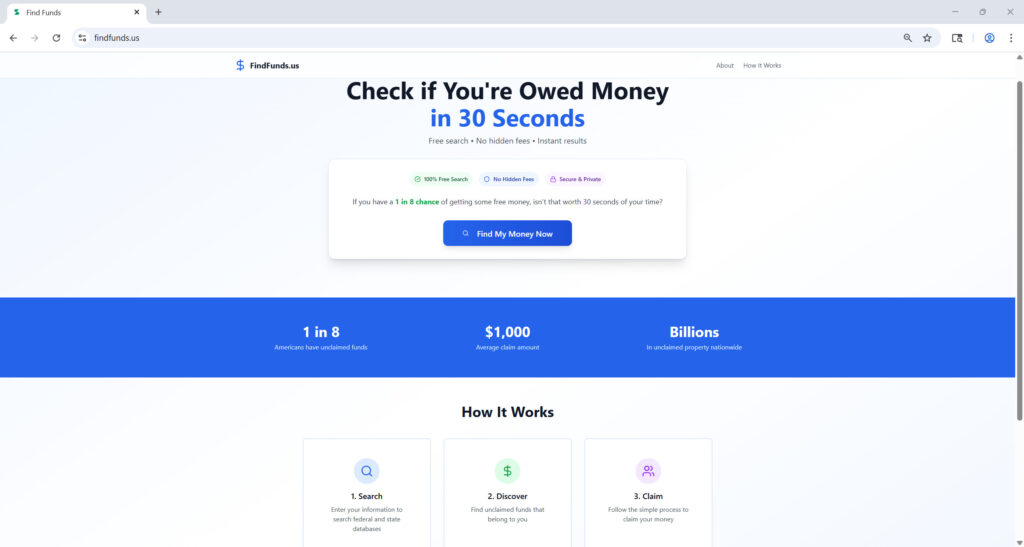
FindFunds.us is a slick-looking website that promotes itself as a fast, free way to uncover unclaimed government money. The service supposedly helps you locate things like forgotten state-held assets, tax refunds, and unclaimed stimulus checks. Their homepage features enticing slogans such as “Check if You’re Owed Money in 30 Seconds” and “100% Free Search.” They also throw around stats like billions in unclaimed property to make the offer seem not just plausible, but urgent.
At first glance, it appears trustworthy, but after closer inspection, there are significant inconsistencies and warning signs that can’t be ignored.
Red Flags and Suspicious Indicators
1. Brand New Domain
The domain for FindFunds.us was only registered in June 2025. Legitimate government-affiliated services typically have years of public history and reputation behind them. A newly registered site that immediately asks for sensitive personal information should trigger serious concern.
2. Lack of Transparency
There is no About Us page, no listed company address, and no visible leadership team or ownership information. The absence of transparency is not just an oversight—it’s a strategic choice often seen in scam operations to avoid accountability.
3. Misleading Claims of Government Ties
FindFunds.us implies a connection to federal and state agencies but fails to provide any documentation or external links to prove this. There are no direct API connections to government databases, no .gov links, and no mention of partnerships with treasury departments. This lack of verifiable evidence further discredits the legitimacy of their service.
4. Suspicious Redirects to Unrelated Sites
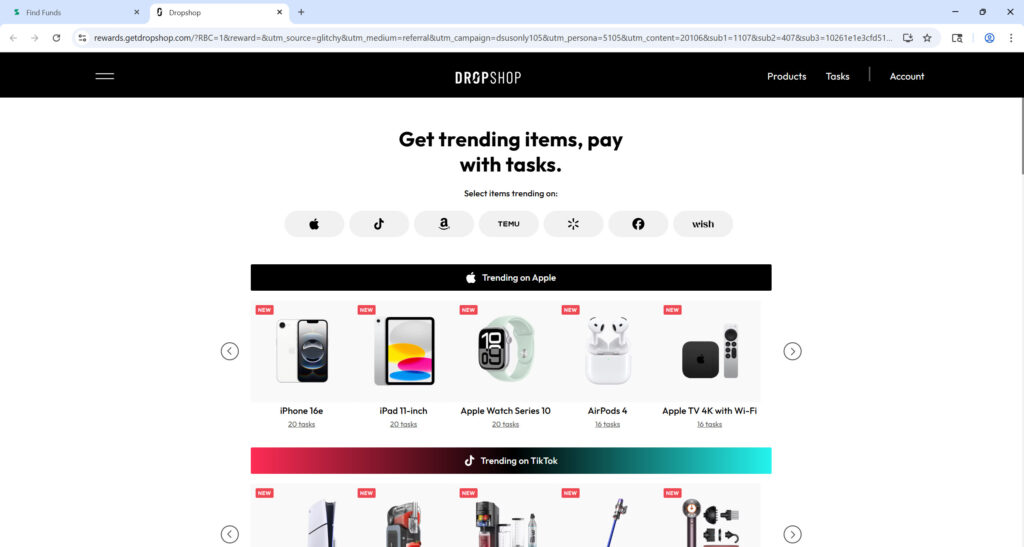
When users initiate the search process, they are led through several steps only to be redirected to unrelated marketing offers or e-commerce platforms like Dropshop. This tactic indicates the site’s true goal isn’t helping you find money but generating affiliate revenue.
5. No Verified User Feedback
Despite claiming to help millions, FindFunds.us has zero user reviews on Trustpilot or other consumer platforms. There is no verifiable success story, no endorsements, and no feedback from real people who actually found money using this service.
6. Generic Language and Psychological Triggers
The site is loaded with vague language and psychologically manipulative buzzwords like “discover your money now” or “don’t miss your chance.” These phrases create a sense of urgency and legitimacy while offering no factual substance.
Collectively, these warning signs point toward a high-likelihood scam, cleverly disguised as a helpful financial tool.
How the Scam Works
Step 1: Luring the User
FindFunds.us captures attention with bold statistics and persuasive headlines, such as “1 in 8 Americans have unclaimed funds.” This initial messaging preys on users’ financial hopes and creates intrigue.
Step 2: Urgency and Call to Action
Once you’re interested, the site reinforces the illusion with claims that you can “check in 30 seconds.” These time-based triggers are designed to rush users into acting before they question the authenticity.
Step 3: Information Harvesting
Users are prompted to enter their personal information under the pretense of conducting a search. Typically requested details include:
- Full legal name
- Residential address
- Phone number
- Email address
- Occasionally, demographic information
This data may be compiled into marketing databases or worse, used in identity theft scams.
Step 4: The Bait-and-Switch
Instead of showing legitimate results for unclaimed funds, the user is rerouted to an entirely different platform. In many cases, this is a pay-to-play site like Dropshop, which pushes users to complete tasks or sign up for offers in exchange for rewards. None of this has anything to do with government-held money.
Step 5: Affiliate Revenue Model
Every time a user clicks or signs up on a redirect site, the operators of FindFunds.us earn a commission. This is their true business model—generating income through affiliate marketing, not by helping people recover unclaimed money.
Step 6: Long-Term Exploitation
Once your data is in the wrong hands, the effects can linger. Users often report a sharp rise in spam calls, phishing emails, and junk mail. In some cases, this information could even be resold on black markets, exposing you to further scams.
Step 7: Re-targeting
Because they’ve captured your email and possibly browser cookies, you may be targeted again by similar sites. These scams often operate in networks, using different URLs but the same backend strategy.
What to Do if You’ve Fallen Victim
1. Cease Interaction
Close the site immediately. Avoid clicking any links or completing any additional forms. If you gave your phone number, be wary of unknown calls or messages.
2. Report the Incident
File a report with the appropriate authorities:
- The Federal Trade Commission at www.reportfraud.ftc.gov
- Your state’s Attorney General’s office
- The Better Business Bureau (BBB)
- Internet Crime Complaint Center (IC3) if financial theft occurred
3. Secure Your Digital Identity
Immediately update passwords associated with your email or any accounts that may be linked. Use a password manager and enable two-factor authentication wherever possible.
4. Monitor for Suspicious Activity
Sign up for a credit monitoring service like Experian, TransUnion, or Credit Karma. Watch for:
- New credit card applications
- Bank account changes
- Address change alerts
- Unusual login attempts
5. Filter and Block Communication
Use spam filters and call-blocking tools to prevent further contact. Apps like Truecaller or Hiya can identify scam numbers and reduce unwanted communication.
6. Educate Your Network
Let your friends and family know about the scam. The more people are aware, the less effective these scams become. Sharing this information can help protect others from falling into the same trap.
Is Your Device Infected? Run a Free Malware Scan
Slow performance, constant pop-ups, or strange behavior? These are classic signs of a malware infection. The fastest way to find out is to scan your device with Malwarebytes Free — one of the most trusted malware removal tools available.
The free version detects and removes the most common threats, including:
- Adware — the cause of those annoying pop-ups
- Browser hijackers — unwanted redirects and changed homepages
- Trojans and spyware — hidden programs stealing your data
- Potentially unwanted programs (PUPs) — software you never asked for
👉 Select your device below — Windows, Mac, or Android — then follow the simple steps to download Malwarebytes, scan your system, and remove any threats it finds. The scan usually takes 5 to 20 minutes.
Run a Malware Scan with Malwarebytes for Windows
Malwarebytes is one of the most popular and trusted anti-malware tools for Windows — and it’s completely free for removing infections. It catches threats that many antivirus programs miss, including adware, browser hijackers, and trojans. Follow the steps below to scan and clean your PC in just a few minutes.
Download Malwarebytes
Click the button below to download the latest version of Malwarebytes for Windows from the official source. The free version is all you need — it will scan your computer and remove adware, browser hijackers, and other malicious software at no cost.
Download MalwarebytesOfficial installer for Windows 11 and 10. Your download starts right away.Want real-time protection? See Malwarebytes Premium Malwarebytes Free for WindowsScans and removes malware at no cost
-
Install Malwarebytes
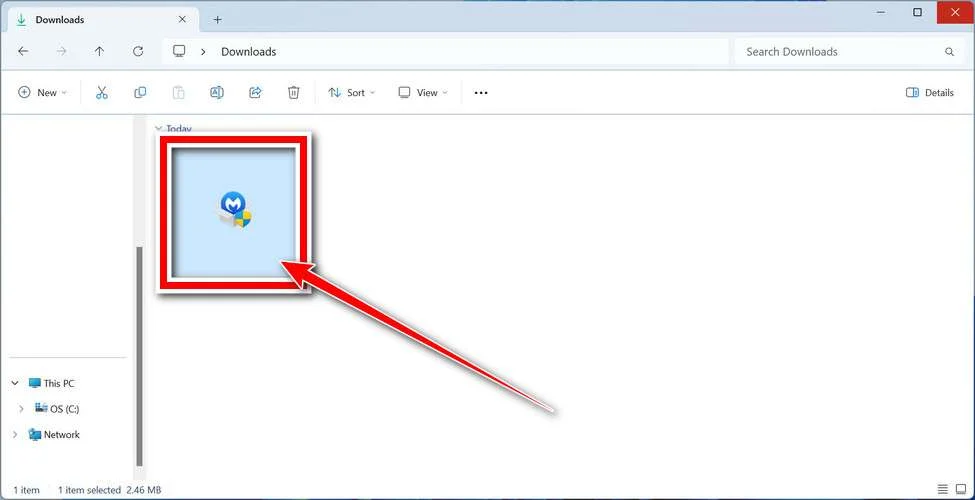
When the download finishes, open your Downloads folder and double-click the MBSetup file. If Windows shows a User Account Control pop-up, click “Yes” to allow the installation.
Follow the On-Screen Prompts to Install Malwarebytes
The setup wizard will walk you through a few quick screens:
-
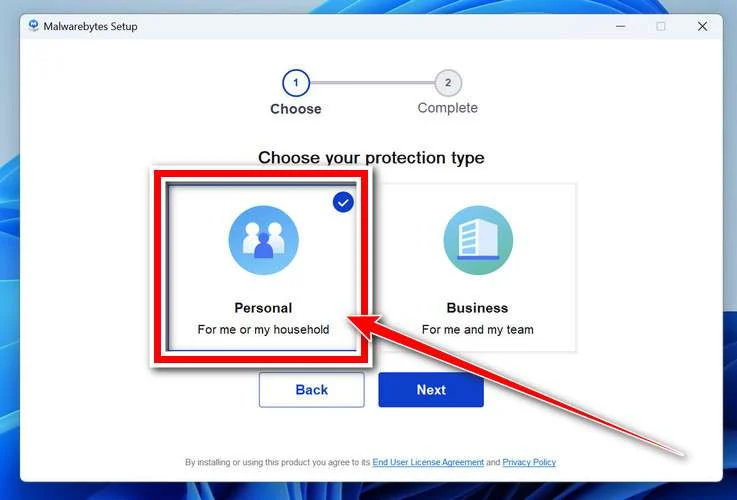
Choose where you’re installing the program — “Personal Computer” or “Work Computer” — then click Next.
-
Malwarebytes will now install on your device. This usually takes under a minute.

-
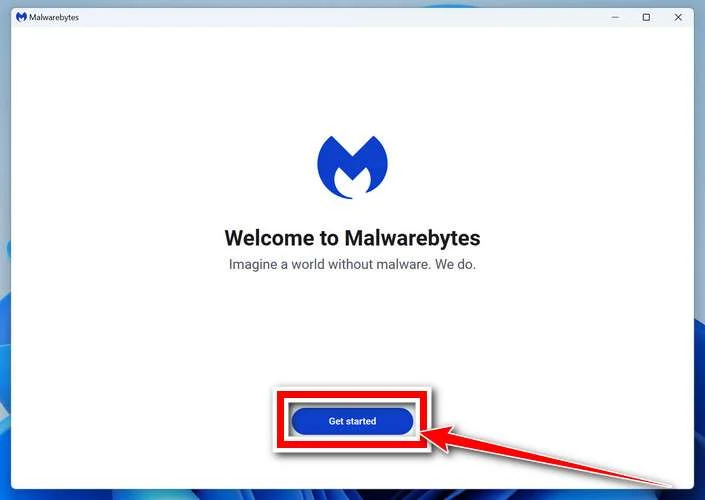
When installation is complete, the “Welcome to Malwarebytes” screen will open automatically.
-
On the final screen, click Open Malwarebytes to launch the program.

-
Enable “Scan for Rootkits”
Before scanning, turn on rootkit detection so Malwarebytes can find even the most hidden threats. Click the Settings gear icon on the left side of the screen.
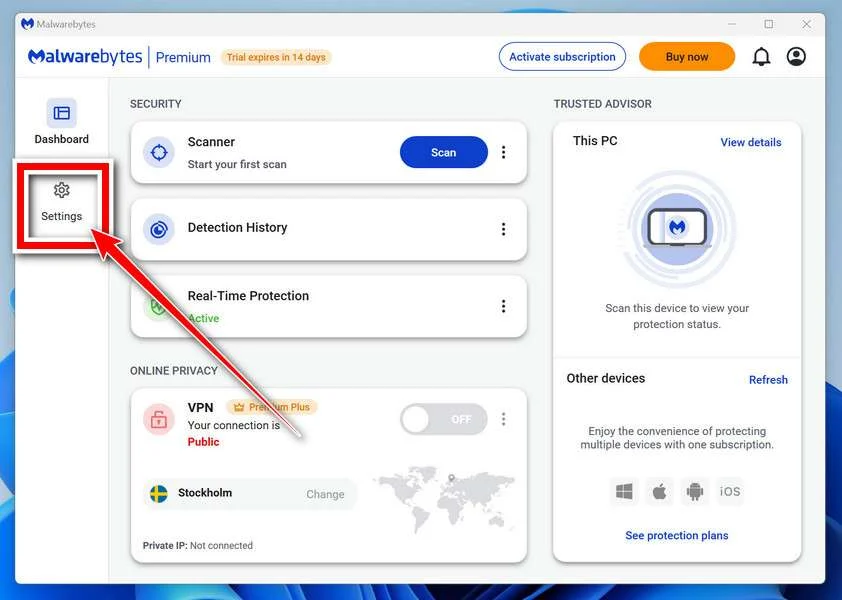
In the settings menu, find “Scan for rootkits” and click the toggle so it turns blue.

Done? Click “Dashboard” in the left pane to return to the main screen.
Start the Scan
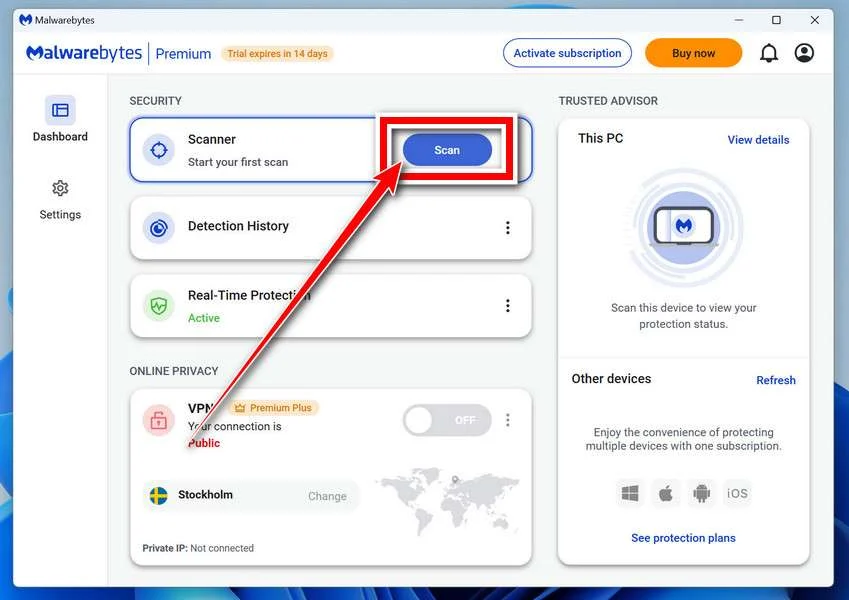
Click the blue Scan button. Malwarebytes will automatically update its virus database and start checking your computer for malware.
-
Wait for the Scan to Finish
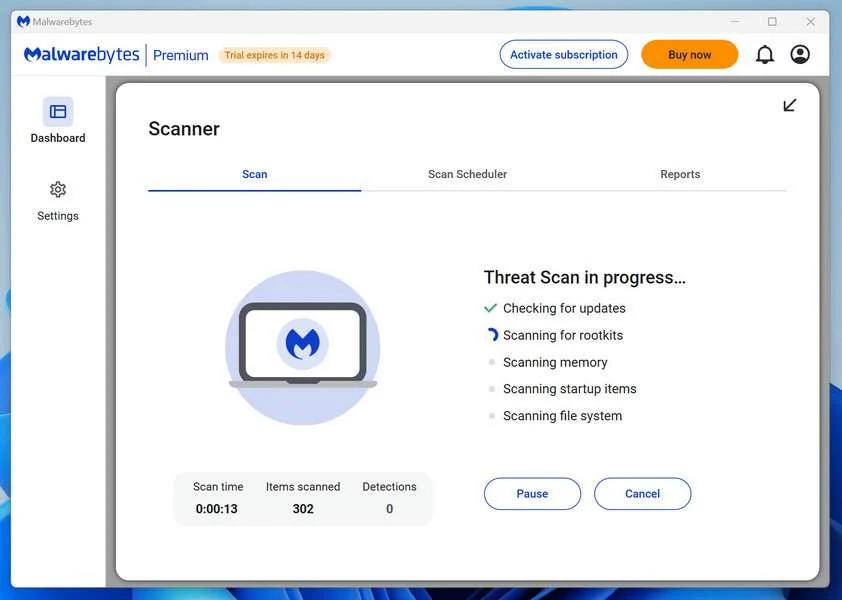
The scan checks your entire system for browser hijackers and other malicious programs, so it can take 5 to 20 minutes depending on your computer. Feel free to do something else — just check back occasionally to see the progress.
-
Quarantine the Detected Threats
When the scan is done, you’ll see a list of everything Malwarebytes found — malware, adware, and potentially unwanted programs. Click the “Quarantine” button to remove all of them at once.
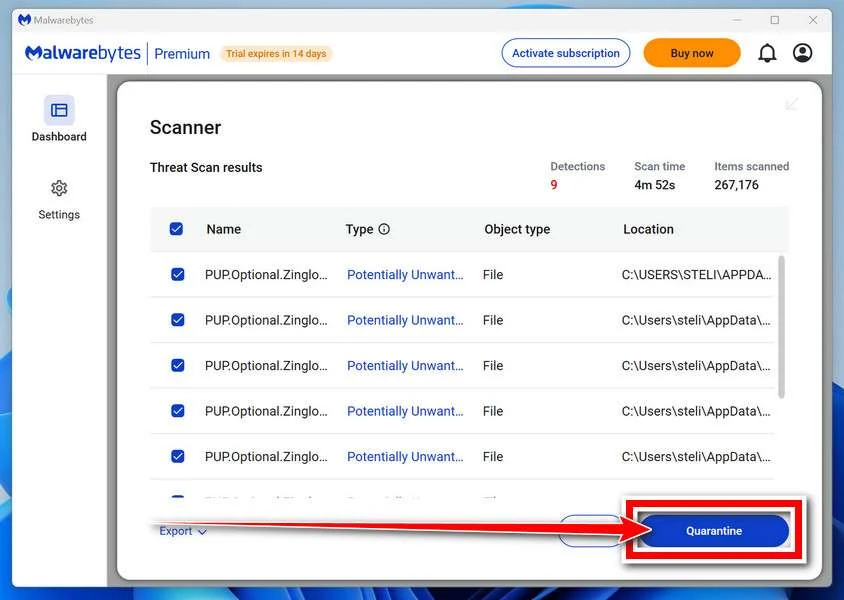
Malwarebytes will now remove the malicious files and registry entries and move them safely into quarantine.
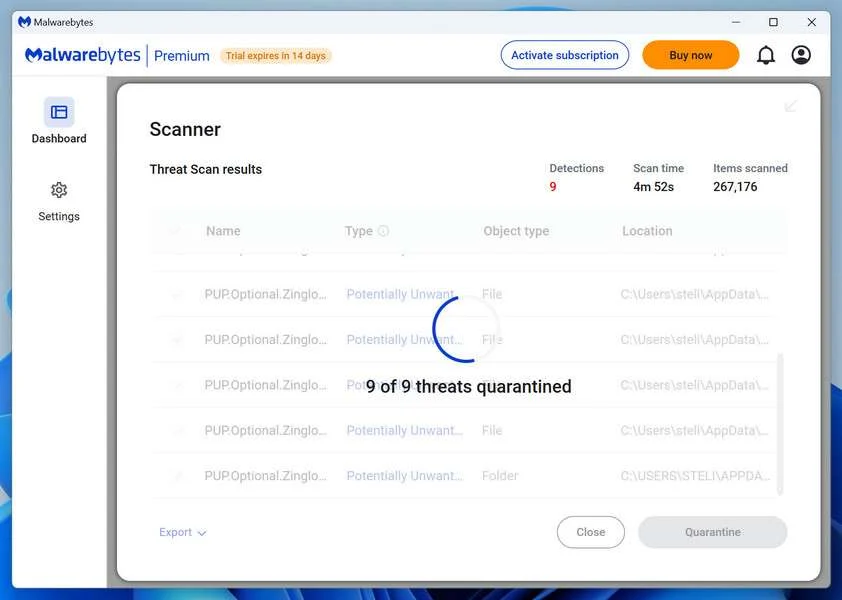
-
Restart Your Computer
Some threats can only be fully removed after a reboot. If Malwarebytes asks you to restart, click Yes. Once you’re logged back in, Malwarebytes has finished removing the threats it found.
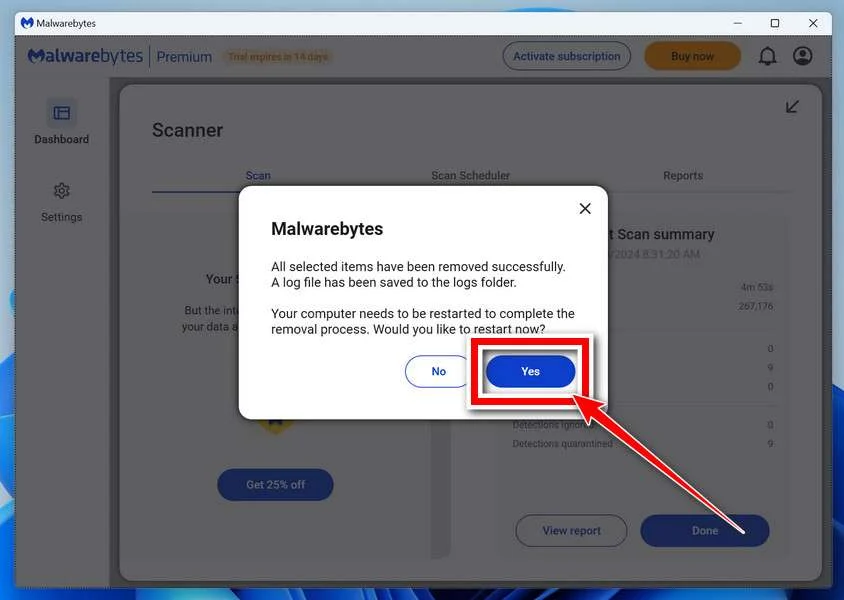
That’s it — your Windows PC is now clean of trojans, adware, and other malware, and should be back to running smoothly.
If you are still having problems with your computer after completing these instructions, then please follow one of the steps:
- Run a computer scan with ESET Online Scanner
- Ask for help in our Windows Malware Removal Help & Support forum.
Run a Malware Scan with Malwarebytes for Mac
Malwarebytes for Mac is a free on-demand scanner that removes the malware other security software tends to miss — adware, browser hijackers, and unwanted programs included. Cleaning an infected Mac with Malwarebytes has always been completely free, and it’s our go-to recommendation. Follow the steps below to scan and clean your Mac in just a few minutes.
-
Download Malwarebytes for Mac
Click the button below to download the latest version of Malwarebytes for Mac.
Download MalwarebytesOfficial installer for macOS. Your download starts right away.Want real-time protection? See Malwarebytes PremiumMalwarebytes Free for MacScans and removes malware at no cost -
Open the Malwarebytes setup file
When the download finishes, open your Downloads folder and double-click the setup file to begin the installation.
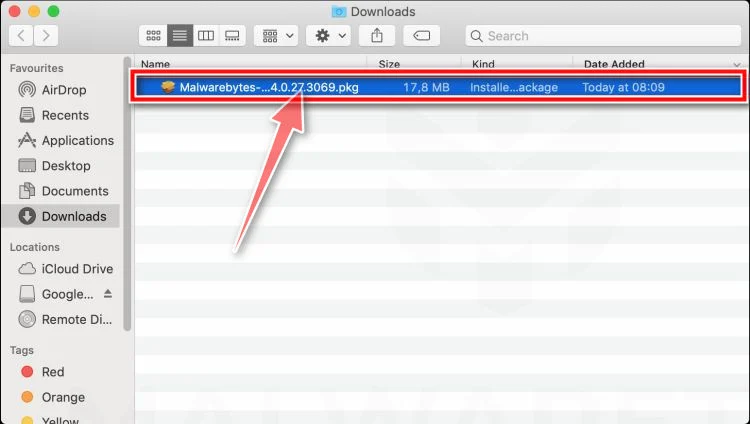
-
Follow the On-Screen Prompts to Install Malwarebytes
The Malwarebytes for Mac Installer will guide you through a few quick screens. Click “Continue” and keep following the prompts until the installation completes.
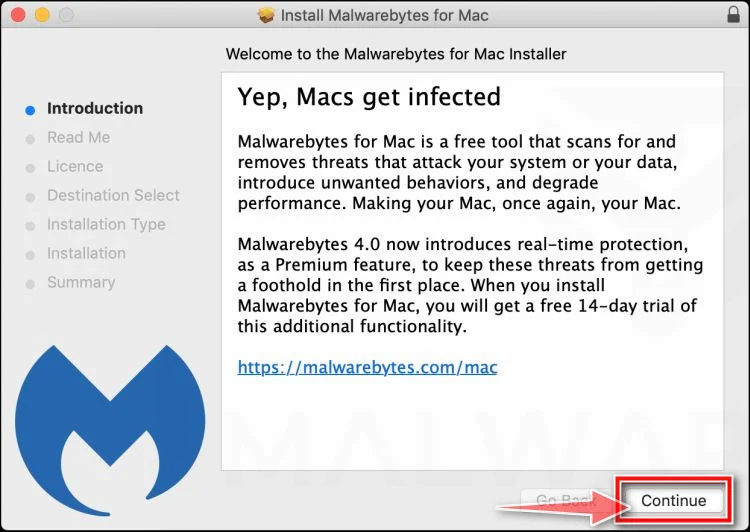
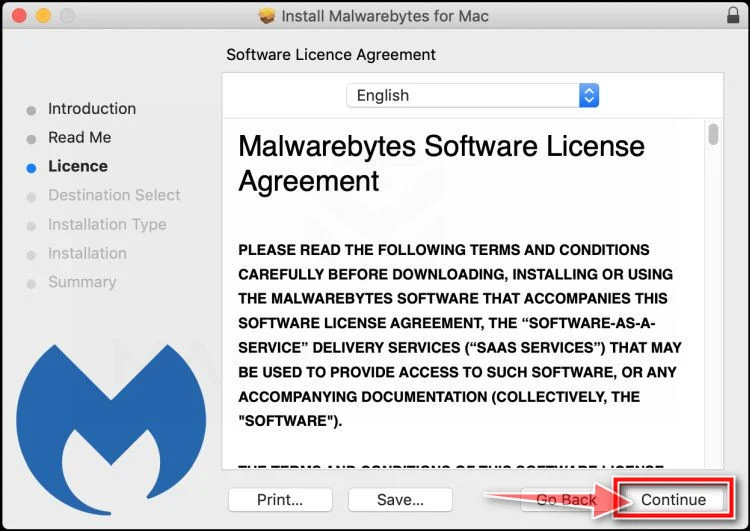
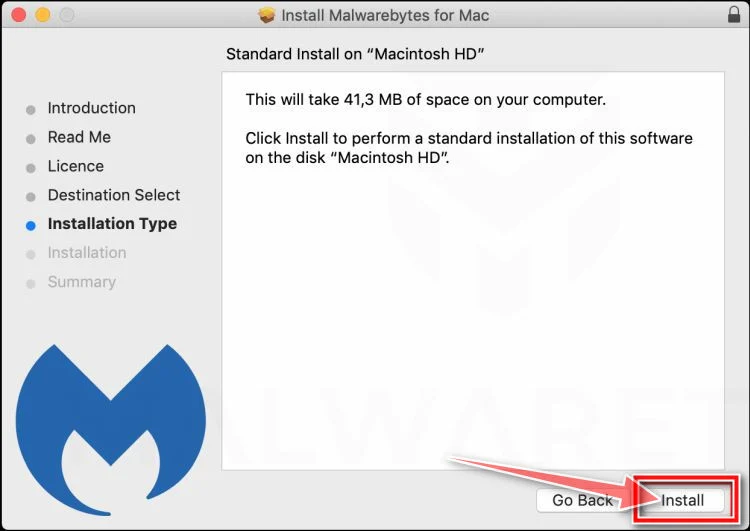
When the installation is complete, Malwarebytes opens to the Welcome to Malwarebytes screen. Click “Get started“.
-
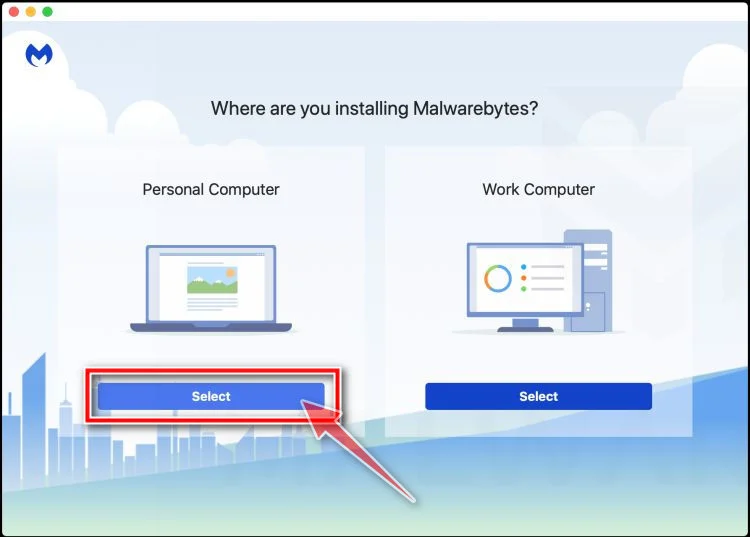
Select “Personal Computer” or “Work Computer”
Malwarebytes will ask what type of computer you’re installing it on. Click either Personal Computer or Work Computer, whichever applies.
-
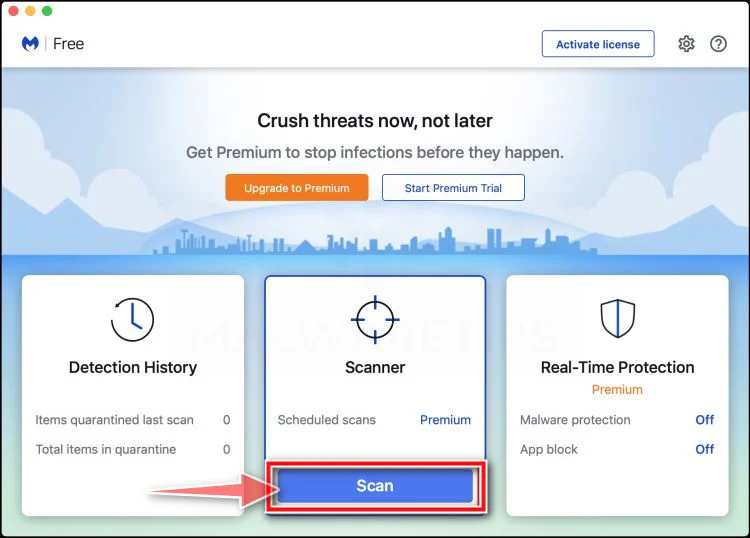
Start the Scan
Click the “Scan” button. Malwarebytes will automatically update its detection database and begin checking your Mac for malware.
-
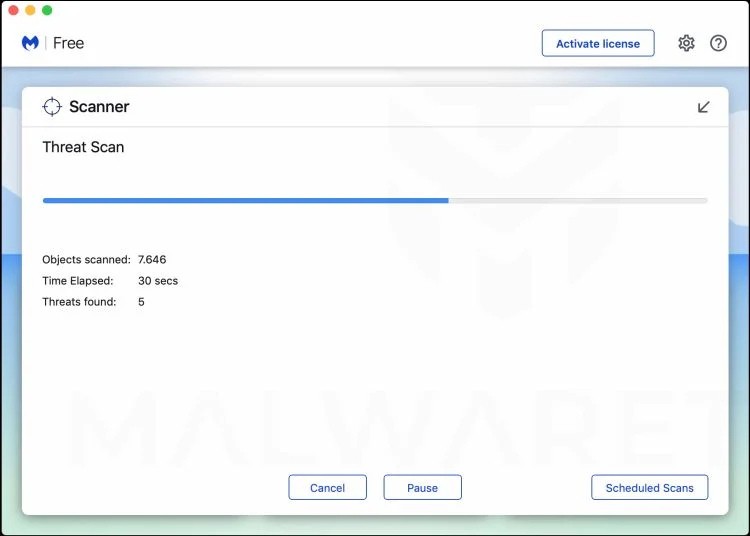
Wait for the Scan to Finish
Malwarebytes will scan your Mac for adware, browser hijackers, and other malicious programs. This can take a few minutes, so feel free to do something else — just check back occasionally to see the progress.
-
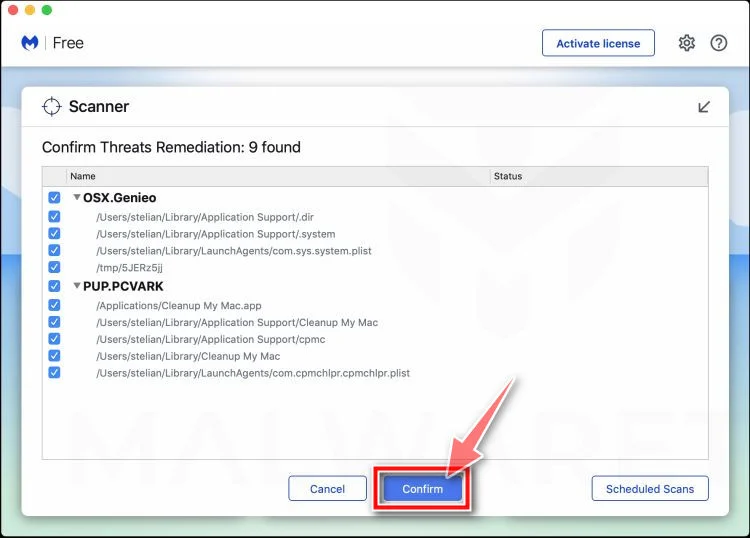
Quarantine the Detected Threats
When the scan is done, you’ll see a list of everything Malwarebytes found. Click the “Quarantine” button to remove all the threats at once.
-
Restart Your Mac
Malwarebytes will now remove all the malicious files it found. Some threats can only be fully removed after a reboot — if Malwarebytes asks you to restart, allow it. Once you’re logged back in, your Mac is clean.
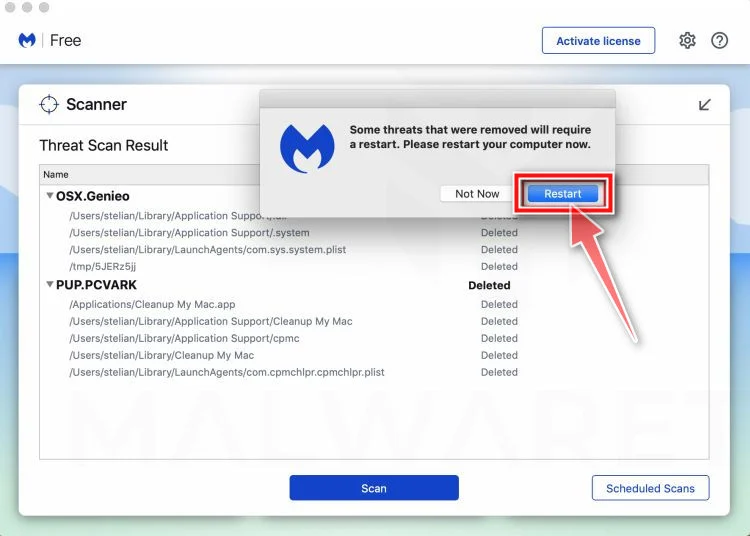
That’s it — your Mac is now free of adware, rogue browser extensions, and other potentially harmful software.
If you are still experiencing problems while trying to remove a malicious program from your computer, please ask for help in our Mac Malware Removal Help & Support forum.
Run a Malware Scan with Malwarebytes for Android
Malwarebytes for Android automatically detects and removes dangerous threats like malware and ransomware so you don’t have to worry about your most-used device being compromised. Aggressive detection of adware and potentially unwanted programs keeps your Android phone or tablet running smooth.
-
Download Malwarebytes for Android.
You can download Malwarebytes for Android by clicking the link below.
Get Malwarebytes for AndroidOpens Google Play in a new tab.Want real-time protection? See Malwarebytes Premium for AndroidMalwarebytes for AndroidScans your phone and removes malware at no cost -
Install Malwarebytes for Android on your phone.
In the Google Play Store, tap “Install” to install Malwarebytes for Android on your device.

When the installation process has finished, tap “Open” to begin using Malwarebytes for Android. You can also open Malwarebytes by tapping on its icon in your phone menu or home screen.

-
Follow the on-screen prompts to complete the setup process
When Malwarebytes will open, you will see the Malwarebytes Setup Wizard which will guide you through a series of permissions and other setup options.
This is the first of two screens that explain the difference between the Premium and Free versions. Swipe this screen to continue.
Tap on “Got it” to proceed to the next step.
Malwarebytes for Android will now ask for a set of permissions that are required to scan your device and protect it from malware. Tap on “Give permission” to continue.
Tap on “Allow” to permit Malwarebytes to access the files on your phone.
-
Update database and run a scan with Malwarebytes for Android
You will now be prompted to update the Malwarebytes database and run a full system scan.

Click on “Update database” to update the Malwarebytes for Android definitions to the latest version, then click on “Run full scan” to perform a system scan.

-
Wait for the Malwarebytes scan to complete.
Malwarebytes will now start scanning your phone for adware and other malicious apps. This process can take a few minutes, so we suggest you do something else and periodically check on the status of the scan to see when it is finished.

-
Click on “Remove Selected”.
When the scan has been completed, you will be presented with a screen showing the malware infections that Malwarebytes for Android has detected. To remove the malicious apps that Malwarebytes has found, tap on the “Remove Selected” button.

-
Restart your phone.
Malwarebytes for Android will now remove all the malicious apps that it has found. To complete the malware removal process, Malwarebytes may ask you to restart your device.
That’s it — your Android phone is now clean — no more malicious apps, adware, or browser redirects.
If you are still having problems with your phone after completing these instructions, then please follow one of the steps:
- Restore your phone to factory settings by going to Settings > General management > Reset > Factory data reset.
- Ask for help in our Mobile Malware Removal Help & Support forum.
Stay Protected: Block Ads and Malicious Sites
Now that your device is clean, keep it that way. Most infections start with a malicious ad or a fake download button — so blocking them at the source is your best defense.
We recommend AdGuard, which blocks malicious ads, phishing pages, and dangerous redirects before they can reach you.
👉 Download AdGuard and browse safely
Frequently Asked Questions About the FindFunds.us Scam
Is FindFunds.us a legitimate website?
No, FindFunds.us is not a legitimate site. While it claims to help you find unclaimed federal or state money, it does not connect to any official government databases. Instead, it uses deceptive tactics to gather your personal data and redirect you to unrelated third-party offers.
How does FindFunds.us scam users?
FindFunds.us collects personal information under the pretense of a free search for unclaimed money. Rather than delivering results, it redirects users to unrelated affiliate sites. These sites may push you to complete offers, sign up for services, or disclose even more information, all while the scammers earn commissions.
What are the warning signs that FindFunds.us is a scam?
Key red flags include:
- A newly registered domain
- No About Us or contact information
- Suspicious redirects to non-government websites
- No verified reviews or success stories
- Vague language and urgency-based messaging
- No proof of government affiliation
What kind of personal data does FindFunds.us collect?
Users are typically asked to enter:
- Full name
- Home address
- Email address
- Phone number
- Sometimes demographic or location details
This information may be sold to marketers or used in identity theft schemes.
Can FindFunds.us actually find unclaimed money for me?
No. It does not access official databases or government services. If you want to find legitimate unclaimed funds, visit recognized sources such as your state treasury department or the National Association of Unclaimed Property Administrators (www.unclaimed.org).
What happens after I enter my information on FindFunds.us?
After submitting your details, you are redirected to unrelated platforms like e-commerce or survey sites. These pages have nothing to do with unclaimed funds and may even require more personal details to claim fictional “rewards.”
Is FindFunds.us connected to any government agency?
No. There is no evidence linking FindFunds.us to the U.S. Treasury, IRS, or any state government. All associations implied by the website are unfounded and unverified.
What should I do if I gave them my information?
Immediately take these steps:
- Stop using the site
- Change your passwords and enable two-factor authentication
- Monitor your credit for suspicious activity
- Report the scam to the FTC and other authorities
- Warn others to prevent more victims
Can I get my data removed from FindFunds.us?
Unfortunately, since the site lacks transparency and legal accountability, there’s no clear way to request data deletion. Focus instead on protecting your digital identity going forward.
Are there safe alternatives to find unclaimed money?
Yes. Use the following trusted sources:
- Your state’s unclaimed property office (usually on a .gov site)
- www.unclaimed.org (NAUPA-endorsed)
- IRS.gov for federal stimulus checks or refunds
These sources are secure, free, and do not require third-party involvement.
Why does FindFunds.us look so professional if it’s a scam?
Many scams invest in high-quality design to build false credibility. A clean interface doesn’t guarantee legitimacy. Always verify before sharing information by checking the site’s age, looking for real reviews, and confirming official affiliations.
How can I avoid scams like this in the future?
Stay alert by:
- Avoiding unfamiliar sites that request personal data
- Looking for .gov domains when dealing with government programs
- Checking site reviews and ownership records
- Being skeptical of urgent or “too good to be true” claims
If in doubt, search the site name plus the word “scam” to see if others have reported it.
The Bottom Line
FindFunds.us presents itself as a free public service, but its real agenda is far more troubling. The clean design and friendly language are a mask for a data-harvesting operation that misleads users and profits from redirects to unrelated affiliate sites.
With no ties to official agencies, no proof of value, and multiple signs of deception, this site should be avoided at all costs. If you’re genuinely trying to locate unclaimed funds, your best bet is to visit established sources like:
- Your state’s official treasury department website
- The National Association of Unclaimed Property Administrators (www.unclaimed.org)
- The U.S. Department of the Treasury or IRS.gov for federal payments
Always verify a site’s legitimacy before entering any personal details. Staying cautious online isn’t just smart—it’s essential.
Be vigilant, trust your instincts, and help others do the same by spreading awareness.

Join the discussion
0 commentsShare your experience or ask a question about this article.
Discussion
Start the conversation
Have a question or something useful to share? Add the first comment.