Don’t Fall for the Geek Squad Protection Renewal Email Scam
Written by: Thomas Orsolya
Published on:
Scammers are getting smarter, and one of the most widespread frauds today is the Geek Squad Protection Renewal Scam. It usually starts with an email that looks urgent, official, and convincing. Before you know it, you may be speaking with a fake support agent who promises to help, but instead steals money, personal details, or access to your devices. This article breaks down exactly how the scam works, why it is so successful, and what to do if you have already been targeted.
Scam Overview
The Geek Squad Protection Renewal Scam has become one of the most common tech support frauds circulating online. It pretends to be an official communication from Geek Squad, which is the real tech support division of Best Buy. Scammers take advantage of this well known brand because many people recognize the name and assume the email is legitimate. They rely on urgency, confusion, and fear to trick victims into acting before thinking.
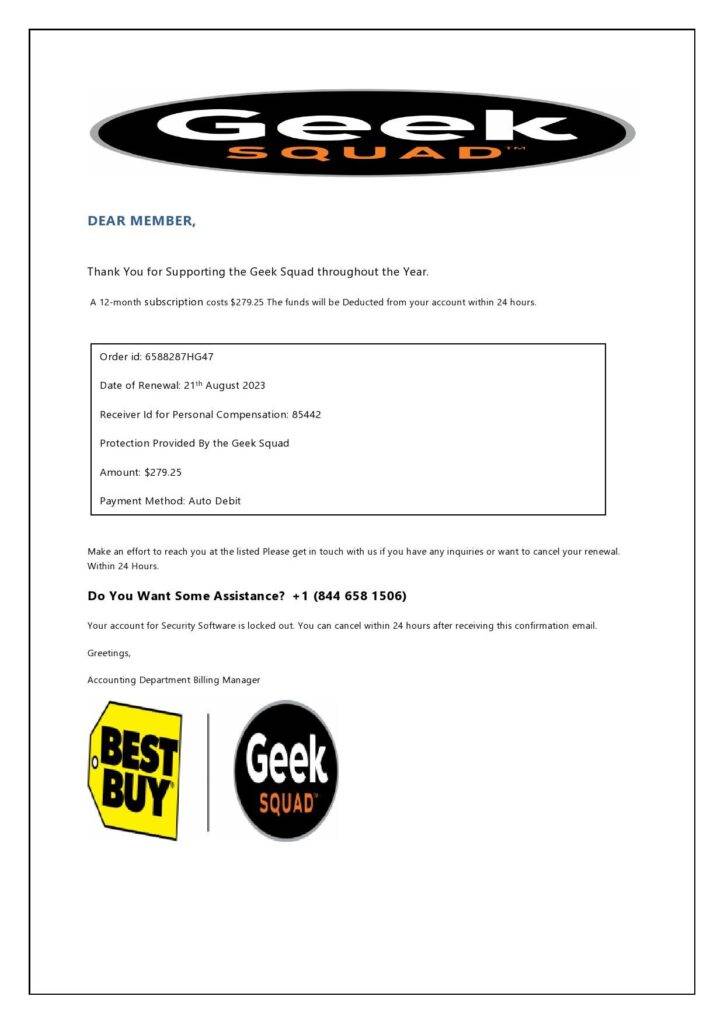
This scam often starts with a renewal notice that arrives in your inbox, similar to the following example:
Your Geek Squad renewal is coming up soon. To ensure uninterrupted access, an automatic payment of $107.99 will be processed within the next 24 hours for the next One Years period.
Transaction Summary
Renewal- Geek Squad Protection
Email-
Quantity- 2 devices
Duration- One Years
Payment Method- Auto Debit
Amount- $107.99
The renewal is part of your ongoing membership with Geek Squad. You may reach our billing team if you do not wish to continue or would like a refund.
Important Renewal Notice
Please refrain from contacting your bank or card provider regarding this payment. They are not authorized to cancel or dispute renewals for Geek Squad. Any interference in the process may result in report you to the authorities by better business bureau. or additional verification steps.
Kind Regards
The Geek Squad Company
This message looks formal but contains clear red flags. The fraudulent tone is disguised beneath official sounding language that claims you owe money or will soon be charged. Although the scammers reference Geek Squad, the email has nothing to do with the real company. The phone numbers lead directly to fake call centers operated by criminals who want access to victims’ devices and financial accounts.
Many people fall for the scam because the email arrives unexpectedly, includes a real company name, and warns that a payment will be processed soon. Scammers know that the fear of being charged for something you never wanted is powerful. They play on that emotion by placing pressure on victims to call immediately.
They often include a notice telling the recipient not to contact their bank. This is a strategic move. If victims call their bank first, they might discover the email is fake. By instructing people not to dispute the charge, scammers hope to isolate victims and push them directly into their traps.
Once a victim calls the provided number, the scam deepens. The scammers pretend to be Geek Squad agents who are ready to cancel the charge. They may ask for remote access to your computer through software such as Anydesk, TeamViewer, or Quick Assist. They justify this by claiming they need to issue a refund or secure the device. Once connected, they can steal passwords, banking details, or files.
The scammers may also claim your device is infected with malware or that hackers are inside your system. They use these scare tactics to persuade you to follow every instruction they give. Their goal is to gain complete control over your device or convince you to send money through unsafe methods.
Gift card payments are another hallmark of this scam. Scammers often direct victims to buy gift cards from stores and read the codes over the phone. This method is untraceable and irreversible, making it ideal for fraudsters.
The Geek Squad Protection Renewal Scam is constantly evolving, but the foundation remains the same. Scammers impersonate a trusted brand, create a fake renewal alert, apply pressure, and then exploit victims who are trying to avoid unexpected charges. They thrive on confusion, urgency, and fear. Because the scam looks professional, many people who would never fall for obvious fraud still become victims.
This scam is just one example of tech support fraud, a category that the FBI lists as one of the most financially damaging cybercrimes. The losses continue to grow every year because scammers constantly refine their techniques. They target people of all ages and experience levels. Even tech savvy individuals can fall victim because these messages look and sound legitimate.
What makes this particular scam so dangerous is the overlapping layers of manipulation. The fake renewal email acts as the hook. The phone call serves as the trap. The remote access session becomes the point of attack. The scammers maintain a calm, friendly tone while guiding the victim step by step deeper into the scheme. The longer the interaction continues, the more damage can be done.
Understanding how this scam operates is critical, and the next section goes deeper into each stage of the process. The more you know about the mechanics of this fraud, the easier it becomes to recognize and avoid it.
How The Scam Works
Understanding the Geek Squad Protection Renewal Scam step by step will help you identify it instantly and protect yourself before any damage occurs. Although the scammers may adjust small details, the core method remains consistent. Below is a highly detailed breakdown of how the scam unfolds from start to finish, showing the psychological techniques and technical strategies these criminals use to manipulate victims.
Step 1: The Fake Renewal Email Arrives
Everything begins with a fake renewal email that appears to come from Geek Squad. The scammers use official looking formatting, logos, transaction numbers, and wording that resembles an actual customer service message. The email may claim you purchased a renewal plan for your devices or that a charge will be processed in the next 24 hours.
The email you received is a common example. It includes made up transaction IDs, a fake reference number, and a falsely urgent tone. Scammers intentionally send these emails without any prior context so the victim panics and believes a mistake has occurred.
The email always includes one or more phone numbers. These numbers are not connected to Geek Squad or Best Buy. They are routed to call centers operated by scammers in various countries. Once the scammers get you on the phone, they can begin manipulating you directly.
Step 2: The Sense of Urgency Creates Pressure
Scammers design these messages to provoke immediate fear. They insist the charge will go through soon and that only their support team can help. This combination of urgency and helplessness triggers instinctive reactions. Most people want to avoid being charged for something they never ordered. This emotional response is exactly what scammers rely on.
The warning that you should not contact your bank is another psychological tactic. Real companies never tell customers to avoid contacting their bank. Scammers include this message because they want to cut off victims from legitimate sources of help.
Step 3: The Victim Calls the Fake Support Number
Once a victim calls the listed phone number, the scam truly begins. The call is answered by a scammer pretending to be a customer service agent. They will sound professional, polite, and experienced. They may even use fake ID numbers or scripted greetings to seem more credible.
They will ask for details such as your name, email, or transaction number. These details help them personalize the interaction, making the scam feel more authentic.
Step 4: The Scammer Offers to Cancel the Charge
The scammer will claim they can cancel the renewal or issue a refund. This reassures the victim and builds a sense of trust. The scammer makes it seem like they are solving your problem, when in reality, they are setting the stage for deeper manipulation.
They may then say they need to verify your device, check for system issues, or confirm account details before processing the cancellation. This is only a pretext to push the next step.
Step 5: They Ask for Remote Access to Your Device
The next step is one of the most dangerous. The scammer will ask you to install a remote access tool such as Anydesk, TeamViewer, GoToAssist, or Quick Assist. These tools allow the scammer to control your screen and access everything on your device.
The scammer will say they need remote access to process the refund, cancel the renewal, check for errors, or remove supposed malware. These are all lies. Their real goal is full access to your files, passwords, banking apps, email accounts, and browser data.
Once the software is installed, scammers can move freely through your device. They may minimize or hide windows to prevent you from seeing what they are doing. They may open your bank account or email account without your awareness.
Step 6: The Refund Manipulation Trick
One of the most common techniques scammers use is called the refund trick. Here is how it works:
The scammer claims they issued a refund for your Geek Squad payment.
They then pretend that you accidentally received too much money. They will say something like: You were supposed to receive a refund of 107.99, but you accidentally typed 1,079.99.
They pretend this overpayment came from their system and now you must return the extra amount.
To pressure you, they may show a fake bank statement or fake online dashboard. They manipulate your browser to make it look like money was deposited.
None of this is real. There was never a refund, and no mistakes occurred. The scammers rely on confusion and urgency to force you into complying.
Step 7: They Demand Payment Through Gift Cards or Transfers
Once you believe you owe money, the scammer will instruct you to pay through gift cards or wire transfers. These payment methods are untraceable and irreversible. The scammer may demand the following:
Gift cards Apple gift cards Google Play gift cards Walmart gift cards Target gift cards Steam cards
Wire transfers Zelle Cash App Crypto transfers Bank withdrawal and mailing cash
The scammer will keep you on the phone the entire time. They will instruct you not to speak to cashiers, not to tell anyone what is happening, and not to hang up.
This behavior is common in fraud schemes because scammers want to keep victims isolated and under pressure.
Step 8: They Attempt to Steal More Money
Once scammers have made you pay once, they often continue. They may claim more mistakes occurred, or that your account is compromised, or that hackers are inside your computer. They use fear to keep the victim engaged.
The scammer’s ultimate goal is to drain your accounts, steal personal data, or gain enough information to commit identity theft.
Step 9: The Victim Realizes the Truth
Most victims realize they have been scammed only when they talk to their bank, a family member, or someone knowledgeable. By then, scammers may have taken large amounts of money or caused significant damage.
What To Do If You Have Fallen Victim To This Scam
If you have already responded to the email or spoken to the scammers, you need to take immediate action. The damage can be reversed or minimized if you act quickly.
Below are the most important steps to follow.
1. Disconnect the Device from the Internet Immediately
If you allowed remote access, disconnect from the internet right away. Turn off Wi Fi or unplug the Ethernet cable. This stops the scammer from continuing to access your device.
2. Uninstall Remote Access Software
Remove any remote access programs the scammer told you to install. Common examples include:
Anydesk TeamViewer GoToAssist Quick Assist
Search your applications list and uninstall them completely.
3. Change All Passwords
Assume the scammer may have seen or recorded your login information. Change passwords for:
Email Bank accounts Social media Shopping accounts Work accounts Cloud storage
Use strong, unique passwords for each account.
4. Contact Your Bank or Credit Card Provider
Even if the scammers told you not to contact your bank, you must do so. Explain you were targeted by a tech support scam. Your bank can:
Freeze your accounts Reverse fraudulent charges Monitor for suspicious activity Stop ongoing withdrawals
Acting quickly increases the chance of recovering funds.
5. Report the Scam
Report the fraud to the following agencies:
FTC Report site IC3 (FBI Internet Crime Complaint Center) Your local police department Your bank’s fraud department
These reports help track scammers and protect others.
6. Scan Your Computer for Malware
Scammers may have installed malicious files. Run a full system scan using trusted antivirus software. If you are unsure, consult a legitimate technician.
7. Notify Friends and Family
Scammers sometimes use stolen contacts for additional fraud. Inform people close to you so they can avoid related scams.
8. Monitor Your Accounts
Watch your bank accounts, credit reports, and email for unusual activity. Consider placing a fraud alert or credit freeze.
9. Educate Yourself to Prevent Future Scams
Now that you understand how this scam works, you can protect yourself and help others stay safe.
Is Your Device Infected? Run a Free Malware Scan
Slow performance, constant pop-ups, or strange behavior? These are classic signs of a malware infection. The fastest way to find out is to scan your device with Malwarebytes Anti-Malware Free — one of the most trusted malware removal tools available.
The free version detects and removes the most common threats, including:
Adware — the cause of those annoying pop-ups
Browser hijackers — unwanted redirects and changed homepages
Trojans and spyware — hidden programs stealing your data
Potentially unwanted programs (PUPs) — software you never asked for
👉 Select your device below — Windows, Mac, or Android — then follow the simple steps to download Malwarebytes, scan your system, and remove any threats it finds. The whole process takes about 5 minutes.
Malwarebytes for WindowsMalwarebytes for MacMalwarebytes for Android
Run a Malware Scan with Malwarebytes for Windows
Malwarebytes is one of the most popular and trusted anti-malware tools for Windows — and it’s completely free for removing infections. It catches threats that many antivirus programs miss, including adware, browser hijackers, and trojans. Follow the steps below to scan and clean your PC in just a few minutes.
Download Malwarebytes
Click the button below to download the latest version of Malwarebytes for Windows from the official source. The free version is all you need — it will scan your computer and remove adware, browser hijackers, and other malicious software at no cost.
(The link opens in a new page where your download will start)
Install Malwarebytes
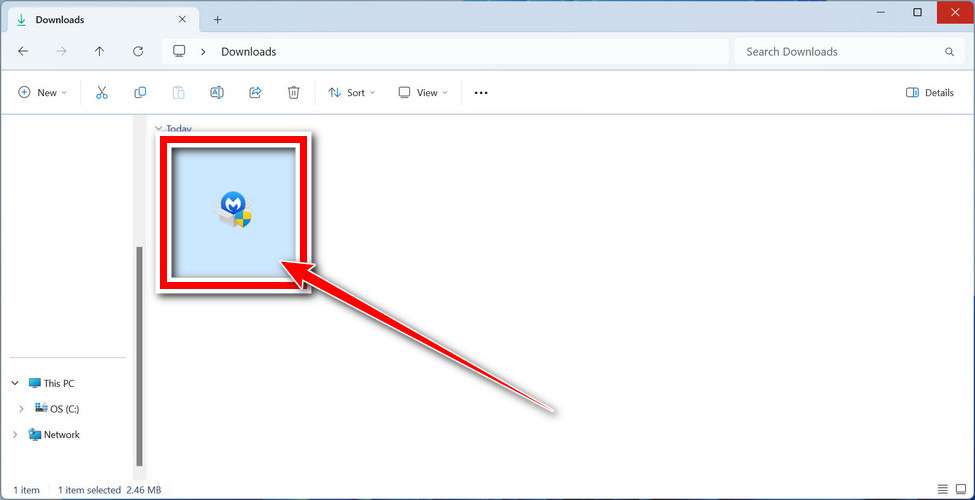
When the download finishes, open your Downloads folder and double-click the MBSetup file. If Windows shows a User Account Control pop-up, click “Yes” to allow the installation.
Follow the On-Screen Prompts to Install Malwarebytes
The setup wizard will walk you through a few quick screens:
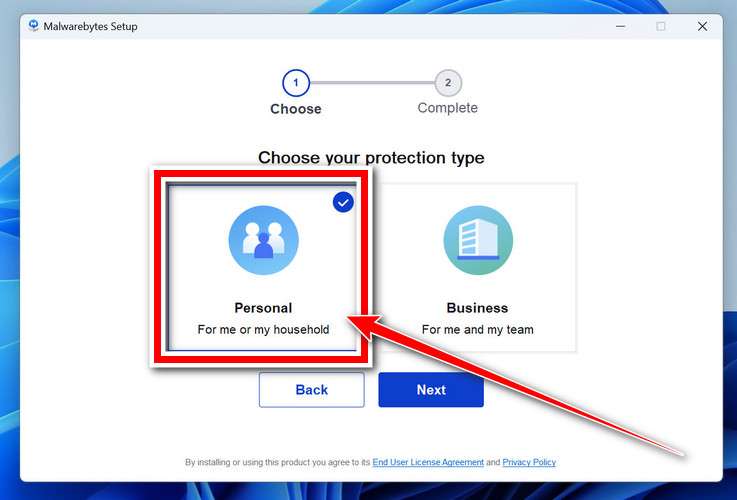
Choose where you’re installing the program — “Personal Computer” or “Work Computer” — then click Next.
Malwarebytes will now install on your device. This usually takes under a minute.
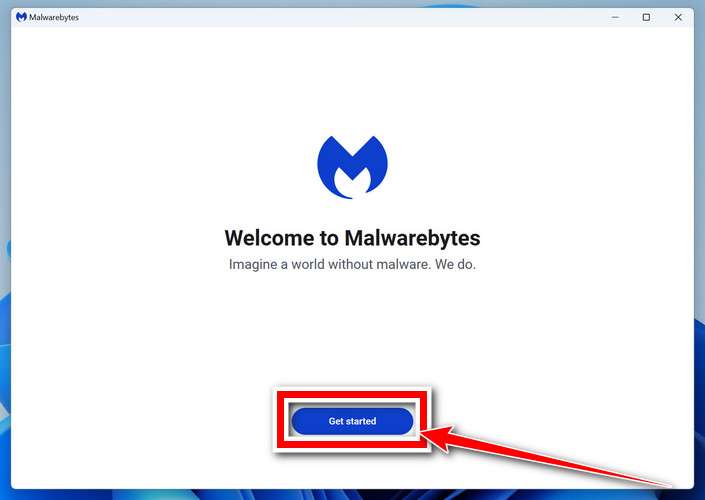
When installation is complete, the “Welcome to Malwarebytes” screen will open automatically.
On the final screen, click Open Malwarebytes to launch the program.
Enable “Scan for Rootkits”
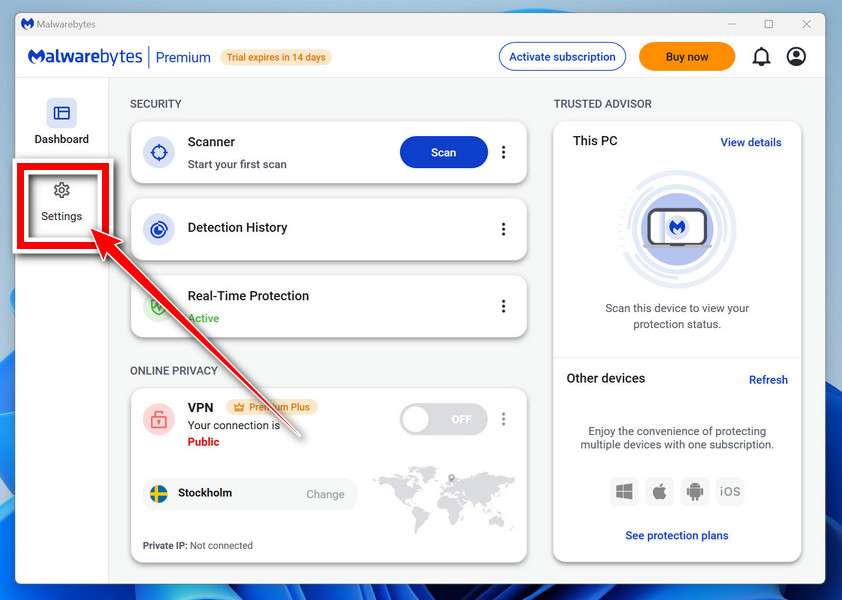
Before scanning, turn on rootkit detection so Malwarebytes can find even the most hidden threats. Click the Settings gear icon on the left side of the screen.
In the settings menu, find “Scan for rootkits” and click the toggle so it turns blue.
Done? Click “Dashboard” in the left pane to return to the main screen.
Start the Scan
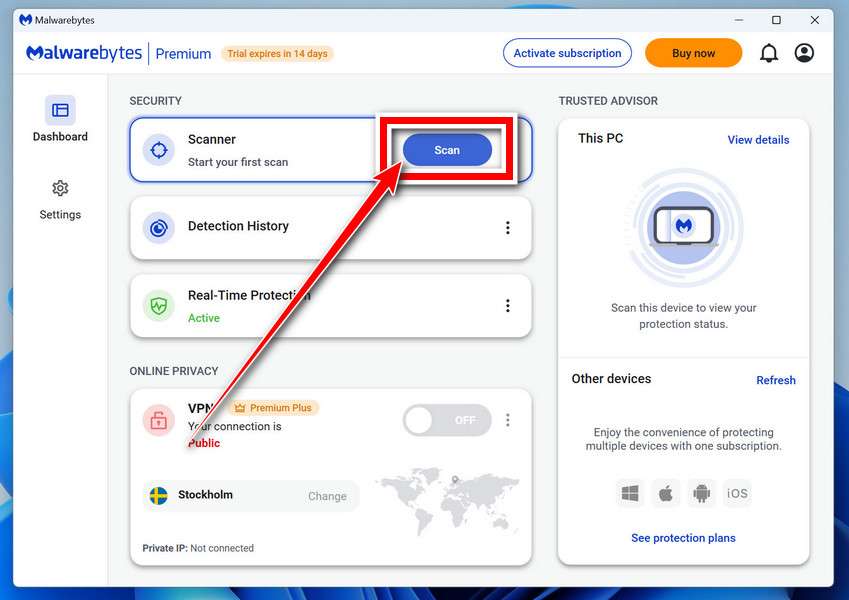
Click the blue Scan button. Malwarebytes will automatically update its virus database and start checking your computer for malware.
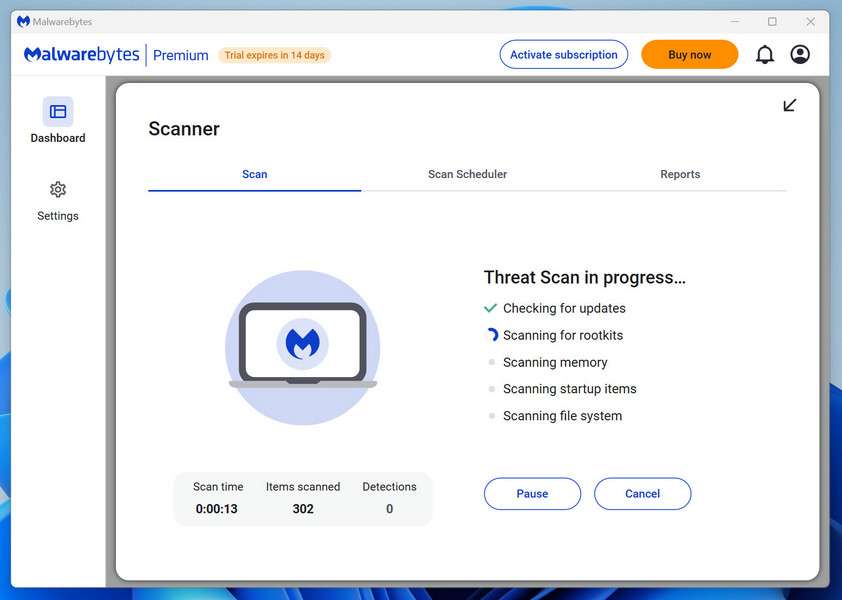
Wait for the Scan to Finish
The scan checks your entire system for browser hijackers and other malicious programs, so it can take several minutes. Feel free to do something else — just check back occasionally to see the progress.
Quarantine the Detected Threats
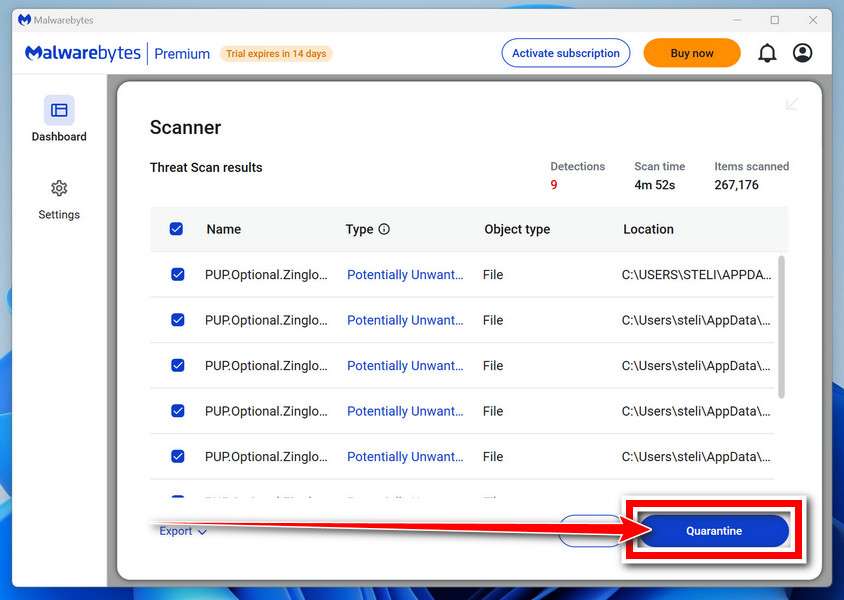
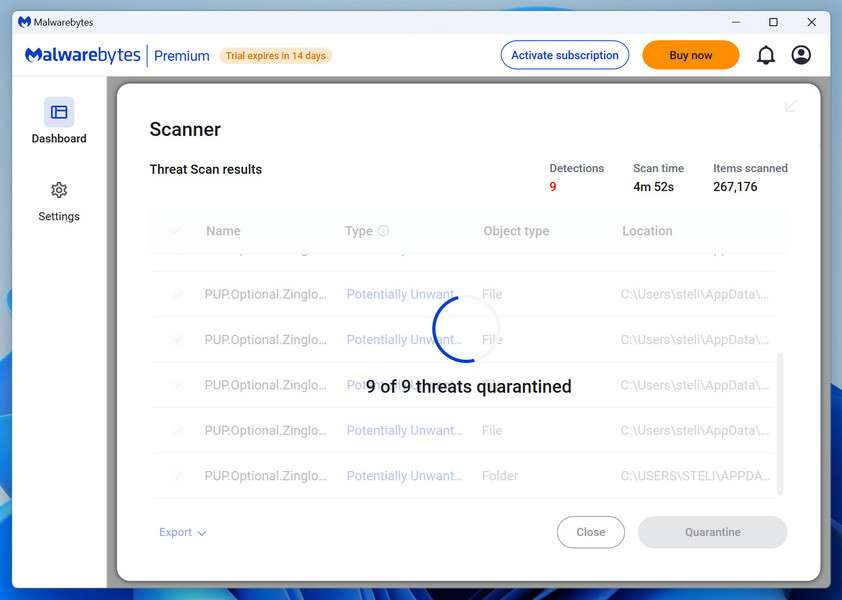
When the scan is done, you’ll see a list of everything Malwarebytes found — malware, adware, and potentially unwanted programs. Click the “Quarantine” button to remove all of them at once.
Malwarebytes will now remove the malicious files and registry entries and move them safely into quarantine.
Restart Your Computer
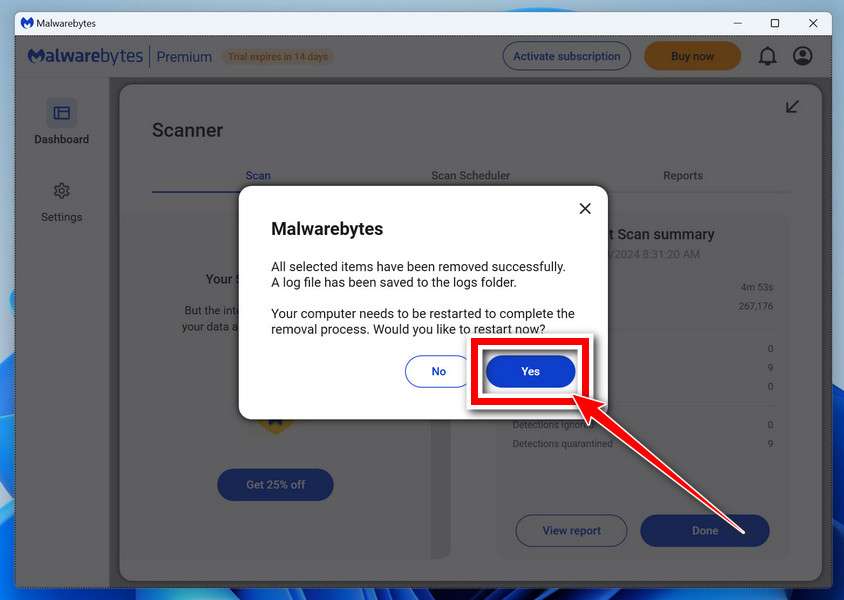
Some threats can only be fully removed after a reboot. If Malwarebytes asks you to restart, click Yes. Once you’re logged back in, your PC is clean and you can continue with the next steps in this guide.
When the scan finishes, click Quarantine to remove everything Malwarebytes found. That’s it — your Windows PC is now clean of trojans, adware, and other malware, and should be back to running smoothly.
If your current antivirus allowed this malicious program on your computer, you may want to consider purchasing Malwarebytes Premium to protect against these types of threats in the future. If you are still having problems with your computer after completing these instructions, then please follow one of the steps:
Malwarebytes for Mac is a free on-demand scanner that removes the malware other security software tends to miss — adware, browser hijackers, and unwanted programs included. Cleaning an infected Mac with Malwarebytes has always been completely free, and it’s our go-to recommendation. Follow the steps below to scan and clean your Mac in just a few minutes.
Download Malwarebytes for Mac
Click the button below to download the latest version of Malwarebytes for Mac.
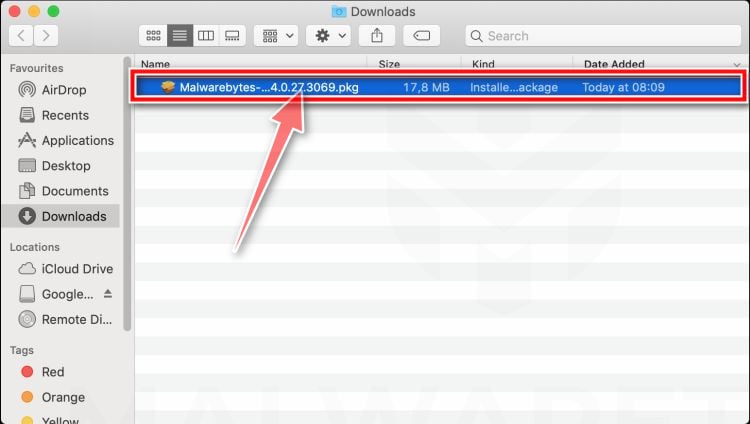
When the download finishes, open your Downloads folder and double-click the setup file to begin the installation.
Follow the On-Screen Prompts to Install Malwarebytes
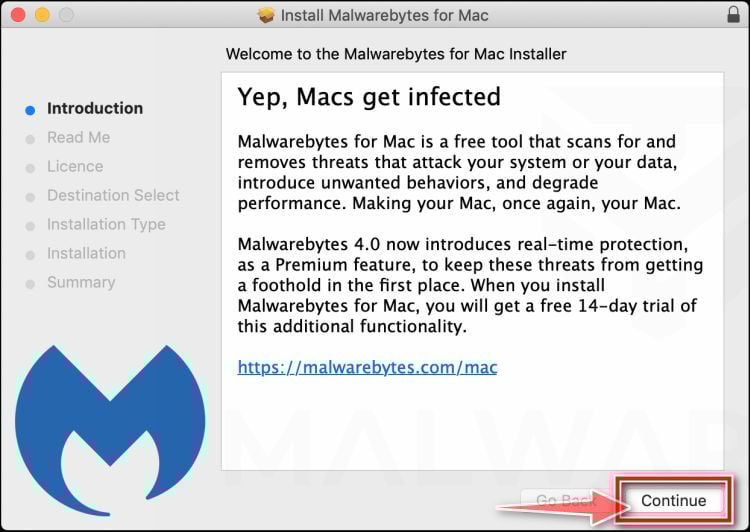
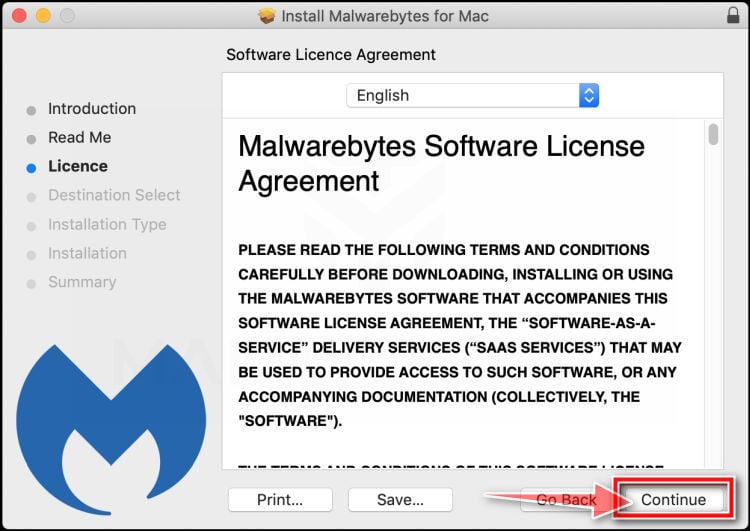
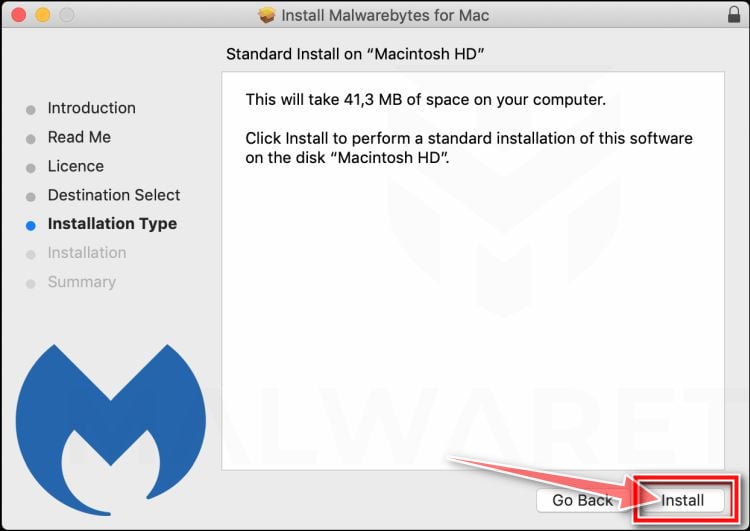
The Malwarebytes for Mac Installer will guide you through a few quick screens. Click “Continue” and keep following the prompts until the installation completes.
When the installation is complete, Malwarebytes opens to the Welcome to Malwarebytes screen. Click “Get started“.
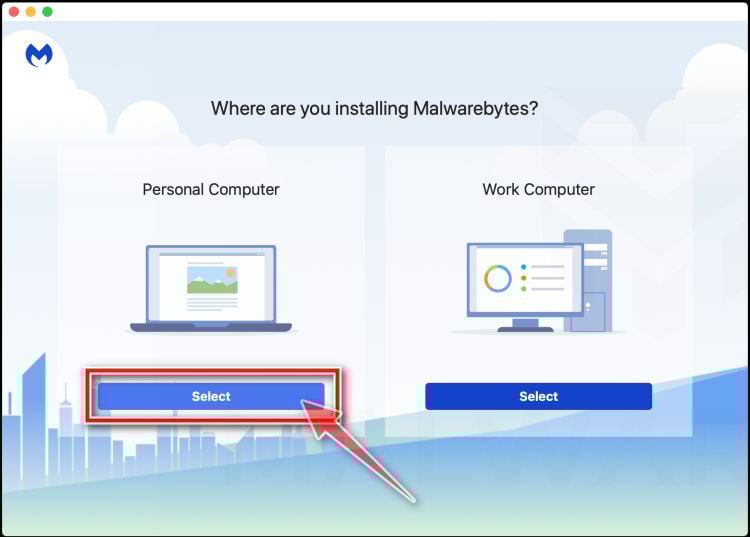
Select “Personal Computer” or “Work Computer”
Malwarebytes will ask what type of computer you’re installing it on. Click either Personal Computer or Work Computer, whichever applies.
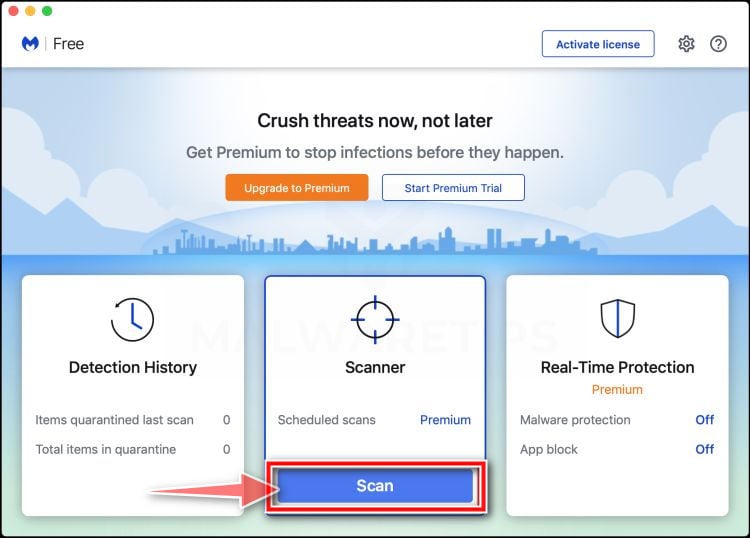
Start the Scan
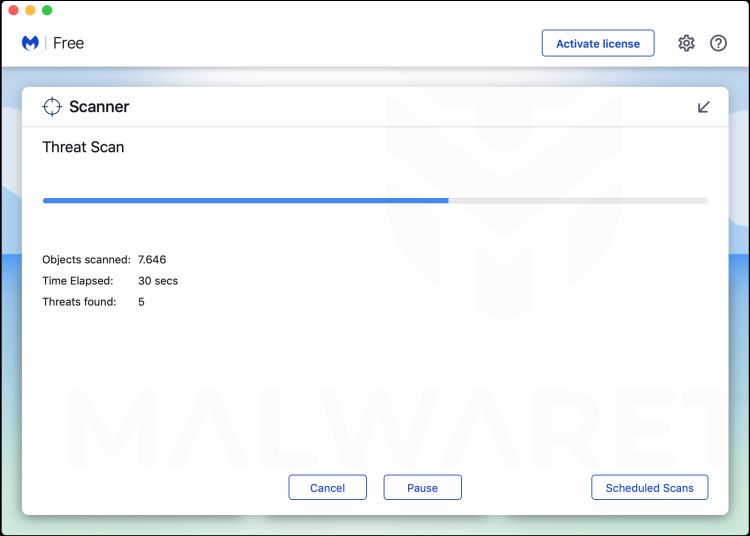
Click the “Scan” button. Malwarebytes will automatically update its detection database and begin checking your Mac for malware.
Wait for the Scan to Finish
Malwarebytes will scan your Mac for adware, browser hijackers, and other malicious programs. This can take a few minutes, so feel free to do something else — just check back occasionally to see the progress.
Quarantine the Detected Threats
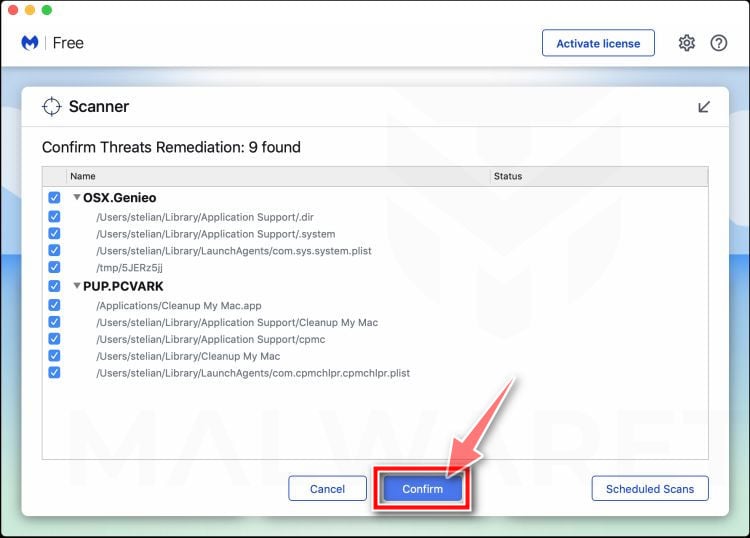
When the scan is done, you’ll see a list of everything Malwarebytes found. Click the “Quarantine” button to remove all the threats at once.
Restart Your Mac
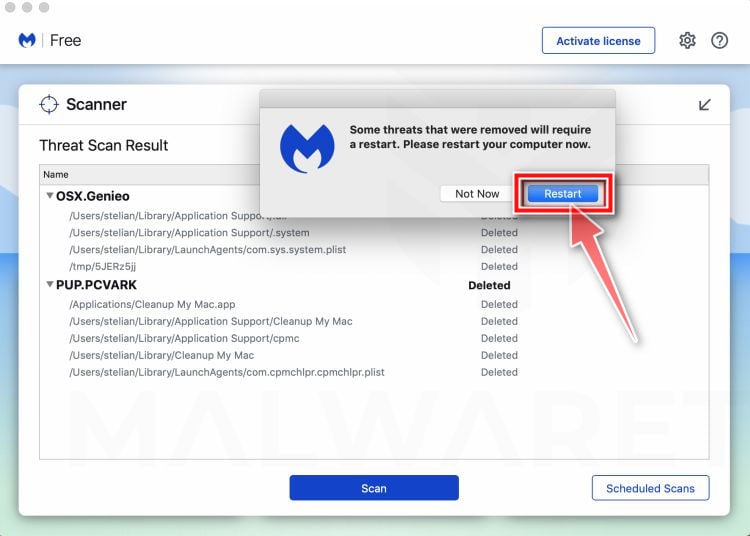
Malwarebytes will now remove all the malicious files it found. Some threats can only be fully removed after a reboot — if Malwarebytes asks you to restart, allow it. Once you’re logged back in, your Mac is clean.
Once the scan is done, remove every threat it detected. Your Mac is now free of adware, rogue browser extensions, and other potentially harmful software.
If your current antivirus allowed a malicious program on your computer, you might want to consider purchasing the full-featured version of Malwarebytes Anti-Malware to protect against these types of threats in the future. If you are still experiencing problems while trying to remove a malicious program from your computer, please ask for help in our Mac Malware Removal Help & Support forum.
Run a Malware Scan with Malwarebytes for Android
Malwarebytes for Android automatically detects and removes dangerous threats like malware and ransomware so you don’t have to worry about your most-used device being compromised. Aggressive detection of adware and potentially unwanted programs keeps your Android phone or tablet running smooth.
Download Malwarebytes for Android.
You can download Malwarebytes for Android by clicking the link below.
In the Google Play Store, tap “Install” to install Malwarebytes for Android on your device.
When the installation process has finished, tap “Open” to begin using Malwarebytes for Android. You can also open Malwarebytes by tapping on its icon in your phone menu or home screen.
Follow the on-screen prompts to complete the setup process
When Malwarebytes will open, you will see the Malwarebytes Setup Wizard which will guide you through a series of permissions and other setup options. This is the first of two screens that explain the difference between the Premium and Free versions. Swipe this screen to continue. Tap on “Got it” to proceed to the next step. Malwarebytes for Android will now ask for a set of permissions that are required to scan your device and protect it from malware. Tap on “Give permission” to continue. Tap on “Allow” to permit Malwarebytes to access the files on your phone.
Update database and run a scan with Malwarebytes for Android
You will now be prompted to update the Malwarebytes database and run a full system scan.
Click on “Update database” to update the Malwarebytes for Android definitions to the latest version, then click on “Run full scan” to perform a system scan.
Wait for the Malwarebytes scan to complete.
Malwarebytes will now start scanning your phone for adware and other malicious apps. This process can take a few minutes, so we suggest you do something else and periodically check on the status of the scan to see when it is finished.
Click on “Remove Selected”.
When the scan has been completed, you will be presented with a screen showing the malware infections that Malwarebytes for Android has detected. To remove the malicious apps that Malwarebytes has found, tap on the “Remove Selected” button.
Restart your phone.
Malwarebytes for Android will now remove all the malicious apps that it has found. To complete the malware removal process, Malwarebytes may ask you to restart your device.
After the scan, tap Remove Selected to delete all detected threats. Your Android phone is now clean — no more malicious apps, adware, or browser redirects.
If your current antivirus allowed a malicious app on your phone, you may want to consider purchasing the full-featured version of Malwarebytes to protect against these types of threats in the future. If you are still having problems with your phone after completing these instructions, then please follow one of the steps:
Restore your phone to factory settings by going to Settings > General management > Reset > Factory data reset.
Now that your device is clean, keep it that way. Most infections start with a malicious ad or a fake download button — so blocking them at the source is your best defense.
We recommend AdGuard, which blocks malicious ads, phishing pages, and dangerous redirects before they can reach you.
The Geek Squad Protection Renewal Scam is a fraudulent scheme where scammers send fake renewal emails pretending to be from Geek Squad. These emails claim you will be charged for a service plan you never purchased. The message includes fake transaction details, renewal dates, and customer support numbers that lead directly to scam call centers. Once you call, scammers pretend to help but instead attempt to steal your money or gain remote access to your device.
How can I tell if a Geek Squad renewal email is fake?
There are several clear warning signs. Fake Geek Squad emails often contain grammatical errors, threatening language, unusual formatting, and urgent claims that a charge will be processed within 24 hours. They also include phone numbers that do not belong to Best Buy or Geek Squad. Another red flag is when the email tells you not to contact your bank. Legitimate companies never discourage customers from verifying payments with financial institutions.
Why do scammers pretend to be Geek Squad?
Scammers choose Geek Squad because it is a widely recognized brand with millions of customers. Many people assume the email is legitimate because they have previously used Geek Squad services or know someone who has. This familiarity makes it easier for scammers to gain trust and manipulate victims into calling their fake support lines.
What happens if I call the number in the fake email?
If you call the phone number, you will be connected to a scammer pretending to be a Geek Squad representative. They will claim they can cancel the charge or issue a refund. During the conversation, they may ask you to install remote access software, provide personal information, or follow steps that allow them to view your banking information. Their primary goal is financial theft, not technical support.
Why do scammers ask for remote access to my computer?
The request for remote access is one of the most dangerous parts of the scam. Scammers use tools such as Anydesk, TeamViewer, or Quick Assist to control your screen. Once connected, they can view sensitive data, install malware, access online banking portals, and manipulate information. Remote access allows them to set up the conditions needed to steal money or commit identity fraud.
What is the refund overpayment trick used in this scam?
The overpayment trick is a manipulation technique. Scammers pretend to refund your payment, then claim you accidentally entered a higher amount, often hundreds of dollars more than intended. They insist you must return the difference. To pressure you, scammers may display fake bank pages or altered browser windows to convince you the extra money was deposited. The victim is then instructed to send the supposed difference through gift cards, wire transfers, or other irreversible methods.
Does Geek Squad ever call customers about renewals?
No. Geek Squad does not call or email customers demanding payment for renewals without prior authorization. They never instruct people to install remote access software, pay through gift cards, or send money through wire transfers. Any unsolicited communication requesting these actions is a scam.
Why do scammers ask for gift cards?
Scammers prefer gift cards because the payments cannot be reversed and offer near total anonymity. Once you read the gift card codes over the phone, the scammers immediately redeem them. Legitimate companies do not accept gift cards as a method of refund or payment for service plans. If someone asks for gift cards for support services, it is a scam.
What should I do if I clicked a link in the fake Geek Squad email?
If you clicked a link, but did not call the scammers or install anything, you should still take precautions. Run a full antivirus scan, update your passwords, and monitor your accounts for suspicious activity. Some scam emails contain malicious links designed to install spyware or collect login information.
What should I do if I gave a scammer remote access?
Disconnect your device from the internet immediately. Uninstall any remote access software they instructed you to download. Run a trusted antivirus or anti-malware program. Reset all passwords, especially banking and email passwords. Contact your bank to report the incident and monitor all accounts for fraudulent activity. It may also be wise to consult a legitimate computer technician to ensure your system is safe.
Can I recover money stolen during this scam?
Recovery depends on how the payment was made. Banks can sometimes reverse transactions if they were fraudulent. However, gift card payments and crypto transfers are almost impossible to recover. Acting quickly increases your chances of getting help. Contact your bank or financial institution as soon as you suspect fraud.
Should I report the Geek Squad Protection Renewal Scam?
Yes. Reporting helps track scammers and may protect other potential victims. You can report the scam to the FTC, IC3 (FBI Internet Crime Complaint Center), your bank’s fraud department, and your local police. Many authorities collect this data to identify patterns in cybercrime.
How can I protect myself from tech support scams?
Never call phone numbers listed in unsolicited emails. Always verify account charges directly through official websites or customer service numbers. Avoid downloading remote access tools unless you initiated the support request. Use strong passwords, enable two factor authentication, and keep your devices updated. Education and caution are your strongest defenses.
Why does the scam email insist I should not contact my bank?
The message discourages you from contacting your bank because scammers know that banks will immediately inform you the email is fake. This instruction is a manipulation tactic designed to isolate victims and reduce the risk of the scam being exposed before scammers obtain money or access.
Is the Better Business Bureau involved in this scam?
No. References to the Better Business Bureau in scam emails are completely fraudulent. Scammers use the BBB name to sound more official and intimidating. The Better Business Bureau does not threaten consumers, does not handle cancellation disputes in this manner, and has no connection to these emails.
Are the phone numbers in the fake email legitimate Geek Squad numbers?
No. Numbers such as +1 808 289 8163 and +1 808 388 8408 are not associated with Geek Squad or Best Buy. They belong to scam call centers. If you search these numbers online, you will find multiple reports linking them to tech support fraud.
Can scammers hack my device even after I hang up?
If you installed remote access software and granted control, scammers may still have access until you remove the software. Once uninstalled, and after changing passwords and scanning for malware, they cannot continue monitoring your device. Taking immediate action is essential to prevent deeper compromise.
The Bottom Line
The Geek Squad Protection Renewal Scam succeeds by combining urgency, fear, and impersonation. Scammers pretend to be trusted support agents, but their only goal is to gain access to your devices and money. Recognizing the warning signs is the best way to avoid becoming a victim. If you have already fallen for the scam, take swift action to protect your accounts, your identity, and your devices. Knowledge and quick response are your best defenses against this fast growing threat.
10 Rules to Avoid Online Scams
Here are 10 practical safety rules to help you avoid malware, online shopping scams, crypto scams, and other online fraud. Each tip includes a quick “if you already got hit” action.
Stop and verify before you click, log in, download, or pay.
Most scams win by creating urgency. Verify using a trusted method: type the website address yourself, use the official app, or call a known number (not the one in the message).
If you already clicked: close the page, do not enter passwords, and run a malware scan.
Keep your operating system, browser, and apps updated.
Updates patch security holes used by malware and malicious ads. Turn on automatic updates where possible.
If you saw a scary “update now” pop-up: close it and update only through your device settings or the official app store.
Use layered protection: antivirus plus an ad blocker.
Antivirus helps block malware. An ad blocker reduces scam redirects, phishing pages, and malvertising.
If your browser is acting weird: remove unknown extensions, reset the browser, then run a full scan.
Install apps, software, and extensions only from official sources.
Avoid cracked software, “keygens,” and random downloads. During installs, choose Custom/Advanced and decline bundled offers you do not recognize.
If you already installed something suspicious: uninstall it, restart, and scan again.
Treat links and attachments as untrusted by default.
Phishing often impersonates delivery services, banks, and popular brands. If it is unexpected, do not open attachments or log in through the message.
If you entered credentials: change the password immediately and enable 2FA.
Shop safely: research the store, then pay with protection.
Be cautious with brand-new stores, “closing sale” stories, and prices that make no sense. Prefer credit cards or PayPal for dispute options. Avoid wire transfers, gift cards, and crypto payments.
If you already paid: contact your card issuer or PayPal quickly to dispute the transaction.
Crypto rule: never pay a “fee” to withdraw or recover money.
Common patterns include fake profits, then “tax,” “gas,” or “verification” fees. Another is a “recovery agent” who demands upfront crypto.
If you already sent crypto: stop paying, save evidence (wallet addresses, TXIDs, chats), and report the scam to the platform used.
Secure your accounts with unique passwords and 2FA (start with email).
Use a password manager and unique passwords for every account. Enable 2FA using an authenticator app when possible.
If you suspect an account takeover: change passwords, sign out of all devices, and review recent logins and recovery settings.
Back up important files and keep one backup offline.
Backups protect you from ransomware and device failure. Keep at least one backup on an external drive that is not always connected.
If you suspect infection: do not connect backup drives until the system is clean.
If you think you are a victim: stop losses, document evidence, and escalate fast.
Move quickly. Speed matters for disputes, account recovery, and limiting damage.
Stop payments and contact: do not send more money or respond to the scammer.
Call your bank or card issuer: block transactions, replace the card if needed, and start a dispute or chargeback.
Secure your email first: change the email password, enable 2FA, and remove unfamiliar recovery options.
Secure other accounts: change passwords, enable 2FA, and log out of all sessions.
Scan your device: remove suspicious apps or extensions, then run a full malware scan.
Save evidence: screenshots, emails, order pages, tracking pages, wallet addresses, TXIDs, and chat logs.
Report it: to the payment provider, marketplace, social platform, exchange, or wallet service involved.
These rules are intentionally simple. Most online losses happen when decisions are rushed. Slow down, verify independently, and use payment methods and account controls that give you recourse.
Thomas is an expert at uncovering scams and providing in-depth reporting on cyber threats and online fraud. As an editor, he is dedicated to keeping readers informed on the latest developments in cybersecurity and tech.