


The used car comes with a fresh MOT pass, which takes one worry off your mind. The record matches the registration the seller gave you.
Then another garage finds a fault that raises an awkward question. What exactly does that pass tell you about the car?
Overview
A pass can be on the record without a proper test
A ghost MOT is a record of a vehicle passing its MOT when the required inspection didn’t actually take place. The record itself can look perfectly ordinary.
The UK’s Driver and Vehicle Standards Agency, or DVSA, reported a Bristol case involving 223 vehicles recorded as passing despite never being tested.
The court imposed suspended sentences on the two men involved. DVSA canceled the fraudulent certificates and contacted the affected owners, rather than treating the recorded passes as valid tests.
Three different problems that can look alike
- A fabricated paper certificate may not match anything in the official vehicle history.
- A ghost MOT can appear in the official history even though the vehicle wasn’t properly inspected.
- A properly tested car can develop a fault after it passed, including faults not covered by the test.
That distinction stops two common mistakes. Don’t assume an official record proves the car is safe today, or that a new fault automatically proves someone committed fraud.
What a buyer can establish before handing over money
Check that the vehicle details match the records you opened yourself. Look at earlier tests, previous defects and any change that needs explaining.
Arrange a separate mechanical inspection if you need an assessment of the car’s present condition. A recent pass is not an independent opinion about whether it’s worth buying.
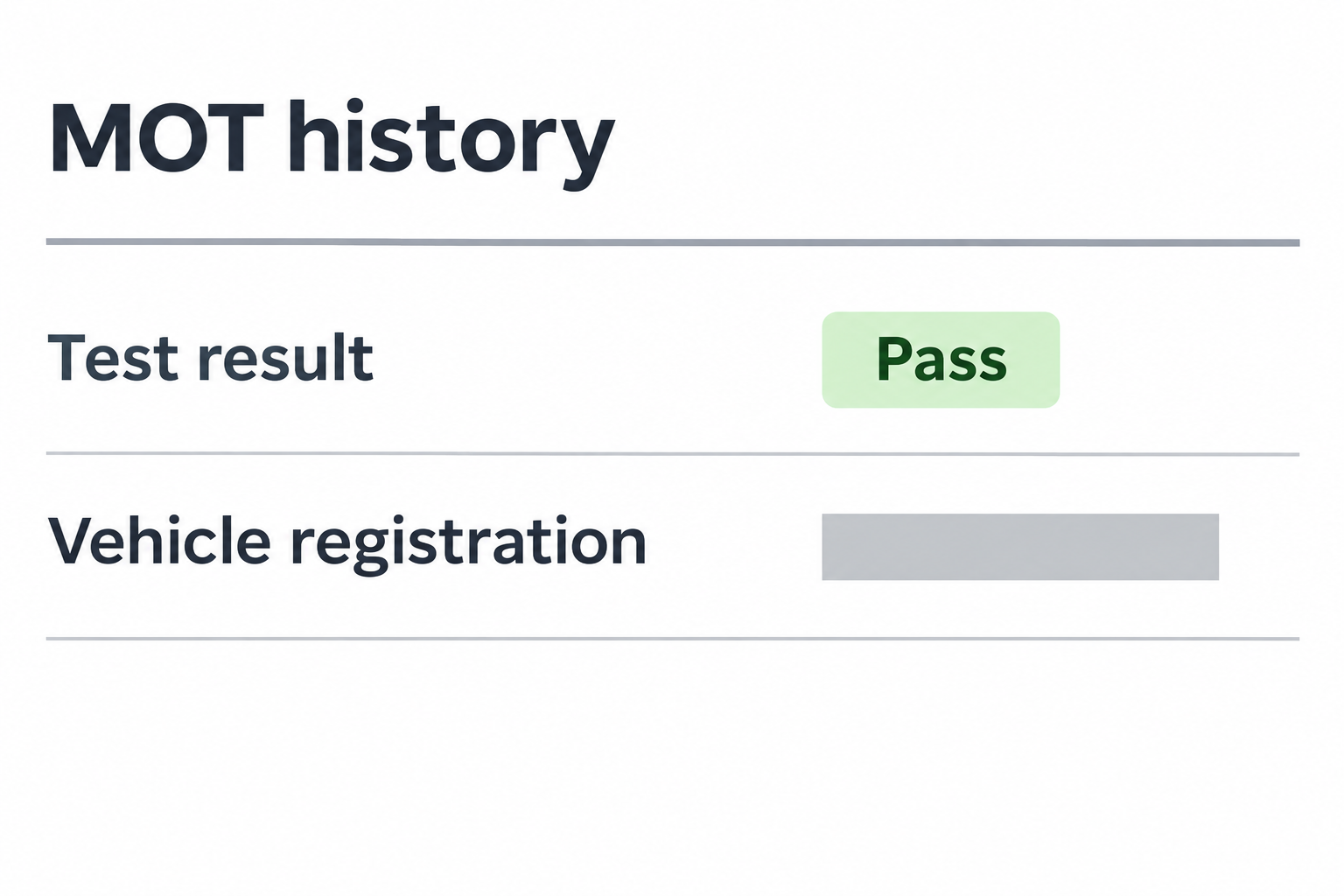
The image above illustrates a pass on a vehicle history screen. It doesn’t represent a real certificate or one of the vehicles in the court case.
How the Ghost MOT Scam Works
Step 1: The pass becomes part of the car’s sales pitch
A private seller or dealer may mention a recent MOT as reassurance, especially if the car has high mileage or you’re buying without seeing it first.
Most fresh passes are not evidence of fraud. The concern is a promise that uses the paper or record as a reason to avoid a proper examination.
If the seller promotes a guaranteed pass before anyone has looked at the car, ask what is being promised. You should be paying for a test, not an outcome.
Step 2: A record substitutes for an actual inspection
In the case DVSA prosecuted, cars received passes without going through the required checks. The danger came from treating a recorded conclusion as if the work itself had happened.
That is different from someone printing a document at home. Checking the official database is valuable, but a database entry cannot reveal everything the tester did or didn’t do.
The questions that help you now are when it was tested and what you can verify independently. You don’t need to reconstruct how the false record was entered.
Step 3: The buyer or driver relies on what the record says
A driver may continue using a car without realizing nobody checked its safety items. A buyer may agree to a price they wouldn’t pay after seeing an independent report.
A tire, brake, steering or light problem can matter right away.
Not every affected car had a confirmed defect, but a false pass takes away the protection of an actual test.
If you’re looking at a car online, ask for inspection arrangements before making a deposit.
A seller who insists the fresh pass makes inspection unnecessary hasn’t answered your safety question.
Step 4: A later fault or official notice brings the issue to light
You may notice a problem on the road, or a workshop may find something during unrelated service.
Record what it finds and when, rather than assuming the fault was present earlier.
If DVSA tells you a certificate has been canceled, independently confirm its instructions before driving.
Don’t let a seller’s claim that a replacement is coming decide when you can use the car.
Investigators may need the original paperwork, digital listing, and a dated professional finding. Keep those items before deleting messages or letting the seller replace their description.
What the Official MOT History Can and Cannot Tell You
Use the registration to find the car’s own record
Start at the official MOT history service. Compare its make and relevant vehicle details with the car you are actually considering, instead of trusting the screenshot in an advertisement.
Read back more than the top result. A previous failure, repeated advisory, or sudden mileage inconsistency may need a reasonable explanation and supporting paperwork.
A record with a mistake is not by itself a ghost MOT. Ask the seller or testing center about an inconsistency, and keep the answer in writing.
Don’t confuse an MOT with a service or a buying inspection
An MOT checks specified items against standards at the time of testing.
It isn’t a promise about how long a component will last or whether the car needs scheduled maintenance.
A vehicle can have a genuine test and still need work outside the scope of that test.
Ask an independent shop which findings concern safety and which are ordinary upkeep.
A pre-purchase inspection can help you decide whether to buy, but it does not grant a new MOT. Ask the garage exactly what service it is providing.
Look for evidence relevant to the date of the test
A later diagnostic report is strong evidence of what a garage found that day.
Ask the examiner whether it can say anything about the likely age or history of the defect.
Write down when you collected the car, how far it traveled, and when the first symptom appeared. That chronology helps distinguish an existing problem from a later one.
A very quick turnaround and a clean record can be reasons to ask questions.
Neither a short appointment nor the absence of advisories is proof that a test was skipped.
How to Approach a Used-Car Purchase With a Fresh MOT
A dealer may offer to obtain a fresh MOT before handover.
Ask which approved test center will carry it out and whether you can receive the result and advisories directly.
Agree on what happens if the car fails or if an independent inspection finds an issue.
A promise to look into repairs later is different from agreeing what must happen before purchase.
If you are buying a car at a distance, find out whether you can extend the inspection window or see it in person.
Don’t let a reservation fee prevent reasonable checks.
Compare the account name on the invoice with the seller you’re dealing with.
Keep the payment discussion separate from the mechanical question so you don’t confuse an identified seller with a safe car.
If the seller tells you another buyer will take it unless you proceed immediately, you’re allowed to let that deal go.
A missed purchase is less costly than an unchecked safety concern.
Keep a copy of the listing wherever it was advertised. Later edits can remove claims about a fresh test, service history, or agreed repairs that matter to a complaint.
How to Read a Suspicious Record Without Jumping to Conclusions
Suppose the car failed on a worn tire and passed the next day. That may be entirely ordinary if the tire was replaced and the car was properly retested.
Ask for the repair invoice or any explanation the seller can give. A related repair record adds context, but it is not a substitute for seeing the condition yourself.
Now suppose the same fault is found on the day you collect the car.
Write down the collection mileage and get the finding documented before making assumptions about the tester.
An inspector can separate a current unsafe condition from a suspicion about the test. You don’t need to settle the second question to take action on the first.
If you saw a pass on a listing but cannot find it in the official history, compare its date and vehicle details before treating it as a system problem.
The government has a separate route for errors in MOT records.
Use the suspected misconduct route when the evidence instead suggests that the work was skipped or the result intentionally misrepresented.
When You Book the Test Yourself
Find out which center will do the test if you leave your car with an intermediary. A drop-off garage and an approved test station can be separate businesses.
Ask who can explain the result and any advisory items. Being able to ask what the tester found is more informative than a promise of a quick pass.
When you collect it, check the final record and keep the invoice.
If the paperwork describes a different date, mileage or vehicle, ask for an explanation while the details are fresh.
If a garage tries to sell unrelated repairs, request the reason and estimate separately. A needed repair and a suspicious test result should not be treated as one issue.
Trust your own experience with the car enough to ask for help.
A warning light, unusual steering or poor braking deserves an assessment even if the history displays a pass.
Don’t use a short drive to prove a suspected safety fault. Describe the symptoms to a professional and ask how to get the car examined safely.
What to Do if You Have Fallen Victim to This Scam
-
Treat a possible safety defect as a separate problem.
If there’s a suspected dangerous fault or you know the MOT is no longer valid, don’t assume you can drive normally.
Ask an independent garage about safe transport and inspection.
A financial dispute does not have to be resolved before you address safety. Make a separate record of any advice you received about moving the vehicle.
-
Check the current official test status.
Open the government history in its own tab and compare it with the paperwork you got, including test date and mileage. Save both if there is a difference.
If you were contacted about a cancellation, confirm it through DVSA’s own channel. Don’t give a caller your card details for a supposed correction or replacement record.
-
Arrange an inspection without depending on the seller’s garage.
Tell the independent examiner why you’re concerned and ask for a dated written description of the faults found. Ask which need immediate attention and which can wait.
Have the examiner record identifying vehicle details privately. A photo of a worn tire is more useful when you can connect it to the actual vehicle and date.
-
Report suspected misconduct through the proper route.
Use DVSA’s official tester reporting page if you suspect the test was skipped or a pass was knowingly given to a vehicle that should have failed.
A report about suspected misconduct is different from asking to correct a simple error or appealing a result. The official guidance can help distinguish these situations.
-
Preserve records and contact the parties responsible for the purchase.
Keep the ad, invoice, payment records, correspondence, history and inspection report. Tell the seller precisely what you found and what you are requesting, preferably in writing.
If you paid a dealer or used finance, ask the relevant provider or a consumer advice service how your purchase route affects a complaint.
Don’t assume every purchase has the same remedy.
-
Check any effect on how you can use or insure the car.
Ask the appropriate licensing authority or an adviser about your situation if the result was voided. For insurance questions, contact your insurer directly and explain what you know.
Don’t rely on anyone promising that a replacement piece of paperwork fixes a canceled test. Verify the new result independently once a genuine inspection has been done.
Frequently Asked Questions
Will a ghost MOT appear in the official history?
It can, because the issue may be a false pass recorded without a real inspection. A separate independent check of the car’s condition still matters.
Does a valid MOT prove a used car is safe today?
A genuine pass reflects the required checks at the time of the test. Parts can wear or fail later, and the test is not a complete mechanical inspection.
Should I report every unexpected issue to DVSA as fraud?
Report suspected tester misconduct if you have reason to believe a test was skipped or knowingly passed. A routine record error or later fault is a different matter.
What if I bought the car from a private seller?
Keep the seller’s promises, listing and payment records. Get independent advice about your options, since the route available can differ from a purchase from a dealer.
Do the same MOT procedures apply in Northern Ireland?
The DVSA tester-reporting route described here is for Great Britain. In Northern Ireland, check the applicable testing and contact guidance with the local authority rather than assuming identical procedures.
Can I rely on an MOT printout sent before a viewing?
You can use it as a starting point for checking the official record. It doesn’t replace seeing the actual car or having someone independent inspect it.
The Bottom Line
Don’t rely on a fresh pass to waive an inspection. A ghost MOT can leave a neat record even where nobody carried out the required test.
If you suspect that happened, protect yourself from any unsafe use, keep the records, and arrange an independent assessment. Report suspected tester misconduct using the official channel.

Join the discussion
0 commentsShare your experience or ask a question about this article.
Community experiences
Did this happen to you?
Your experience could help someone recognize the same scam. Submit a private report for our team to review.
I experienced this tooReports are reviewed before publication. Sharing publicly is always your choice.
Discussion
Start the conversation
Have a question or something useful to share? Add the first comment.