

The promise sounds almost irresistible. Ads claim you can earn $750 simply by reviewing Sephora beauty products, all from home, with no experience needed. The website GiftSeph.com looks sleek and modern, complete with the Sephora logo, clean typography, and professional visuals. You’re told that you’ll get paid after completing a few simple steps, and you can even keep the products you review.
But as convincing as it looks, GiftSeph.com is not associated with Sephora, and the “reviewer program” it promotes does not exist. Instead, it’s part of a rapidly expanding network of affiliate reward scams designed to capture personal information, push users into completing sponsored deals, and generate revenue for scammers. No one gets the promised $750 credit. No one receives free Sephora products. The only people earning money are the operators behind the website.
This article provides a detailed breakdown of how the GiftSeph.com scam works, how it tricks people, and what you should do if you entered your information. If you want a full understanding of this scam and how to protect yourself, keep reading.
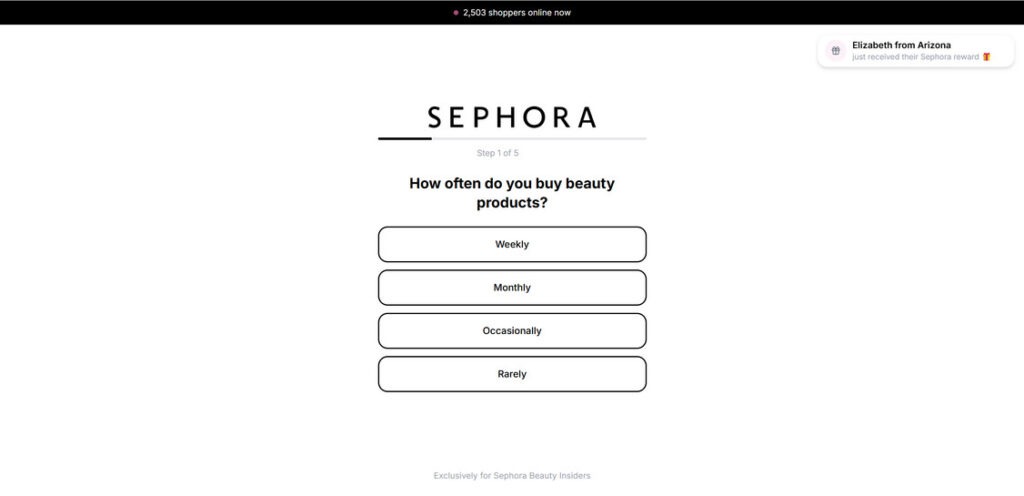
Scam Overview
The GiftSeph.com Sephora Reviewer Scam is one of the latest variations of a broader pattern of fraudulent “reviewer” promotions that have impersonated brands such as Target, Sephora, TikTok, Costco, Starbucks, and Apple. Each scam offers a high-value reward, typically between $100 and $1,000, in exchange for completing simple tasks. The scammers count on the appeal of getting paid for easy work and the trust that comes with major brand names.
GiftSeph.com advertises that users can:
- Get paid $750 for reviewing Sephora products
- Keep the products they review
- Participate for free
- Start earning immediately
The homepage features a large Sephora logo and the headline “Get Paid to Review Sephora Products.” Beneath it, users see a call-to-action button labeled “Apply Now,” followed by a step-by-step explanation of how to join the supposed reviewer program. Everything is designed to look like an official recruitment page.
Why It Looks Real
The site uses several tricks to appear credible:
- Branding precision
Fonts, spacing, and color schemes closely match Sephora’s branding. To an untrained eye, the page looks convincing and professional. - Fake notifications
Small pop-ups appear saying things like “Ella from California became a Sephora Reviewer.” These are fabricated and generated automatically. - Artificial urgency
A banner reads “Limited Time – Ends November 24th,” even though that date updates automatically and has no meaning. Scammers use urgency to push users into acting quickly. - Simple, believable steps
The “How to Apply” section lists easy steps: enter details, complete deals, earn credit. It mimics real application pages, making users believe the process is legitimate.
The Real Goal
The true objective of GiftSeph.com is to funnel users into completing third-party offers, such as:
- Downloading apps
- Signing up for free trials
- Entering additional surveys
- Providing personal details
- Subscribing to digital services
- Sharing credit card information
Each time a user completes one of these offers, the scammers earn an affiliate commission, often ranging from $1 to $30 per offer. The victim receives nothing in return.
No Actual Sephora Program Exists
Sephora does not operate any program that pays people $750 to review products. Any legitimate Sephora-related testing program would:
- Only appear on Sephora’s official website
- Never require completing unrelated offers
- Never ask for payment information
- Never offer such abnormally high payouts for simple reviews
GiftSeph.com is pretending to be Sephora to exploit brand trust and lure in victims.
A Pattern of Cloned Scams
GiftSeph.com is nearly identical to other scams using different brand names, including:
- ApplyCost.com
- TikReview.com
- ReviewersCost.com
- Bucks100.com
- Cart700.com
- AppleStudentRewards
- WalletRewards scams
- Target reviewer scam
- Costco reviewer scam
These sites use the same layout, same steps, and the same affiliate-driven backend. Only the logos and brand names change.
What Victims Experience
People who complete the tasks often report:
- Endless loops of offers with no reward
- Spam emails and texts
- Unwanted subscription charges
- Lots of time wasted completing fake tasks
- Zero payout
- No Sephora products
- Increased scam targeting
Some victims report over 30–50 junk emails appearing within hours of signing up.
In short, GiftSeph.com is a fake program designed to generate income for scammers, not a legitimate reviewer opportunity.
How the GiftSeph.com Scam Works
This section provides a clear, step-by-step breakdown of how the scam operates, from the moment a user encounters the ad to the point scammers profit.
Step 1: The TikTok or Social Media Ad
The scam begins with an ad on TikTok, Instagram, Facebook, or Snapchat. These ads usually feature:
- A model unboxing beauty products
- Screenshots of fake earnings
- Claims like “I just got paid $750 for testing Sephora products”
- Videos showing a $750 “credit balance”
- A link to GiftSeph.com
The content appears authentic because it looks like user-generated videos, even though they’re produced by affiliate marketers.
Step 2: The Fake Sephora Reviewer Page
When users click the ad, they land on GiftSeph.com. The site is minimalist, polished, and uses Sephora’s iconic black-and-white branding. It displays phrases like:
- “Earn $750 per complete review”
- “Keep the items you review as a bonus”
- “Starts November 24th”
A button labeled “Apply Now” leads users to a short sign-up form.
Step 3: Collecting Personal Information
The site asks for basic details:
- Name
- Sometimes phone number
The purpose is not to start a reviewer job — it’s to collect data. The information is later:
- Sold to advertisers
- Added to spam lists
- Used to target victims with future scams
- Potentially used for identity-based phishing
Step 4: The Offer Wall
After entering information, users are told:
“Complete some recommended deals to qualify.”
These deals are where the affiliate scam begins. Offers may include:
- Installing games and reaching certain levels
- Signing up for subscription trials
- Entering contests
- Completing multiple surveys
- Registering for “reward programs”
- Providing credit card details for “verifications”
Each completed deal puts money into the scammers’ pockets.
Step 5: The Endless Loop
Victims soon learn that completing the required offers doesn’t unlock anything. Instead, the system says:
- “One more offer required”
- “Complete Level 2 offers”
- “Verify your identity”
- “You still have deals left to finish”
The site ensures users never reach the final “reward.”
Step 6: The Scammers Get Paid
Whenever users complete a task:
- The affiliate network pays GiftSeph.com operators
- The advertisers gain a new subscriber or download
- The victim gains nothing
The reward is intentionally unachievable, but the affiliates still profit.
Step 7: Aftermath of the Scam
Many victims face:
- Sudden credit card charges
- Endless spam
- Scam robocalls
- Subscriptions they didn’t know they agreed to
- Increased exposure to future scams
Some users sign up for dozens of offers without realizing they’re inflating the scammers’ earnings.
What to Do If You Fell Victim to the GiftSeph.com Scam
If you interacted with GiftSeph.com, take these steps immediately to protect yourself.
1. Stop Interacting With the Website
Exit the site and avoid any links or emails it sends you.
2. Change Passwords Associated With the Email You Used
If your email is compromised, other accounts connected to it may be vulnerable.
3. Check Your Bank Statements
Look for suspicious charges, especially subscriptions connected to:
- Trials you signed up for
- App installs
- “Verification fees”
Dispute unfamiliar charges with your bank.
4. Cancel Any Free Trials You Signed Up For
Log into each service you joined and cancel before recurring charges appear.
5. Run a Security Scan
Use updated antivirus software to check your device for malware or tracking scripts.
6. Report the Scam to Authorities
Report the site to:
- Federal Trade Commission (FTC)
- Internet Crime Complaint Center (IC3)
- Better Business Bureau’s Scam Tracker
This helps others avoid the scam.
7. Mark All Emails From the Site as Spam
Do not click unsubscribe links — they often lead to more scams.
8. Monitor Your Identity
If you submitted personal details, consider using credit monitoring or identity protection services.
9. Warn Friends and Family
Scams spread quickly. Warning others limits the damage.
Is Your Device Infected? Run a Free Malware Scan
Slow performance, constant pop-ups, or strange behavior? These are classic signs of a malware infection. The fastest way to find out is to scan your device with Malwarebytes Free — one of the most trusted malware removal tools available.
The free version detects and removes the most common threats, including:
- Adware — the cause of those annoying pop-ups
- Browser hijackers — unwanted redirects and changed homepages
- Trojans and spyware — hidden programs stealing your data
- Potentially unwanted programs (PUPs) — software you never asked for
👉 Select your device below — Windows, Mac, or Android — then follow the simple steps to download Malwarebytes, scan your system, and remove any threats it finds. The scan usually takes 5 to 20 minutes.
Run a Malware Scan with Malwarebytes for Windows
Malwarebytes is one of the most popular and trusted anti-malware tools for Windows — and it’s completely free for removing infections. It catches threats that many antivirus programs miss, including adware, browser hijackers, and trojans. Follow the steps below to scan and clean your PC in just a few minutes.
Download Malwarebytes
Click the button below to download the latest version of Malwarebytes for Windows from the official source. The free version is all you need — it will scan your computer and remove adware, browser hijackers, and other malicious software at no cost.
Download MalwarebytesOfficial installer for Windows 11 and 10. Your download starts right away.Want real-time protection? See Malwarebytes Premium Malwarebytes Free for WindowsScans and removes malware at no cost
-
Install Malwarebytes
When the download finishes, open your Downloads folder and double-click the MBSetup file. If Windows shows a User Account Control pop-up, click “Yes” to allow the installation.
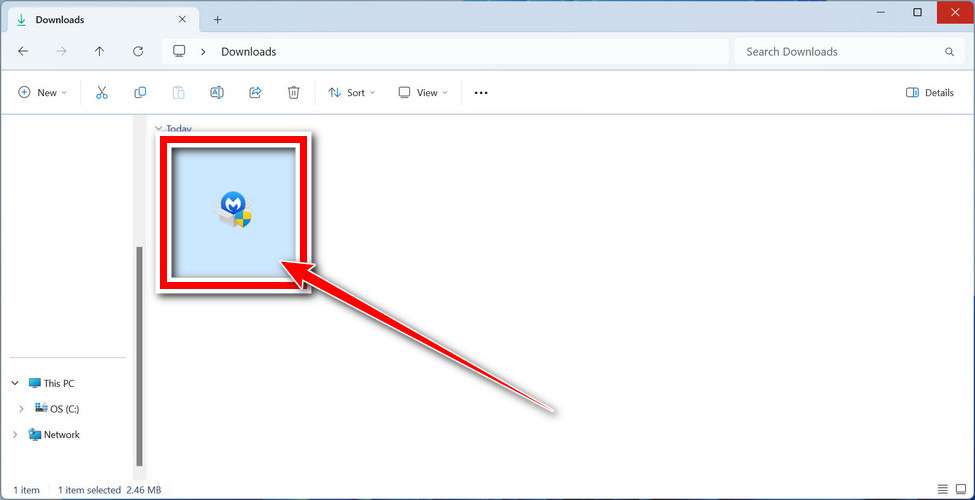
Follow the On-Screen Prompts to Install Malwarebytes
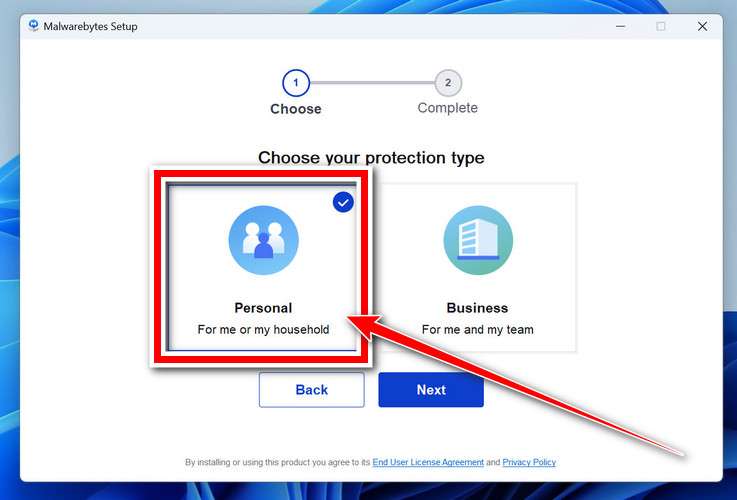
The setup wizard will walk you through a few quick screens:
-
Choose where you’re installing the program — “Personal Computer” or “Work Computer” — then click Next.
-
Malwarebytes will now install on your device. This usually takes under a minute.

-
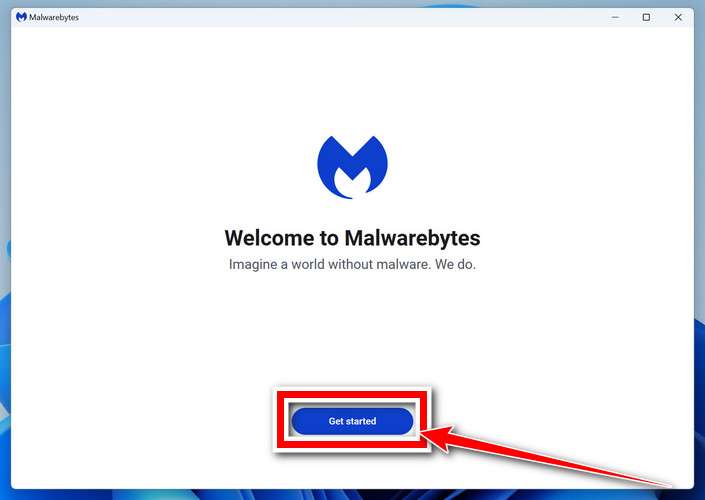
When installation is complete, the “Welcome to Malwarebytes” screen will open automatically.
-
On the final screen, click Open Malwarebytes to launch the program.

-
Enable “Scan for Rootkits”
Before scanning, turn on rootkit detection so Malwarebytes can find even the most hidden threats. Click the Settings gear icon on the left side of the screen.
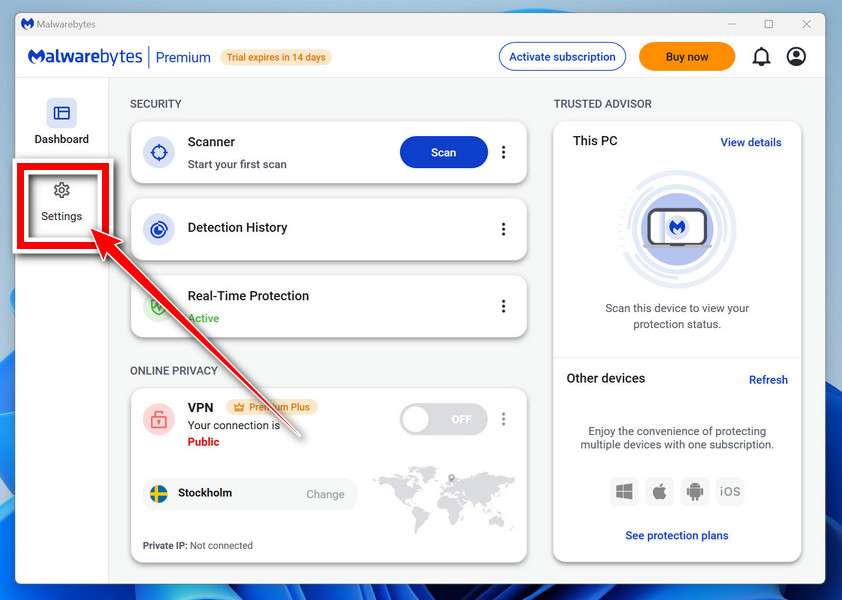
In the settings menu, find “Scan for rootkits” and click the toggle so it turns blue.

Done? Click “Dashboard” in the left pane to return to the main screen.
Start the Scan
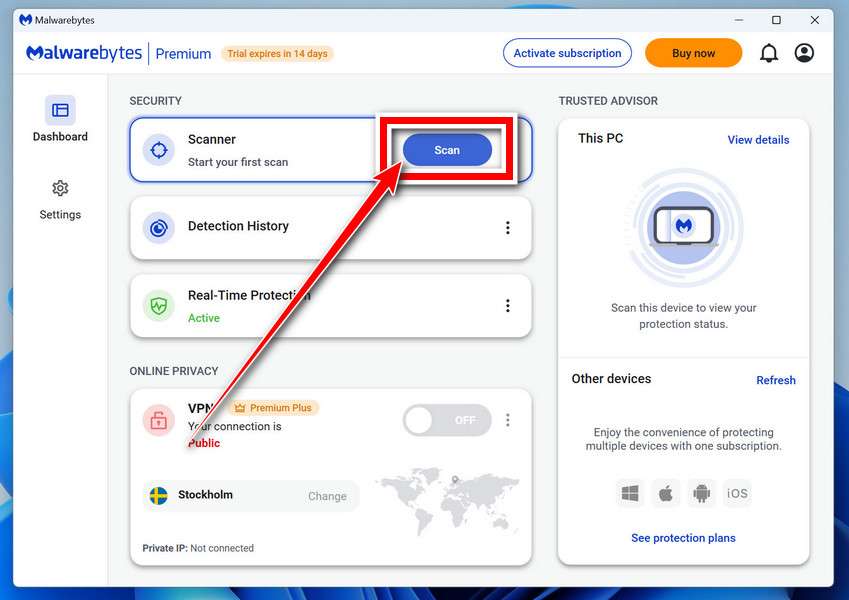
Click the blue Scan button. Malwarebytes will automatically update its virus database and start checking your computer for malware.
-
Wait for the Scan to Finish
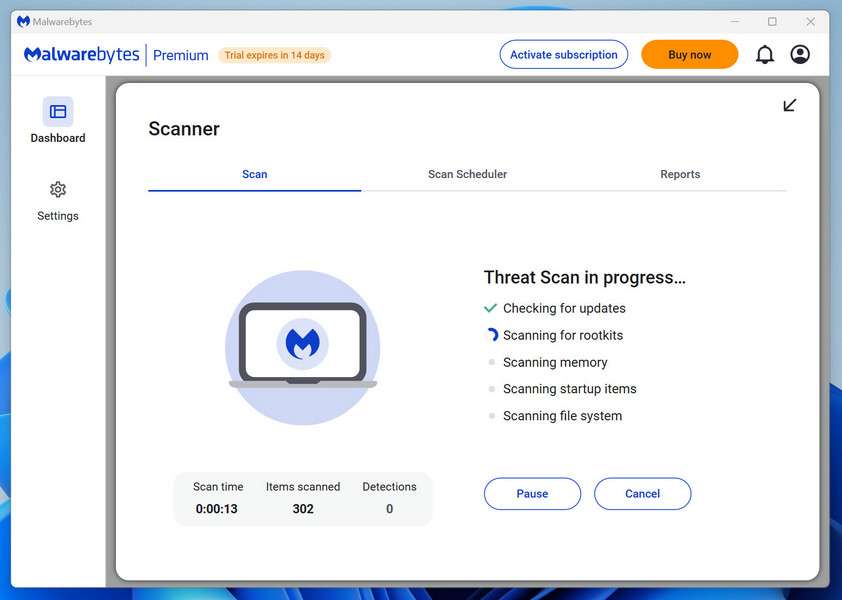
The scan checks your entire system for browser hijackers and other malicious programs, so it can take 5 to 20 minutes depending on your computer. Feel free to do something else — just check back occasionally to see the progress.
-
Quarantine the Detected Threats
When the scan is done, you’ll see a list of everything Malwarebytes found — malware, adware, and potentially unwanted programs. Click the “Quarantine” button to remove all of them at once.
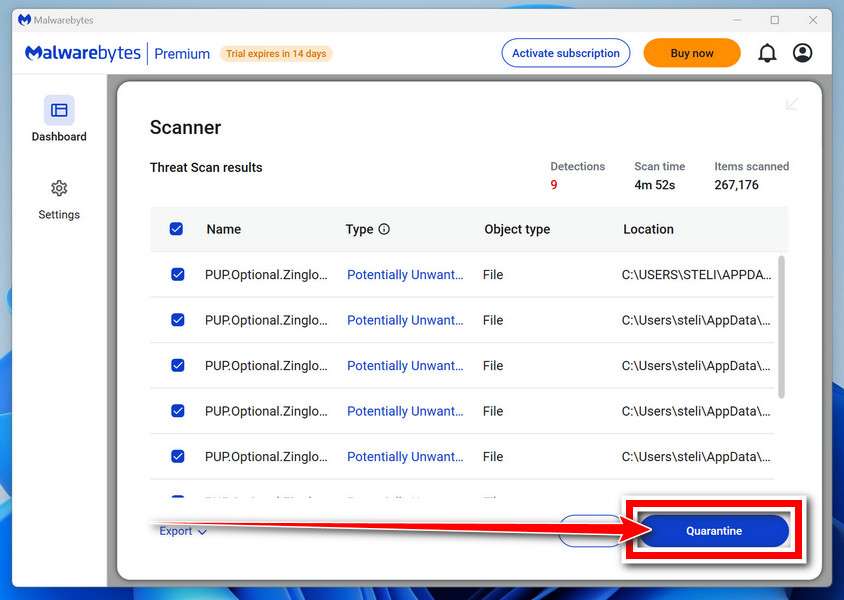
Malwarebytes will now remove the malicious files and registry entries and move them safely into quarantine.
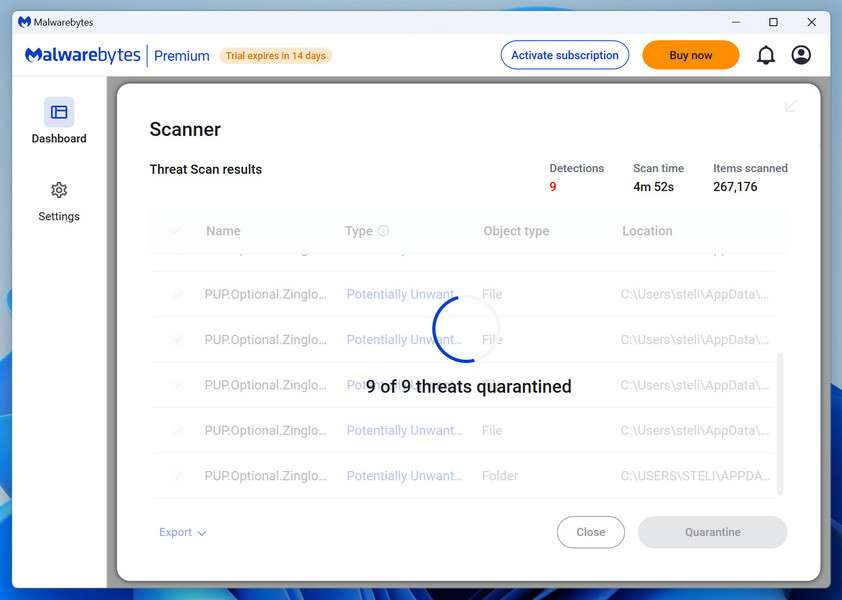
-
Restart Your Computer
Some threats can only be fully removed after a reboot. If Malwarebytes asks you to restart, click Yes. Once you’re logged back in, Malwarebytes has finished removing the threats it found.
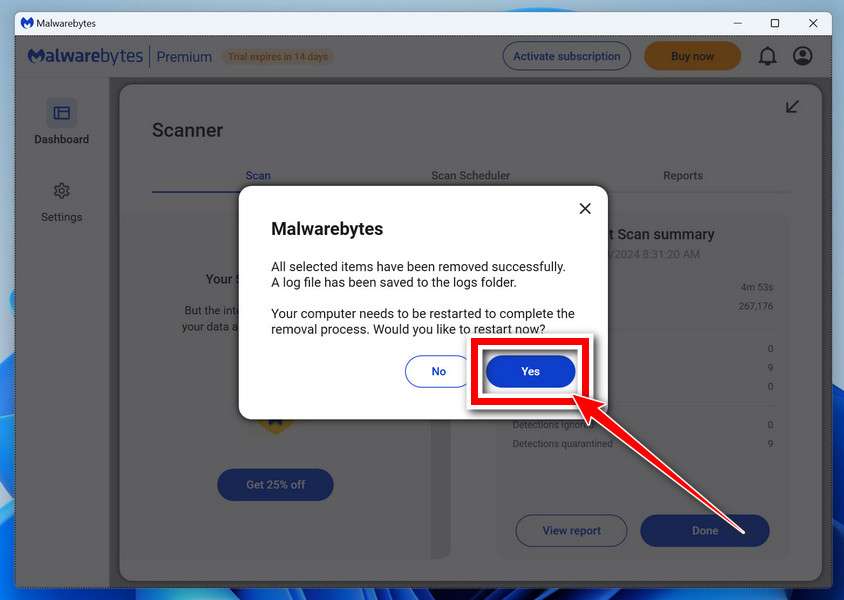
That’s it — your Windows PC is now clean of trojans, adware, and other malware, and should be back to running smoothly.
If you are still having problems with your computer after completing these instructions, then please follow one of the steps:
- Run a computer scan with ESET Online Scanner
- Ask for help in our Windows Malware Removal Help & Support forum.
Run a Malware Scan with Malwarebytes for Mac
Malwarebytes for Mac is a free on-demand scanner that removes the malware other security software tends to miss — adware, browser hijackers, and unwanted programs included. Cleaning an infected Mac with Malwarebytes has always been completely free, and it’s our go-to recommendation. Follow the steps below to scan and clean your Mac in just a few minutes.
-
Download Malwarebytes for Mac
Click the button below to download the latest version of Malwarebytes for Mac.
Download MalwarebytesOfficial installer for macOS. Your download starts right away.Want real-time protection? See Malwarebytes PremiumMalwarebytes Free for MacScans and removes malware at no cost -
Open the Malwarebytes setup file
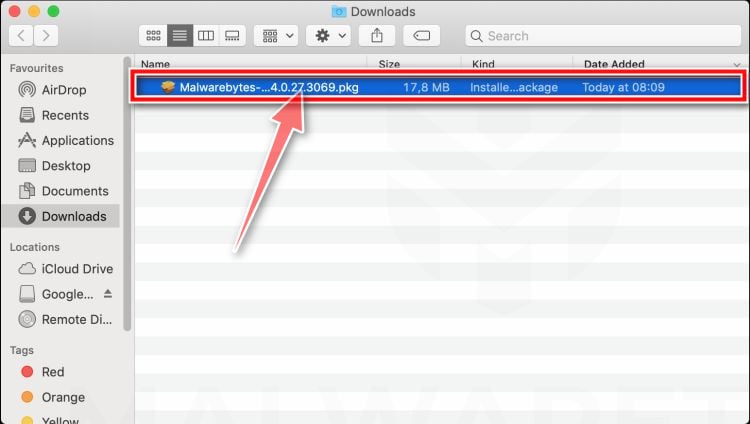
When the download finishes, open your Downloads folder and double-click the setup file to begin the installation.
-
Follow the On-Screen Prompts to Install Malwarebytes
The Malwarebytes for Mac Installer will guide you through a few quick screens. Click “Continue” and keep following the prompts until the installation completes.
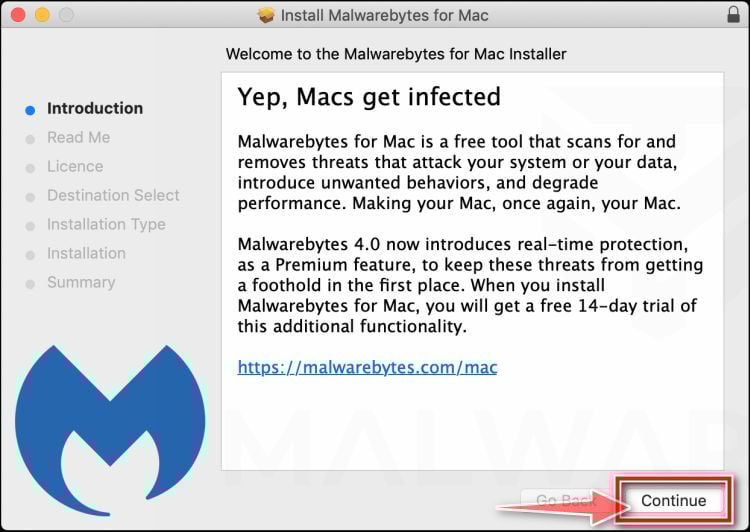
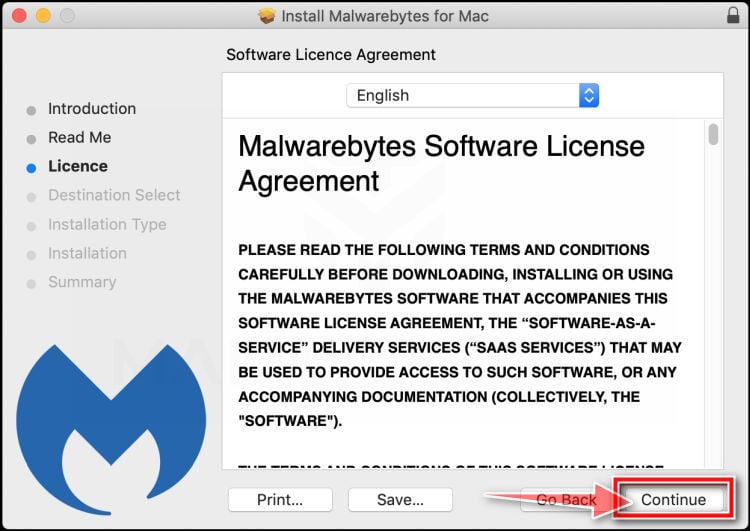
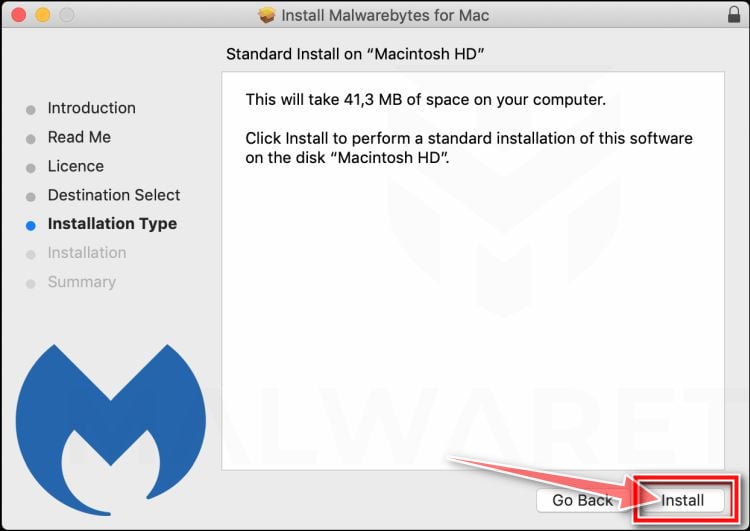
When the installation is complete, Malwarebytes opens to the Welcome to Malwarebytes screen. Click “Get started“.
-
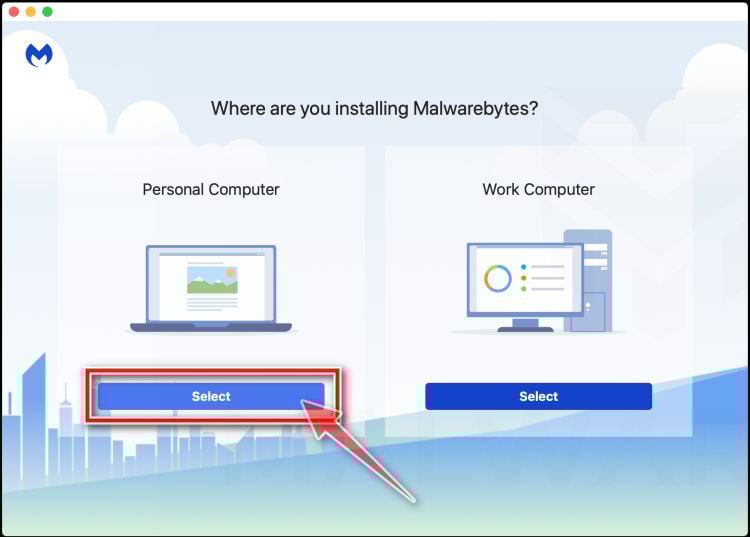
Select “Personal Computer” or “Work Computer”
Malwarebytes will ask what type of computer you’re installing it on. Click either Personal Computer or Work Computer, whichever applies.
-
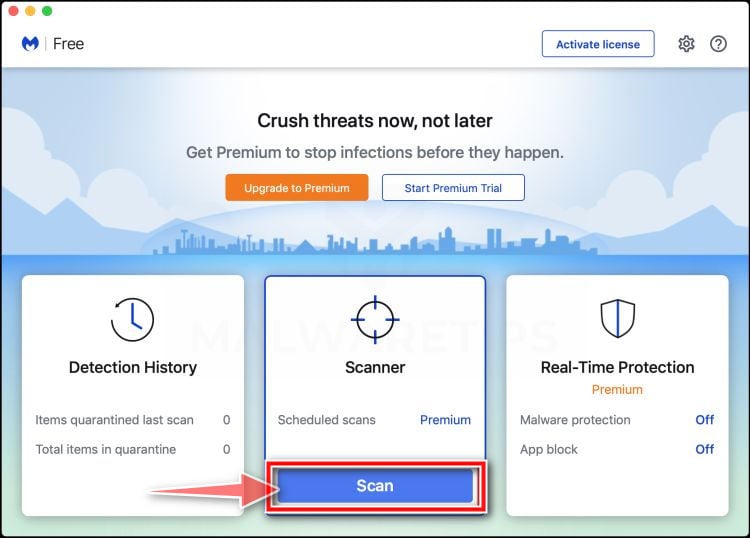
Start the Scan
Click the “Scan” button. Malwarebytes will automatically update its detection database and begin checking your Mac for malware.
-
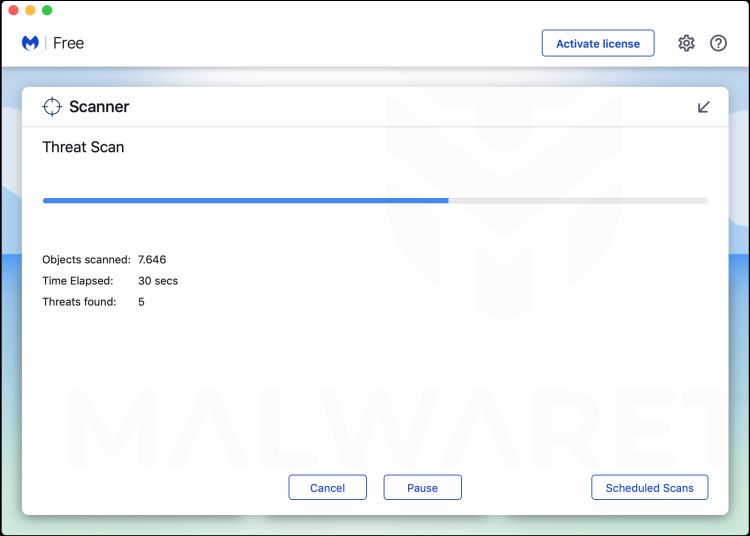
Wait for the Scan to Finish
Malwarebytes will scan your Mac for adware, browser hijackers, and other malicious programs. This can take a few minutes, so feel free to do something else — just check back occasionally to see the progress.
-
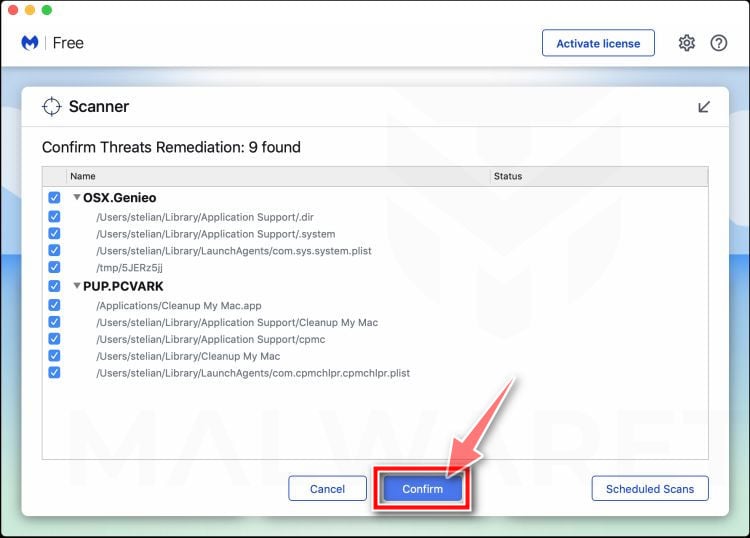
Quarantine the Detected Threats
When the scan is done, you’ll see a list of everything Malwarebytes found. Click the “Quarantine” button to remove all the threats at once.
-
Restart Your Mac
Malwarebytes will now remove all the malicious files it found. Some threats can only be fully removed after a reboot — if Malwarebytes asks you to restart, allow it. Once you’re logged back in, your Mac is clean.
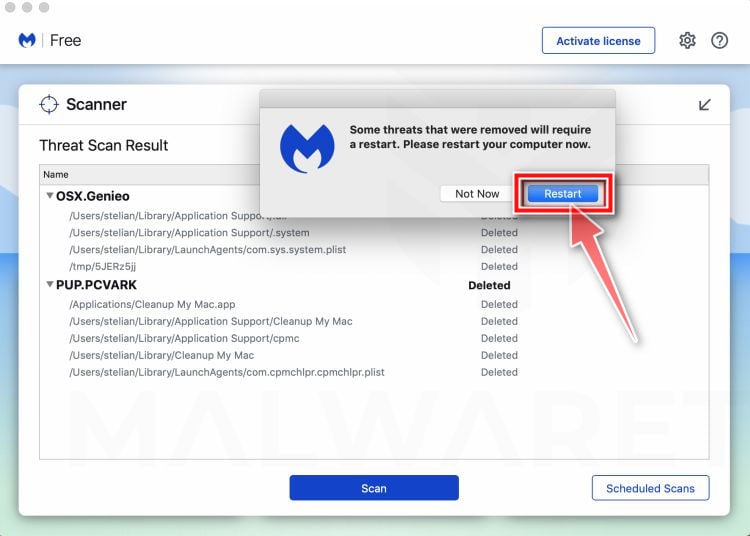
That’s it — your Mac is now free of adware, rogue browser extensions, and other potentially harmful software.
If you are still experiencing problems while trying to remove a malicious program from your computer, please ask for help in our Mac Malware Removal Help & Support forum.
Run a Malware Scan with Malwarebytes for Android
Malwarebytes for Android automatically detects and removes dangerous threats like malware and ransomware so you don’t have to worry about your most-used device being compromised. Aggressive detection of adware and potentially unwanted programs keeps your Android phone or tablet running smooth.
-
Download Malwarebytes for Android.
You can download Malwarebytes for Android by clicking the link below.
Get Malwarebytes for AndroidOpens Google Play in a new tab.Want real-time protection? See Malwarebytes Premium for AndroidMalwarebytes for AndroidScans your phone and removes malware at no cost -
Install Malwarebytes for Android on your phone.
In the Google Play Store, tap “Install” to install Malwarebytes for Android on your device.

When the installation process has finished, tap “Open” to begin using Malwarebytes for Android. You can also open Malwarebytes by tapping on its icon in your phone menu or home screen.

-
Follow the on-screen prompts to complete the setup process
When Malwarebytes will open, you will see the Malwarebytes Setup Wizard which will guide you through a series of permissions and other setup options.
This is the first of two screens that explain the difference between the Premium and Free versions. Swipe this screen to continue.
Tap on “Got it” to proceed to the next step.
Malwarebytes for Android will now ask for a set of permissions that are required to scan your device and protect it from malware. Tap on “Give permission” to continue.
Tap on “Allow” to permit Malwarebytes to access the files on your phone.
-
Update database and run a scan with Malwarebytes for Android
You will now be prompted to update the Malwarebytes database and run a full system scan.

Click on “Update database” to update the Malwarebytes for Android definitions to the latest version, then click on “Run full scan” to perform a system scan.

-
Wait for the Malwarebytes scan to complete.
Malwarebytes will now start scanning your phone for adware and other malicious apps. This process can take a few minutes, so we suggest you do something else and periodically check on the status of the scan to see when it is finished.

-
Click on “Remove Selected”.
When the scan has been completed, you will be presented with a screen showing the malware infections that Malwarebytes for Android has detected. To remove the malicious apps that Malwarebytes has found, tap on the “Remove Selected” button.

-
Restart your phone.
Malwarebytes for Android will now remove all the malicious apps that it has found. To complete the malware removal process, Malwarebytes may ask you to restart your device.
That’s it — your Android phone is now clean — no more malicious apps, adware, or browser redirects.
If you are still having problems with your phone after completing these instructions, then please follow one of the steps:
- Restore your phone to factory settings by going to Settings > General management > Reset > Factory data reset.
- Ask for help in our Mobile Malware Removal Help & Support forum.
Stay Protected: Block Ads and Malicious Sites
Now that your device is clean, keep it that way. Most infections start with a malicious ad or a fake download button — so blocking them at the source is your best defense.
We recommend AdGuard, which blocks malicious ads, phishing pages, and dangerous redirects before they can reach you.
👉 Download AdGuard and browse safely
FAQ for the GiftSeph.com Sephora Reviewer Scam
Is GiftSeph.com a real Sephora reviewer program?
No. GiftSeph.com is not affiliated with Sephora in any way. The site uses Sephora’s branding, logo, and design style without permission to trick users into believing it is an official program. Sephora does not pay people $750 to review products, nor does it run surveys or reviewer recruitment through third-party websites.
How does the GiftSeph.com scam work?
The scam lures users with a fake promise of earning $750 for reviewing beauty products. After entering basic information, users are pushed into completing “deals” such as downloading apps, signing up for trials, or entering personal details. Each completed task earns money for the scammers through affiliate commissions. Users never receive the promised reward, no matter how many deals they finish.
Why does GiftSeph.com look so professional?
Scammers intentionally copy Sephora’s clean branding to create legitimacy. This includes matching fonts, black-and-white color schemes, high-resolution product images, and fake notifications pretending to show real people joining the program. The professional appearance is designed to lower suspicion.
What information does GiftSeph.com collect?
The site gathers personal information such as names, email addresses, phone numbers, zip codes, and sometimes credit card details through its “deals.” This data can be sold to advertisers, added to spam lists, or used for future scam campaigns.
Will I really get paid $750 for reviewing Sephora products?
No. No one receives any payment or product from GiftSeph.com. The reward is intentionally unattainable, and the system keeps adding more “required deals” to prevent users from ever reaching the payout stage. The promise of $750 is bait to push users deeper into the scam.
Can Sephora verify this program?
Yes. If you contact Sephora directly, they will confirm that they do not run a reviewer program through GiftSeph.com or any similar website. Real Sephora product-testing opportunities only appear through official company channels, not through third-party survey sites.
How do the scammers make money?
Scammers earn affiliate commissions every time a user:
- signs up for a free trial
- downloads an app
- enters credit card information
- completes a survey
- subscribes to a service
These small payouts add up quickly, especially when the scam goes viral.
What are the dangers of submitting my information?
Victims often experience:
- heavy spam emails
- unwanted promotional texts
- suspicious subscription charges
- targeted scam attempts
- increased phishing risk
- exposure to identity theft
In some cases, victims accidentally authorize recurring payments because many “free trials” convert into monthly billing.
What should I do if I entered my credit card information?
Immediately contact your bank or card provider. Explain that you were tricked by an online scam and ask them to:
- block future charges
- reverse fraudulent transactions
- issue a new replacement card
Acting quickly reduces the likelihood of ongoing billing.
How can I avoid scams like GiftSeph.com in the future?
You can protect yourself by:
- avoiding offers that promise large payouts for simple tasks
- checking official brand websites for legitimate promotions
- being skeptical of offers requiring multiple “deals”
- never entering credit card information for rewards
- researching unknown domains before participating
- using strong spam filters and antivirus tools
If a deal offers extremely high rewards for minimal effort, it is almost always a scam.
The Bottom Line
GiftSeph.com is not a real Sephora reviewer program. It’s an affiliate scam disguised with professional branding, fake urgency, and promises of easy money. Users never receive Sephora products, never earn $750, and instead end up trapped in an endless cycle of offers designed to profit scammers.
The safest choice is to avoid GiftSeph.com entirely and rely only on verified Sephora channels for promotions or product-testing opportunities. If a deal sounds too generous or requires completing unrelated offers, it’s almost always a scam.
Being informed, cautious, and skeptical of quick-cash online promises is the best protection against schemes like the GiftSeph.com Sephora Reviewer Scam.








