

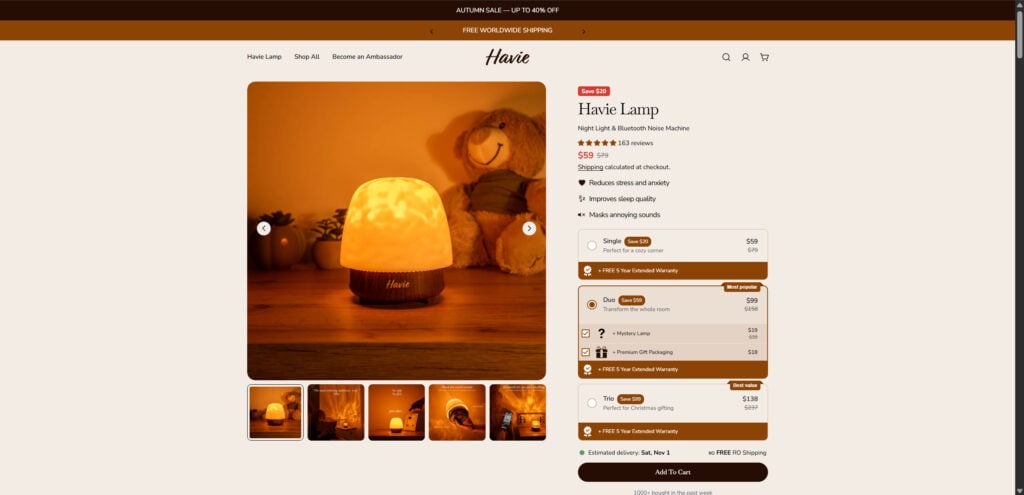
The Havie Lamp calls itself an “all-in-one sleep sanctuary.” It promises a combination of soft ambient lighting, 18 color modes, built-in white noise, Bluetooth audio, a timer, and a cordless rechargeable design. On the surface, it looks like the perfect gadget to transform your bedroom into a cozy retreat. But is it really worth the $59 to $138 price tag – or is it just another overhyped dropshipping product with clever marketing?
In this in-depth investigation, we’ll break down how the Havie Lamp is marketed, how it actually works, what red flags to look for, and what to do if you’ve already purchased it.
Overview
The Havie Lamp is promoted as a premium relaxation device, blending:
- Aurora ambient projection lighting (18 color modes)
- Adjustable brightness and gradient lighting effects
- White, brown, pink, and other noise modes
- Bluetooth speaker functionality
- Cordless, rechargeable design
- Remote control and timer options (30/60/120 minutes)
It’s marketed heavily on social media platforms like Facebook, Instagram, and TikTok with professionally edited videos showing warm, relaxing amber glows, soft background sounds, and aesthetic bedroom setups.
The sales page claims:
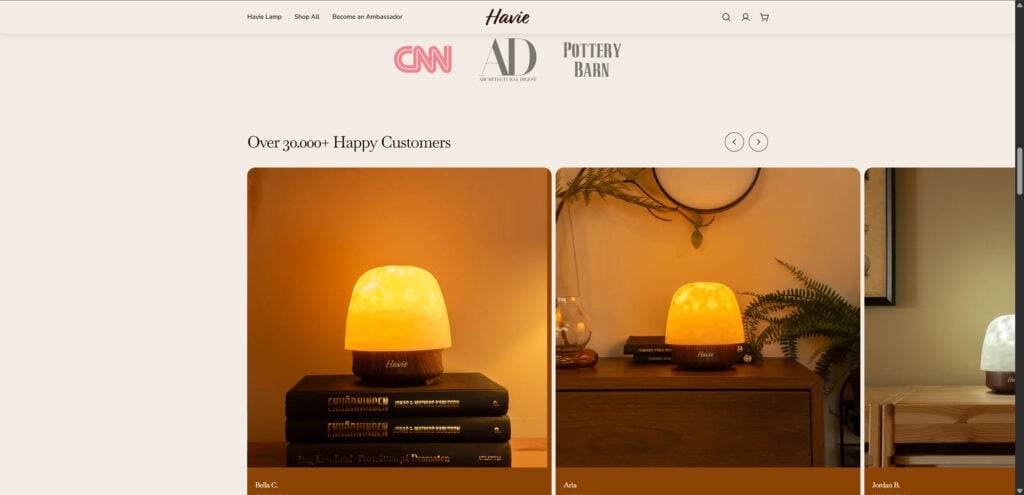
- “Over 30,000 happy customers”
- Featured in CNN, Architectural Digest, and Pottery Barn
- Backed by hundreds of five-star reviews
- A 5-year extended warranty “free of charge”
At first glance, this looks convincing. The product seems elegant, simple to use, and versatile. But a closer look reveals multiple red flags that consumers should be aware of.
Red Flag 1: Fake media mentions
The website proudly displays big logos of CNN, Architectural Digest, and Pottery Barn, suggesting it’s been featured or endorsed by these well-known brands. But there are no backlinks, no articles, no press releases confirming these claims. These are unsubstantiated marketing tactics designed to build false trust.
Red Flag 2: Aggressive, pushy discounts
The site is filled with flashy messages like:
- “Autumn Sale — up to 40% off”
- “Save $20 now”
- “Buy 2, get a mystery lamp free”
- “Free 5-year warranty”
When there are too many promotional banners, it often signals an impulse-buy strategy rather than genuine value. Real premium brands rarely rely on aggressive upselling.
Red Flag 3: Copied or fake address
The website lists a physical address, but further digging reveals that this address is copied from another website and does not belong to Havie. This is a common pattern in dropshipping operations aiming to appear legitimate while avoiding real traceability.
Red Flag 4: Suspicious customer reviews
The review section is full of glowing five-star reviews dated months before the website domain was even registered. This means they were likely fabricated or imported. Additionally:
- All reviews are overly positive, generic, and lack verified purchase badges.
- No external reviews exist on trusted platforms like Trustpilot or Reddit.
Red Flag 5: No legitimate brand presence
Despite its polished website, Havie has no meaningful online footprint:
- No registered company information
- No verified customer discussions on major forums
- No customer service history
- No verified press coverage
This is typical of a short-term dropshipping operation—where the seller sets up a slick Shopify storefront, sells for a few months, then disappears.
How the Havie Lamp Operation Works
To understand why caution is needed, it’s important to see how the entire sales operation is structured.
1. Sourcing from Alibaba at a fraction of the price
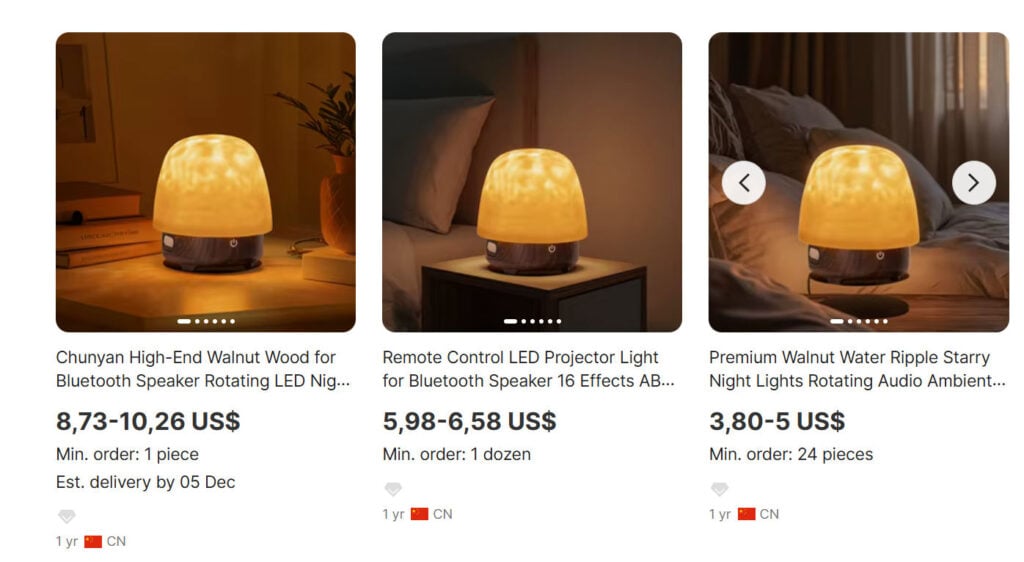
The lamp is identical to a generic product available on Alibaba and AliExpress:
- Price: $3.80 – $10.26 per unit
- Minimum order: from 1 piece
- Descriptions match word-for-word (18 color modes, Bluetooth speaker, white noise, rechargeable)
- No Havie branding is present on original product images.
Dropshipping stores buy or list these cheap units under a premium lifestyle brand name and apply a 500–1000% markup.
2. Creating a polished Shopify storefront
The website uses:
- A minimalist beige-brown theme (common in modern dropshipping)
- Auto-generated fake reviews
- Stock videos and lifestyle images
- “As seen on CNN” banners to boost credibility
- Countdown timers and fake scarcity tactics
None of these guarantee quality or after-sales support. Their purpose is to get users to impulse-buy.
3. Targeting buyers through social media ads
They run highly targeted Meta (Facebook and Instagram) ads aimed at:
- Young adults seeking cozy bedroom setups
- People searching for “sleep gadgets,” “anxiety relief,” or “night lights”
- Those who engage with ambient lighting or wellness content
The videos highlight the warm light and soundscapes but avoid showing real close-ups of the product build quality.
4. Using urgency tactics
- Flashy banners with limited-time discounts
- Fake “X bought this in the past hour” notifications
- “Only 3 left in stock” counters
- Free extended warranty or bonus lamp deals
These are classic psychological pressure techniques to rush your decision.
5. Delays and difficulties with returns
Once an order is placed:
- The lamp is shipped from China, not from any EU or US warehouse.
- Delivery times are often longer than advertised.
- Return and refund policies are vague and difficult to enforce.
- Customer service emails often get slow or automated replies.
- In many cases, customers are asked to ship the item back to China at their own cost, which is more expensive than the product itself.
6. Short product lifespan and no real warranty
Because the lamps are generic low-cost imports:
- Quality varies wildly between units.
- Battery life, LEDs, and speaker components may degrade quickly.
- The “5-year warranty” is marketing language only — there’s no real warranty infrastructure.
7. Rebranding and disappearing
This is the final stage of many dropshipping operations:
- The seller shuts down the site after a few months.
- A new store appears under a different name selling the same lamp.
- Consumers have no real way to claim refunds or warranty.
This pattern has been repeated with countless trendy products online — from posture correctors to fake “premium blankets.”
What to Do If You Have Bought the Havie Lamp
If you’ve already placed an order or received your lamp, here are practical steps to protect yourself:
1. Check your transaction
- Verify the payment processor (Shopify Payments, Stripe, PayPal, etc.).
- Keep your order confirmation and email receipts.
- If the charge looks suspicious (e.g., different merchant name), contact your bank.
2. Cancel the order if it hasn’t shipped
- Act fast: email their support immediately.
- Request a full cancellation and refund before the product enters international shipping.
3. If the lamp has shipped
- Document all communication.
- If the quality is poor, file a dispute with your payment provider.
- PayPal: “Item not as described”
- Credit card: chargeback
- Shopify Payments/Stripe: initiate a dispute with your bank
4. Don’t ship returns to China without clear instructions
- Many scammers rely on buyers giving up on returns due to high shipping costs.
- If they insist on shipping back, ask for an EU or local return address.
- If they can’t provide it, that strengthens your dispute.
5. Check for recurring charges
- Ensure no subscription or recurring payment was added.
- Block future charges from the same merchant if necessary.
6. Report the store
- File a complaint with Shopify if it’s hosted there.
- Report misleading ads to Facebook or Instagram.
- You can also warn others on Trustpilot or Reddit scam threads.
7. Leave a traceable review
- Post on consumer protection forums and scam databases.
- This helps others avoid the same trap.
The Bottom Line
The Havie Lamp looks warm and cozy in ads, but the reality is far less magical.
- It’s a cheaply sourced generic lamp being resold at premium prices.
- It uses fake endorsements from major media outlets.
- It relies on manufactured reviews and psychological pressure tactics.
- Returns are difficult or nearly impossible.
- There’s no transparent customer support or verified warranty.
If you’re looking for a night light with Bluetooth and white noise features, you can buy the same product directly on Alibaba or AliExpress for a fraction of the cost — or choose a reputable electronics brand with real support and warranty.
Final Verdict:
Unless Havie becomes transparent about its operations, provides real support, and proves its claims, we do not recommend buying the Havie Lamp.








