

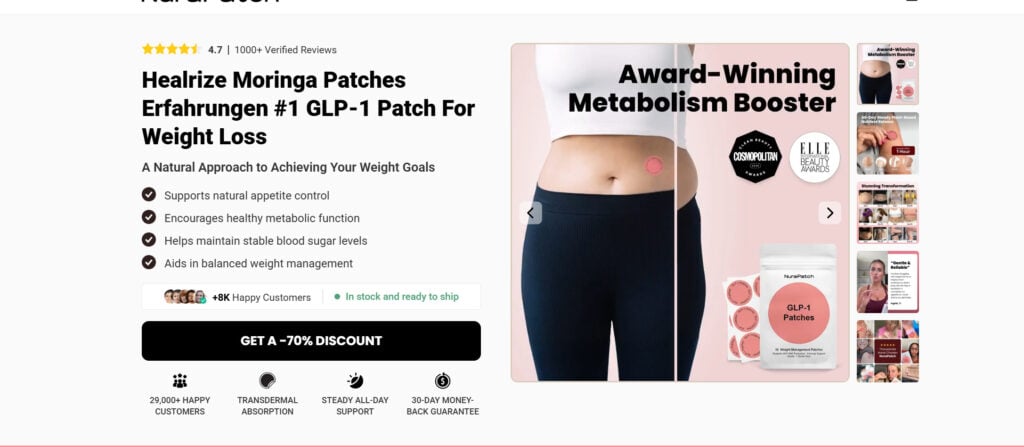
They look sleek, scientific, and revolutionary — the kind of product that promises to change your life overnight. Healrize Moringa Patches are being pushed across social media as the next big breakthrough in effortless weight loss, claiming to “mimic the effects of GLP-1 medications like Ozempic and Mounjaro” through the skin. The marketing suggests that these simple transdermal patches can boost metabolism, suppress appetite, and melt fat — all without injections or prescriptions.
Sounds tempting, right? Especially with the explosion of real GLP-1 medications that have made headlines for helping people lose significant weight. But beneath the glossy packaging, influencer reviews, and “scientific-looking” graphics, the story quickly unravels. Healrize Moringa Patches are not what they seem.
Behind the scenes lies a classic online scam structure — one that recycles names, domains, and fake medical claims to extract as much money as possible before vanishing. From hidden subscriptions to fake scientific badges, this operation mirrors dozens of other patch-based scams like LipoJaro, MounJaro Patch, and Berberine Slim Patches.
Let’s break down exactly how this scam works, why these patches have no real medical validity, and what to do if you’ve already been caught in the trap.
Overview
At first glance, Healrize Moringa Patches look legitimate. The branding is clean, the product imagery looks medical-grade, and the website often includes clinical buzzwords like “transdermal GLP-1 activation,” “fat metabolism modulation,” or “nanotechnology diffusion.” These phrases sound convincing — but they’re designed to manipulate, not inform.
The Science That Isn’t There
Real GLP-1 medications (like Ozempic, Wegovy, or Mounjaro) are prescription-only drugs that contain active compounds called GLP-1 receptor agonists. These are complex molecules that cannot be absorbed through the skin. They must be injected because the skin barrier blocks large peptide structures like GLP-1 analogues.
Yet the Healrize patch claims to “deliver GLP-1 effects transdermally through nanotechnology.” Scientifically, that’s impossible with current technology. There are no verified studies, patents, or FDA filings showing that a skin patch can replicate injectable GLP-1 medication effects.
In short: Healrize’s claims are pure fiction dressed up in scientific-sounding language.
Fake Credibility Badges
Many Healrize landing pages feature graphics that mimic real certifications — logos of the FDA, GMP, or “clinically tested” seals. However, none of these badges link to real documents or lab data. They’re decorative, meant to simulate trust.
Legitimate supplements or medical products will link to verifiable clinical studies, FDA registration numbers, or certificates of analysis. Healrize does not.
Mirrored Marketing
If you’ve seen ads for MounJaro Patch, LipoJaro, or Berberine Microneedle Patch, Healrize will feel eerily familiar. The same stock images, wording, and discount structures appear repeatedly:
- “80% OFF TODAY ONLY”
- “Trusted by doctors and scientists”
- “Thousands of satisfied users”
- “Official store — limited stock remaining!”
These are psychological hooks, designed to rush buyers into impulsive purchases.
No Company Transparency
One of the biggest red flags is the lack of transparency. Healrize’s website never lists a physical address, verified contact number, or registered business name. The “About Us” section is vague, and customer service emails are often generic (like support@Healrize.com).
When traced, most domains associated with Healrize are registered anonymously through privacy-protected registrars in countries like China or Singapore. Many appear newly created — often within the last 60 to 90 days — which is a hallmark of disposable scam sites.
Unverified Testimonials
The glowing five-star reviews and dramatic before-and-after photos on Healrize’s site are fabricated or stolen. Image reverses show they appear on unrelated skincare or supplement ads.
The writing style of the reviews also reveals automation — similar sentence structures, overuse of superlatives (“amazing results!” “changed my life!”), and impossible timelines (“I lost 15 lbs in 7 days”).
No independent reviews exist on Trustpilot, Amazon, or major retailers — another major warning sign.
Fake Doctor Endorsements
Healrize ads often feature “doctors” recommending the patch. The images are either AI-generated or pulled from stock photo libraries. The names don’t correspond to licensed practitioners, and none have verifiable credentials in public medical directories.
It’s a tactic designed to create false authority — one of the oldest tricks in scam marketing.
False Guarantees and Risk-Free Trials
Like many scam products, Healrize promises a “100% satisfaction guarantee” or “risk-free 60-day trial.” In practice, these are meaningless. When customers try to request refunds, they either receive no response or are told to return the product to an address in China — which often leads to shipping costs higher than the refund itself.
These tactics effectively make refunds impossible while maintaining the illusion of legitimacy.
How the Scam Works
The Healrize scam follows a near-perfect dropshipping fraud model, optimized for speed, volume, and minimal traceability. Here’s how the entire operation typically unfolds step-by-step.
Step 1: Viral Ad Campaigns
It starts with hyper-targeted Facebook, Instagram, and TikTok ads. They feature short videos or before/after montages showing people losing weight “in just one week.”
The captions often mention GLP-1 — a trending keyword because of the popularity of real weight loss medications. Examples include:
- “No injections, no prescriptions — GLP-1 benefits in a patch!”
- “Doctors stunned by this new fat-burning breakthrough!”
- “Get the same effects as Ozempic at home!”
The ads are deliberately vague about how it works, relying on curiosity and buzzwords like “natural GLP-1 activation” or “nanoparticle diffusion.”
Step 2: The Landing Page Funnel
Once clicked, the ad redirects to a clean-looking website — often on a brand-new domain like Healrizefit.com, Healrizewellness.co, or similar.
The page includes:
- “Clinical” graphics showing fat metabolism
- Claims of FDA approval (without documentation)
- Fake social proof (testimonials, “5-star” ratings, and stock influencer images)
- A massive discount timer, usually showing 70% to 80% off
This countdown timer is not real. It resets when you reload the page — a tactic known as “false scarcity.” It’s designed to push buyers into a sense of urgency before they can research.
Step 3: Checkout Manipulation
When you proceed to checkout, several traps are embedded:
- “Buy 2, Get 1 Free” or “Buy 3, Get 2 Free” bundles pre-selected
- Automatically added “Shipping Insurance”
- Checkboxes pre-ticked for recurring monthly shipments
Many users report that even if they select a single purchase, they are later charged multiple times or enrolled in an unannounced subscription.
Step 4: Payment and Fulfillment
Once you pay, your money doesn’t go to a health brand — it goes to an offshore shell company using third-party payment processors.
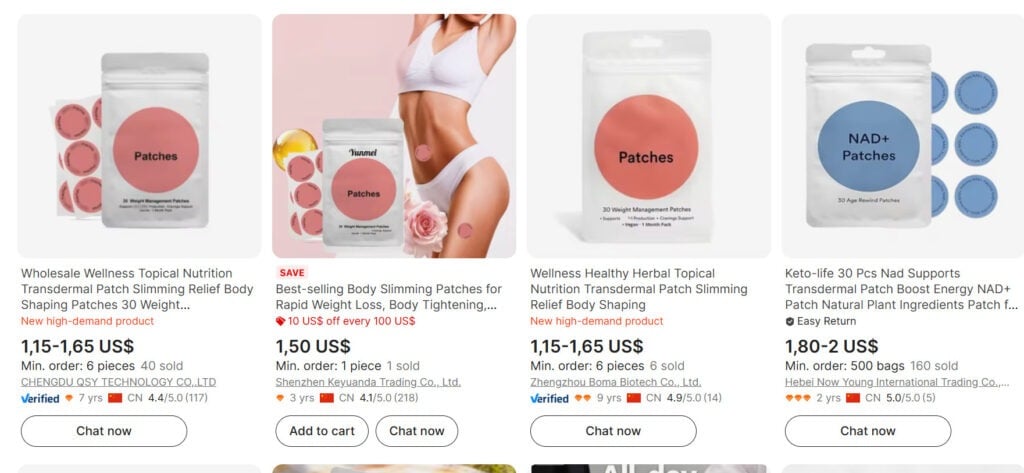
Orders are shipped from bulk suppliers in China, often weeks later, using untracked or low-tier logistics. The product that arrives rarely matches the photos. In some cases, customers receive unbranded adhesive patches with minimal labeling.
Step 5: Customer Support Vanishes
If you try to contact customer service, the response is either automated or non-existent. Replies might promise refunds but never follow through. In some cases, the domain disappears entirely within a few months.
By the time enough complaints surface, the scammers have already moved on, launching new brands under different names.
Step 6: The Science Illusion
The claim that a patch can deliver GLP-1 effects through skin contact is scientifically baseless. GLP-1 analogs are peptide molecules — too large and complex to pass through the skin barrier.
Even with advanced microneedle systems, the delivery of such compounds requires clinical-grade precision and regulation. A cosmetic sticker or patch sold online cannot legally or effectively deliver GLP-1-like effects.
Step 7: Rebranding and Recycling
Once Healrize starts attracting complaints or negative reviews, the operators simply rebrand. They use identical templates under new names like:
- GLP-1 Slim Patch
- MounJaro Patch
- Berberine Fat Patch
- LipoJaro Microneedle
This allows them to restart the same operation under fresh domains, targeting new victims who haven’t seen the warnings yet.
What To Do If You Have Fallen Victim to This Scam
If you’ve already ordered the Healrize GLP-1 Patch, stay calm — there are clear steps you can take to protect yourself.
1. Document Everything
Save all your receipts, emails, screenshots of ads, order confirmations, and any tracking information. These records will help in disputes or investigations later.
2. Contact Your Bank or Credit Card Provider
Immediately report the transaction as a potential fraud. Explain that the product was misrepresented or part of a deceptive sales operation. Banks often allow chargebacks for this kind of scam, especially when the merchant is overseas.
3. Cancel Any Recurring Payments
Check if your card has been enrolled in an automatic subscription or recurring billing. If so, request a stop payment or card replacement to prevent further unauthorized charges.
4. Don’t Return the Product to Overseas Addresses
Many scammers insist that customers return the patch to an address in China to get a refund. In most cases, these returns are lost, and the cost of shipping exceeds the refund amount. Instead, go through your bank for reimbursement.
5. Report the Website
File complaints with your local consumer protection agency or online fraud centers:
- FTC.gov (U.S.)
- IC3.gov (for international online scams)
- Your country’s consumer protection bureau
Include screenshots and the full web address in your report.
6. Warn Others
Post about your experience on forums, Reddit, or Trustpilot. Sharing details helps prevent others from falling for the same scam.
Real GLP-1 Medications vs Fake Patches
It’s crucial to understand what GLP-1 medications actually are. Real GLP-1 agonists — like Ozempic, Wegovy, and Mounjaro — are prescription drugs approved by the FDA. They work by mimicking a hormone that regulates appetite and blood sugar.
However:
- They must be injected, not applied topically
- They require medical supervision
- They are clinically tested and regulated
In contrast, fake “GLP-1 patches” like Healrize are unregulated, unsupported by science, and sold through deceptive advertising. No patch on the market can safely or effectively replace real GLP-1 medications.
FAQ
Is Healrize GLP-1 Patch FDA approved?
No. It uses fake FDA-style logos to imply legitimacy, but it has no approval, registration, or verification from any medical authority.
Can a patch really mimic GLP-1 injections?
No. The molecules are too large to be absorbed through the skin. Claims of “nanotechnology” are unproven marketing jargon.
Where do these products ship from?
Most come from Chinese dropshipping suppliers, despite claims of “Made in USA.” Delivery times are long, and quality is inconsistent.
Why are there no real reviews online?
Because these brands are disposable. They are launched under new names every few months, so genuine customer feedback never accumulates.
Are all GLP-1 patches scams?
Yes, as of now, there are no scientifically verified or medically approved GLP-1 transdermal patches.
The Bottom Line
Healrize Moringa Patches are not a revolutionary medical breakthrough — they’re a clever online scam designed to capitalize on the popularity of real weight-loss medications like Ozempic and Mounjaro.
From fake medical claims and fabricated testimonials to hidden subscription traps, this operation fits perfectly into a wider network of health-product scams that thrive on social media virality.
No patch can deliver GLP-1 hormones through the skin. No legitimate medical source endorses these claims.
If you want safe, effective weight loss support, speak with a qualified healthcare provider about real, clinically tested options — not viral “miracle patches.”
When it comes to Healrize and other lookalike brands, one rule applies: If it sounds too good to be true, it is.

Reviews & discussion
4 commentsShare a firsthand experience, or ask a question.
Community reviews
Healrize Moringa Patches
Moderated reader experiences, not an editorial verdict.
I got the product I should have done my homework. I want to return it
In reply to Linda kreydatus
Linda, if you want to return it, act quickly. With these products, “returns” are often made difficult on purpose (no real address, expensive overseas shipping, or partial refund offers).
If the seller won’t provide a clear return method, your best option is usually:
Contact your card/PayPal provider and ask about a dispute/chargeback
Save screenshots of the site, the return policy, and your attempts to contact them
Stelian from MalwareTips
It took weeks for me to get this healrize product. I’ve been scammed.
In reply to Cindy Thee
Weeks of waiting is the standard timeline, because nothing is dispatched until enough orders accumulate to justify a bulk shipment from overseas – which is also why the tracking sits still and the “in transit” replies keep arriving.
If it eventually turned up and is not what was advertised, dispute the charge with your card issuer as not as described, with a photo of the advert next to what arrived. If it never came at all, dispute it as goods not received, which is even simpler since they have to produce delivery evidence they do not have. Either way you generally have up to 120 days, and in the same call ask them to revoke any recurring authorisation and issue a new card number, because this kind of order frequently carries a subscription that appears four to six weeks later.
Then five minutes at reportfraud.ftc.gov. And if it was bought for a health problem, the money is better spent on a pharmacist’s advice, which is free.