


A payment appears in your bank account beside a name you haven’t thought about in years: Herbalife. An old check in a drawer suddenly comes to mind.
Even if the amount looks familiar, it isn’t obvious what the deposit has to do with your old business. Start with the record your bank shows.
Overview
Zelle replaces mailed checks in this round
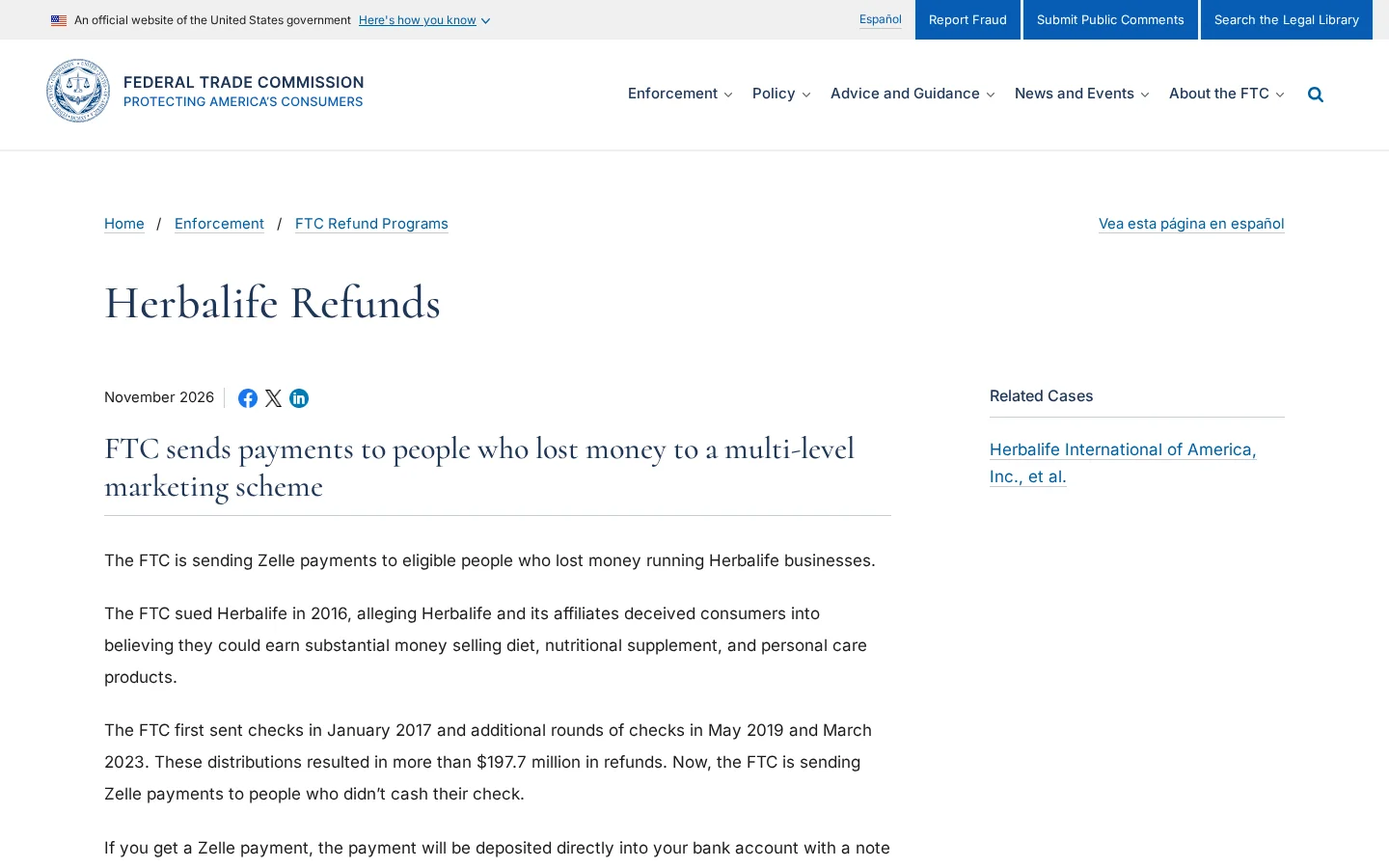
The FTC’s Herbalife refund notice says it is sending Zelle payments to eligible people who lost money running Herbalife businesses and did not cash their refund check.
That changes what you should look for. The agency says the funds will be deposited directly into your bank account, with a note about the settlement.
You don’t receive a Zelle refund by sending a Zelle payment. If someone asks you to make a transfer first, stop before getting to the confirmation screen.
Look for an incoming credit in your own transaction history. A text containing a payment screenshot is somebody else’s claim about your account, not your account record.
Old eligibility rules are not instructions for this payment
The FTC sent checks in January 2017, May 2019 and March 2023. It says those rounds resulted in more than $197.7 million in refunds.
The November 2026 announcement targets eligible recipients who didn’t cash their check. An earlier article telling recipients to deposit a new paper check describes a different round.
People who bought a shake, ran a Herbalife business, and previously received a government check are not automatically interchangeable groups. Your own payment history matters here.
If you have an old letter, keep it for the administrator. Don’t post it online to ask whether your payment matches what another distributor received.
Three records worth checking separately
- Open the agency’s case page and confirm that it identifies Herbalife and names Zelle as the payment method for November 2026.
- Find Analytics Consulting, LLC in the official refund directory. The listed number for this case is 1-844-322-8146.
- Read your real bank activity for the amount, posting date, direction of the payment and note about the settlement.
Each of those records answers a different question. The notice establishes the program, the administrator can address eligibility, and the bank can tell you whether money posted.
Why the FTC Paid Herbalife Distributors
The case began in 2016, when the agency accused Herbalife and its affiliates of making deceptive earnings claims about selling nutritional, diet and personal care products.
The dispute concerned the business opportunity, including the relationship between rewards and retail demand. It wasn’t a product recall or compensation for buying a particular flavor.
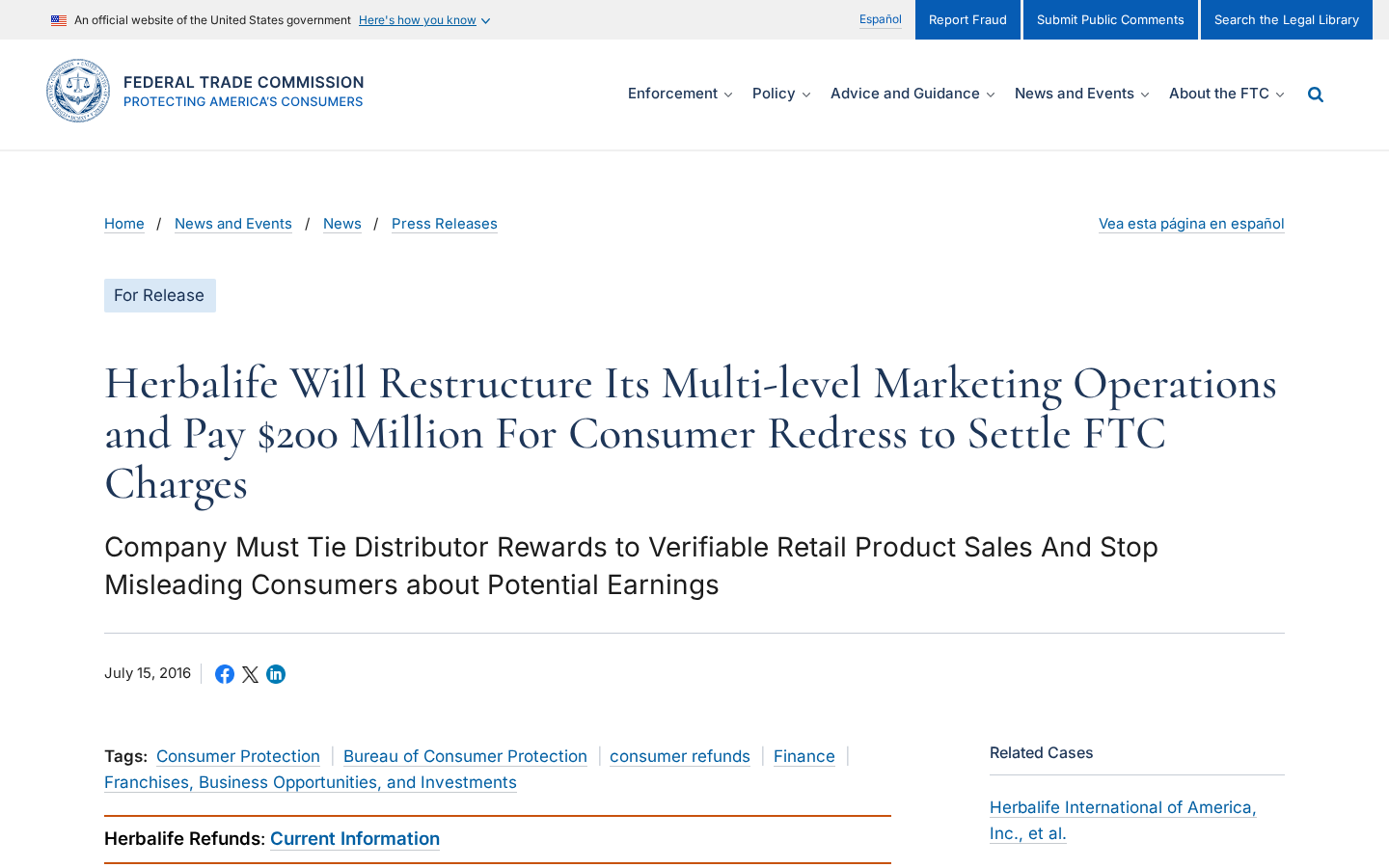
In the 2016 settlement announcement, the FTC said Herbalife agreed to pay $200 million for consumer redress and restructure its multilevel marketing operations in the United States.
The distinction is useful when someone insists that anyone with an old Herbalife receipt qualifies. Complaints about the business opportunity did not make every retail purchase refundable.
The promised earnings also mattered because a distributor could spend money before finding out whether a local market could support the business.
A box of product in the garage may have been tangible inventory, but it was not income. The question was what customers outside the sales network would buy.
The $200 million settlement is not your payment amount
The figure describes the original settlement. The $197.7 million figure covers refunds resulting from earlier distributions, rather than the size of this new batch of Zelle payments.
Neither number is a promise to reimburse the entire amount you put into the business. A settlement fund has to cover many people, each with a different history.
You may see a blog quoting an old typical payment range. Don’t estimate your November credit from it, and don’t send a difference to somebody who claims you were overpaid.
If the amount is a surprise, save the original transaction note and ask the administrator about your record. The sender of an unsolicited message doesn’t get to reconcile it.
Which payment method applies to which round?
Earlier rounds in this case used checks. The FTC can use different methods across its programs, but the current Herbalife notice specifically says Zelle.
A PayPal logo in a message is not corroboration for a credit that the agency says arrives in your bank account. Neither is a QR code requesting enrollment.
Keep the oldest document separate from the newest one. An envelope from 2019 can provide a case reference without telling you what will happen in 2026.
If you received something on paper recently, don’t assume it is the replacement the website describes. Verify the document separately without relying on a number printed on it.
What you can learn from your old check
Separate the date the check was issued from the date you found it. The agency’s schedule refers to when it sent payments, not when you opened the envelope.
Look at your previous account statements if you’re unsure whether you deposited it. A bank can help identify an old deposit, but it won’t decide government eligibility.
A scanned check image in a statement is better evidence than remembering a similar amount. Compare its check reference if one is available.
If you moved, an earlier check may have gone to an address you no longer use. Call the administrator to ask what its records show before assuming payment was denied.
Keep the outside of the old envelope if you still have it. The postmark and mailing address can help explain a returned or delayed payment.
The general FTC policy is that reissue depends on whether money remains. Ask which rule applies to the specific payment, especially if a new credit may already have posted.
How to Verify a Herbalife Refund Payment
Step 1: Start at the refund directory
Type ftc.gov into your browser yourself and go to the FTC refund directory. Search the page for Herbalife to find the listing and administrator.
Open the program’s name rather than an advertisement above a search result. Compare its date and payment method to what the message or bank entry says.
If you can’t find the entry on a cached page, open the case-specific notice. Record the administrator’s number from the government page, not the incoming communication.
Nothing on this lookup requires you to tell a caller how much you received or log into your bank through a link. You are confirming the process first.
Step 2: Look for the money in your banking app
Use the bank app you normally open, or sign in at the bank’s address you already know. Select the account where you expect the refund.
Open its transaction history, then open any incoming credit you can match to the settlement. Record the date, amount, status and reference the bank displays.
If you have used several bank accounts since your original check, tell the administrator that before changing your Zelle setup. Ask your bank which account your enrollment points to.
A pending entry is not the same as a posted deposit. If the message says you’re paid but the account has no credit, ask the bank to trace it.
Zelle’s guidance says enrolled recipients normally get money in the account associated with their profile. Do not enroll from an unexpected message that you have not authenticated.
Step 3: Ask the administrator about anything that doesn’t match
Call Analytics Consulting using the number you saw on the official listing. Explain whether you have an uncashed check, a claimed payment or a real bank credit.
Ask whether the program shows a payment associated with the old check and what reference it can confirm. If records need correction, ask for the approved process.
Only share information necessary for the case after verifying whom you reached. An old reference number is different from a one-time code that authorizes a bank login.
If the administrator cannot confirm the credit, return to the bank through its known service channel. Don’t let the person who first contacted you resolve the discrepancy.
What to Do If You Received a Refund Message
-
If you received a notice but haven’t acted, save it and verify separately. Keep the sender, time and exact payment request without clicking the links.
Search for the Herbalife program on the FTC website. Compare it with your bank record instead of replying to prove that your address belongs to you.
-
If a real credit is sitting in your account, read the note before doing anything. Ask your bank to verify the entry if the description is abbreviated.
Leave an unexpected payment alone while that check is ongoing. If it’s a mistake, let the bank handle that rather than sending a separate payment yourself.
-
If a paper check expired, ask the administrator about your specific record. Have the date and check reference available, but don’t put them in a public comment.
Don’t assume you can deposit the old paper check and keep any electronic credit too. Verify which payment is valid before submitting the old check.
-
If you entered a banking password or verification code, contact the bank immediately. Use its app or the number on the back of your card.
Tell the fraud team exactly what you shared and when. Ask it to check for newly enrolled devices, changed contact details and transfers you didn’t authorize.
-
If you sent an activation fee or a return transfer, report the transaction promptly. Provide its identifier, the recipient and whatever messages led you to pay.
Ask the bank what can be disputed or recalled. Describe whether you approved the payment yourself or somebody else initiated it using your account.
-
If somebody poses as the refund administrator, report what they did. Use the FTC’s ReportFraud service, and keep your submission confirmation with your bank records.
A fraud report documents the impersonation. It does not enroll you in the Herbalife settlement or replace the call to your bank about a transfer.
When a Refund Request Asks You to Send Money Back
The request can sound reasonable if the caller names your old business and claims to have a refund record. That information still doesn’t tell you who is calling.
A separate payment can be dressed up as verification, a temporary hold, tax or an accounting correction. Look past the label to what the bank confirmation screen does.
If it shows money leaving your account, you aren’t authorizing an incoming credit. Cancel the action, hang up and check the existing entries in your account.
A settlement note in a real deposit also doesn’t give the sender of a second message authority. Have your bank handle any genuine payment reversal.
Scammers can invent a reason why you must act while they’re still on the line. There is no financial advantage to letting them watch you verify.
The FTC’s refund FAQ explains how to recognize its payments and why the agency doesn’t ask for an advance fee or sensitive banking credentials.
When a family member is helping
If an older relative is sorting through notices, start by reading the lender or bank record together. The relative should remain in control of their login and security code.
Write down only the facts needed to ask a question: the program, the date, the amount and the reference the institution gives you.
If the payment belongs to a deceased relative, ask the administrator what it needs from a legally authorized representative. Being able to open the mail doesn’t grant that authority.
When a check has a spelling error or different legal name, request the administrator’s written instructions. Don’t send proof to an address copied from a forwarded message.
A genuine payment can still be confusing if the recipient changed names, banks or phone numbers. Those are reasons to verify it, not reasons to pay someone to fix it.
Frequently Asked Questions
Is the November 2026 Herbalife Zelle refund real?
The FTC announced an electronic distribution for eligible former Herbalife business operators who didn’t cash their check. Verify any individual payment in your bank account.
Do I have to pay a fee to receive it?
The FTC does not charge people to receive a refund. A demand for a Zelle payment, verification transfer or processing fee is a reason to stop.
Does buying products qualify me for this round?
The current notice describes people who lost money running Herbalife businesses and didn’t cash a refund check, not anyone who has purchased an Herbalife product.
Will I get new money if I cashed my old check?
The FTC says this distribution goes to eligible people who didn’t cash their check. Ask the administrator about your own record rather than relying on older eligibility summaries.
What if the original check used my former name?
Call the listed administrator and ask which written request and documentation it needs. Do not send identity documents to anybody who approached you first.
Do I need to give a caller my Zelle verification code?
Never share a bank login or verification code with someone offering a refund. Open your own banking app and get help through the bank’s established support channel.
The Bottom Line
The November Herbalife refund is real and goes straight to eligible recipients’ bank accounts. Use the FTC’s case listing and your bank’s transaction record to check yours.
Don’t send money or banking codes to claim that credit. For an old check or a missing payment, contact Analytics Consulting through the FTC’s verified listing.

Join the discussion
0 commentsShare your experience or ask a question about this article.
Community experiences
Did this happen to you?
Your experience could help someone recognize the same scam. Submit a private report for our team to review.
I experienced this tooReports are reviewed before publication. Sharing publicly is always your choice.
Discussion
Start the conversation
Have a question or something useful to share? Add the first comment.