

If you’ve spent any time on Facebook, Instagram, or TikTok lately, you’ve probably seen ads for HydroBead Pro — the “chemical-free toilet cleaning pod” that claims to keep your toilet spotless for up to 10 years without scrubbing.
The videos look impressive. Brown stains magically disappear. The toilet stays “white and shiny.” And influencers are calling it “a revolutionary eco-friendly cleaner.”
But is HydroBead Pro really a breakthrough?
Or is it just another dropshipping operation using cheap Alibaba products and fake reviews?
Let’s break it down with a full, fact-checked, buyer-beware investigation.
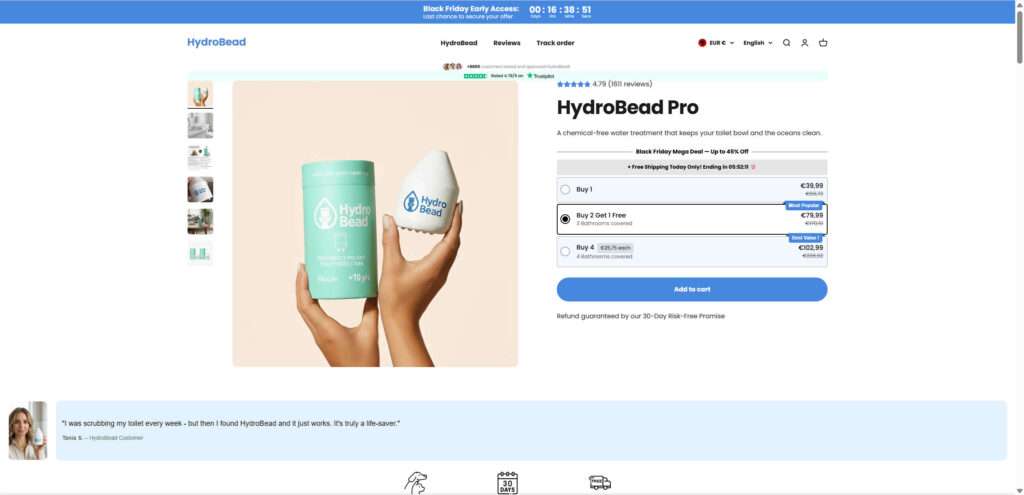
HydroBead Pro Overview
According to hydrobead.co, the HydroBead Pro is:
- A “chemical-free” toilet cleaner
- That releases “natural minerals” into your tank
- Prevents toilet rings and limescale
- Works for up to 250 flushes
- Eco-friendly, safe for pets, biodegradable
- And lasts “+10 years” (in some descriptions)
The marketing promises:
- Less scrubbing
- No harsh chemicals
- No water pollution
- Better looking toilet bowls automatically
Sounds almost too good to be true — and that’s the first red flag.
Red Flags Found During the Investigation
1. The Website Is Extremely New (Registered October 2025)
A WHOIS lookup of hydrobead.co shows:
- Registered on: October 7, 2025
- Expires: 2026
- Brand-new domain
- No business information
- No company name
- No physical address
- No phone number
Despite being only weeks old, the site claims:
“1600+ customers tested and approved HydroBead!”
There is no way a brand-new store has that many verified buyers unless the numbers are inflated.
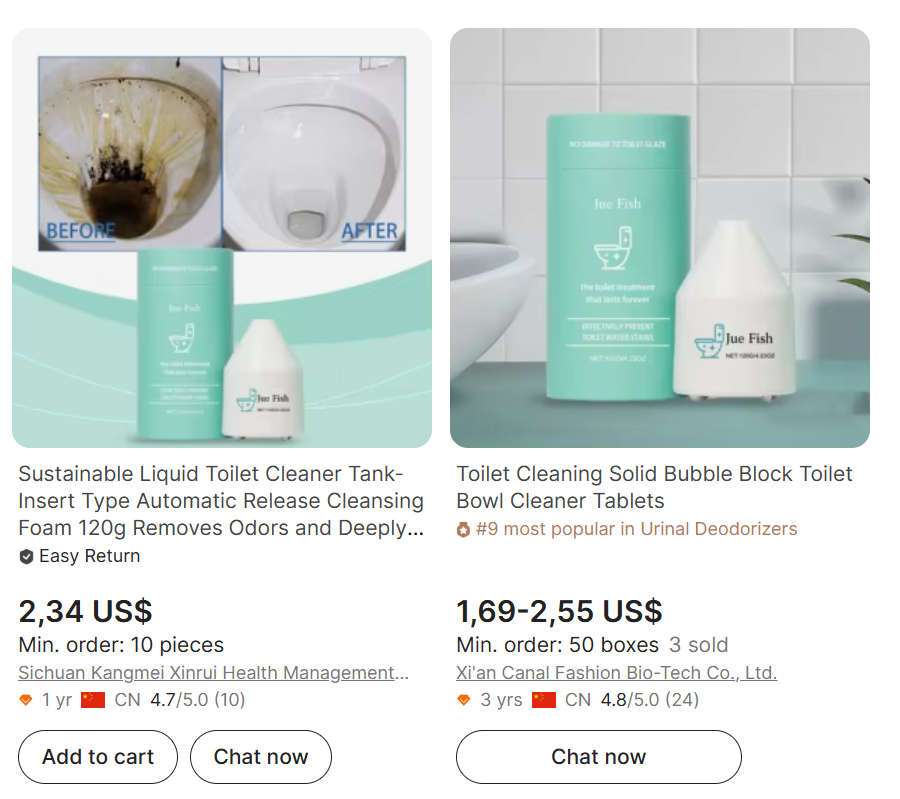
2. The Same Product Is Sold on Alibaba for $1.69–$2.55
Using reverse image search and product keywords, we found the exact same product — same shape, same color, same packaging style — being sold on Alibaba under generic names like:
- “Sustainable Liquid Toilet Cleaner Tank Insert”
- “Jue Fish Toilet Cleaner Block”
- “Toilet Cleaning Solid Bubble Bead”
These cost:
- $1.69–$2.55 per unit
- With a minimum order of 50 units
HydroBead sells 1 unit for:
- €39.99 – €56.73 (depending on “fake sale timers”)
This is textbook dropshipping:
Buy for $2 → Sell for €39–€56 under a made-up brand.
3. Fake Before/After Photos
Reverse search reveals that:
- The brown-stain toilet photos come from old Pinterest cleaning tutorials, not HydroBead.
- The “spotless white toilet” after photos come from generic stock images used in hundreds of cleaning advertisements online.
Several images on the HydroBead site also appear in Alibaba product listings, showing they were taken by the manufacturers—not this brand.
The “customer photos” displayed on HydroBead are not original or verifiable.
4. Fake Trustpilot Score Used in Marketing
The HydroBead website displays a 4.7/5 Trustpilot rating.
But on Trustpilot, the brand actually has:
- Only 2 reviews
- Both 1-star
- Both warning that HydroBead used fake Trustpilot claims
Users say:
“Such AI b*llocks. Total con.”
“Fake TP reviews marketing. Very naughty.”
This is a serious red flag:
Faking a Trustpilot rating is deceptive marketing.
5. Review Photos and Testimonials Are AI-Generated or Stolen
HydroBead shows polished “customer reviews” from:
- “Tania S.”
- “Lisa R.”
- “Michael P.”
The photos appear to be AI-generated headshots or stock photo models, not real customers.
Common signs:
- Perfectly lit stock-photo style
- No EXIF data
- No real user identity link
- Reused across multiple dropshipping stores
These are not legitimate reviews.
6. The “Chemical-Free” Claim Is Misleading
HydroBead claims:
“No chemicals. Safe for pets and kids.”
But their own ingredient list includes:
- Sodium dodecyl sulfate (SDS) – a detergent/chemical surfactant
- Citric acid
- Baking soda
- 1,2-Hexanediol – synthetic preservative
- Disodium EDTA – chelating agent used in industrial descalers
These are chemicals, even if some are mild or plant-derived.
So the marketing is false.
7. Unrealistic Longevity Claims
HydroBead claims:
- “+10 years lifespan”
- “250 flushes per tablet”
- “Never scrub again”
But the manufacturer’s listing for the same beads on Alibaba clearly states:
- Each unit lasts 2–4 weeks maximum
- “Natural limescale removal may vary”
- Recommended for “light cleaning only”
Nothing lasts 10 years.
That number is pure marketing fiction.
8. The “Limited Sale Timer” Is Fake
Every time you refresh the page, the countdown resets.
This is a common sales tactic used by low-quality dropshipping stores to create artificial urgency.
9. The Price Is Unreasonably High for What It Actually Is
Let’s compare:
| Product | Real Price | HydroBead Price |
|---|---|---|
| Alibaba Toilet Bead | $1.69–$2.55 | €39.99–€56.73 |
| HydroBead 2-Pack | ~$10 wholesale | €79.99 |
| HydroBead 4-Pack | ~$20 wholesale | €102.99 |
The markup is outrageous, especially for a product with no proven results.
How HydroBead Actually Works (Based on Manufacturer Info)
The product is not a tech innovation. It is simply:
- A plastic shell
- Containing a compressed mixture of baking soda + citric acid + detergent
When dropped in the toilet tank, it:
- Dissolves slowly
- Releases mild surfactants
- Helps slightly reduce mineral buildup
- Provides very light cleaning effect
It cannot:
- Remove deep stains
- Remove heavy limescale
- Replace scrubbing
- Keep a toilet clean for years
- Clean hard water stains
This is not a professional cleaning product.
It is a basic low-power bead used as a novelty item on Chinese marketplaces.
Is HydroBead Safe?
Because the product is unregulated and untested, safety concerns include:
- Unknown chemical concentrations
- Potential for tank corrosion
- Allergic reactions
- Septic system incompatibility
- Non-biodegradable plastics ending up in water
The site claims it’s “eco-friendly and plastic-free,” but the product itself is made of:
- Plastic casing
- Artificial surfactants
- Synthetic preservatives
None of this is backed by certification.
What to Do If You Already Ordered HydroBead
1. Save screenshots of all claims
Especially the fake Trustpilot rating.
2. Contact the seller for a refund
Use the 30-day guarantee they claim.
3. If they ignore you, open a chargeback
- Card issuer: “Product not as described / deceptive advertising”
- PayPal: “Significantly not as described”
4. Report the store
- Trustpilot
- Facebook Ads feedback
- FTC / EU Consumer Protection
5. Warn others
Leave real reviews to counter the fake ones.
Should You Buy HydroBead? (Final Verdict)
Short answer: No.
HydroBead Pro is:
- A dropshipping product
- Based on a $2 Alibaba item
- Using fake reviews
- Using stolen images
- Running misleading “chemical-free” claims
- Advertised through fake urgency timers
- Backed by a brand-new website with no traceable company
There is no evidence that HydroBead works as advertised, and the massive price markup is unjustifiable.
Better Alternatives
If you want real results:
- Use professional toilet descalers (Limescale removers)
- Use manual scrubbing + vinegar + baking soda
- Install a water softening filter
- Clean regularly — no product removes ALL scrubbing
These methods are safer, more effective, and far cheaper than a $56 plastic bead.
Bottom Line
HydroBead Pro appears to be a typical dropshipping operation selling a low-cost, low-performance toilet cleaner under inflated claims and fake reviews.
Buyers should avoid it and choose established cleaning brands with proven results.








