

Consumers are being duped by deceptive ads on social media promoting a so-called “revolutionary” air purifier called IonZen. Promising unrivaled air purification, the IonZen ads on Facebook, YouTube and TikTok pressure people into buying this device at seemingly steep discounts. But here’s the shocking truth – IonZen is nothing more than a cheap $3 air cleaner sold on Chinese e-commerce sites, deceptively marked up nearly 1300% by scammers.
This article will uncover everything you need to know about this predatory scam – how it works, what to watch out for, and most importantly, how to protect yourself.
Overview of the IonZen Air Purifier Scam
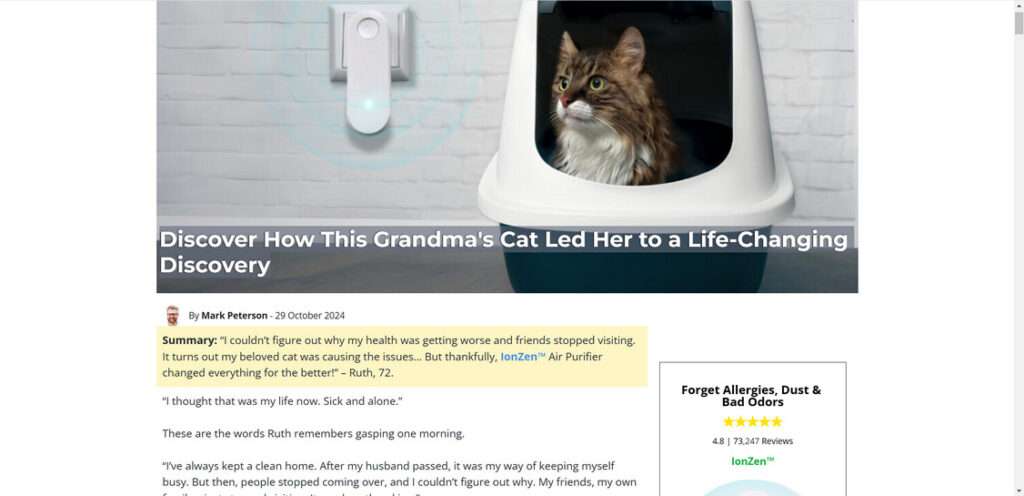
The IonZen air purifier scam operates through social media ads and fake review sites. Scammers run targeted ads on Facebook, YouTube and TikTok, presenting IonZen as a cutting-edge air purification device created by someone named “John Anderson”.
These ads make dubious claims about IonZen’s purification capabilities, asserting it uses “state-of-the-art filtration technology” to remove allergens, pollutants and odors. According to the ads, it performs this “magic” without any filters, instead utilizing negative ions.
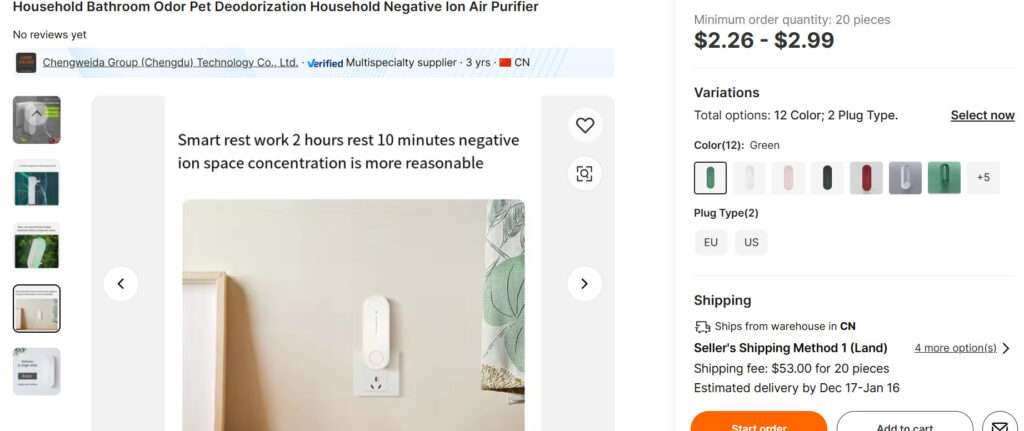
The ads further state IonZen is sold directly from the company website, available at seemingly huge discounts up to 50% off. Various bundles are advertised at different price points, starting from 1 unit at $39 up to 7 units for $195.
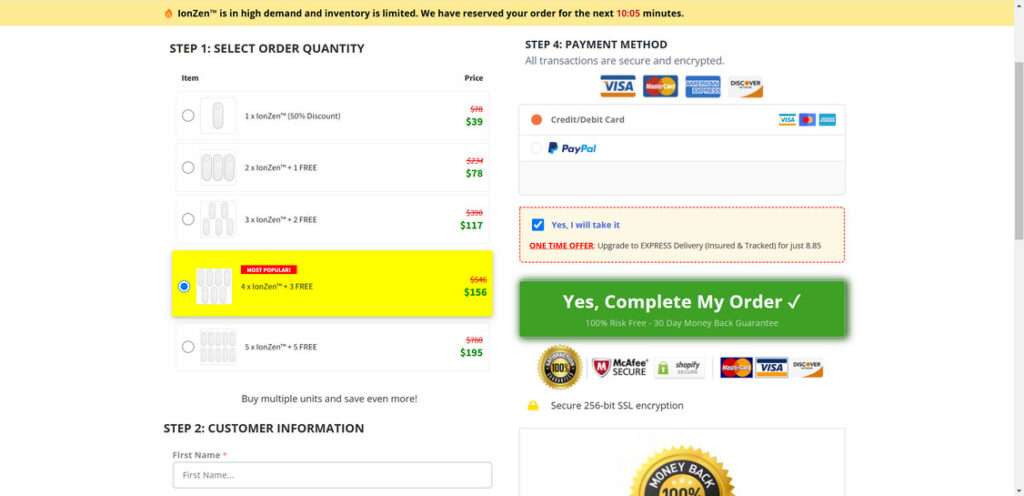
In reality, IonZen is nothing more than a basic ionizer sold on Chinese e-commerce websites like Alibaba for around $3. It likely does not have any advanced filtration capabilities despite the ads’ claims.
The heavily marked up prices, fake discounts and misleading claims are all tactics to compel people into purchasing multiple units of this nearly worthless device.
How the IonZen Air Purifier Scam Works
The IonZen scam is orchestrated systematically through the following steps:
Step 1: Running Targeted Social Media Ads
The scam begins with targeted ads on Facebook, YouTube and TikTok. These ads are directed at users identified as potential victims, based on interests, age and other data points.
The ads portray IonZen as a cutting-edge air purifier created by the fictional “John Anderson”. Various misleading claims are made about its purification capabilities.
At the end, the ads direct users to click through to the company website to purchase IonZen at a special discounted price.
Step 2: Fake Review Websites and Articles
The social media ads often lead to fake review websites and blog articles that further propagate false claims about IonZen’s purification prowess.
These sites use fictitious customer reviews and testimonials to convince visitors that IonZen offers unmatched air cleaning. Some even include fake celebrity endorsements.
The review articles also mirror the misleading claims from the ads, asserting IonZen uses advanced filtration to eliminate allergens, pollutants and odors. These articles aim to manipulate readers into believing the scam’s legitimacy.
Step 3: “Discount” Bundles on the Company Website
Visitors who click through from the ads and reviews land on IonZen’s official-looking website. Here the air purifier is touted through more false claims.
The site emphasizes discounted pricing, urging visitors to purchase multi-unit bundles before the offers expire. 1 unit is $39, but bundles of 4 are $156 and 7 units $195.
In reality, these “discounts” are fabricated to create a false sense of urgency. The scammers likely purchased the devices for $3 and the true cost to them is a fraction of the advertised price.
Step 4: Fake Limited Inventory Messages
On the website, users may encounter pop-up messages saying limited stock remains due to high demand. This is another deceptive tactic to compel immediate purchase before the discounted bundles “sell out”.
In truth, the scammers likely hold large inventories of the cheap devices and merely want to prevent visitors from price shopping elsewhere.
Step 5: No Refunds
Victims who purchase the overpriced air purifiers eventually realize they do not work as advertised. But refunds are essentially impossible.
The website and payment processor show no identifiable company information. Moreover, the devices ship directly from China with no way to return them.
Users are simply left with multiple units of a worthless $3 air cleaner purchased for exponentially inflated prices.
Recognizing the IonZen Air Purifier Scam Red Flags
When encountering ads for IonZen or similar air purifying devices, watch out for these telltale red flags of a scam:
- Ads on social media – Facebook, YouTube and TikTok ads are common channels used by scammers to promote shady products. Real companies rarely market products exclusively through social media ads.
- Celebrity endorsements – Claims that celebrities like Oprah Winfrey endorse IonZen are fake. These outright fabrications are made to manipulate consumers.
- Suspicious discounts/deals – Special deals that pressure you to buy quickly are highly suspicious. Time limited discounts and bundle deals are mainly scams.
- No company information – Research the website and payment processor, but expect to find no legitimate company information. Scams stay anonymous to avoid accountability.
- Ships from China – Dropship scams ship directly from China to conceal origins. The low shipping cost indicates a low-value item, contradicting the website’s claimed value.
- Too good to be true claims – Outlandish or exaggerated claims about a product’s capabilities are almost always false. Any “miracle” device warrants heavy skepticism.
- Fictitious reviews – Research any reviews, testimonials and online articles praising a product’s remarkable capabilities. Most are completely fabricated by scammers.
- No refund policy – Avoid any website that prevents refunds for unsatisfactory products or directs you to deal with the third party seller (in China).
Stay vigilant for these clear markers of a scam. If it seems too good to be true, it almost certainly is.
What To Do if You’re a Victim of the IonZen Scam
If you already purchased IonZen air purifiers and now believe it to be a scam, take the following steps to rescue the situation:
1. Call your credit card company immediately. Inform them you believe the purchase was fraudulent. Request to chargeback the transaction and get your money refunded. Act quickly before your chargeback rights expire.
2. Report the incident to the FTC. File a scam report with the Federal Trade Commission at ReportFraud.ftc.gov. Provide all details to help bring the scammers to justice.
3. Leave online reviews. Post reviews about the scam on the product website and anywhere else warning others from being duped. This helps counteract the fake positive reviews.
4. Report the social media ads. Report the Facebook, YouTube and TikTok ads to get them taken down so more people avoid being scammed.
5. Contact your state attorney general. Your state AG may provide additional support and potentially pursue legal action if enough complaints are received about the company.
6. Spread awareness. Share your experience and warn others about this predatory scam on social media channels to stop the spread of misinformation.
7. Be more cautious next time. Learn from this experience. Be vigilant about online scams, especially those promoted through social media ads and containing unbelievable claims. Only purchase from reputable websites, and research products extensively before buying.
Frequently Asked Questions about the IonZen Air Purifier Scam
1. What exactly is the IonZen Air Purifier?
IonZen is a cheap $3 air cleaner purchased from Chinese sites like Alibaba. Scammers promote it through social media ads as a high-tech air purifier invented by “John Anderson”, using fake discounts up to 50% off to convince people to buy it.
2. How does the IonZen Air Purifier scam work?
Scammers run targeted ads on Facebook, YouTube and TikTok making exaggerated claims about IonZen’s capabilities. The ads funnel people to fake review sites and a website selling IonZen bundles at inflated prices. Victims realize too late it does not work as advertised.
3. What claims do the IonZen Air Purifier ads make?
The social media ads state IonZen uses advanced filtration to eliminate allergens, pollutants, odors, etc. They say it performs this “magic” without filters, instead using negative ions. All these claims are false.
4. What’s the real purpose behind the discounted bundles?
The “discounted” bundles, like 4 units for $156, create a false sense of urgency to buy before the deals expire. In reality, scammers just want to prevent price shopping and maximize profits off their $3 devices.
5. How can I recognize the IonZen Air Purifier scam?
Red flags include social media ads, unbelievable claims, fake discounts/reviews, no company information, ships from China, no refund policy. Use skepticism for any product marketed this way.
6. I already purchased the IonZen Air Purifier. What should I do now?
Act quickly to chargeback through your credit card company. Report the ads, website and payment processor. File complaints with the FTC and state attorney general. Post reviews warning others.
7. Can I get a refund if I purchase the IonZen Air Purifier?
Unfortunately, no. The scammers intentionally make refunds impossible. That’s why it’s important to recognize red flags before purchasing, as you’ll have no recourse after.
8. Is this a reliable air purification device as advertised?
No, IonZen is simply a $3 ionizer. It cannot perform advanced filtration or effectively remove allergens/pollutants. The revolutionary claims are outright lies intended to scam consumers.
9. Are the reviews I see for IonZen real or fake?
A vast majority of the positive IonZen reviews are completely fabricated. Check review sites for patterns, repeated text, etc. Real reviews highlight it’s a total scam.
10. How can I avoid the IonZen Air Purifier scam?
Carefully research products, sellers and claims before purchasing. Rely on trusted brands and retail sites. Beware of unbelievable claims or deals, especially via social media ads. Trust your instincts.
The Bottom Line on the IonZen Air Purifier Scam
The IonZen air purifier scam serves as a prime example of how deceptive internet scammers operate today. Through social media ads and fake reviews, they pedal a near-worthless gadget using lies, completely fabricated discounts and high pressure sales tactics.
Sadly, many consumers fall victim before recognizing the obvious red flags. The steeply marked up prices and outright fraudulent claims follow a tried-and-true scam formula seen repeatedly with such dropshipping ploys.
Avoid being swindled by trusting your instincts when you encounter unbelievable deals online. Scrutinize outlandish claims, suspicious discounts and questionable reviews. Only purchase from reputable sellers after thorough research, and exercise extreme caution when products exclusively use social media ads.
Share this article to spread awareness about the IonZen scam, and report any instances you uncover to help prevent more people from being duped. Stay vigilant to protect yourself and your wallet from predatory scams proliferating online.








