

A new health gadget being aggressively marketed online called the Vital Health Ring is duping consumers through exaggerated claims and fake discounts. Behind the slick ads and convincing celebrity endorsements lies a systematic scam designed to prey on unsuspecting customers.
This article will uncover everything you need to know about this predatory scam – how it ensnares victims, what to watch out for, and most importantly, how to protect yourself.
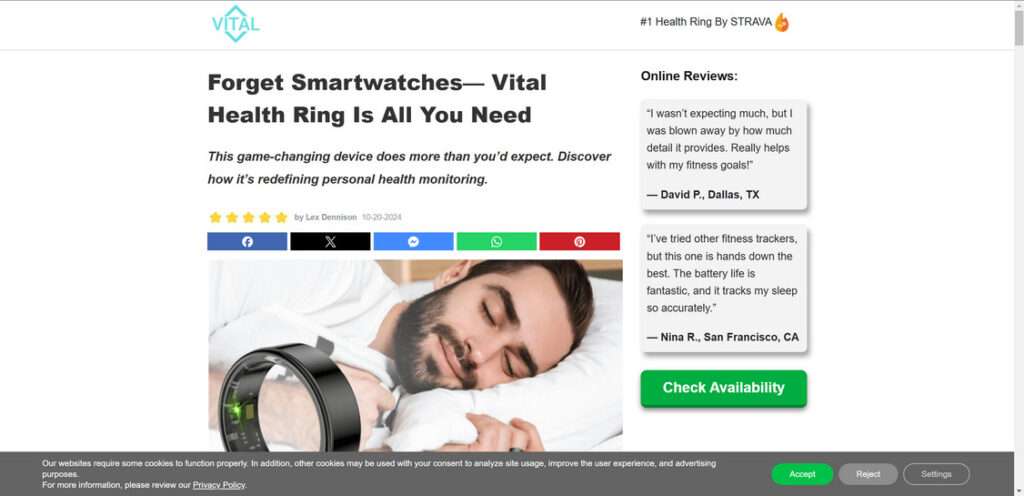
Overview of the Vital Health Ring Scam
The Vital Health Ring is promoted through social media ads and fake review websites as a cutting-edge wearable that provides unmatched health tracking capabilities. Using the familiar formula of scammers, it is touted as a breakthrough device that monitors heart rate, blood oxygen, sleep, fitness and more.
The ads claim the ring was developed by health experts and utilizes advanced sensor technology to provide 24/7 monitoring and health insights. To further manipulate consumers, dubious celebrity endorsements are used implying ABC News, CBS and Fox News have endorsed the product.
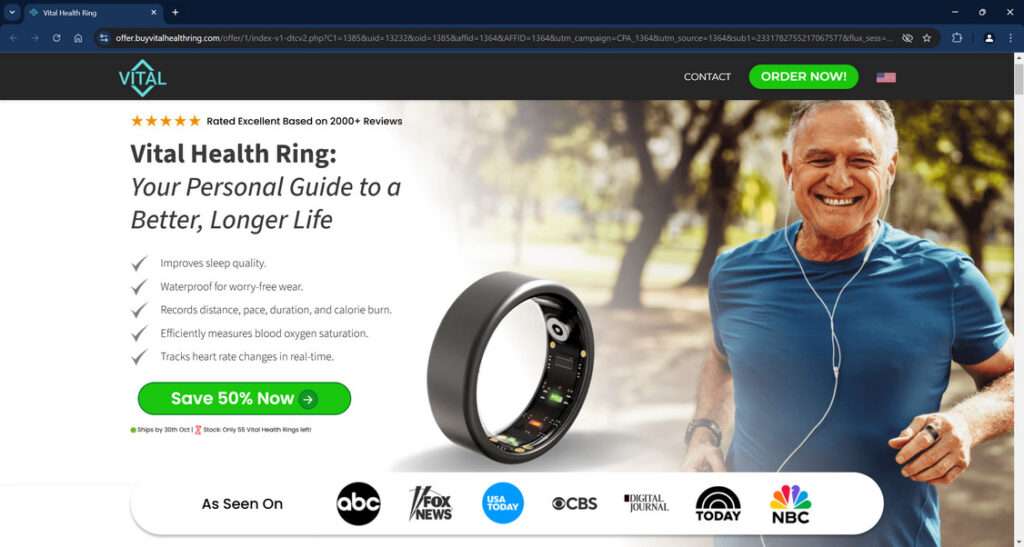
According to the promotions, Vital Health Ring is available directly from the company website at steep discounts up to 50% off. Various bundle packages are shown at different price points to convince victims they are scoring major savings on this revolutionary product.
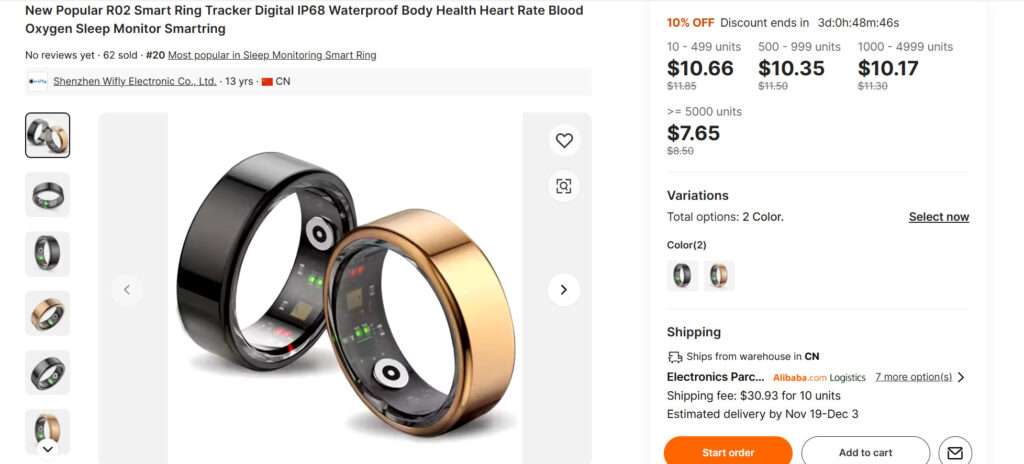
In reality, the Vital Health Ring appears to be a cheap Chinese fitness tracker available on sites like Alibaba for around $9. It likely does not have most of the advanced capabilities claimed in the ads. All evidence points to an egregious scam bilking consumers out of millions.
How the Vital Health Ring Scam Works
Let’s break down how this devious grift works to swindle unsuspecting consumers:
Step 1: Running Targeted Social Media Ads
The cornerstone of the scam is targeted ads run on platforms like Facebook, YouTube and Instagram. Using personal data, the ads are strategically shown to users identified as potential victims.
The slick promotions portray the Vital Health Ring as a cutting-edge wearable packed with health tracking capabilities. Dubious celebrity endorsements are used to fabricate credibility.
Step 2: Fake Review Websites and Articles
To further dupe consumers, the social ads direct to fake review websites, blogs and articles promoting the Vital Health Ring through false claims and fictitious testimonials.
These sites declare the ring provides unrivaled health insights and mirror the exaggerated capabilities touted in the ads. The goal is to manipulate consumers through these promotional materials posing as objective third-party praise.
Step 3: Website Offering Bundles at Marked-up Prices
Victims who click through from the ads and reviews land on the Vital Health Ring website, which continues the charade through more outlandish claims.
The site emphasizes bargain prices for multi-unit bundles described as exclusive deals expiring soon. A 5-pack is $179 for rings costing scammers under $10 each.
This fabrics a false sense of urgency to purchase before the fabricated discounts vanish. In reality, it is all a ruse to peddle cheap Chinese rings at insane markups.
Step 4: Fake Limited Inventory Messages
On the website, users may see pop-up notices that limited inventory remains due to high demand. This reinforces the ploy that supplies are scarce to compel immediate purchase.
In truth, this is just another deceptive tactic to pressure victims and prevent comparison shopping. The scammers likely have huge supplies of these $9 rings ready to ship from China.
Step 5: No Refunds Allowed
Once victims receive the rings and realize they are shoddy devices with none of the promised capabilities, refunds are impossible to obtain.
The website and payment processor show no legitimate business details, and the rings ship directly from China. Victims have no recourse to recoup any money.
Recognizing the Vital Health Ring Scam Red Flags
When assessing any health-related wearable advertised online, watch for these clear red flags indicating a likely scam:
- Social media ads – Facebook and Instagram ads are favorite channels for scammers to promote their shady products through flashy videos.
- Celebrity endorsements – Claims that Oprah, CNN or other major brands endorse the product are complete fiction. This is an attempt to fabricate credibility.
- Dubious discounts – “50% off” or other countdown deals pressuring immediate purchase are highly suspicious. The discounts are rarely real.
- No company details – Research the website, payment processor and terms & conditions but expect to find no legitimate business details. Scammers hide behind anonymity.
- Ships from China – Products from scams typically ship directly from China to hide their origin. This contradicts claims of being American-made.
- Exaggerated claims – Outlandish claims of revolutionary technology or capabilities that seem too good to be true are never real.
- Fake reviews – Search independent consumer sites but expect to find no reviews. All praise is fabricated by the scammers themselves.
- No refund policy – Avoid any site that prevents refunds or makes them exceedingly difficult. This signals a clear scam.
What To Do if You Were Scammed by Vital Health Ring
If you already ordered the Vital Health Ring and now realize it’s a scam, immediately take the following steps:
1. Contact your credit card provider. Inform them the charge is fraudulent and request a chargeback refund. Provide all details and be persistent. Act quickly before your chargeback rights expire.
2. Report the scam. File reports with the FTC at ReportFraud.ftc.gov, BBB.org, and FBI Internet Crime Complaint Center at IC3.gov. This helps bring the scammers to justice.
3. Leave online reviews. Post detailed scam alerts about Vital Health Ring on the seller website, under the social media ads, and anywhere else to warn other consumers. Counteract fake reviews with truth.
4. Beware secondary scams. Scammers may reach out posing as representatives to help obtain refunds, then steal more money. Ignore all such outreach.
5. Contact your state attorney general. File a complaint with your state AG reporting the details of the scam. If enough complaints are submitted, legal action may be pursued.
6. Spread awareness. Share your experience on social platforms to help warn others not to fall for this trap. Prevent more victims by exposing these deceptive practices.
Frequently Asked Questions about the Vital Health Ring Scam
1. What exactly is the Vital Health Ring?
The Vital Health Ring is a cheap Chinese fitness tracker costing $3-9 but deceptively sold online for over $50. Scammers promote it through ads and fake reviews as an advanced health monitoring device.
2. How does the Vital Health Ring scam work?
Targeted social media ads direct victims to fake review sites and a website selling Vital Health Ring bundles at inflated prices using false discounts. Victims don’t realize it’s a basic device that was marked up over 500%.
3. What types of claims do the Vital Health Ring ads make?
The ads state it tracks heart rate variability, blood oxygen, sleep cycles, fitness activity and more. They also use fake celebrity endorsements implying credibility. None of these claims are true.
4. What’s the real purpose behind the discounted bundles?
The “50% off” bundles create false urgency to buy before the fabricated deals expire. In reality, scammers just want to prevent price comparisons and hide the insane markups.
5. How can I recognize the Vital Health Ring scam?
Red flags include social media ads, unbelievable capabilities, no company info, ships from China, no refund policy and exaggerated “deals”. Use extreme caution with tactics like these.
6. I purchased the Vital Health Ring. What should I do now?
Act immediately to file a chargeback request with your credit card company. Report the scam to the FTC, BBB, and IC3. Leave reviews warning others. Seek additional recourse through your state AG.
7. Can I get a refund if I bought the Vital Health Ring?
Unfortunately no – the scammers deliberately prevent refunds. This underscores the importance of recognizing red flags before purchasing to avoid losing money.
8. Is this actually an advanced health tracking device?
No. The Vital Health Ring provides very limited basic fitness tracking despite the ads’ claims about revolutionary technology. All the lofty claims are outright fabrications.
9. Where can I find real customer reviews?
All positive reviews are fake. Legitimate reviews only exist on scam warning sites. This lack of real reviews is a clear red flag.
10. How can I avoid this scam in the future?
Carefully vet sellers, capabilities claimed and discount offers shown especially in social media ads. Rely only on established brands and retail sites. Trust your instincts if it seems questionable.
The Bottom Line on the Vital Health Ring Scam
The Vital Health Ring scam provides a textbook example of how modern online scams operate by exploiting social media ads, fake reviews and urgent discount offers to peddle cheap, worthless products at insane markups.
It is increasingly important to be vigilant about such schemes that depend on exaggeration and deception. Always thoroughly research any health-related wearable advertised heavily online before considering a purchase.
Use diligent skepticism rather than blindly trusting flashy ads, celebrity endorsements or any claims that seem too good to be true. Avoid any seller unwilling to provide contact details, refunds or other critical consumer protections.
Hopefully by exposing the inner workings of this Vital Health Ring scam, others can protect themselves and avoid being manipulated by such egregious fraud exploiting those seeking to monitor and improve their health. Don’t let them swindle another dollar.








