

A retiring artist, a last shelf of cat-themed totes and a bag supposedly worth $89.95 going free. Jennifer Bags makes the offer feel personal.
It is easy to picture carrying one home. Before you pay the postage, look at what happens when the story reaches the refund policy.
Overview
The bag is advertised as free, but the order costs money
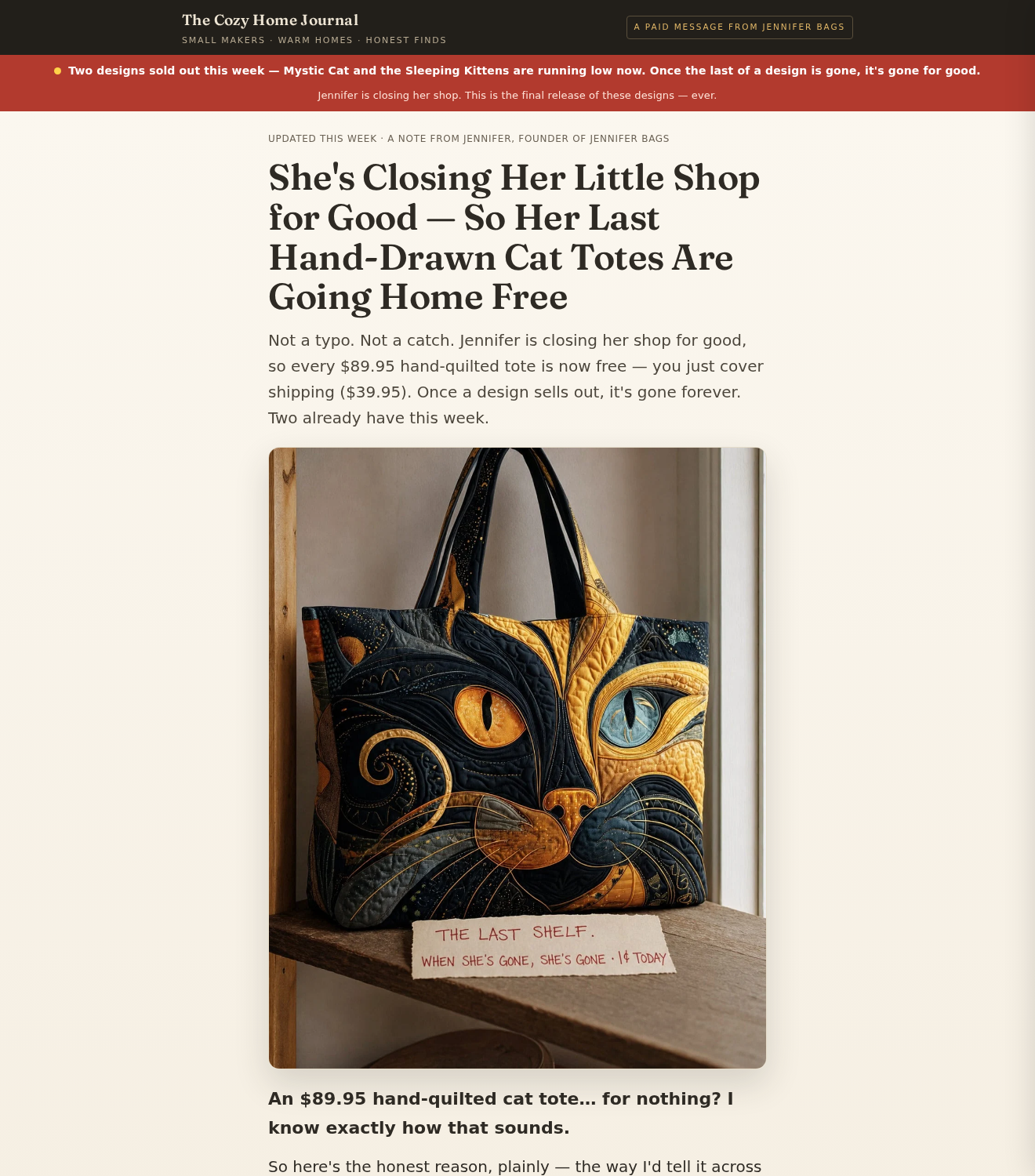
The Jennifer Bags promotion offers a quilted tote for $0 with $39.95 shipping for the first bag. Additional bags are advertised at roughly $30 extra each.
This is the hyphenated jennifer-bags.com storefront. A similarly named website without that hyphen should not be treated as the same business.
The offer tells the story of Jennifer, an artist closing her workshop and releasing her remaining designs. It explicitly describes overseas production and a one-time purchase.
Those disclosures matter. An international shipment or a substantial shipping charge is not automatically fraud, and this page does not establish a hidden refill plan.
The central problem is the money-back promise
The paid advertorial promises a refund including shipping, with no need to send the tote overseas. The separate return policy says something materially different.
Its conditions include buyer-paid return postage, a 15% restocking fee and non-refundable original shipping. It also imposes a very short initial cancellation window.
Here is the practical issue:
- The advertised first payment is almost entirely described as shipping.
- The sales story says that shipping can be refunded.
- The written policy excludes original shipping from refunds.
- The merchant needs to resolve that contradiction before asking buyers to trust a satisfaction guarantee.
Why this offer does not deserve a purchase recommendation
The store promises money back in one place and excludes the relevant charge in another. That is the problem to resolve before paying.
There was no purchase or physical inspection of a tote. Its stitching, durability and delivered appearance are therefore not established by this investigation.
Do not order through the free-tote promotion while its refund terms conflict over the very charge you would be paying.
The Closing-Shop Story Changes How the Price Feels
From a purchase to a personal favor
The promotional letter frames the order as giving an artist’s final designs a good home.
That makes hesitation feel different. Instead of comparing bags, a shopper may feel they are helping someone preserve a small part of her life’s work.
The page’s cozy journal presentation reinforces that feeling. However, it carries a paid-message disclosure and belongs to the selling storefront.
It is advertising, not an independent publication verifying the artist, the workshop’s history or the old selling price.
A final shelf and a made-to-order product
The story repeatedly emphasizes remaining designs, dwindling availability and a permanent closure. Elsewhere, it says each bag is made to order overseas.
Those statements are not necessarily impossible to reconcile. A business could stop accepting new orders after a final production run.
But the distinction matters. Limited designs, limited manufacturing capacity and a physical shelf of finished bags are not the same kind of scarcity.
A buyer should not assume there is a nearby artisan handing over existing stock simply because the letter evokes a small workshop’s last days.
No verified final trading date or independently established stock count was available to settle that impression. Do not let it replace an ordinary value comparison.
The right comparison starts at $39.95
A free product is not a free order when receiving it requires $39.95. That total is the meaningful starting point for comparing similar totes.
The claimed former $89.95 value is a seller assertion, not an independently established resale value or a guarantee of premium construction.
Ask whether you would still want the bag at $39.95 without the retirement story. If not, the emotional framing is doing the selling.
The same applies to extras. A second design may feel almost free, but an additional charge still increases the amount you could need to recover.
How the Jennifer Bags Offer Works
Step 1: Introduce a relatable artist and an ending
The letter describes a founder finishing her working life and spending more time with family. The designs become a sentimental final collection.
Cat lovers and readers can easily recognize themselves in the artwork. The product becomes a little expression of identity rather than an ordinary fabric bag.
That appeal is not inherently deceptive. It becomes risky when the warmth of the story discourages questions about the actual business transaction.
Step 2: Replace the product price with postage
The bag is presented at $0 while the first shipping charge becomes $39.95. The page does disclose that figure rather than hiding it until payment.
Still, the free label changes the comparison. Shoppers may judge the deal against the claimed $89.95 rather than other bags costing about $40 delivered.
You are spending real money either way. Judge the whole purchase, including delivery time and return conditions, not just the line labeled product.
Step 3: Use familiar buyers to reduce hesitation
The letter includes customer stories, hometowns and buyer labels. Several directly address the fear that the offer might be too good to be true.
That is persuasive because it answers the reader’s objection in another shopper’s voice. The testimonials make proceeding seem like the reassuring choice.
They remain seller-published statements. They do not independently verify an artist’s history, a typical bag’s quality or how a disputed refund is handled.
Step 4: Make extra designs feel inexpensive
The pitch says each additional tote adds about $30 because part of the shipping cost is already covered. Different designs encourage a gift or second purchase.
Check the final count yourself. An optional extra is a separate decision, not a reason to stop reading because the first item is described as free.
No forced quantity change or unauthorized post-payment bundle was established. Preserve your summary if the quantity or charge later differs from what you selected.
Step 5: Promise a soft landing if you dislike the bag
The advertorial offers a 30-day satisfaction period from arrival, including repayment of shipping. It says customers will not need to mail the tote overseas.
That promise is especially important in a free-plus-shipping offer. It addresses the precise amount the buyer would otherwise worry about losing.
But the separate policy removes that certainty. Before treating the order as reversible, compare the promise with its actual exclusions and fees.
The Refund Terms Undercut the Free-Tote Pitch
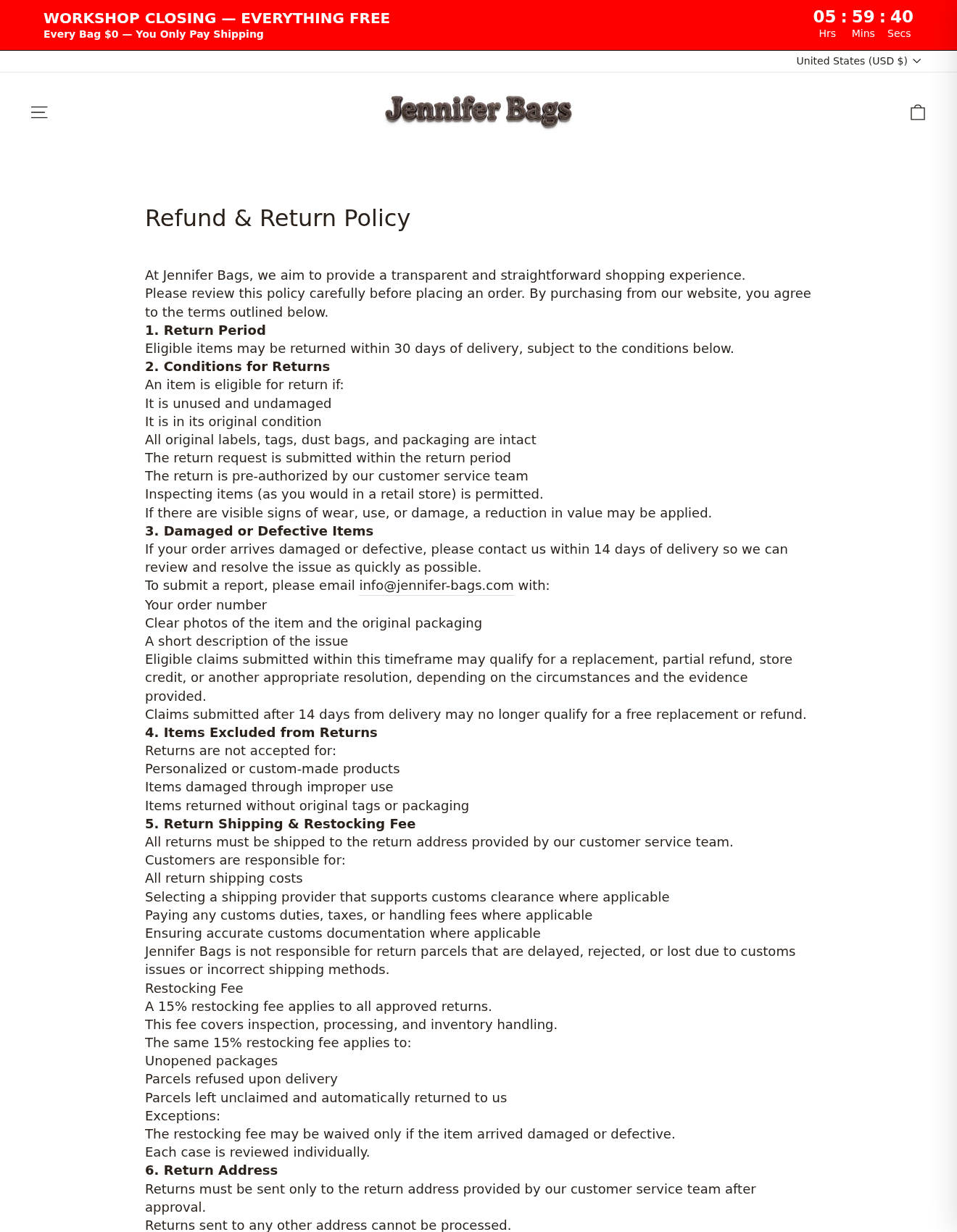
The Refund & Return Policy calls for authorization and goods kept unused, with their original tags and packaging.
It assigns return postage to the customer and excludes original shipping from refunds. Approved returns also face a 15% restocking fee, subject to a limited exception.
That is not the straightforward shipping-inclusive, no-overseas-return remedy described in the promotional letter.
What gets refunded when the bag’s price is $0?
If the purchase is itemized as a free bag plus shipping, excluding the shipping charge raises an obvious question: which part of the payment is refundable?
The policy does not clearly reconcile that situation with the letter’s promise. A buyer should not have to discover the calculation during a complaint.
This does not establish that every purchaser loses the entire payment. It establishes a material ambiguity precisely where the sales page promises certainty.
Ask the merchant for a written example using the first-bag total, including any deduction and return expense. A vague reference to its guarantee is insufficient.
Made to order creates another question
The letter describes every bag as made to order. The policy excludes personalized or custom-made products from ordinary returns.
A standard design produced after an order is not necessarily personalized. The seller should explain whether that exclusion applies to its advertised totes.
Do not accept an open-ended answer that the product is returnable before payment but custom-made only when you request your money back.
The cancellation clock is only 30 minutes
The policy permits cancellation within 30 minutes. After processing starts, requests may be refused, and approved late cancellations may carry an 8% fee.
That short window makes the timing of your written request important. Waiting for delivery is not the same thing as canceling before dispatch.
The damaged-item reporting period is also shorter than the general return period. The policy asks for such reports within 14 days of delivery.
Jennifer Bags Company, Workshop and Support Checks
The contract names Scaling Ops LLC
The store’s terms identify Jennifer Bags as operated by Scaling Ops LLC. The founder story is therefore not the complete contracting identity.
Compare that name with your receipt and card statement if a problem arises. A friendly first name cannot replace knowing which merchant owes the remedy.
Wyoming business details and a China warehouse
The published business address is 30 N Gould Street, Sheridan, Wyoming. The same company information lists a warehouse in Yiwu, Zhejiang, China.
The warehouse entry specifies Xijing Future, 1533 Xuefeng West Road. These are seller-published logistics details, not an independent inspection of a factory.
They support an overseas fulfillment warning. They do not establish manufacturing costs, the quality of every bag or where every authorized return must go.
A contact route is published, not performance-tested
The site publishes info@jennifer-bags.com and +1 307 314 0944. It advertises service six days a week and aims to respond within 24 hours.
No contact test was performed. Keep requests in writing so an unanswered message, a refusal or a promised refund can be documented if it occurs.
The workmanship claims still need ordinary product details
The letter describes quilted fabric, double stitching and washable construction. It does not turn the advertised picture into an inspection of a delivered tote.
Before buying, establish the dimensions, fabric composition, fastening and care instructions. A design you love may still arrive in a size or material you did not expect.
Why Delivery and Returns Should Be Considered Together
The letter allows roughly two to three weeks for delivery. That is consistent with an overseas order rather than a bag collected from a local closing shop.
A gift needed next week is therefore a poor fit for this offer, even before considering the refund contradictions.
If a parcel arrives late, keep the promised timing and actual tracking events. A tracking number alone does not explain a missed dispatch commitment.
For US shoppers, FTC guidance on undelivered orders explains that shipment promises matter and delayed shipping can trigger cancellation rights.
A disagreement about a delivered bag’s quality is different from non-delivery. Describe the actual issue when seeking help rather than applying the wrong complaint label.
What to Do If You Ordered a Jennifer Bags Tote
-
Check your confirmation while cancellation may still be possible. Confirm the design, number of bags, shipping amount and final charge.
If you want to stop the purchase, email immediately with your order number and a clear cancellation instruction. Retain the timestamp.
-
Save the promise about shipping-inclusive refunds. Keep the promotional letter as well as the policy excluding original shipping and imposing deductions.
Ask the seller to state the exact amount it would repay on your order. Mention the no-return promise if that persuaded you to buy.
-
Inspect the delivered bag without destroying its return condition. Keep tags and packaging. Photograph the fabric, seams, dimensions and any obvious fault.
Report damage promptly, noting the policy’s 14-day reporting provision. Do not wash or routinely use a disputed item while seeking instructions.
-
Do not mail it overseas without a complete agreement. Obtain authorization, the receiving address and written confirmation of the refund and postage arrangement.
The listed warehouse is not automatic authorization to return your parcel there. Keep tracking and proof of delivery if you do send it.
-
Escalate a refused promise with clear records. Show your payment provider the charge, the advertisement, your request and the seller’s reply.
Explain whether the problem is non-delivery, a materially different item or a refund promise that was not honored. Ask about deadlines before waiting longer.
-
Treat extra charges as separate facts. This promotion says the purchase is one-time, with no membership or autoship.
If another charge appears, match its descriptor to your receipt and request an explanation. Do not assume every similar store name belongs to this merchant.
Frequently Asked Questions
Is Jennifer Bags giving away bags for nothing?
No. The first advertised order costs $39.95, described as shipping. Compare that delivered cost with other totes rather than focusing only on the $0 product line.
Is Jennifer Bags a confirmed scam?
The documented problem is contradictory commercial promises, especially around shipping refunds. The investigation does not establish that every order is fraudulent or that no bags arrive.
Does the order start a subscription?
The promotional letter expressly describes a one-time transaction without a membership or automatic shipments. Hidden recurring billing was not established.
Are the totes made in a local American workshop?
The letter describes overseas production, and the company information lists a China warehouse. The exact factory and manufacturing process were not independently verified.
Will I get the $39.95 shipping charge back?
The letter promises shipping-inclusive refunds, while the policy excludes original shipping. Obtain an order-specific written answer instead of assuming either page settles the conflict.
Is jenniferbags.com the same storefront?
Do not assume that. This investigation concerns jennifer-bags.com, with a hyphen. Similar names are not evidence of the same operator.
The Bottom Line
Do not order Jennifer Bags through this free-tote offer while its policy contradicts the refund of the main charge. The sentimental story does not resolve that conflict.
If you have paid, act quickly: preserve the letter, request cancellation or a precise remedy, and obtain written instructions before spending more on return postage.

Join the discussion
0 commentsShare your experience or ask a question about this article.
Discussion
Start the conversation
Have a question or something useful to share? Add the first comment.